Hello.
I’m Kim Hawon from Beauty’s Doctor.
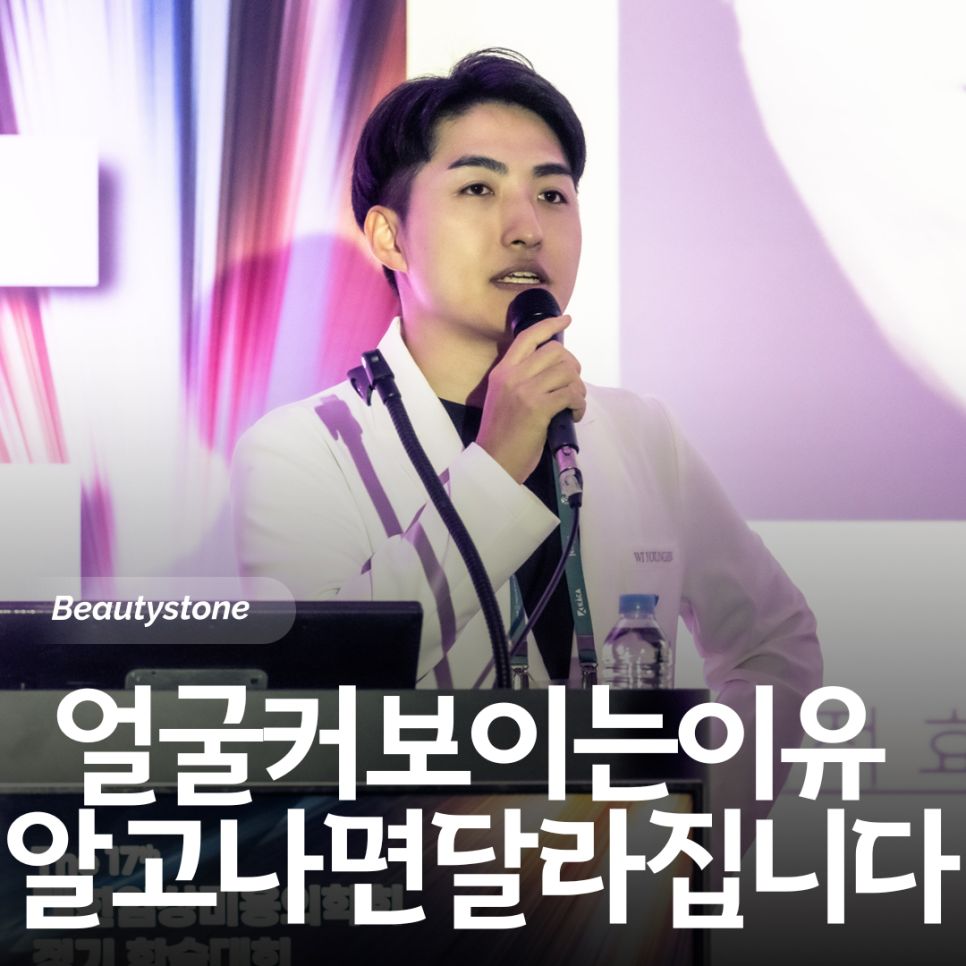
“Have you ever felt like your face suddenly looked bigger?”
When you look in the mirror,
it can seem like your face has gotten wider than before,
and in photos,
your face may look especially large.
It may feel like a change that cannot simply be explained
by saying you gained weight,
and in fact,
there can be several causes hidden behind it.
Today, focusing on how to make your face look smaller
and how to reduce facial empty space,
I’ll go over why a face can look bigger,
and how it can be improved,
one by one.
Why does your face suddenly look bigger?

Is it really just because of fat?
In many cases, the phenomenon of a face looking bigger
cannot be explained by weight gain alone.
Typical factors include:
🔥 Development of the square jaw muscle (masseter)
🔥 Habitually clenching the teeth, teeth grinding
🔥 Enlargement of the salivary glands and parotid glands
🔥 Reduced volume at the temples and hairline
These factors act in a way that
expands the outer outline of the face outward.
So even if you lose weight,
your face may stay the same,
or even feel wider.
Then how can you make your face look smaller?
Can it be done with lifestyle changes alone?
Even improving your habits alone
can be enough to control swelling to some extent.
🔥 Reduce salty foods → ease swelling
🔥 Stretch the jaw → relieve muscle tension
🔥 Correct your sleeping posture → help prevent asymmetry
🔥 Reduce caffeine and alcohol → decrease fluid retention
However, while these methods are effective for improving
“swelling,”
they have limitations when it comes to changing
structural changes that have already formed.
That is why, depending on the cause,
a more direct approach is often needed.

If a square jaw is your concern,
it is important to first check for teeth-grinding habits.
The habit of clenching your teeth without realizing it
continually stimulates the jaw muscles,
and as a result,
the jaw gradually becomes more developed,
changing in a direction that makes the face look wider.
In this case,
reducing the volume of the masseter muscle
through square jaw Botox
can be helpful.
Another easily overlooked area
is the salivary glands and parotid glands.
When these areas are developed,
the area below the cheekbones and the jawline becomes more prominent,
disrupting the overall contour
and making the face look larger.
In such cases,
you can use salivary gland Botox
to reduce unnecessarily enlarged volume,
and refine even the small muscles
to make the contour look clearer.
Then what exactly is facial empty-space reduction?
A small face does not simply mean
a face that is narrow in width.
The impression of face size changes depending on
how the empty spaces—such as the hairline,
temples, and chin tip—are arranged.
Many people worry,
“Won’t filler make my face look bigger?”
but in reality, the more balanced the proportions are,
the smaller the face appears.


It is the same principle as how a smooth egg-shaped face
looks much smaller and more refined
than an uneven peanut-shaped face.
Typical methods for reducing facial empty space include:
🔥 Hairline filler / correction for an M-shaped hairline
🔥 Temple filler
🔥 Chin tip filler
These procedures are not simply about filling in areas;
they should be understood as a process of
reorganizing facial proportions.
Another area many people worry about
is the double chin.
Even if the front view looks fine,
many people feel their face looks bigger because of the line under the chin
that shows in the side profile.
A double chin is not just a fat issue;
it becomes more noticeable when fat distribution is uneven
or when the boundary between the jawline and neck line is blurred.
In such cases,
you may want to consider a fat-dissolving injection.
In particular, the Double Slim injection
acts 집중적으로 on the fat layer under the chin,
helping to quickly refine the contour.
For about a week after the procedure,
swelling may occur,
but because the fat-reduction effect is quite clear,
satisfaction tends to be high.
What matters is not choosing just one procedure unconditionally,
but selecting an approach that matches the cause.
When the jawline becomes more defined,
not only does the whole face look smaller,
but the side-profile silhouette also changes
in a much clearer way.
In the end, facial size is influenced
more by proportions than by absolute size.
✔ If the forehead is wide, the face looks bigger
✔ If the chin is blunt, the face looks broader
✔ Conversely, when empty space is refined,
the face looks much smaller and more defined.
To summarize,
the key to making your face look smaller
is not simple weight loss,
but “cause analysis + proportion design.”
🔥 The reason a face looks bigger may be structure rather than fat.
🔥 Lifestyle habits are effective for improving swelling.
🔥 Reducing empty space such as at the temples, hairline, and chin tip
changes the impression.
🔥 A double chin may be a fat issue,
so a fat-dissolving approach may be needed.
A small face is not something you are only born with;
it can change enough depending on how it is designed.
Thank you for reading.
This was Kim Hawon.