Hello.
This is Beauty’s Doctor Kim Jang-ju.
Skin elasticity
graduallly decreases
as time passes.
During this process,
many people notice
fine lines appearing one by one
and that their skin texture has become looser
than before.
These changes are
not simply due to a lack of moisture,
but rather a natural aging process
that occurs as the collagen structure
inside the skin gradually weakens.
That is why, recently,
there has been growing interest in
lifting procedures that improve
not the skin surface,
but the ‘structure inside the skin.’
Among them,
the representative device that uses
radiofrequency (RF) energy
is Thermage.
In this post,
based on the questions frequently asked
during actual consultations at a dermatology clinic in the Ewha Womans University area,
I will organize the key things you should know before the procedure,
in a more detailed and natural way,
including the Thermage effect duration,
the level of pain,
and the possibility of side effects.
What is Thermage?
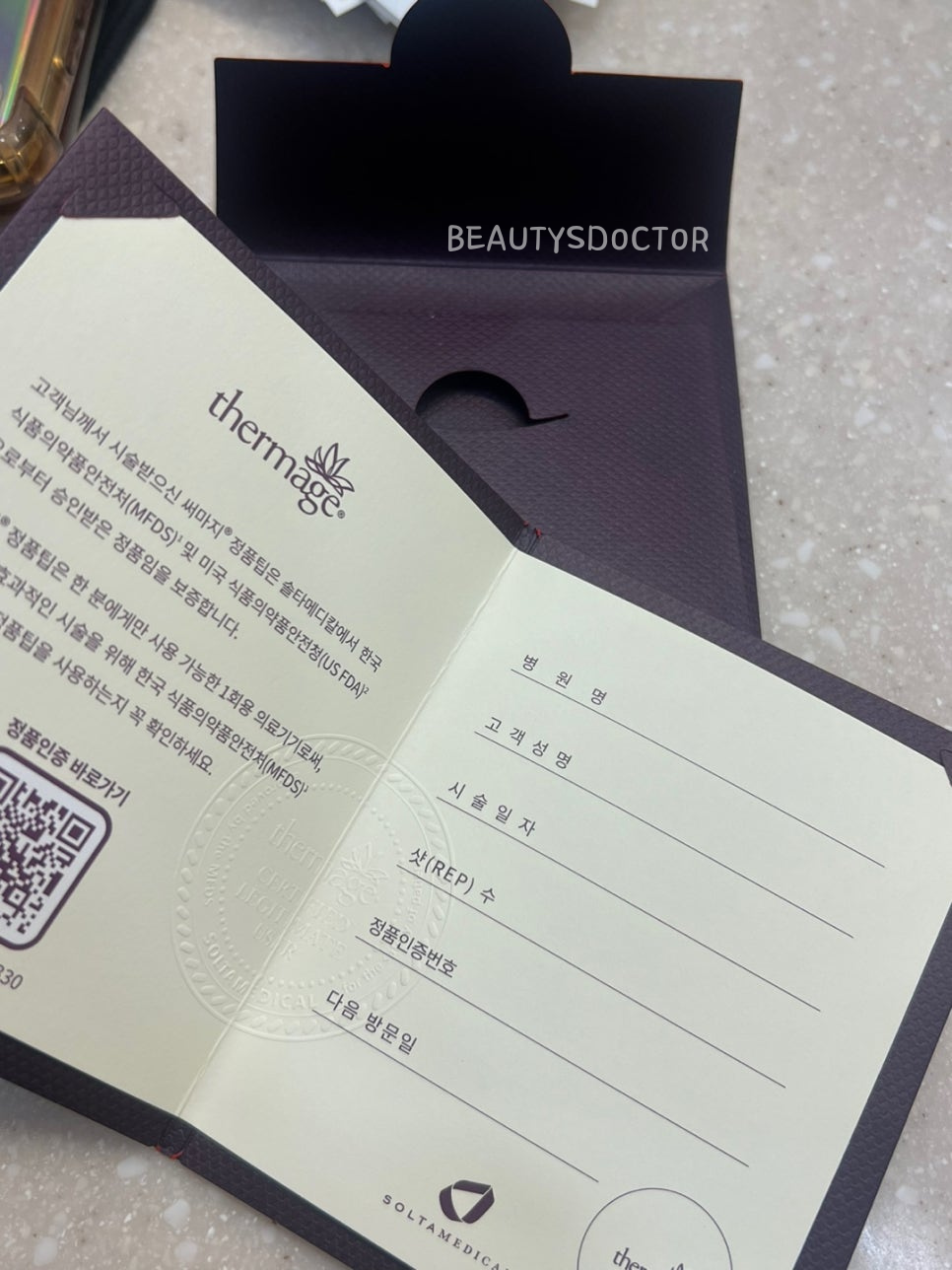
Thermage
uses radiofrequency (RF) energy
to deliver thermal stimulation to the dermis,
and through this process,
it is a tightening procedure
that induces collagen contraction and regeneration.
It is not a method that pulls the skin from the outside,
but rather a principle that strengthens
the structure inside the skin
and improves elasticity.
In other words, it is closer to the concept of
‘enhancing internal elasticity’
by increasing the density of the skin itself,
rather than simply lifting.
Because of this,
it is considered a suitable procedure for people who want to
improve skin texture and elasticity naturally
without drastically changing the facial line.
At dermatology clinics in the Ewha Womans University area as well,
we often recommend it as a non-surgical option
to people in the early stages of aging,
when skin elasticity has just begun to decline.
When does Thermage start to feel effective?


Many people ask,
“Does the effect appear right away?”
Thermage is a procedure that improves gradually over time,
rather than showing an immediate change.
This is because after the thermal stimulation,
new collagen needs to be generated
and reorganized.
Usually, about 2 to 3 months after the procedure,
changes in skin texture and elasticity
begin to be felt gradually,
and around 6 months afterward,
many people notice clearer improvement.
The duration of the effect varies by individual,
but on average it lasts about 1 year.
Because the changes are not abrupt
but improve little by little in a natural way,
it is important to watch the progress patiently
rather than feeling rushed.
At dermatology clinics in the Ewha Womans University area as well,
we explain this process of change in advance and thoroughly,
and we consider it important to provide realistic expectations.
How painful is Thermage?
The pain of Thermage tends to vary
depending on each person’s skin sensitivity
and the intensity of the procedure.
During the procedure,
as heat is delivered momentarily,
there may be a stinging or hot sensation.
However, in most cases,
if a numbing cream is applied sufficiently,
it can be performed at a tolerable level.
In particular,
compared with ultrasound lifting, which strongly stimulates
the fascial layer,
Thermage acts mainly on the dermis,
so the pain burden is relatively lighter.
At dermatology clinics in the Ewha Womans University area,
we take each person’s pain response into consideration
and proceed while carefully adjusting
the energy intensity and the number of shots.
Thermage side effects: is it a safe procedure?

Thermage is known as a relatively safe procedure,
but since it uses energy,
basic caution is necessary.
Commonly,
right after the procedure,
redness, mild swelling,
and a sense of heat may appear,
and in most cases,
these reactions naturally improve within a few days.
In rare cases,
if the energy is concentrated excessively,
skin irritation or a mild burn reaction
may occur,
but this is something that can be sufficiently prevented
depending on the practitioner’s skill
and the energy design.
Also, because Thermage does not destroy deep skin structures
but acts mainly on the dermis,
problems such as hollowing of the cheeks
or fat loss are very unlikely to occur.
At dermatology clinics in the Ewha Womans University area as well,
after thoroughly analyzing skin thickness, sensitivity,
and elasticity status before the procedure,
we place importance on the process of designing the energy
within a safe range.
Things to check before the procedure
Thermage is a procedure where the device’s performance matters,
but even more important is
a precise design that matches the individual’s skin condition.
By comprehensively considering skin thickness,
the degree of elasticity loss,
fat distribution,
and sensitivity,
where, how much, and with what intensity the energy should be delivered
is what makes the difference in results.
Also, after the procedure,
basic care such as sun protection,
avoiding excessive heat stimulation,
and minimizing skin irritation
must be carried out together
in order to maintain the effect more stably.
At dermatology clinics in the Ewha Womans University area as well,
we do not stop at the procedure itself,
but also guide patients through the post-procedure course
and maintenance care,
and we approach treatment with the goal of improving the overall condition of the skin.
Thermage is a tightening procedure that uses radiofrequency energy
to induce collagen regeneration inside the skin.
The effects appear gradually over 3 to 6 months,
and in many cases they last about 1 year.
The pain is relatively manageable,
and it can be sufficiently reduced through proper anesthesia
and adjustment of the settings.
Side effects are usually temporary,
but depending on the skin condition,
customized planning is important.
If you are considering Thermage,
it is most important to receive a thorough consultation
at a place that will think through the direction together
based on your skin condition.
If you have any further questions about a dermatology clinic in the Ewha Womans University area,
please feel free to ask.
This was Kim Jang-ju.