Hello,
This is Kim Ha-won from a dermatology clinic in Gangseo-gu.
These days, when consulting about beard hair removal at our Gangseo-gu dermatology clinic,
the first and most common question we get is:
“Will it hurt?”
In particular, many people are concerned about pain in sensitive areas
such as the chin and around the mouth.
In fact, beard hair removal tends to feel more irritating
than treatments on other areas,
so it is true that some level of pain can be involved.
However, in recent years,
a variety of technologies and devices have been developed
to reduce this pain,
and at the center of that are
the performance and design of laser devices.
Today, I’ll explain in a bit more detail
why pain occurs during beard hair removal,
and what factors you should check
to reduce that pain.
https://www.youtube.com/watch?v=ilJm8yc74L4
✨ Beard hair removal pain,
why does it feel worse?
The chin and area around the mouth are parts of the face
with especially dense nerve distribution.
That means the same stimulus can be felt more sensitively.
In addition, men’s beards tend to grow thick and deep.
Lasers work by targeting melanin in the hair follicle,
and the thicker and deeper the hair,
the more energy is needed,
which means the stimulus is delivered more strongly.
In other words, it is not simply because there is a lot of hair that it hurts,
but because of three key factors:
the depth of the hair follicle,
the thickness of the hair,
and the density.
Another important point is shaving habits.
Because the beard area is repeatedly shaved,
minor irritation accumulates over time,
and as a result, the skin barrier is often weakened.
When laser is applied in this state,
the skin may react more sensitively than usual,
and the pain can feel stronger.
As such, the pain from beard hair removal is not caused by a single factor,
but is the result of a combination of
skin structure,
hair characteristics,
and lifestyle habits.
🫢 Why does the area around the mouth
hurt especially much?
The area around the mouth is the part where pain is felt the most
during beard hair removal.
The reason is more straightforward than you might think.
The skin layer is thin,
nerves are densely concentrated,
and it is an area where stimulation has been repeatedly accumulated.
Even when using the same laser intensity,
it often feels sharper around the mouth
than on the cheeks or chin.
Also, the area around the mouth is
the part that is shaved most often.
Because of that, the skin is often more sensitive
and in a state where it can react easily even to small stimuli.
Therefore, for this area,
it is not enough to simply adjust the output.
A careful approach is needed that considers
cooling,
anesthesia,
and energy settings
all together.
🔧 To reduce pain
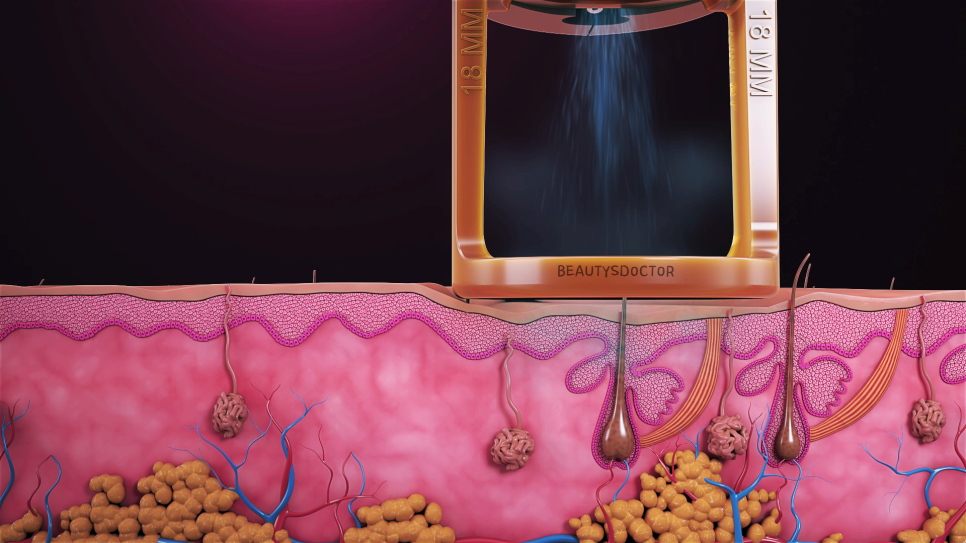
device factors to check
To reduce pain during beard hair removal,
it is important not just to look for a “good device,”
but to check how the device is designed.
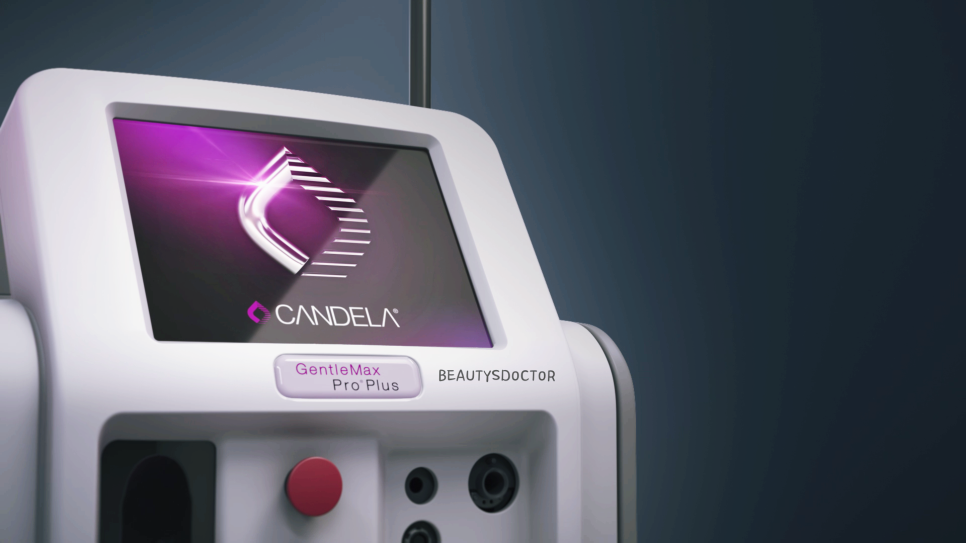
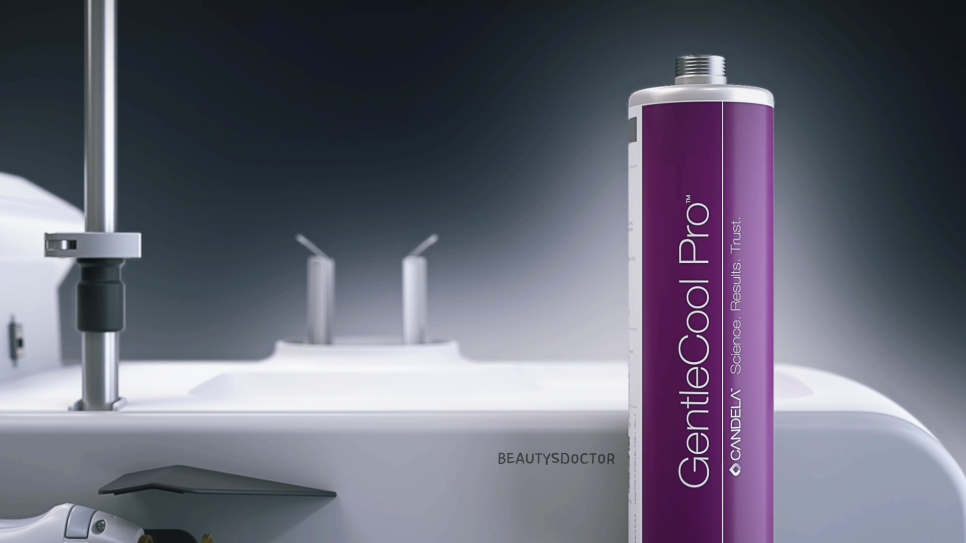
Using the commonly used GentleMax Pro Plus as an example,
there are three factors you should check.
1️⃣ Differences in cooling systems
GentleMax Pro Plus uses a DCD cooling system.
It sprays cooling gas immediately before and after laser emission
to quickly lower the skin temperature.
This process plays a very important role
in both pain relief
and reducing the risk of burns.
By contrast, air cooling systems
work by inducing cooling with air,
so the felt effect may be weaker
or some people may experience discomfort.
Ultimately, the difference in cooling methods
directly affects the pain felt during treatment.
2️⃣ Variety of spot sizes
It is also important whether the device allows
an appropriate spot size to be selected for each area.
Narrow and sensitive areas should be set smaller,
while wider areas should be set larger,
so that treatment can be performed efficiently
without unnecessary repeated passes.
As a result,
treatment time is reduced,
and pain is reduced as well.
3️⃣ Short pulse width
The time during which the laser delivers energy to the skin,
that is, the shorter the pulse width,
the less time heat remains in the skin,
which reduces pain.
GentleMax Pro Plus uses a short pulse width of 2 ms,
achieving both rapid energy delivery
and minimal skin damage.
💤 Can anesthesia
reduce pain?
In addition to the device,
there are enough ways to ease pain.
The most representative method is anesthetic cream.
It is applied for a certain period before the procedure
to dull skin sensation,
and it is especially helpful for people who are sensitive to pain
or for first-time treatments.
In some cases,
sedation anesthesia may also be used.
This method can make you feel almost no discomfort during the procedure,
but it is decided based on the medical team’s judgment
and prior consultation.
In practice, however,
beard hair removal usually takes a relatively short time,
so in most cases,
anesthetic cream alone is sufficient.
In other words, sedation anesthesia is not always necessary;
it can be flexibly chosen depending on each person’s pain sensitivity.
To summarize,
the pain of beard hair removal
is not a simple issue,
but the result of all of the following factors working together:
skin structure,
hair characteristics,
device performance,
and treatment method.
Therefore, if you are considering beard hair removal,
rather than comparing only the effectiveness,
it is important to also check
the cooling system,
device characteristics,
and anesthesia methods.
When consulting at our Gangseo-gu dermatology clinic,
after understanding these factors well before starting,
many people tend to be much more satisfied with the procedure.
Beard hair removal is
not simply a process of removing hair,
but a care process that improves both skin condition and appearance.
If you are considering beard hair removal at a Gangseo-gu dermatology clinic,
please be sure to get sufficient consultation
about devices that can manage pain
and a customized treatment plan.
Also, at our Gangseo-gu dermatology clinic,
we take into account each person’s skin condition, hair characteristics,
and pain sensitivity,
and we approach treatment so that it can be performed
more comfortably and safely.
Thank you for reading this long post.
This was Kim Ha-won.