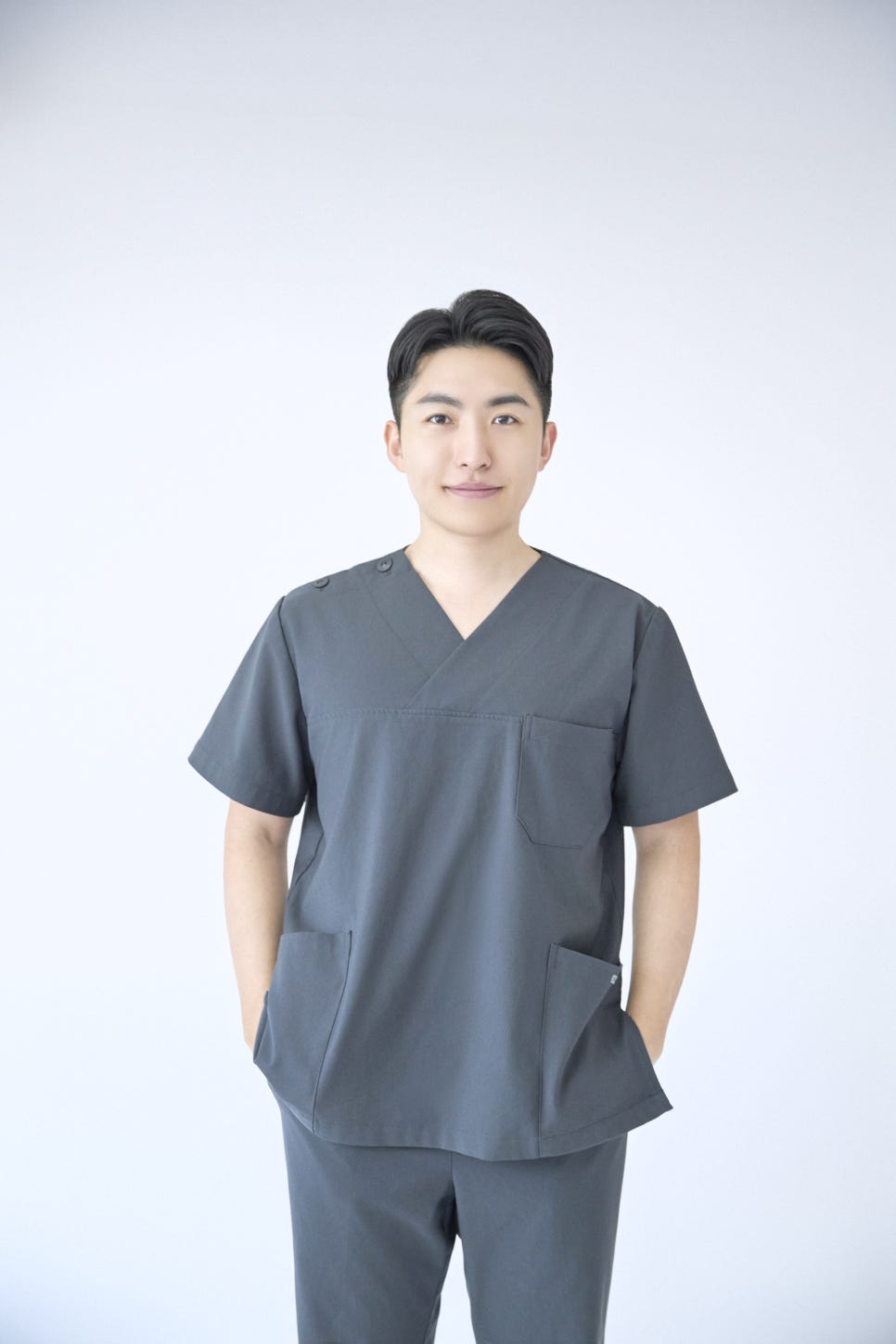
Hello.
This is Beauty's Doctor, Wi Youngjin.
When I consult with patients about Radiesse,
I get the same questions over and over.
"Is Radiesse really a collagen injection?"
"How is it different from Sculptra?"
"Can it cause side effects?"
"Does it also have a volume effect?"
Unlike a simple filler,
Radiesse is a biostimulator treatment
that induces collagen production.
In other words, rather than a procedure that fills immediately,
it is closer to a collagen-inducing treatment
that gradually improves the skin’s internal structure.
So if you understand the ingredients and mechanism of action,
you can understand its effects more accurately.
Today, I’ll organize everything about Radiesse
based on the questions commonly asked in the clinic,
one by one.
- Is Radiesse really a collagen injection?
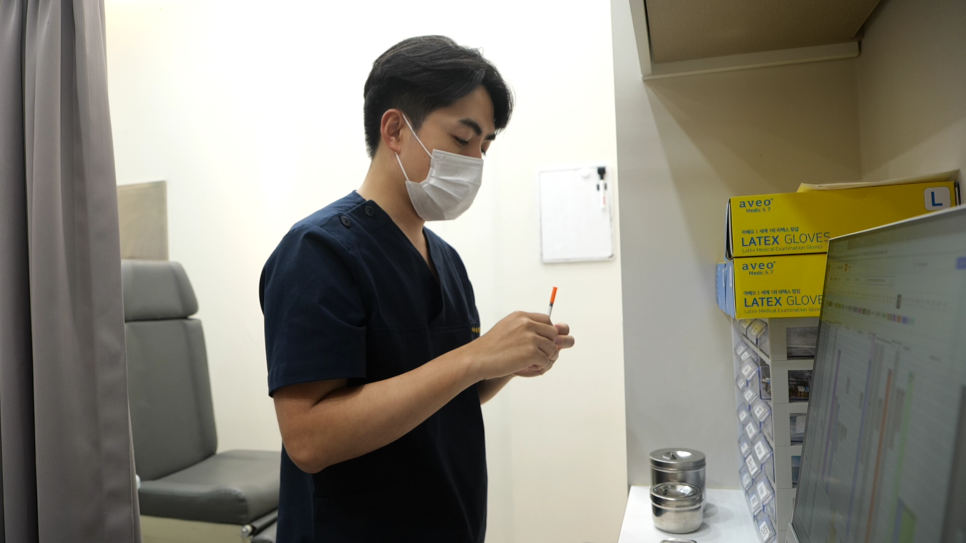
Radiesse consists of two ingredients:
CaHA + CMC.
CaHA (Calcium Hydroxyapatite): about 30%
CMC (Carboxymethyl Cellulose): about 70%
CaHA is a calcium-based mineral component
also found in human bones and teeth.
These particles stimulate fibroblasts
inside the skin,
leading to
collagen production, increased elastin,
and improved skin density.
CMC is a gel-form carrier
that creates volume immediately after treatment
and is gradually absorbed over time.
In other words:
Initial volume → CMC
Lasting firmness → CaHA
These two components
work together.
- Is Radiesse a treatment that gives nutrition to the skin?
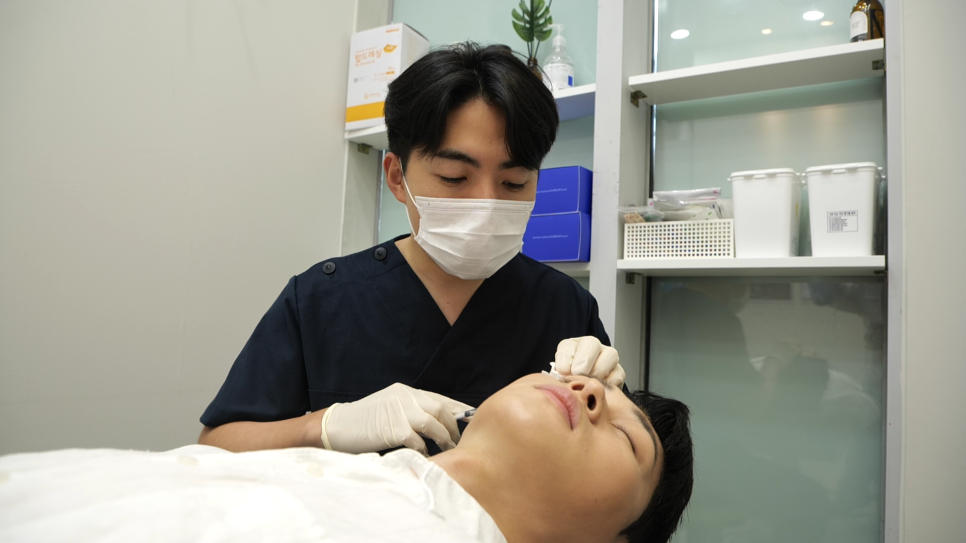
Radiesse is not a treatment that directly adds nutrition;
it stimulates the skin to produce collagen on its own.
CaHA particles inside the skin induce
increased type 1 collagen, increased type 3 collagen,
and elastin production,
which leads to
better skin firmness, improved skin density,
and correction of hollowness.
In other words, it does not simply fill;
it works by rebuilding the skin’s structure.
- Where is the calcium component made?
Radiesse’s CaHA is
a bioceramic particle synthesized in a laboratory.
It is manufactured into a structure similar to the human body
using calcium, phosphorus, oxygen, and hydrogen.
It has high biocompatibility
and is gradually broken down over time.
That is why it does not leave a lingering foreign-body sensation
and has the characteristic of being naturally replaced
by a collagen structure.
- Why is CMC in gel form?
CMC is a cellulose-based material
with a highly viscous gel structure.
This gel form helps fix the particles in place,
maintain volume,
and distribute them evenly.
It creates immediate volume right after treatment,
and over time the CMC is absorbed,
leaving only the CaHA particles behind
to induce collagen production.
So both an immediate effect and a delayed effect
appear at the same time.
- What are type 1 and type 3 collagen?
Collagen is the key protein
that maintains the skin’s structure.
In particular, in the skin,
type 1 collagen
type 3 collagen
are important.
type 1 collagen → maintains firmness
type 3 collagen → skin density
Radiesse has the characteristic of promoting
both of these collagen types.
That is why it can improve fine lines,
correct hollowness,
and increase firmness.
- Is Radiesse developed by researchers?
Products like Radiesse are developed jointly
by biomaterials researchers, medical device development teams,
and bioengineers.
Particle size, degradation speed, and stability
are the three key criteria.
If the particles are too large, there is a risk of nodules.
If they are too small, the effect may be reduced.
That is why
designing the particles precisely is important.
- What are proteoglycans and neovascularization?
During collagen production,
increased proteoglycans and new blood vessel formation
also occur.
Proteoglycans are structures that help retain moisture,
and new blood vessels are structures that help tissue recovery.
As this process progresses,
it can lead to increased skin density, improved skin firmness,
and a better-looking skin tone.
- Is Radiesse similar to Sculptra or Juvelook?
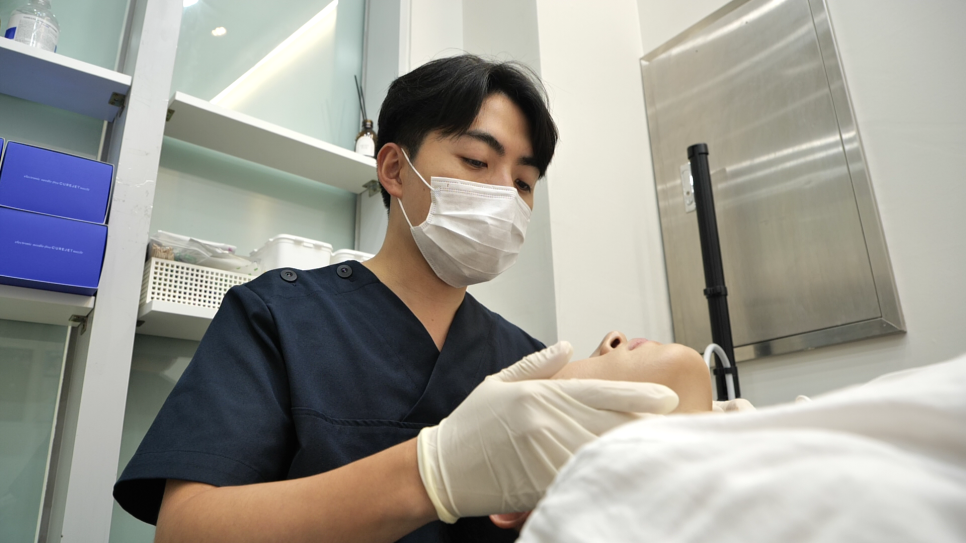
All three treatments
are collagen-inducing procedures.
What Radiesse, Sculptra, and Juvelook have in common
is collagen stimulation, gradual improvement,
and natural-looking volume.
The differences are particle structure, speed of effect,
and degree of volume.
Radiesse has the characteristic of
both immediate volume and collagen production
appearing together.
- Does Radiesse have side effects?
The main side effect is nodules.
If too much is injected into one area
or if it is not evenly distributed,
clumping can occur.
That is why layered injection,
even distribution,
and an appropriate dose are important.
In most cases, this is something that can be prevented
through proper treatment design.
- Can Radiesse cause changes in skin color?
In thin areas such as under the eyes,
as collagen increases,
visibility of blood vessels may decrease,
and the skin tone may appear brighter.
Rather than being a side effect,
this is a visible change caused by increased skin density.
Radiesse is
a CaHA-based collagen-inducing treatment.
Immediately after treatment,
CMC creates instant volume,
and afterward CaHA induces collagen production,
leading to gradual improvement in firmness.
This mechanism of action
can be considered similar to collagen-inducing treatments
such as Sculptra and Juvelook.
Therefore, more than excessive volume,
even injection design is important,
and the result depends on tailoring the procedure
to the skin thickness and treatment area.
Thank you for reading this long post.
This was Wi Youngjin.