
Hello.
This is Beauty's Doctor, Wi Yeong-jin.
When I conduct pico toning consultations,
I get a lot of similar questions.
"How many pico toning sessions do I need for it to work?"
"Will it also remove melasma?"
"Will scabs form?"
"Are there any side effects?"
Pico toning is
not a laser that removes things aggressively,
but rather a laser treatment that
reduces pigment gradually
while minimizing skin damage.
So understanding the principle
and treatment method is important.
Today, I’ll organize the details
about pico toning one by one
based on the questions I usually get in the clinic.
- Does pico toning remove pigment based on its principle?
Pico toning uses a method in which
high energy is delivered for an extremely short time.
When this energy is delivered
to melanin pigment,
the pigment particles are broken down into finer pieces.
To put it simply, it delivers strong energy
for a very short time,
breaking large pigment particles
into smaller ones.
After that, through inflammatory responses,
immune responses,
and the action of white blood cells,
the broken melanin is gradually removed.
This process
is similar to the principle of tattoo removal.
However, pico toning
is performed repeatedly with mild intensity
while minimizing skin damage.
- Is 10 sessions really necessary?
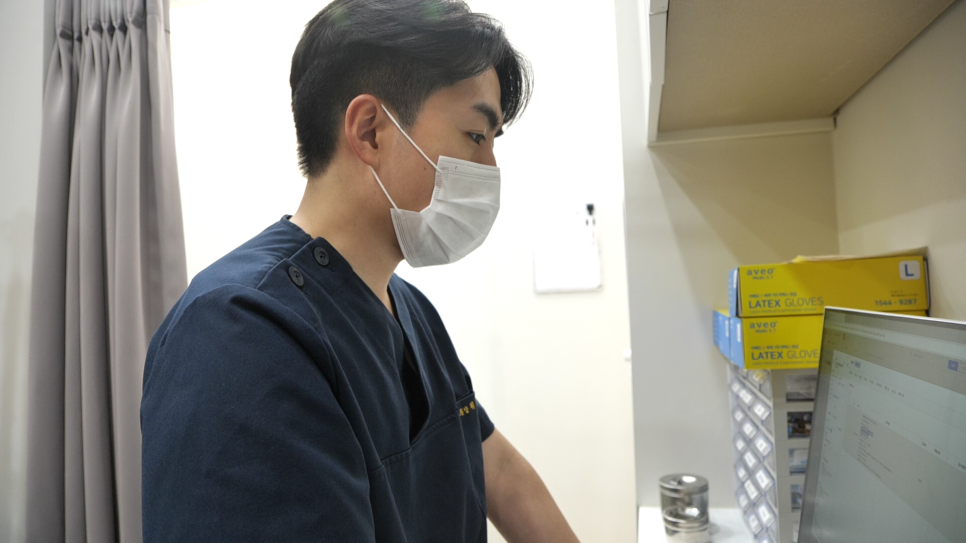
Pico toning is
not a procedure that removes pigment all at once,
but a method that reduces pigment little by little
through multiple sessions.
For example, if one session reduces pigment by about 10%,
then repeated sessions
yield a cumulative effect.
So the changes often appear in this pattern:
3 sessions → tone improvement
5 sessions → pigment reduction
10 sessions → overall improvement
The number of sessions can vary
depending on the depth of pigmentation in each person.
- What is the treatment interval?

Considering the skin recovery period,
it is usually performed at 7- to 10-day intervals.
The time needed for skin recovery
is about one week.
Young skin
faster skin regeneration
→ 5-7 days
Skin is thin
melasma is severe
→ 10 days
It may be adjusted like this.
Too short of an interval
can instead become irritating.
- Is it only for melasma?
Pico toning is used not only for
melasma treatment alone,
but also for freckles, lentigines,
dermal pigment,
and combined pigment treatments.
In particular, melasma is often not a single pigment condition,
but rather a complex structure involving
epidermal + dermal layers,
so the mild, repeated pico toning approach
is often appropriate.
- How does the effect appear?
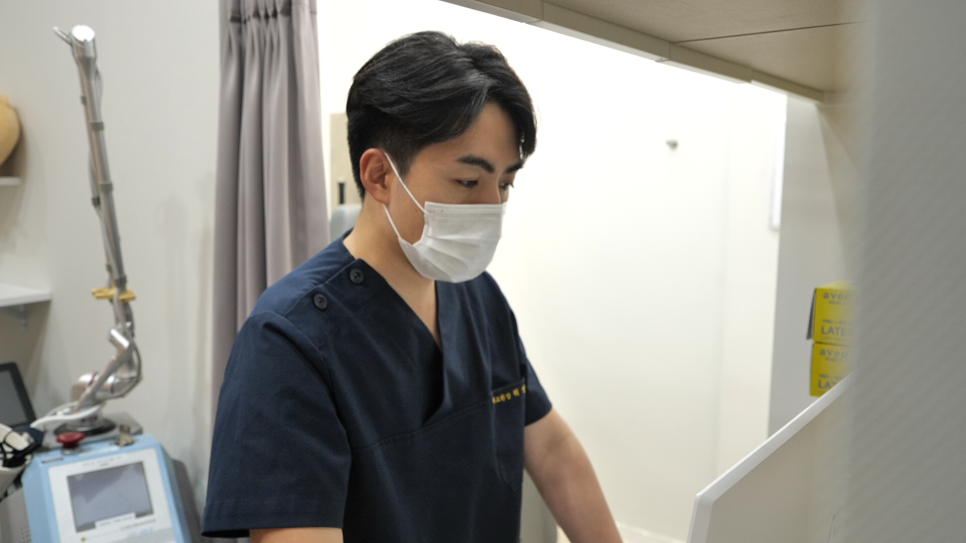
Pico toning is characterized by gradual improvement
rather than immediate results.
As the number of sessions accumulates,
skin tone improves, pigment decreases,
and blemishes become less noticeable.
It is a change in which the overall skin
becomes gradually brighter.
- How much downtime is there?
Downtime is relatively short.
Immediately after the procedure,
redness and stinging may appear.
In most cases, it subsides within a few hours.
The skin recovery period
is about 5 to 10 days.
- Does it hurt a lot?
The pain is not severe.
It is often described as a tingling sensation or warmth.
In many cases, it can be performed without anesthesia.
- Do I have to use moisturizer?
After pico toning,
moisturizing is important.
Because the skin barrier
is temporarily weakened,
adequate hydration is needed.
An emollient-type moisturizer is good.
Atopic skin moisturizers and barrier creams
can also help.
- Can it be combined with other procedures?
Combination treatment is also possible.
It is sometimes performed together with vascular lasers
and tone-improving lasers.
For skin boosters,
Rejuran and water glow injections
may also be combined.
The combination varies
depending on the skin condition.
- Can I wear makeup after pico toning?
Makeup is possible immediately after the procedure.
However, strong rubbing and irritating cleansing
should be avoided.
Only light makeup is recommended.
- Are there side effects from pico toning?
If excessive energy is used,
there is a possibility of increased inflammation,
pigmentation, and worsening melasma.
That is why a low-energy, repeated-treatment
approach is important.
- Will scabs or flakes form?
Pico toning causes almost no damage
to the skin surface.
So scabs and flaking
almost never occur.
It is a laser that selectively targets melanin.
Pico toning is
a laser treatment that finely breaks down melanin pigment.
It delivers strong energy
for a very short time,
fragmenting pigment particles,
and the melanin broken down in this way
is naturally eliminated over time.
With this method,
instead of removing it strongly all at once,
improvement appears gradually
through repeated sessions.
Usually, the treatment interval is
set at 7 to 10 days,
considering the skin recovery period,
and because there is almost no damage to the skin surface,
scabs do not form and downtime is relatively short.
Also, with pico toning,
rather than removing pigment all at once with strong energy,
it is important to perform repeated treatments
at a moderate intensity.
In particular, it is used not only for melasma and blemishes,
but also as an appropriate method for treating combined pigmentation
that includes dermal pigment.
What is important in pico toning is not simply
completing a set number of sessions,
but designing the energy and treatment plan
to match the skin condition.
Because the type and depth of pigment,
as well as skin sensitivity,
can change the appropriate intensity and interval,
providing personalized treatment based on the current skin condition
leads to more stable results.
If you are considering pico toning,
it is best to establish a step-by-step treatment plan
while taking your individual pigment condition
and skin response into account.
If you have any further questions,
please leave them in the comments,
and I will explain them in detail based on clinic standards.
Thank you for reading.
This was Wi Yeong-jin.