Hello,
This is Beauty’s Doctor, Wi Young-jin.
When consulting about Shurink,
there is one question I hear very often.
“Why are the results different even though it’s the same Shurink?”
“I didn’t really see much effect.”
Even with the same device,
the reason the results feel different
is more clear than you might think.
It is not simply a problem with the machine,
but a difference in the treatment method and design
that leads to different outcomes.
So today, I’ll explain in a little more depth
why Shurink results can differ
and what the actual clinical standards are.
- Why results differ even with the same Shurink
Shurink is not simply a procedure
that fires a set number of shots.
The factors that determine the result
can be divided into three main parts.
The first is the energy setting,
the second is tip selection,
and the third is the
“depth of the layer” where the energy is delivered.
Even with the same number of shots,
if the energy is weak, the effect may be reduced,
and conversely, if it is too strong,
it may only increase pain or irritation.
Also, depending on whether it acts precisely on
the skin layer, fat layer, or SMAS layer,
the direction and intensity of lifting
can change completely.
2. In these cases, Shurink is not recommended
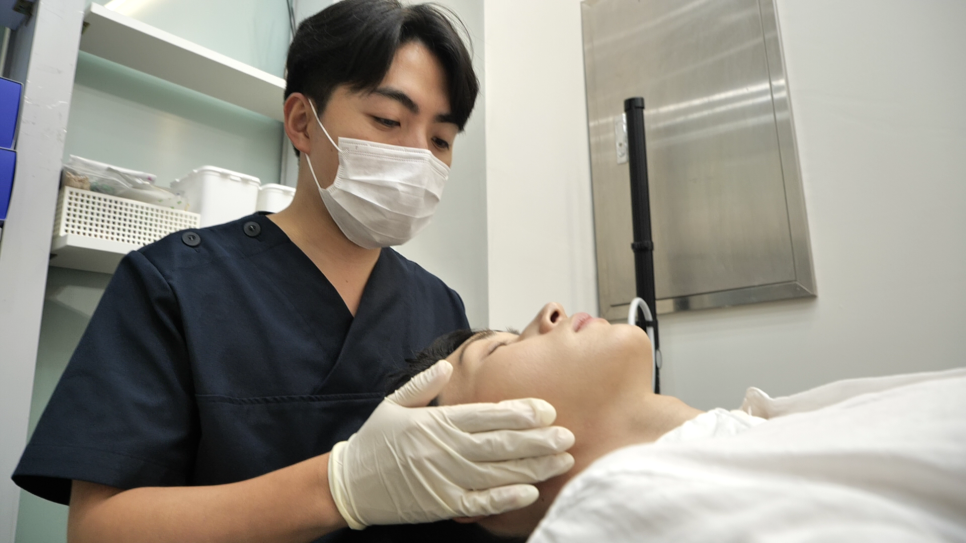
Shurink
is not a good procedure in every case.
In particular, it should be approached more carefully
when there is little facial fat.
If lifting is performed when volume is lacking,
rather than making the line look neater,
the hollowed impression may become more noticeable.
Therefore, if the jowls are not large
or the amount of fat is low,
it is better to first consider
volume supplementation or another approach
rather than lifting,
which can lead to a more natural result.
3. The skin condition we look at first during consultation
During a Shurink consultation,
we do not simply look at sagging alone,
but assess the skin condition
from multiple angles.
Elasticity, thickness, fat volume,
and the presence of fine wrinkles
must all be judged together
to select the appropriate tip.
Shurink includes
Derma Shurink, Eye Shurink,
and several tips divided by depth.
In cases with many fine wrinkles,
we use Derma Shurink, which targets the skin layer,
to prioritize improving skin texture.
4. Why combination treatment is recommended over a standalone procedure
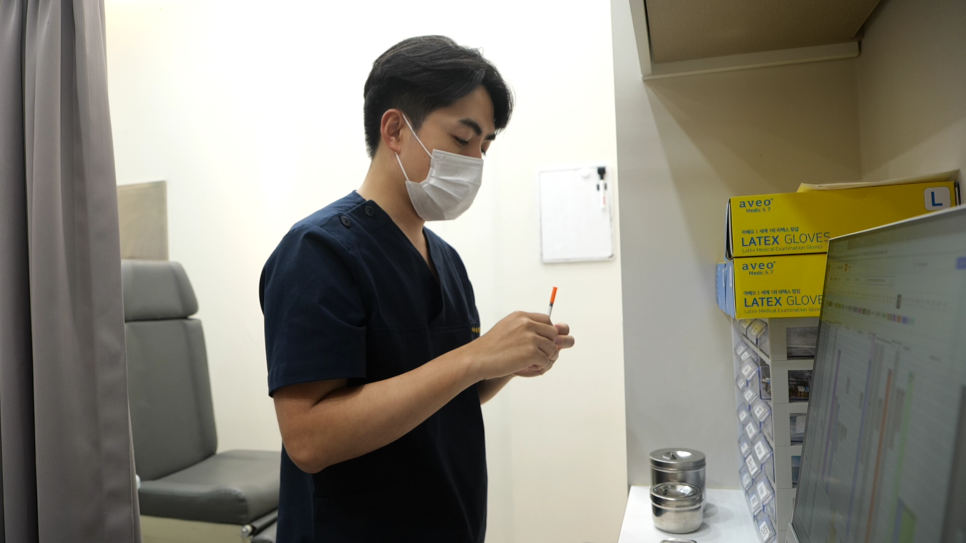
In actual practice, compared with Shurink alone,
combination treatments are performed much more often.
The reason is that
the causes of facial sagging are not limited to one.
Because muscle, fat, and skin
all work together,
it is important to combine treatments
that match each factor.
For example, if the muscles are well developed,
Botox can be used to reduce strength,
and if there is a lot of fat,
DCA ingredients can be used
to reduce unnecessary volume.
When combined in this way,
it is possible to create a much more refined contour
than with lifting alone.
5. The standard for saying Shurink worked well
The effect of Shurink is
more accurately judged by
“how much it has been refined”
rather than “how much it has been pulled up.”
In particular, if unnecessary volume is reduced
and the borders become clearer
in the jowl area, below the cheekbones,
the nasolabial fold area, and the double-chin area,
it can be considered a good result.
Also, not only from the front but also from the side,
a change that brings out the jawline
is an important criterion.
6. The most common misconception: sunken cheeks
Many people worry that
when they get Shurink,
their cheeks will become sunken.
However, in most cases,
this is not a problem with the procedure itself,
but rather an issue with
area selection and depth settings.
In particular, if lifting energy is applied to areas
that should preserve volume, such as the back of the cheeks,
sunkenness can occur.
Therefore, knowing “which areas to avoid”
is an important factor that determines the result.
7. Will increasing the number of shots improve the effect?
The number of shots is one of the factors
that affects the result.
Within a certain range,
increasing the number of shots
can be a way to stably improve the effect.
However, it is not about firing more shots blindly,
but about distributing them evenly
to the necessary areas,
which is much more important.
In other words, more important than the number of shots is
“where and how they are used.”
8. Differences in the purpose of Shurink by age group
The purpose of Shurink
changes depending on age group.
In relatively younger age groups,
the focus is on contour refinement and line improvement,
while in older age groups,
the need for fine wrinkle reduction
and skin elasticity improvement becomes greater.
In this case,
the proportion of Derma Shurink,
which acts on the skin layer,
becomes more important.
9. The biggest reason satisfaction differs
The reason satisfaction with Shurink differs
is simpler than you might think.
It comes down to whether the procedure touched
an area that should not be treated.
In particular, areas like the back of the cheeks,
where sunkenness should not occur,
must be avoided.
The judgment made here directly affects
not only the result
but also satisfaction with the procedure.
10. My standard approach to Shurink design
If I were to receive the procedure myself,
I would first use a 4.5 mm depth
to perform lifting 중심ed on the jawline and cheekbones.
After that, as needed,
I would additionally design treatment at a shallower depth
to improve the skin layer and fine wrinkles.
The key is not simply to pull the face upward,
but to refine it in a three-dimensional way.
Shurink is not just a simple lifting procedure,
but one in which energy, depth, and design
work together in combination.
Even with the same device,
results can differ 충분히 depending on
how it is designed.
Therefore, if you are considering the procedure,
I recommend checking first
“what 기준 it uses for the treatment”
rather than the number of shots or the price.
Thank you for reading this long post.
This was Wi Young-jin.