A forehead shape is not something you are born with
— it can be designed
Hello.
This is Wi Youngjin from Paju Dermatology Clinic.
Consultations for forehead filler
have been increasing quite a bit lately.
"My forehead is flat, so it feels stuffy."
"My forehead is narrow, so my face looks bigger."
"From the side, my forehead looks too sunken in."
I’ve heard these concerns so many times.
The forehead takes up a much larger part of
how the whole face is perceived than people expect.
But accurate information about forehead filler
isn’t that easy to find.
So I organized the questions I hear most often,
one by one.
✅ 1. What ingredients are used in forehead filler?
For people with firmer forehead skin,
we shape it with a slightly firmer filler.
On the other hand, for people with softer skin,
we use a softer filler
so that the forehead looks very round and natural.
Rather than filling the entire forehead,
we design it by filling only the sunken areas
and areas that lack volume.
Choosing a filler suited to the skin condition
is the key to a natural result.
✅ 2. How does the design change depending on face shape?
Paju Dermatology Clinic’s forehead filler design
is decided not by looking at the forehead alone,
but by considering the hairline as well.
If someone has a narrow forehead,
we add volume so the forehead looks larger overall,
and if the outer sides of the forehead are narrow,
which can make the face look trapezoid-shaped,
we fill the temple area
to make the forehead appear wider horizontally.
By considering curvature, dimension,
and left-right balance,
our goal is to create the most natural shape
for each person’s face.
✅ 3. What are the possible side effects
and how are they managed?
The side effect that requires the most caution
with forehead filler is pressure on blood vessels.
We take plenty of precautions in advance
to prevent this from happening,
but because pressure symptoms may still occur,
we do the procedure in two sessions
rather than injecting a large amount at once.
As the tissue gradually adapts,
this approach leads to a more natural
and safer result.
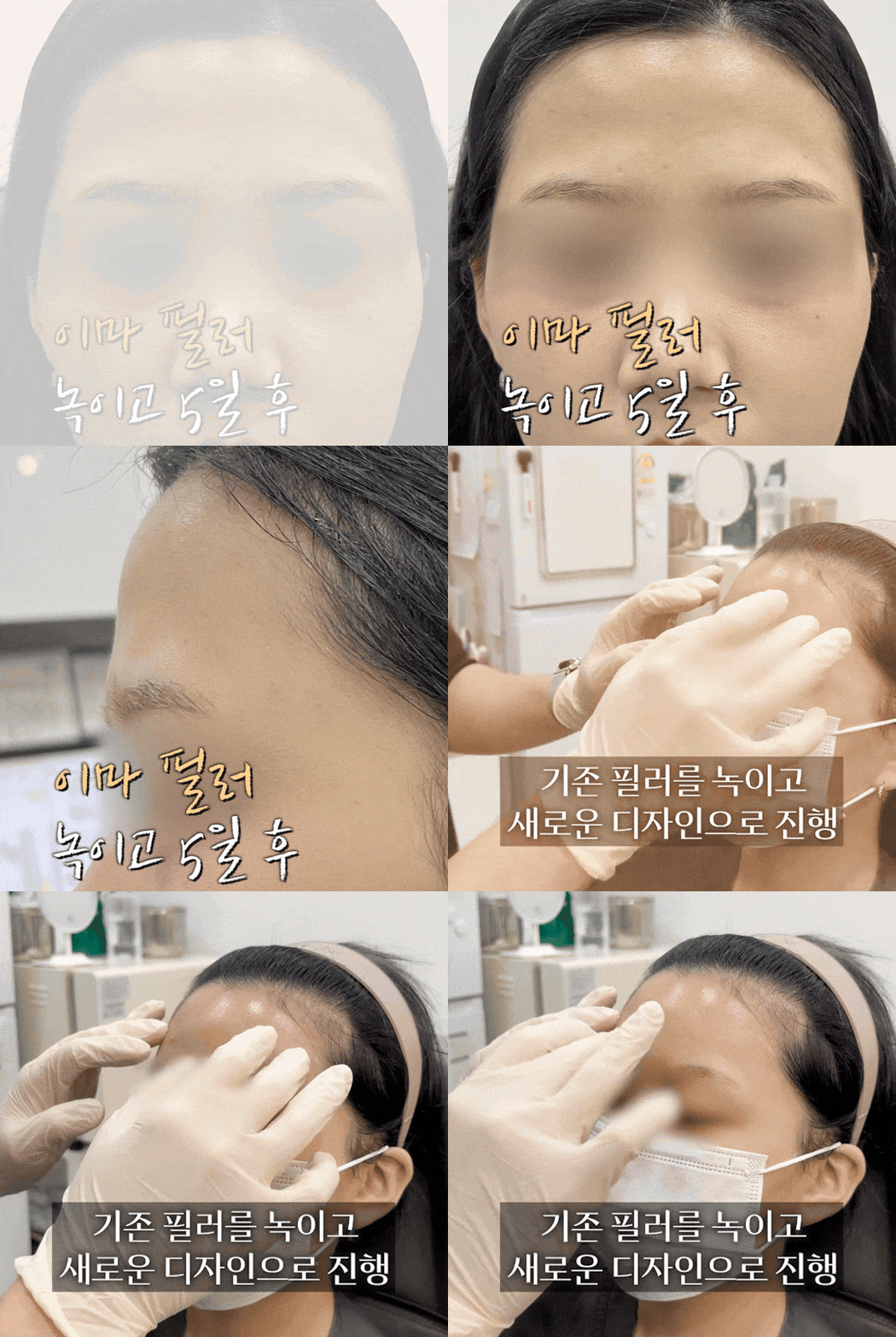
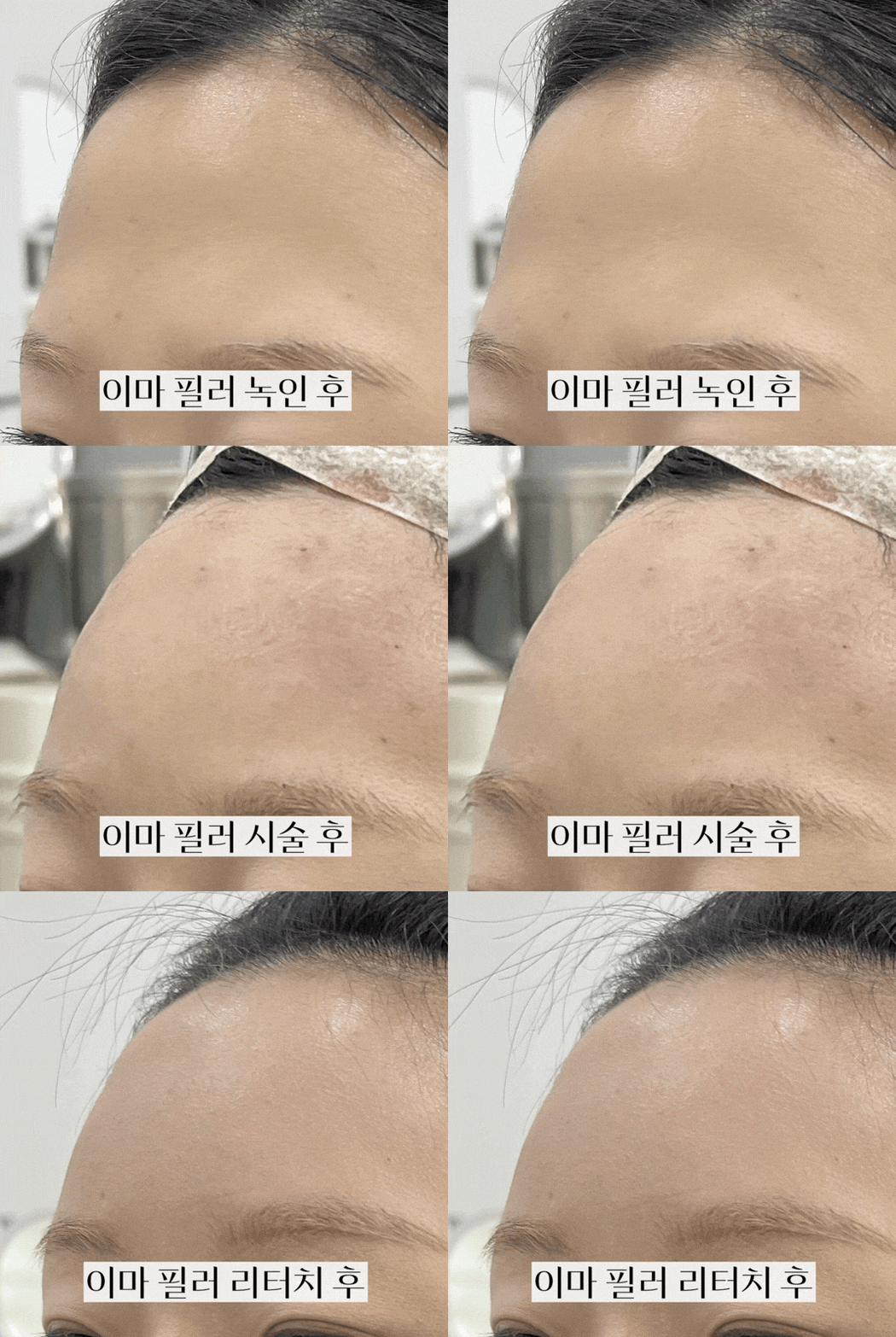
✅ 4. How is retreatment done after the filler is absorbed?
Forehead filler tends not to be absorbed
in very large amounts.
Still, if you do a touch-up after about a year,
you can get results that are much more satisfying
than the first procedure.
Because we are simply adding a small amount
on top of the parts that remain,
the burden of retreatment is not very high.
✅ 5. Can the desired image and
the actual result be different?
In most cases, we can create the direction
that you want.
However, there are cases where the result does not turn out well,
and those are skin types that have frequently had
scars or acne.
That is because if the skin tissue is uneven,
the filler has difficulty settling evenly.
In such cases,
if you let us know during the consultation,
we will set up a treatment plan accordingly.
✅ 6. How do you avoid blood vessels during the procedure?
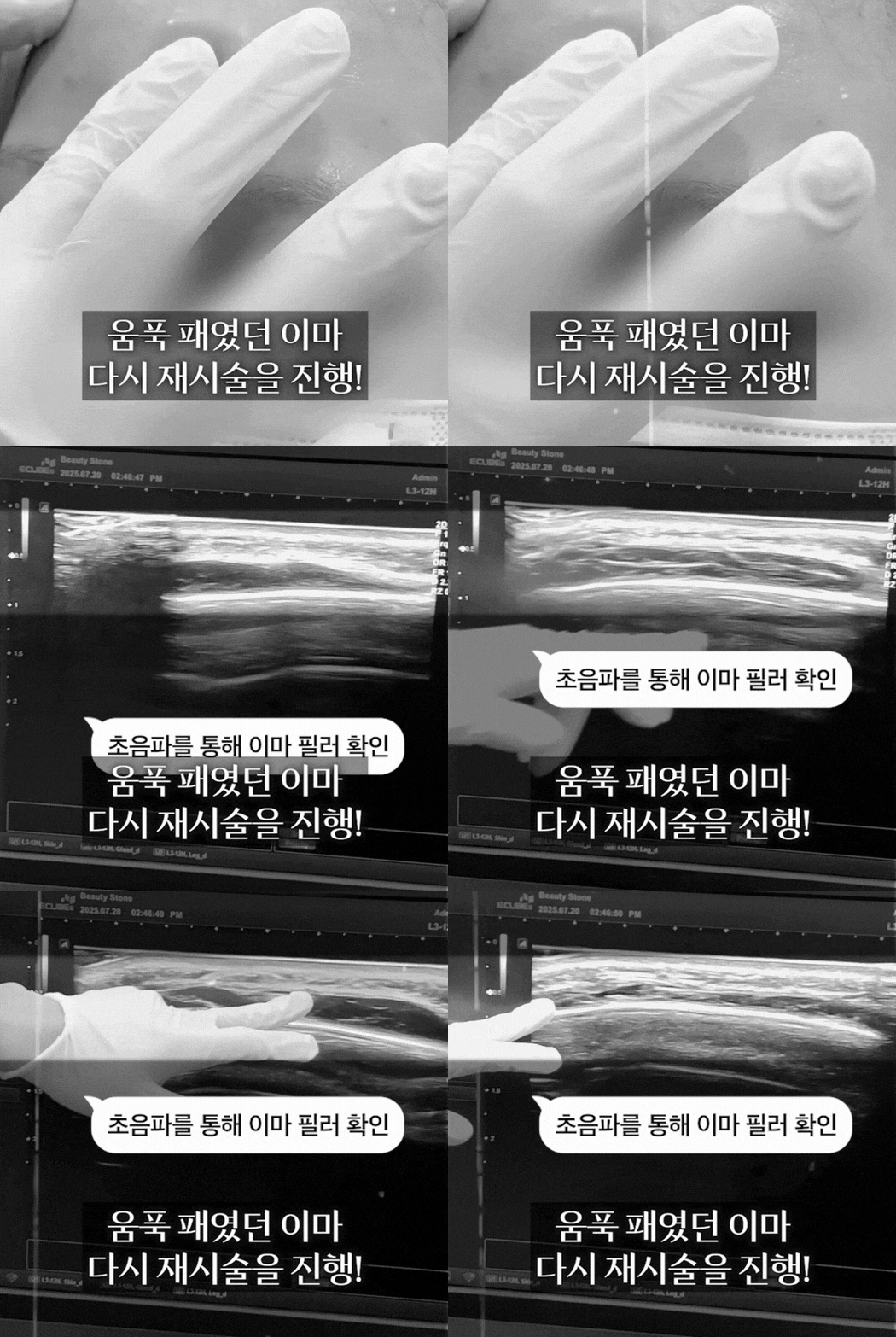
We continuously check the distribution and variation
of blood vessels with ultrasound.
Because the location of blood vessels on the forehead
varies slightly from person to person,
ultrasound confirmation is especially important in this area.
In addition,
we use a blunt-tipped cannula
to inject safely without touching the blood vessels.
Ultrasound confirmation + cannula procedure,
these two are the core of
forehead filler safety at Paju Dermatology Clinic.
✅ 7. Which layer of the skin is forehead filler injected into?
The main goal is to fill the deep layer
beneath the muscle.
The deeper the fill,
the more naturally the contour is formed.
Think of the difference between covering something
with a thin blanket versus a thick blanket.
Just as a thick blanket covers more evenly and smoothly,
the deeper and more sufficiently it is filled,
the more naturally the contour comes to life.
However, if the skin is sunken like a scar,
we add a small amount of extra injection
into the upper layer of the subcutaneous fat
as a supplement.
✅ 8. Does the result and safety differ
depending on injection depth?
The deeper it is, the better the result.
When it is filled in the deep layer,
the contour looks more natural
and there is no issue of the surface looking bumpy.
In terms of safety as well,
deep-layer injection is safer because it is farther away
from the superficial blood vessels.
✅ 9. How is the amount of forehead filler determined?
If the whole forehead needs to be widened,
a larger amount is needed,
but if only the deficient areas are being filled,
a smaller amount is enough.
How much to fill is decided after confirming
the current forehead condition and the desired result
through consultation at Paju Dermatology Clinic.
It is not good to inject a lot unconditionally;
the key is to inject only as much as is needed,
accurately.
✅ 10. In an emergency blood vessel occlusion,
how do you respond?
Fortunately, I have
not experienced blood vessel occlusion.
But we are always prepared.
If an emergency occurs,
the basic protocol is immediate administration of
hyaluronidase (hyalase) and massage
to quickly dissolve the filler
and restore blood flow.
Hyalase is always prepared
in the procedure room at Paju Dermatology Clinic.
✅ 11. Does repeated treatment cause changes in the tissue?
With repeated procedures,
the tissue feels a little firmer
and more hydrated.
This is not a bad change;
it means collagen production is being stimulated,
which makes the skin itself more elastic.
However, rather than repeating it carelessly,
it is important to proceed at appropriate intervals
based on the absorption cycle.
Forehead filler is
not simply a procedure that adds volume.
It is a treatment that considers the hairline,
face shape, and skin condition to design
the forehead that best suits the person.
We proceed safely with ultrasound confirmation
and the use of a cannula,
and naturally by choosing a filler suited to the skin condition.
If you have any questions,
feel free to ask anytime through the comments
at Paju Dermatology Clinic! 😊
Thank you for reading this long post.
This was Wi Youngjin.