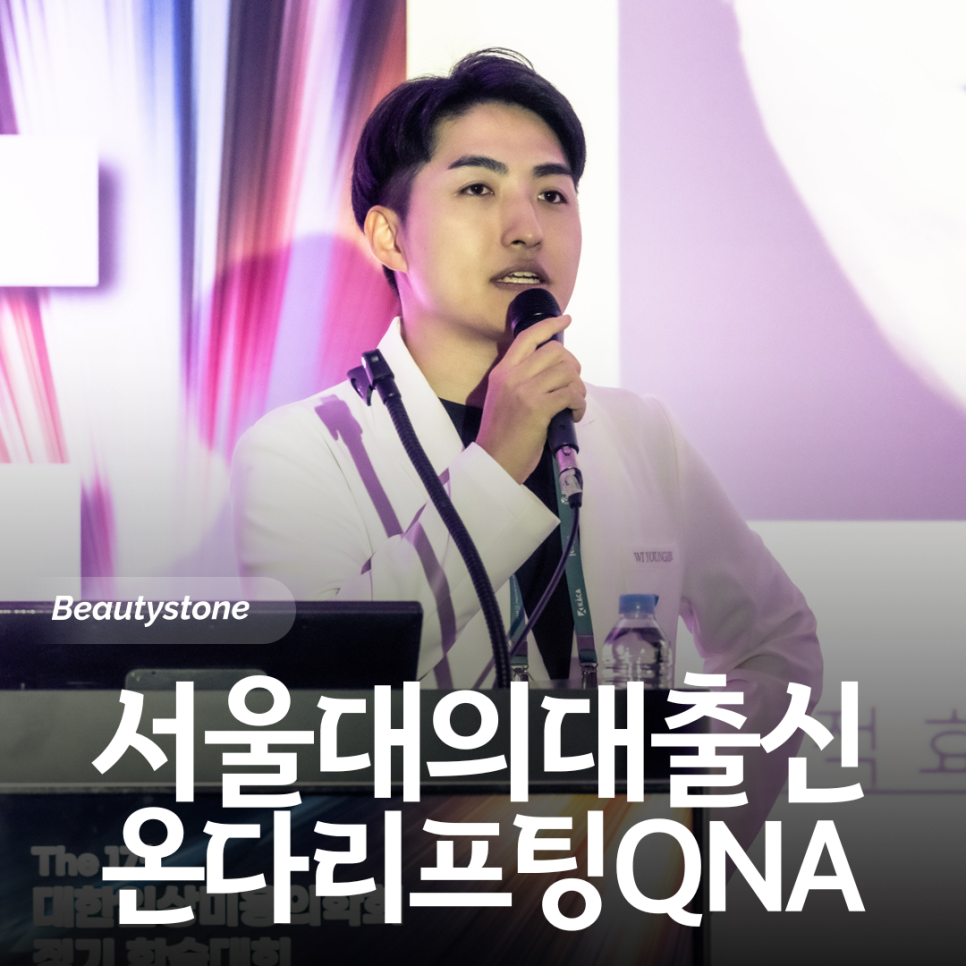
Cold and hot, but the results are definite
— The real story of Onda lifting
Many people are curious about Onda lifting,
so I organized everything myself, one by one.
“Does Onda really hurt?”
“Does it work even if you do it just once?”
“Are there any side effects?”
I get questions like these very often.
I’ll tell you everything honestly.

✅ 1. How painful is Onda lifting?
In one word,
it feels cold and hot at the same time.
The tip itself is cooled, so it feels cold,
while the deeper inner layer
receives thermal energy and feels hot.
Because these two sensations are felt at the same time,
it may feel a little unfamiliar at first.
Some people say it doesn’t hurt at all,
while people who especially struggle with heat
may describe it as painful.
There are individual differences.
That said, compared to other lifting procedures,
it is definitely less painful.
In particular, compared with InMode FX mode,
it is much less painful.
By adjusting the moving speed
and the amount of energy delivered (W),
we can minimize discomfort.
✅ 2. How should before-and-after photos
be taken so the results are clearly visible?
Onda lifting is a procedure that shows good results mainly around the buccal fat area and cheekbones.
So it’s best to take before-and-after photos
from an angle where these areas are clearly visible.
Before consultation, we first perform a 3D facial analysis
through MetaView imaging.
Because it’s not just a simple photo,
but a way to understand the face in three dimensions,
we can make a more accurate treatment plan.
✅ 3. How are the Onda handpieces
combined and used?
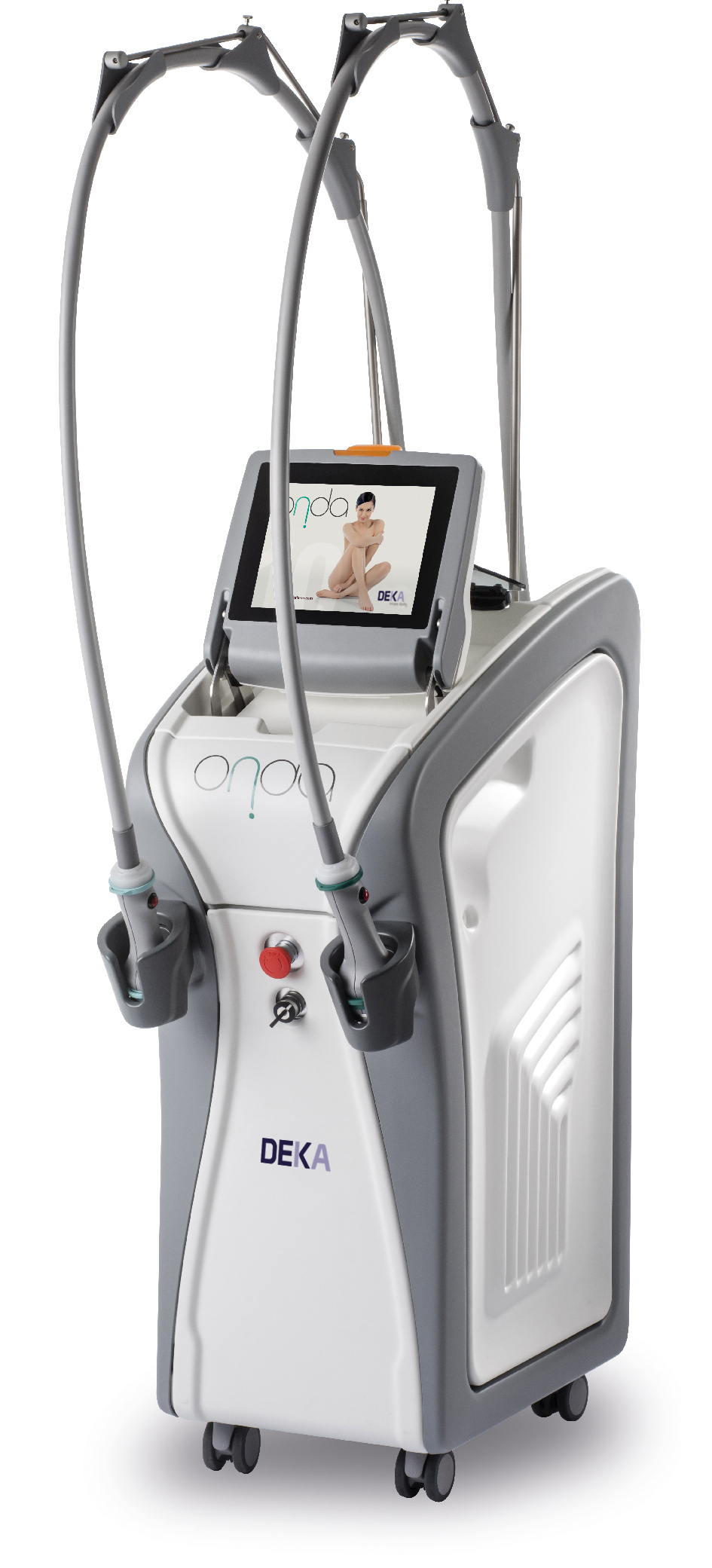
Onda has two handpieces.
They are the 7 mm handpiece and the 3 mm handpiece.
The numbers refer to the depth of skin penetration.
The 7 mm handpiece
is specialized for reducing deep-layer fat,
while the 3 mm handpiece
is mainly used to improve skin elasticity.
For people with a lot of facial fat,
the 7 mm handpiece is used mainly,
and for those who do not,
a combined treatment with the 3 mm handpiece is performed.
Energy distribution is focused about 50% on the area that needs the most reduction,
and the remainder is distributed to other areas.
Areas with a lot of fat, such as the jawline and cheeks,
are treated intensively,
while areas that may become hollow, such as the side cheeks to the back cheeks,
are mapped out before treatment and avoided.
✅ 4. Does it actually work?
How satisfied are people?
It is one of the procedures
with excellent immediate results.
Many people notice a change in their facial contour
right after the procedure.
In particular, people who want to reduce facial fat
and achieve a contouring effect
are highly satisfied.
✅ 5. Why do prices differ from one clinic to another?
The technique itself for Onda
is not all that varied.
The difference comes from other factors.
Whether the doctor and the practitioner are the same person,
whether detailed ultrasound diagnosis is performed before the procedure,
whether pre- and post-procedure care is carried out systematically,
these are the kinds of things that differ from clinic to clinic.
In particular, whether the targeted area is precisely identified through ultrasound diagnosis and then treated
is the key factor that creates differences in results.
✅ 6. Do you need to have it done multiple times for it to work?
It works even if you have it done just once.
The reason for multiple sessions
is not because one treatment is ineffective,
but to enhance the cumulative effect.
The difference in effect between one session and three sessions
can simply be considered to be about three times.
The number of sessions is determined
depending on the size of the change you want.
✅ 7. Can side effects occur?
Onda is a procedure
that rarely causes side effects.
However, there is one thing to keep in mind.
Because it is a procedure that reduces fat,
if it is performed indiscriminately without prior design,
it can cause hollowing in the cheeks.
Before the procedure, it is important to identify the areas where hollowing may occur
and proceed while avoiding those areas.
It’s a good idea to check whether the clinic carefully goes through this process
before choosing where to go.
✅ 8. Does age affect the results?
Is 30 too early? Is 60 too late?
There is no age limit for the procedure.
Just as there is no specific age at which you must lose weight,
Onda is the same.
What matters is not age,
but whether there is fat on the face that needs to be reduced right now.
Whether you are in your 30s or 60s,
if that condition applies,
it is a suitable procedure at any time.
✅ 9. In what cases do you recommend Onda?
It is recommended for people who need improvement in facial contours,
that is, contouring.
It works especially well for people who have a lot of facial fat
and therefore do not have a clearly defined contour.
It is also a procedure with steady demand
for body areas such as the upper arms, waist, and thighs,
not just the face.
✅ 10. What must you check to make a choice without regret?
When choosing a clinic and procedure,
be sure to check these three things.
First, whether the doctor and the practitioner are the same person.
Make sure the doctor who consulted with you is the one performing the procedure.
Second, whether ultrasound diagnosis is performed before the procedure.
Whether the structure of your face is precisely identified
and the design is established first
determines the outcome.
Third, whether areas that may become hollow are avoided in advance.
Places that carry a risk of hollowing
can lead to cheek hollowing if the procedure is performed without this step.
Even a good procedure must be done at a good clinic
for good results to come out.
Onda lifting
is an immediate and effective procedure
for reducing facial fat
and refining facial contours.
It involves less pain and has a low risk of side effects,
but if it is performed without design,
it can cause hollowing in the cheeks.
Pre-procedure ultrasound diagnosis and precise design,
these two points are the core of Onda lifting.
If you have any questions,
feel free to ask anytime in the comments! 😊
Thank you for reading this long post.
This was Wi Young-jin.