
A thread that fills, not pulls
— The true role of Jamber Thread
Hello.
This is Beauty's Doctor, Wi Youngjin.
There are many people who are curious about Jamber Thread,
so I’ve organized everything one by one myself.
"A thread procedure is all the same, right?"
"How is it different from lifting?"
I get questions like these very often.
Face thread, Jamber Thread, and thread lifting
actually have completely different purposes.
Let me go through them one by one.
✅ 1. Face thread and Jamber Thread,
what’s the difference?

Face thread is a thread that focuses on
pulling.
If multiple threads are inserted,
volume can also be created to some extent,
but the main purpose is
lifting sagging tissue.
Jamber Thread has a different purpose.
It is designed with a mesh-like structure,
so even a small amount of thread
can create a large amount of volume.
Because it spreads out densely like a net,
the volume does not gather in one place
and instead spreads widely and naturally.
In other words, face thread is for lifting,
while Jamber Thread is for filling volume.
✅ 2. What is Jamber Thread made of?
What happens inside the body?

The representative material used is PDO.
In addition to PDO, there are PCL and PLLA,
and while they differ slightly by ingredient,
they work in a similar way overall.
PCL lasts longer than PDO,
and PLLA tends to stimulate collagen production more strongly.
These threads slowly dissolve inside the skin
and induce collagen production.
In other words, as the thread itself is replaced by collagen,
volume and firmness are created together.
Rather than filling with an external substance like filler,
it is a method in which your body creates volume on its own,
which is a major advantage because the result looks natural.
✅ 3. Which face types are Jamber Thread especially suitable for?
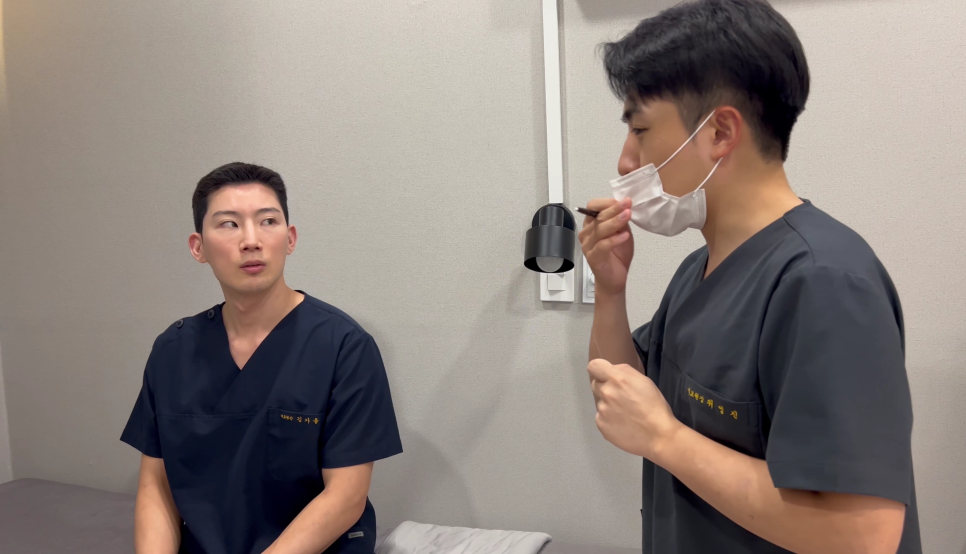
Jamber Thread is more suitable for people who lack volume
rather than those with sagging.
It is especially effective in these areas:
nasolabial folds,
marionette lines,
hollow under-eyes.
It shows strength in naturally filling areas
that are sunken or have lost volume.
Not only for people who have lost volume with age,
but also for people who have always had hollow areas in certain parts,
it can be a good option.
✅ 4. How do results change depending on the depth of thread insertion?

The deeper it is inserted, the more natural it looks,
and the more shallowly it is inserted,
the more distinct the volume effect appears.
A good way to understand this is to compare it to a blanket.
If you hide under a thick blanket, the shape is not easily visible,
and if you hide under a thin blanket, the outline shows through.
Finding the depth that maximizes the volume effect
without the thread showing through
is the practitioner’s skill.
✅ 5. How much pain and discomfort is there during the procedure?

The pain is not severe.
However, there may be some discomfort.
Because threads for firm volume are inserted into the skin,
for a few days after the procedure
you may feel a slight foreign-body sensation.
In most cases, as time passes,
you naturally get used to it.
✅ 6. What side effects are there?

The most common side effect is
that the shape of the thread shows through the skin.
This happens when the thread is inserted too shallowly.
If the practitioner is experienced,
they proceed by finding the proper depth
so that the thread does not show through,
which can adequately prevent this side effect.
✅ 7. Thread lifting and Jamber Thread, how are they different?

These two procedures are quite different.
Thread lifting uses cog threads (hook-shaped threads)
to pull and fix sagging tissue.
Jamber Thread is for volumizing,
that is, creating volume.
The most important thing in thread lifting is
where to move the tissue.
Since tissue does not disappear but changes position,
planning where to lift it is the key.
For this reason, a combined procedure
that performs thread lifting and Jamber Thread together
often produces better results.
✅ 8. What checkpoints should you be sure to confirm during a consultation?
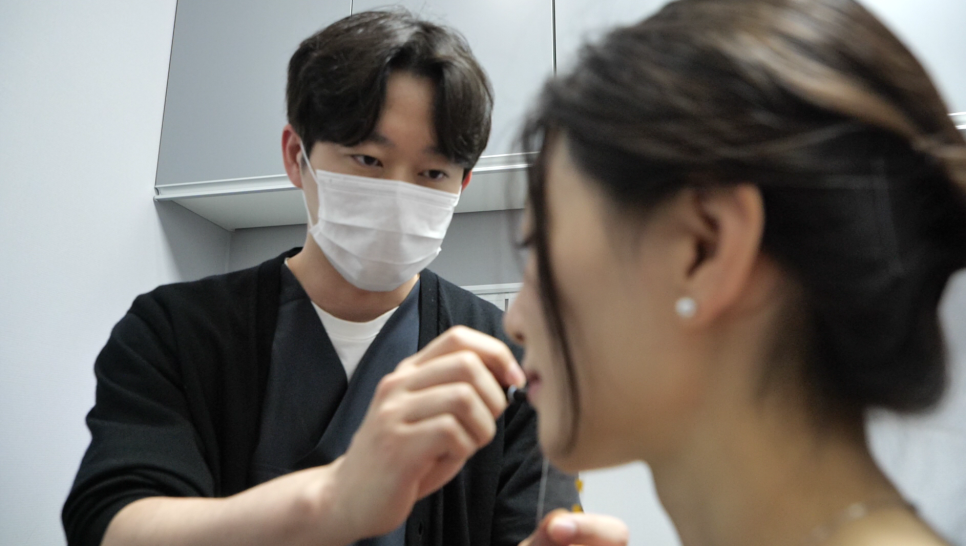
When considering Jamber Thread,
the first thing to check is
which area is hollow.
And when that area is filled,
you should also consider whether it will actually look natural
and move in a better direction.
For example, even if the nasolabial folds are hollow,
if you have a long philtrum,
filling the nasolabial folds
can make the philtrum look even longer.
It is not simply about filling the sunken area;
you also have to judge whether filling it will make the entire face
look more natural and more attractive.
This is the most important part
of a Jamber Thread consultation.
✅ 9. How much does Jamber Thread cost?
It is about 150,000 KRW per thread.
The number of threads needed varies depending on the area
and the volume condition,
so the exact amount is provided after consultation.
Jamber Thread is not lifting.
It is a volumizing procedure that naturally fills
sunken, volume-deficient areas.
The key is to accurately determine
where to fill and whether filling it will make the result look more natural.
If you have any questions,
feel free to ask anytime in the comments! 😊
Thank you for reading this long post.
This was Wi Youngjin.