Hello.
I’m Beauty’s Doctor, Wi Young-jin.
A tattoo may have once had meaning,
but over time, the atmosphere can change,
and regret may set in.
Also, as circumstances change, such as employment, job changes, marriage, or relationships,
many people find themselves
thinking about tattoo removal.
Even a small lettering tattoo can feel
noticeable if it is in a visible area.
A tattoo that was done casually at first
can spread or fade over time,
making it look even messier,
and in some cases,
the trend has passed,
leading to lower satisfaction.
In addition, a design that once looked fine
may now feel like it no longer matches your style,
which is another common reason people consider removal.
For these reasons, interest in tattoo removal
has been steadily increasing,
just as much as interest in getting tattoos.
❓ How is tattoo removal done?

Tattoo removal is usually done using a laser
to break down the pigment in the skin
into smaller particles.
When the laser energy
reacts with the tattoo pigment,
the pigment particles gradually break apart,
and then, through the skin’s metabolic process,
they are expected to fade little by little.
In simple terms,
it is a process of gradually
fading the ink left in the skin.
However, depending on the depth and color of the tattoo,
and the amount of ink used,
the number of sessions needed and the response can vary.
The response can also differ depending on skin type
and how long the tattoo has been there.
❓ Does tattoo removal work in just one session?

One of the things many people wonder about
is the number of removal sessions.
In most cases, however,
a tattoo is not completely removed in just one session
and is often done over several sessions.
In particular, if the pigment is deeply embedded,
if the tattoo is old, or if it is a color tattoo,
more time may be needed.
The response can also vary depending on
how deeply the tattoo was placed.
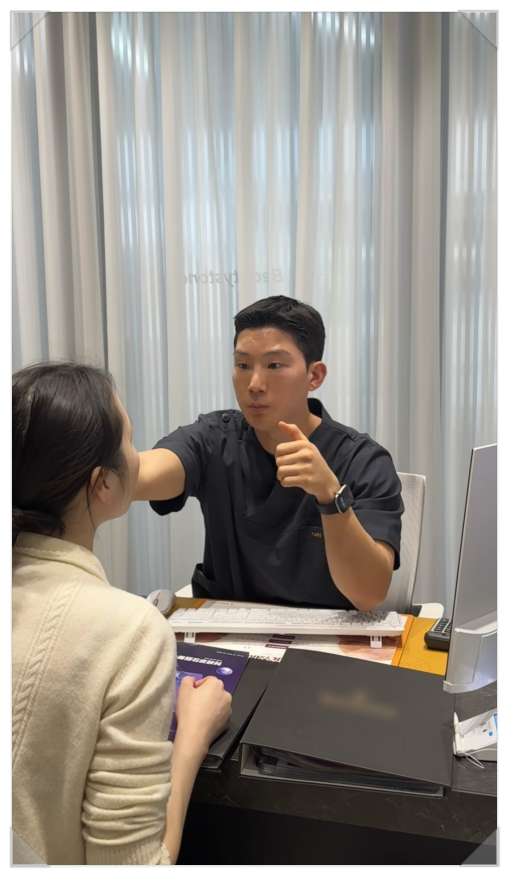
That is why it is important to fully assess the current condition of the tattoo
before making a plan.
Rather than trying to remove it too quickly,
it may be important to proceed gradually
while monitoring the skin’s response.
❓ Can color tattoos be removed too?

The laser response can differ
depending on the tattoo color.
In general, black tones are known to respond relatively well,
but when colors such as red, green, and blue are involved,
the approach may need to differ by color.
In particular, tattoos with multiple colors may show different responses for each color,
so a more careful approach may be needed.
That is why it is important to set the treatment direction
by considering the tattoo color, depth,
and skin condition together.
Recently, more people have also been considering
color tattoo removal using various wavelengths.
❓ What does tattoo removal feel like?
Pain varies from person to person,
but many describe it as
a rubber band snapping against the skin
or a stinging sensation.
In particular, the level of pain can vary by area,
and thinner skin areas may feel
a bit more sensitive.
On the other hand, areas such as the arms or legs,
where the skin is relatively thicker,
may feel a bit less burdensome.
Recently, many procedures are done while reducing discomfort
by using cooling devices
or numbing cream.
❓ Post-removal care is also important
After laser treatment,
the skin may become temporarily sensitive.
Because redness, warmth, scabbing, or mild swelling
may occur,
it is important to follow the aftercare instructions carefully.
In particular, forcibly picking off scabs
or doing anything irritating
may affect skin recovery,
so caution is needed.
UV exposure can also affect pigment changes,
so sun protection may be important as well.
During the skin recovery process,
moisturizing care is also important,
and it is best not to irritate the treated area excessively.
❓ Tattoo removal is often considered in these cases

✔ When you regret a tattoo you got in the past
✔ When you are preparing for a job application or interview
✔ When a tattoo has spread or faded and it bothers you
✔ When you want removal instead of a cover-up
✔ When you want to return to a more natural skin appearance
✔ When a visible-area tattoo is causing stress
✔ When you want to get rid of a tattoo that is no longer in style
✔ When you are considering tattoo removal before an important event
In particular, areas that are easy to see,
such as the wrist, arm, ankle, and collarbone,
are common areas for tattoo removal consultations.
Recently, more people have also been seeking consultations
because they want to remove small lettering tattoos.
These days, rather than simply “erasing” a tattoo,
many people place importance on
fading it naturally while reducing concern about scars or marks.
❓ What is important in tattoo removal?

Tattoo removal is not just about
using a strong laser.
It is important to consider the current skin condition,
the depth of the tattoo,
the color,
and the location together.
In particular, rather than proceeding with overly strong energy,
it may be important to take a safe approach
while monitoring the skin’s response.
Also, tattoo removal is often not a one-time treatment,
but something that progresses gradually over time,
so sufficient consultation and planning are needed.
Because the removal direction and expected process
can differ depending on the tattoo type and skin condition,
it is also important to accurately check the current state.
These days, from small lettering
to large tattoos and color tattoos,
more and more people are considering removal
for various reasons.
If you are stressed by a tattoo,
or want it to fade naturally,
it can be a good idea to get enough consultation
based on your current skin condition and the tattoo’s characteristics.
Thank you for reading this long post.
This was Wi Young-jin.