Hello.
I am Youngjin Wi from Beauty's Doctor.
You may have been determined to lose weight and combined dieting with exercise, successfully reducing your overall body weight,
yet, strangely, there are many cases where the upper-arm fat looks even softer and more jiggly than before.
Looking in the mirror, you may wonder, “Is the fat not coming off because I have not been exercising my arms properly?” and try lifting dumbbells, but feel frustrated when the area of concern does not improve at all.
To be honest, the reason is that the upper arms are a complex area where not only subcutaneous fat but also skin tissue that has lost elasticity and become saggy are intertwined.
Therefore, when you lose weight through dieting, only the volume of the fat underneath decreases, while the sagging of the skin that covered it may actually become more noticeable on the outside.
I will now clearly organize the medical factors that people looking into upper-arm contouring treatments for the first time often find confusing.
Fat loss can make sagging more noticeable
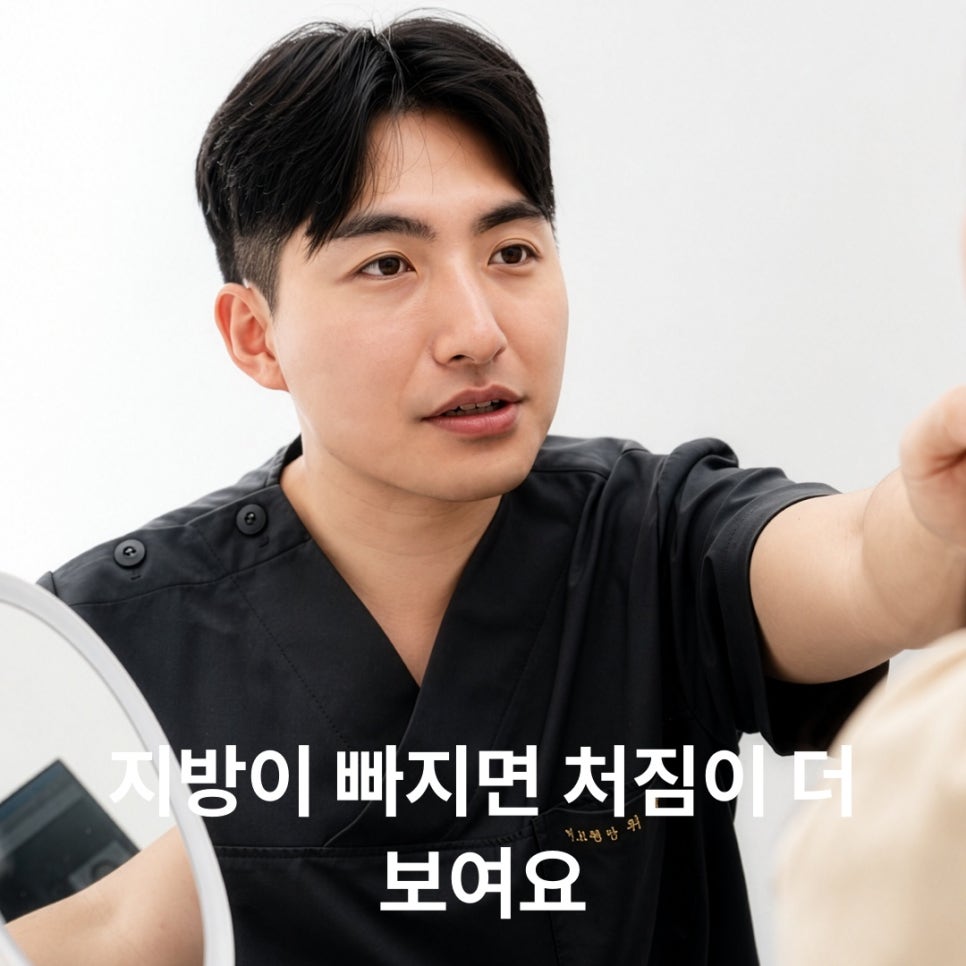
The inner upper-arm fat we commonly refer to has an anatomical structure in which a thick layer of subcutaneous fat and loose, inelastic skin hang downward together, creating a jiggly appearance.
If you diet intensively in this condition and rapidly reduce only the fat underneath, the internal volume that had supported the sagging skin and kept it taut disappears all at once.
Ultimately, the principle is similar to how the outer surface of a balloon becomes wrinkled when the air escapes: the loose skin becomes exposed on the outside.
This is why online reviews so often include complaints such as, “I lost weight, but my upper arms jiggle and look worse than before.”
Therefore, to minimize tissue-level changes in the upper-arm contour after dieting, it is necessary to combine management that controls the reduction in the volume of localized subcutaneous fat cells with tightening of the dermal and upper layers.
If the approach focuses on only one mechanism while excluding the issue of reduced elasticity in the connective tissue, the extent of visible change after treatment may be limited.
RF treatments such as InMode Body are commonly used
To smooth upper-arm contours that have lost elasticity and become jiggly, the devices most frequently used in clinics are those that combine RF (radiofrequency) technology, such as InMode Body, with vacuum suction technology.
While firmly lifting the area of concern with powerful negative-pressure suction, the device delivers radiofrequency energy deep into the skin to apply thermal stimulation to the fat tissue,
and at the same time induces collagen metabolism and regeneration in the dermal layer, leading to tissue contraction and a tightening response.
Of course, depending on the condition of the client’s upper arms, other types of RF treatments, such as Thermage Body, can also be excellent options.
If a sizeable amount of pinchable fat still accounts for a greater proportion of the concern than skin sagging, InMode Body can be a natural starting point.
Conversely, if there is not much fat but the skin itself is loose and restoring elasticity is the top priority, Thermage Body may be the more appropriate choice.
Both treatments are generally tolerable and comfortable with little more than the application of topical anesthetic cream. They also have the advantage of being relatively short and simple, with an actual treatment time of approximately 30 to 40 minutes.
See the recommended number of treatments and complementary exercises
For InMode Body treatments to refine the upper-arm contour, it is generally advisable to undergo at least three treatments at two-week intervals.
The tissue changes and maintenance patterns observed after treatment may vary depending on individual skin elasticity, lifestyle habits, and aftercare.
Rather than expecting dramatic results from a single treatment, this treatment protocol involves gradually accumulating sessions and continuously observing changes inside the skin.
To maximize the results, it is also recommended to consistently perform complementary exercises in daily life that specifically stimulate the triceps on the inner upper arm, such as triceps extensions.
If dermatological laser treatments help organize loosened skin elasticity on the surface and excess fat layers,
the exercises you perform help fill out and strengthen the underlying muscles, providing firm support from within. Only when these two approaches work together can an ideal, slender upper-arm contour be achieved.
This article provides general information to help explain changes in the upper arms that may occur after dieting.
The safest approach is to decide on the most effective treatment plan after an in-depth consultation with a physician who has directly examined and diagnosed your body shape, including the actual volume of fat in your abdomen and upper arms and the extent of damage to your skin’s elasticity.
Frequently Asked Questions (FAQ)
Q. Will a noticeable effect appear immediately after just one treatment?
A. After treatment, the cells inside the skin generally begin to regenerate around two to four weeks later, and subtle changes gradually start to appear.
A distinct and clear change in the contour that is likely to be satisfying becomes complete only after a sufficient number of sessions have been accumulated according to the standard intervals mentioned above.
Therefore, in most cases, the final effect is evaluated after calmly completing at least three treatments.
Q. How intense is the pain during treatment?
A. Because sufficient anesthetic cream is applied to the skin’s surface before treatment, even people who are sensitive to pain can generally tolerate the procedure comfortably without separate sedation anesthesia.
The main sensations are the characteristic pressure of the device tip strongly suctioning the skin, along with the warm thermal stimulation felt as radiofrequency energy flows into the treatment area.
[Post-Treatment Precautions and Side Effects]
After RF treatments such as InMode Body, temporary redness (erythema), swelling, or soreness may occur depending on the individual’s skin type.
In particular, body treatment tips involve strong vacuum suction and pressure, so bruising, swelling, or minor abrasions may persist in the treated area for several days.
In addition, as high-temperature thermal energy reaches the deeper layers of the skin, side effects such as skin burns, blister formation, or irritant-induced hyperpigmentation may rarely occur.
If you notice any unusual symptoms after treatment, you must immediately visit a nearby medical facility that provided the treatment and receive appropriate medical care.
Thank you for reading this long article.
This was Youngjin Wi.