
My cheeks have become hollow and my nasolabial folds have deepened
— Is Sculptra right for me?
Hello.
I’m Kim Ha-won from Beauty’s Doctor.
Many people become concerned when, at some point, the area beneath their cheekbones looks deeply hollow in photos and the shadows along their nasolabial lines gradually become more pronounced.
Especially after the late 30s, more people hear comments such as:
"You look tired,
even though you haven’t lost weight."
When this happens, fillers are often the first option people consider.
However, after looking into it, some people hesitate because of reviews such as:
"Fillers make my face look swollen."
"It looks awkward when I smile."
That is why, recently, more people have become interested in methods such as Sculptra that gradually build collagen.
To get straight to the point,
for broadly hollowed areas such as cheek depressions or nasolabial folds,
collagen-stimulating treatments
are often perceived as more natural than immediate volume-based fillers.
📌 Why can filling extensively with conventional fillers look unnatural?
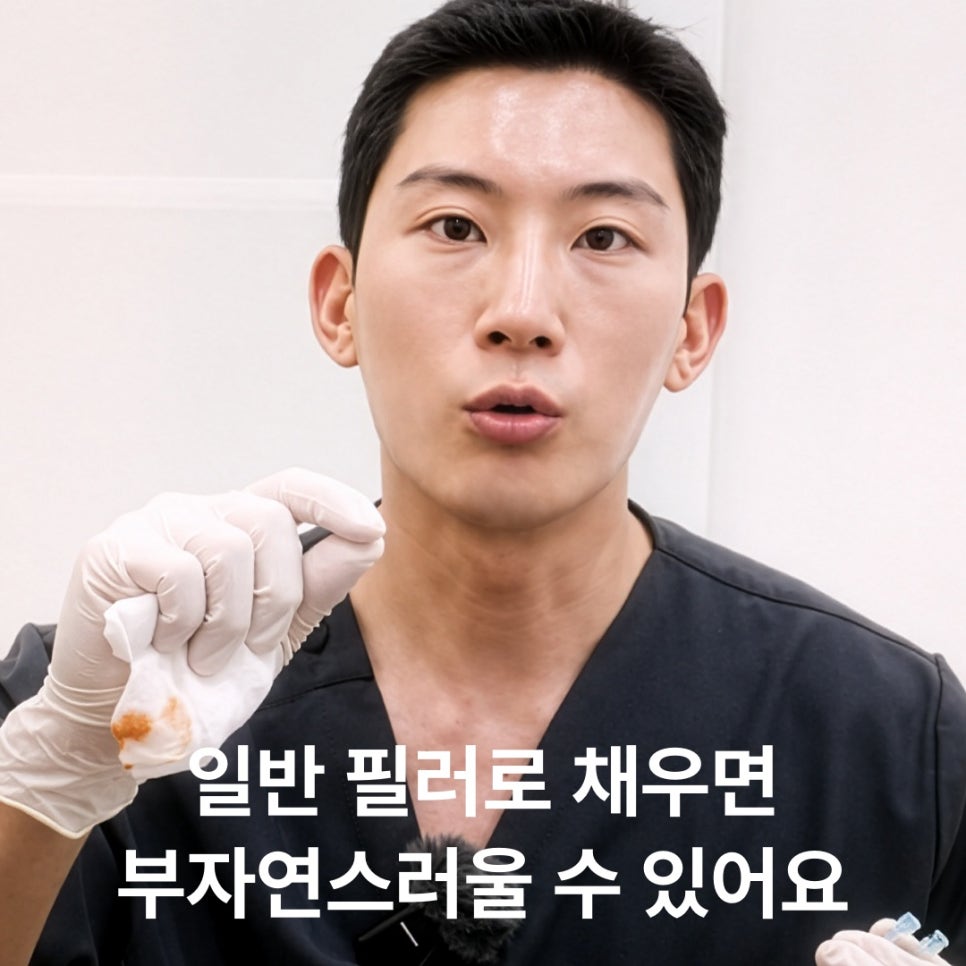
The cheek and nasolabial areas
are larger than you might expect.
Therefore, filling the hollowed areas entirely with hyaluronic acid fillers
often requires a fairly large amount.
This is where the problem can arise.
If a large amount is injected at once,
✔️ facial expressions may look stiff,
✔️ the face may look heavy when smiling, or
✔️ the volume may seem to shift sideways in the cheeks when lying down.
In particular, the cheek area beneath the cheekbone moves a great deal with facial expressions,
so excessive volume can be noticeable.
Sculptra, on the other hand,
does not work by immediately creating a large amount of swelling.
The PLLA ingredient stimulates collagen production within the skin,
so the patient’s own tissue gradually fills out over time.
As a result, the outcome often feels less like
👉 "Something has been added"
and more like
👉 "My face looks less hollow."
⏳ With Sculptra, accumulation is more important than a single treatment
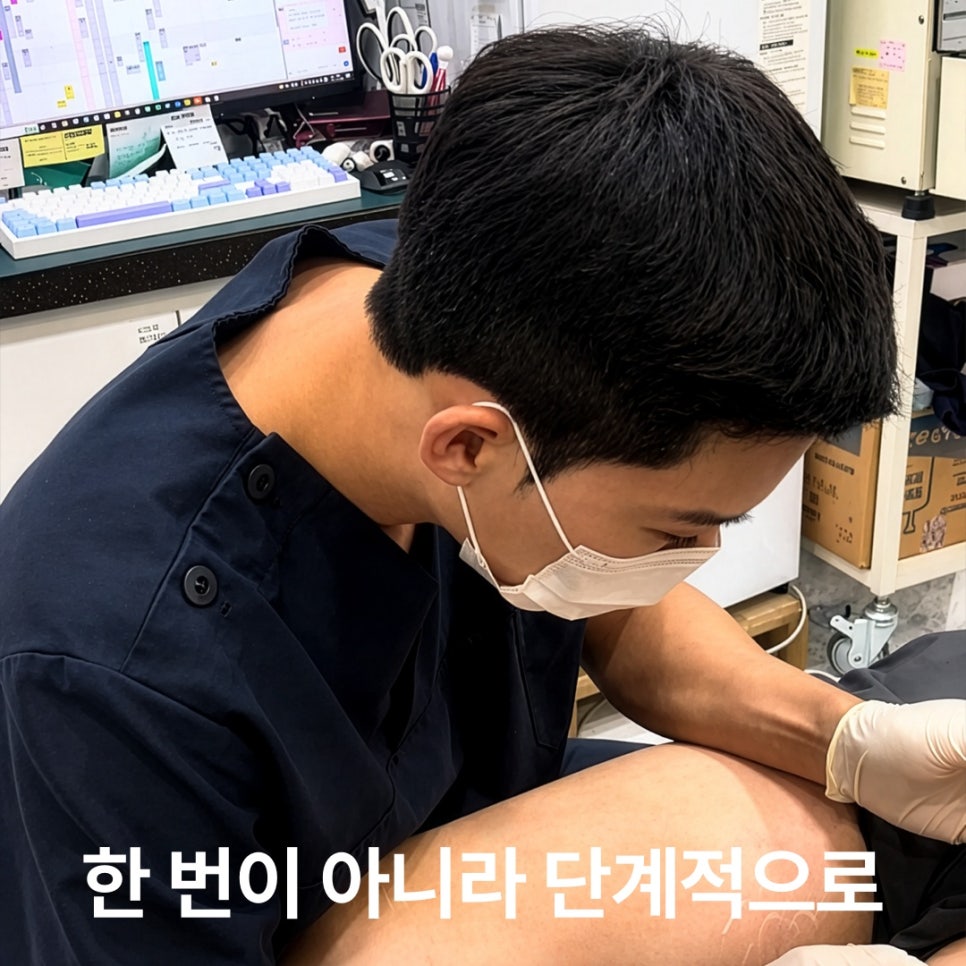
Sculptra
is generally not a one-time treatment.
In many cases,
👉 around three sessions at four-week intervals
are performed.
The reason is simple.
Rather than filling excessively all at once,
the treatment gradually builds up collagen stimulation.
Therefore, immediately after the first treatment,
the area may temporarily appear fuller due to swelling,
but after a few days it may feel as though the volume has decreased again.
At this point, many people may easily think:
"Does this mean it isn’t working?"
However, Sculptra is a treatment whose changes appear gradually.
Usually,
👉 from around four to six weeks afterward,
gradual changes in volume can be noticed,
and as the sessions accumulate,
the overall hollowness may appear more balanced.
Therefore, if treatment is stopped after only the first session,
it is often difficult to fully see Sculptra’s characteristic cumulative effect.
✨ Which areas are particularly well suited to it?

Sculptra is
particularly well suited to broadly hollowed areas.
Typical areas include:
✔️ hollowing in the cheeks beneath the cheekbones
✔️ nasolabial shadowing
✔️ sagging around the corners of the mouth
✔️ sunken temples
In these areas,
adding a large amount of immediate volume
can instead make the result look unnatural.
Conversely, when collagen gradually fills in,
the overall contours of the face may appear more refined.
It is mainly used at medical institutions
with the aim of softening a tired-looking appearance caused by localized volume loss.
⚠️ Conversely, some areas may be better suited to conventional fillers
Sculptra is not suitable for every area.
For example,
✔️ areas that require immediate volume, such as the lips
✔️ areas that require precise contours, such as the tip of the nose
are often better suited to conventional fillers.
Sculptra is closer to the concept of gradually filling overall volume,
so it has limitations when it comes to creating a precise shape immediately.
Therefore, during an actual consultation,
different types of treatments are often combined depending on the area.
💡 Why massage after treatment is important
After Sculptra treatment, post-treatment care is also important.
If the PLLA particles clump together in one area,
they may be palpable like a nodule.
Therefore, after treatment,
it is important to massage the area as directed by the medical staff.
Usually, for a specified period,
the area is gently massaged a set number of times.
Following this process carefully
may help the collagen settle more evenly,
and the result may appear more natural.
📋 Points worth checking during a consultation
During a Sculptra consultation,
there is something more important than asking:
"How many vials will be used?"
👉 Whether your face is actually the type in which fat has become depleted
👉 Whether skin elasticity has also decreased
👉 Which area should be filled first for a natural result
These are important considerations.
In particular, with cheek hollowing,
it is often necessary to consider the balance among the cheekbones, jawline, and nasolabial folds together
for a natural result.
It may also be helpful to check whether the provider explains the proportions of your entire face.
❓ Frequently asked questions
Q. Can I receive Botox at the same time?
A. It is possible.
Botox is a treatment that controls muscle movement,
while Sculptra is a treatment that stimulates collagen production,
so their mechanisms of action are different.
However, to allow for skin recovery,
it is also common to leave an interval of about one to two weeks.
Q. How long do the effects last?
A. The period of pharmacological action of the injected ingredient
is generally known to be approximately one and a half to two years.
However, this may vary depending on the individual’s skin condition,
lifestyle habits,
and whether the recommended sessions are completed.
Q. Is massage after treatment essential?
A. It is considered important.
The PLLA ingredient needs to be spread evenly
so that it does not clump in one area.
Massage methods may vary slightly from one clinic to another,
so the safest approach is to follow the instructions provided by the clinic where you received treatment.
Thank you for reading this long post.
This was Kim Ha-won.