Hello.
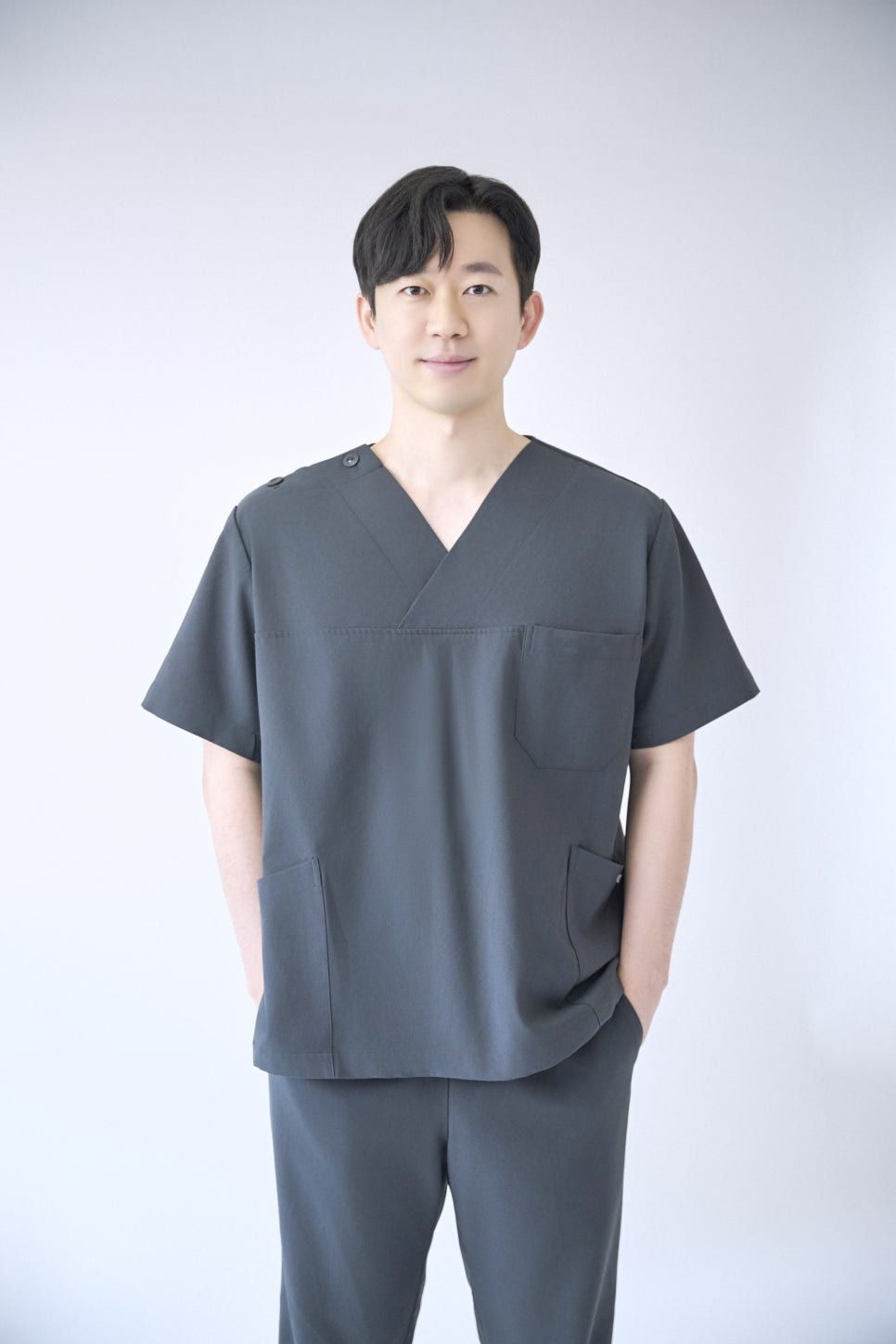
I’m Kim Jang-ju from Beauty’s Doctor.
Many people feel self-conscious when the outer line of their calves appears to protrude when wearing shorts or skirts.
In particular, if the appearance remains unchanged even after reducing exercise, and massage does not make much difference, many people eventually search for
“calf Botox”
at least once.
However, when they look into it, they may see reviews saying
“my leg line became slimmer,”
along with comments such as
“walking feels uncomfortable”
and
“the effect disappears quickly,”
which can make things confusing.
To start with the conclusion,
calf Botox is a treatment that induces temporary relaxation of the muscles and is mainly used by medical institutions to help refine the volume of specific, excessively developed muscle areas.
However, the important thing is to first determine whether the reason the calves look thick is truly due to muscle.
If fat or swelling is the cause, you may notice little change even after receiving the same treatment.
📌 Calves are classified as muscular, fatty, or combination types

There are more reasons than you might expect for calves to look thick.
They are generally divided into three types.
✔️ Muscular type
When viewed from the side, the upper part of the calf protrudes in a rounded shape, and it becomes firm and visibly prominent when flexed.
This type is common among people who have exercised for a long time or who habitually stand on their tiptoes.
👉 This type may be relatively suitable for the principle of relaxing localized muscles.
✔️ Fatty type
This type has a uniformly thick appearance extending throughout the lower calf.
It feels soft to the touch, and the muscle definition is not very pronounced even when flexed.
In this case, an approach focused on reducing fat may be more appropriate than Botox.
✔️ Combination type
This type has both muscle and fat.
In practice, this combination type is fairly common.
Therefore, during a consultation, it can be quite important if the medical professional examines the outer line of the calf directly and explains which type it is.
⏳ Calf Botox does not produce immediately visible results

Many people expect their calves to look slimmer immediately after the treatment.
However, the calf muscles are relatively large muscles, like the jaw muscles or trapezius muscles.
Therefore, changes also occur gradually.
Immediately after treatment, there are often few noticeable differences even when looking in the mirror.
Instead, after about one to two weeks, some people first notice:
👉 A slight feeling of reduced tension in the calves
👉 A subtle change when climbing stairs
More noticeable changes in the leg line usually begin to appear gradually from around the fourth week.
The clearest changes are often felt around the second or third month.
Therefore, if you have a summer vacation, wedding photo shoot, or other event scheduled, it is best to plan at least two months in advance.
If you expect a dramatic change within one month, you may instead be disappointed during the period when the results are most ambiguous.
🔍 How long do the effects last?

Calf Botox commonly lasts for about four to six months.
However, because the calf muscles are large, the effect tends to wear off gradually.
With repeated treatments, the treatment begins from a state in which the muscles themselves have gradually become smaller.
When establishing a plan for repeated treatments, the appropriate dosage is reset after taking the previous state of muscle development into consideration.
Typically, the intervals are gradually extended as follows:
✔️ First treatment: every 4–6 months
✔️ Subsequent treatments: every 6–12 months
It is recommended to receive retreatment at an appropriate time, taking the duration of the medication’s effects into consideration.
👀 Many people worry that walking may become difficult

One of the questions most often asked about calf Botox is, “Won’t it become difficult to walk?”
For about one to two weeks after treatment, you may feel slightly weaker when:
✔️ Climbing stairs
✔️ Standing on your tiptoes
However, most people do not notice a significant difference when walking on level ground.
This is because the calf contains more than one muscle.
Botox is mainly administered to the gastrocnemius, which is the muscle that appears most prominent on the surface.
Because the other calf muscles continue to move normally, there are generally no major problems with daily activities.
However,
👉 Ballet
👉 Dance
👉 Occupations that involve frequent wearing of high heels
If you engage in activities that require substantial calf strength, it is best to mention this during your consultation in advance.
It may be possible to adjust the units conservatively or slightly change the injection location.
⚠️ What should you do about exercise after treatment?
On the day of treatment, it is best to avoid:
❌ Strenuous exercise
❌ Saunas
❌ Alcohol
It is also safer not to apply strong pressure to or massage the calves for about four hours after treatment.
This is intended to reduce the possibility of the medication spreading to unintended areas.
Light walking is often possible from the following day.
However, it is often recommended to take about a week off from activities that heavily use the calves, such as:
👉 Hiking
👉 Cycling
👉 Lower-body strength training
In particular, if you normally exercise your calves frequently, the muscles may redevelop more quickly, causing the effects to wear off sooner than average.
💡 Points worth checking during your consultation
During a calf Botox consultation, there is something more important than asking, “How many units will I receive?”
👉 Whether your calves are the muscular type
👉 The fatty type
👉 Or the combination type
It is important to accurately determine this first.
Because the size of the muscles on the left and right sides often differs, it is also important to consider how to balance both sides.
For people whose development is especially pronounced on one side, treatment may focus primarily on that side.
Therefore, rather than simply discussing the dosage, it can also be helpful to listen for whether the provider explains the calf line itself.
❓ Frequently asked questions
Q. Is it effective if my calves became thicker from exercise?
A. This type may be relatively suitable for the principle of relaxing localized muscles.
However, if you continue the same exercise intensely after treatment, the effects may fade more quickly.
Q. I do ballet or dance. Is it okay for me to receive the treatment?
A. It is possible, but if the activity requires precise control of calf strength, it is best to mention this in advance during the consultation.
The units may be adjusted conservatively.
Q. Is it possible to receive treatment on only one side?
A. Yes, it is possible.
If one calf is more developed than the other, treatment may focus primarily on that side to correct asymmetry.
However, in many cases, adjusting both sides together is recommended to maintain overall balance.
[Post-Treatment Precautions and Possible Side Effects]
After calf Botox treatment, temporary pain, swelling, bruising, and other symptoms may occur depending on the individual’s constitution and skin type.
In addition, due to the effects of the injected medication, temporary muscle weakness, fatigue, and walking discomfort may accompany going up and down stairs or walking for several weeks after treatment.
If these symptoms persist for an extended period or you notice any abnormal signs, you should immediately contact the medical institution where you received the treatment.