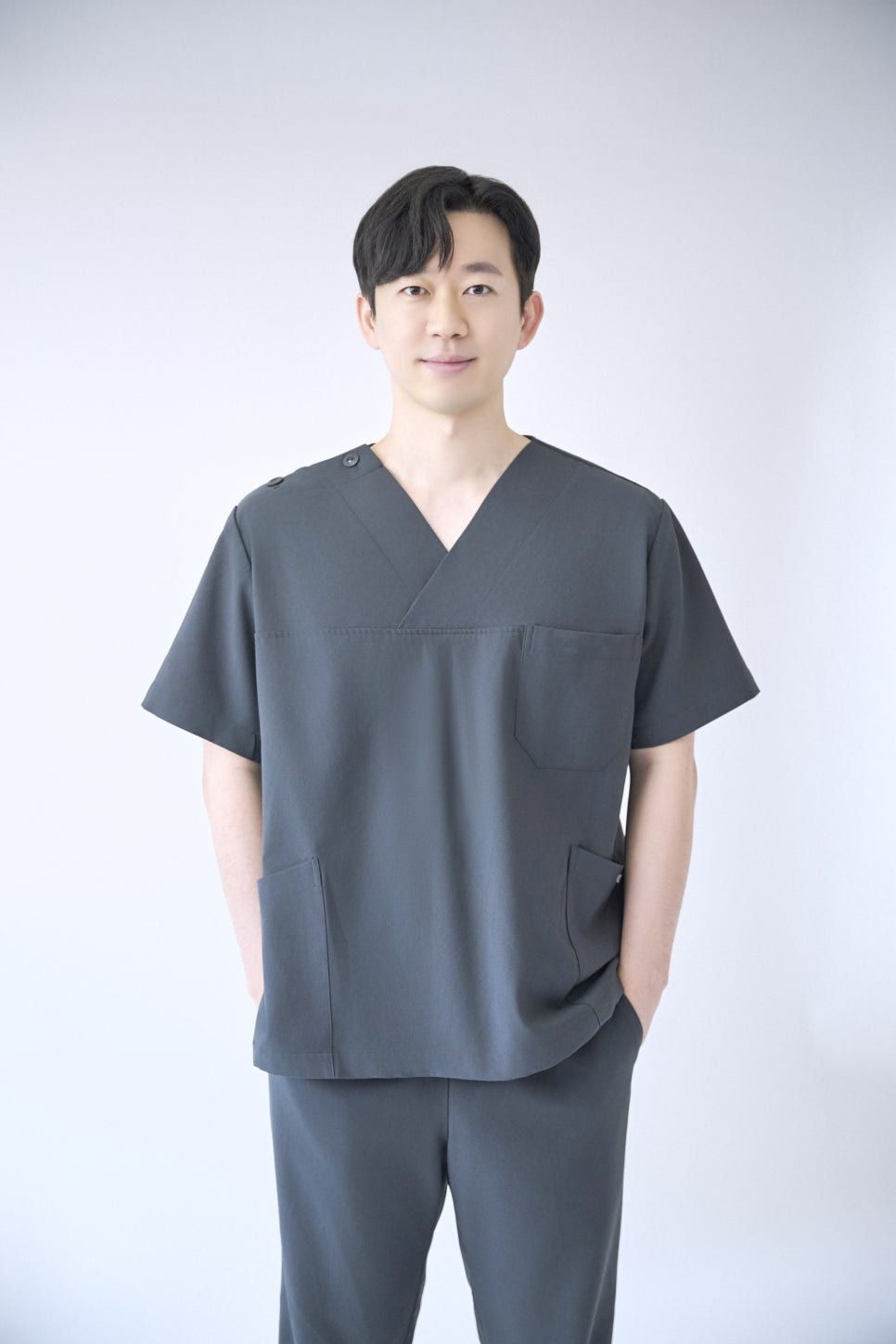
Hello.
I’m Dr. Jangju Kim.
After receiving a skin booster treatment for the first time,
your skin may feel hydrated and radiant for several days.
Makeup may also seem to apply better,
and your skin may feel smoother,
which can raise your expectations.
However, after about a month,
many people suddenly find themselves thinking:
"Did my skin look better during the first few days?"
"Has the effect ended?"
"It seems like there has been less change than I expected."
People who expected an immediately noticeable change,
such as that seen with Botox or fillers,
may find this especially confusing.
To put it simply, skin boosters
are not treatments that produce a dramatic change all at once.
They are closer to treatments that gradually change
the environment inside the skin.
That is why the real changes
are often felt more clearly
👉 after about 3–4 sessions have accumulated.
📌 The radiance immediately after treatment may be ‘temporary hydration’

The fact that the skin looks shiny and radiant
immediately after a skin booster treatment
reflects a real change.
In particular, products containing PDLLA·HA complexes
or HA ingredients
provide an immediate boost of hydration
inside the skin.
Therefore, for several days immediately after treatment,
you may notice that:
✔️ your skin looks hydrated,
✔️ makeup applies more smoothly, and
✔️ your skin feels smoother.
However, this initial radiance
may gradually fade over time.
Many people feel that
the "initial effect seems to have disappeared"
after about 1–2 months.
At precisely this point, many people think:
👉 "Has the effect ended?"
and stop treatment.
In fact, the opposite is true.
This period is actually closer to the stage
when the real changes begin.
The key to skin boosters
is not simply hydration.
The key to skin boosters
is not simply hydration.
The main goal is to stimulate the skin
so that new collagen can be produced.
For example,
✔️ PN-based products
These consist of polynucleotide ingredients
extracted from salmon DNA
and are used by medical institutions
to help regulate the overall balance
of the skin environment.
✔️ PDLLA·HA complex products
These combine PDLLA,
a biocompatible polymer,
with HA, an ingredient that attracts moisture.
They may be considered when supplementing
subtle volume in localized areas
and helping improve the overall condition of the skin over time.
What both types have in common
is that collagen production takes time.
New collagen does not form immediately
after treatment.
In general,
✔️ it begins after about one month, and
✔️ becomes most active between 3 and 6 months.
That is why cumulative treatment is important
with skin boosters rather than just one session.
Skin changes are often more noticeable
after the second and third treatments have accumulated
than after the first session.
Treatment plans are generally developed
to improve localized areas lacking hydration
or to smooth rough surface texture.

Rather than depending only on the overall appearance of the face,
the timing at which a response begins
may vary according to each person’s skin thickness
and skin type.
Treatment plans are generally developed
to improve localized areas lacking hydration
or to smooth rough surface texture.
Rather than starting by focusing on
"how much improvement is possible,"
it can help reduce disappointment
to understand first
👉 "which areas may not change very much."
⚠️ Why the same treatment can produce different results for different people

Even when people receive
the same product and the same number of sessions,
responses can vary considerably.
The main reason is
👉 differences in the body’s response when producing new collagen.
In general,
✔️ responses tend to be better when the skin is healthier,
✔️ when the person is relatively younger, and
✔️ when recovery is better.
Conversely,
❌ smoking
❌ lack of sleep
❌ frequent alcohol consumption
❌ intense exposure to ultraviolet rays
may affect collagen production.
Simply put,
a skin booster treatment induces a "recovery process"
inside the skin.
If the body’s overall condition is unfavorable for recovery,
the results may also be less apparent.
Therefore, when the effect seems limited,
it may not always be appropriate
to attribute it solely to a problem with the treatment itself.
📸 It is a good idea to compare photos
Skin boosters are among the treatments
for which it can be most difficult to notice changes
when looking in the mirror every day.
Because you see your face every day,
small changes can be hard to recognize.
The best approach is to take photos
before treatment.
In particular, it is important to compare photos taken with:
✔️ the same lighting,
✔️ the same distance, and
✔️ the same angle.
It is helpful to record
front, 45-degree, and side views.
This can help you identify subtle improvements
in skin texture and differences in overall hydration
that you may not have noticed otherwise.
Conversely, if there is no significant change even in photos,
that may be a sign to consult again
about the treatment approach itself.
💡 Skin boosters are closer to treatments that improve your skin’s ‘foundation’
Botox and fillers are treatments
whose effects are relatively noticeable quickly.
Skin boosters, on the other hand,
are closer to treatments that gradually change
the skin’s overall environment.
Therefore, rather than producing short-term results,
they work through the accumulation of small changes such as:
👉 "My skin feels less rough and dry."
👉 "My makeup applies better."
👉 "My fine lines look smoother."
If you expect a dramatic change all at once,
the results may feel less impressive than expected.
However, with consistent cumulative treatment,
many people feel that the overall condition of their skin
has changed.
❓ Frequently Asked Questions
Q. Can I see results after just one treatment?
A. Immediately afterward,
you may notice increased hydration and radiance.
However, actual collagen-related changes
are often more noticeable after 3–4 cumulative sessions.
Therefore, it is difficult to judge the final results
from just one treatment.
Q. I would like to have the treatment before my wedding. When should I start?
A. It is generally recommended
to start planning at least 3–4 months in advance.
This is because collagen production takes time.
If the treatment is carried out too close to the desired date,
the changes may not have fully developed by then.
Q. What should I do if the results are not very noticeable?
A. First, it is a good idea to compare photos taken before and after treatment.
There are many cases in which small changes have occurred,
but the person does not notice them.
Conversely, if there is almost no difference even in photos,
it may be helpful to reassess:
👉 the type of product,
👉 the interval between sessions, and
👉 the condition of the skin.
[Post-Treatment Precautions and Possible Side Effects]
After a skin booster injection,
temporary swelling, bruising, redness, or pain
may occur depending on the individual’s skin condition and constitution.
In addition, temporary bumps at the injection sites
(an embossing effect) may occur depending on the injection method
or the characteristics of the ingredients.
These generally resolve naturally,
but in rare cases, side effects such as infection, inflammation,
or delayed nodules may occur.
If any unusual symptoms persist,
you should visit a medical institution immediately
and receive appropriate care.
Thank you for reading this lengthy post.
This was Jangju Kim.