Hello.
I’m Young-jin Wi from Beauty’s Doctor.
The upper-chest line below the collarbone,
commonly called the décolleté line,
can look more hollow or sagging than before,
which can noticeably change your overall appearance in clothes.
This is especially noticeable when wearing clothing that exposes the neckline,
such as V-necks or off-the-shoulder tops:
👉 The area below the collarbone looks deeply hollow
👉 The skin texture looks wrinkled
👉 The skin feels less firm
Many people become concerned about these issues.
However, when you search for information,
terms such as
"breast filler"
and
"décolleté volume"
are often mixed together,
making it easy to become confused about what is actually possible.
To put it simply,
👉 Sagging of the breasts themselves
and
👉 Sagging of the décolleté line
require different approaches.
If you consider these two to be the same problem,
it is easy to choose an unsuitable treatment.
📌 The breasts themselves and the décolleté line are different areas
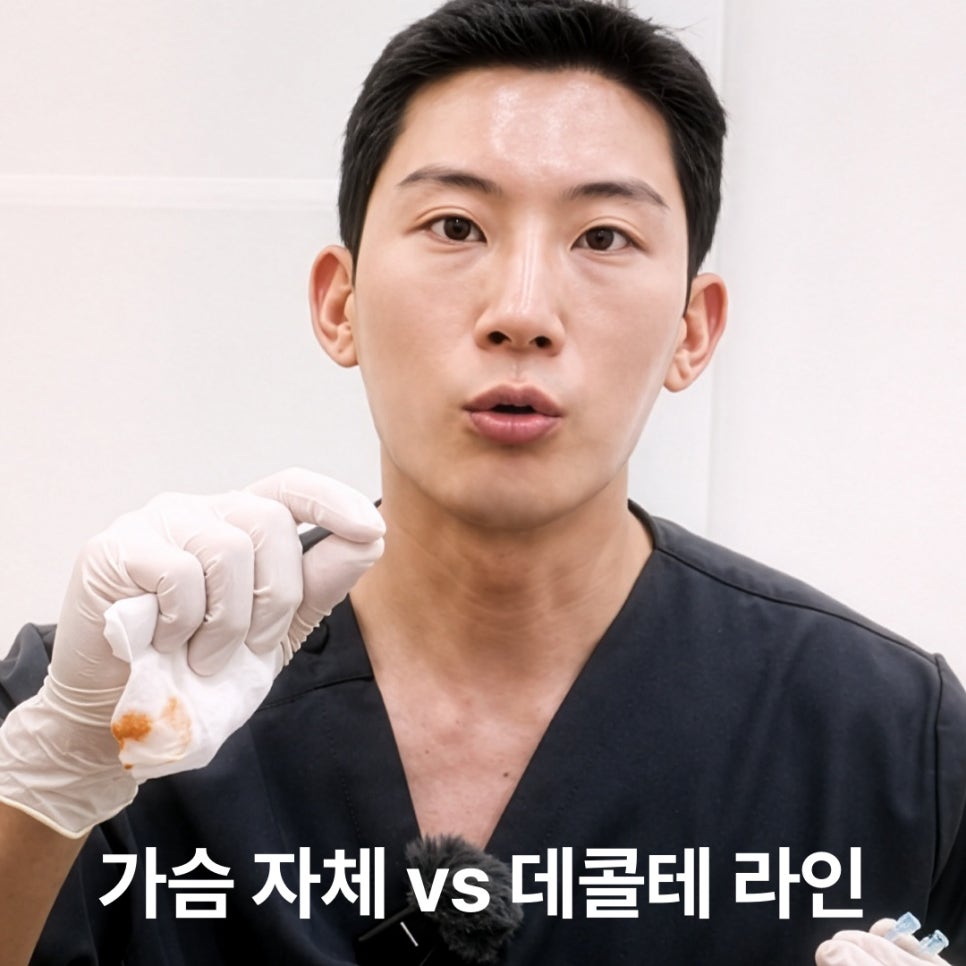
Many people think of
décolleté hollowing and breast sagging
as one issue.
In reality,
the treatment goals are quite different.
✔️ Sagging of the breasts themselves
This is a condition in which the breast tissue and skin descend,
causing the position of the breasts themselves to drop.
The sensation that the volume has shifted downward
is especially noticeable when not wearing a bra.
In this case,
because the skin and tissue themselves need to be lifted,
non-surgical treatments alone often have significant limitations.
✔️ Sagging of the décolleté line
This primarily involves
volume loss, reduced elasticity, and fine lines
in the upper-chest area below the collarbone.
It is closer to a weakening of the appearance of the upper line
than to a change in the breasts themselves.
Therefore, the approach often focuses on:
👉 Skin elasticity
👉 Collagen production
👉 Improving skin texture
⚠️ Large amounts of filler in the breasts require caution
Because of breast sagging,
some people wonder,
"Could filler be used to lift them?"
However, in South Korea,
there is considerable caution regarding
large-volume filler procedures for the breasts
whose safety has been established for this purpose.
In particular, approaches involving large amounts
have also been associated with concerns such as:
❌ Inflammation
❌ Necrosis
❌ Infection
❌ Risk of sepsis
For this reason, in practice,
rather than trying to significantly lift the breasts themselves non-surgically,
👉 the approach more often focuses on improving
the skin condition and elasticity of the décolleté line.
🔍 What treatments are commonly used for the décolleté line?
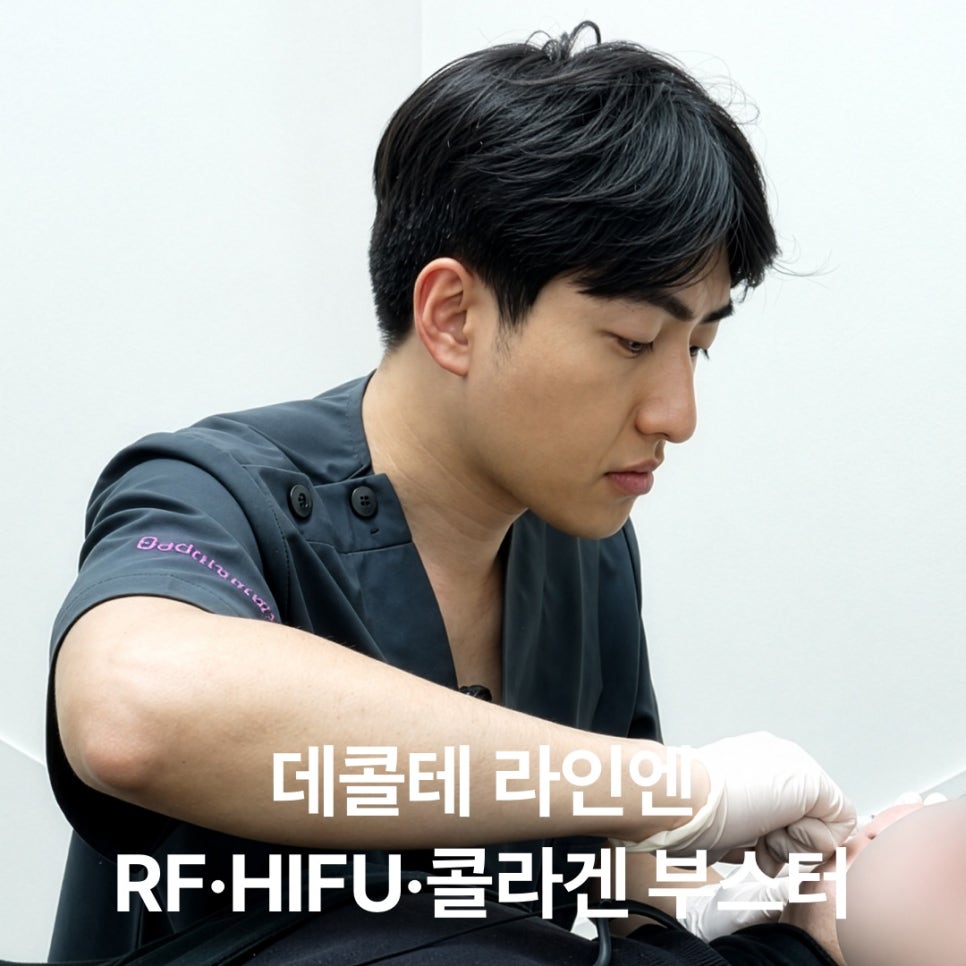
The décolleté line is an area where the skin is thin
and there is a lot of movement,
so both elasticity and texture are often considered.
Commonly discussed options include:
✔️ RF (radiofrequency)
✔️ HIFU (high-intensity focused ultrasound)
✔️ Collagen boosters
✔️ RF-based treatments
Devices that use radiofrequency (RF) current
work by applying heat to the dermal layer
and are generally used in medical institutions
for overall elasticity care and skin refinement.
✔️ HIFU-based treatments
Devices that use high-intensity focused ultrasound (HIFU) energy
work by forming thermal coagulation points in deeper layers of the skin.
They may be considered when providing precise elasticity care
by targeting the fascial layer.
✔️ Collagen boosters
When the skin texture is rough
or there are many fine lines,
collagen boosters may also be used.
Injectable treatments containing ingredients that induce the production of the body’s own collagen
are used with the goal of improving the long-term skin environment
while minimizing stimulation of the local area,
rather than artificially adding volume.
👀 It is often better to proceed step by step rather than doing everything at once
Décolleté treatments can produce
more varied skin responses than expected.
Therefore, rather than combining multiple treatments from the beginning,
👉 observing the response after one treatment
👉 and then adding what is needed
is often a more natural approach.
Because the décolleté is strongly affected
by movement of the neck and shoulders,
excessive treatment can instead feel unnatural.
📍 For sagging of the breasts themselves, surgery may be a more realistic approach
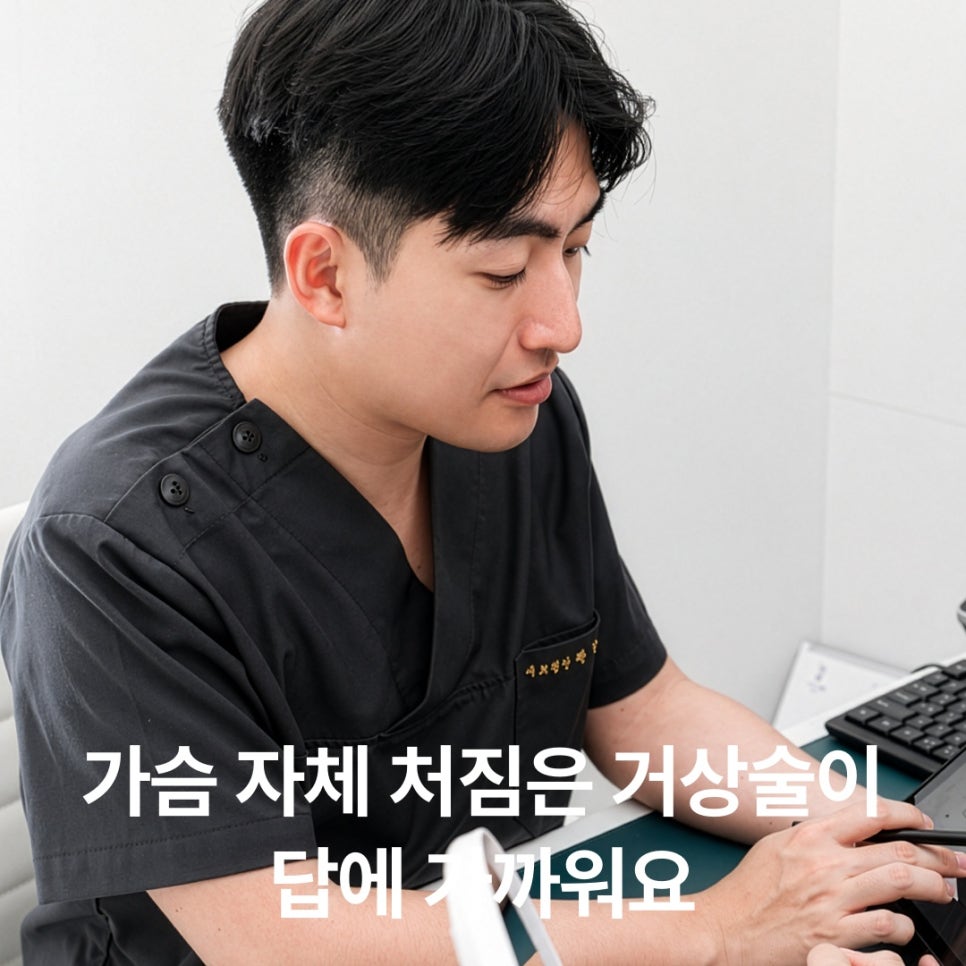
If the main concerns are:
👉 The position of the breasts themselves has dropped significantly
👉 The breast tissue feels sagging
👉 It is difficult to maintain the breast shape without a bra,
non-surgical treatments alone
may clearly have limitations.
At this stage,
✔️ Breast lift surgery
✔️ A combination with implants
may instead be realistic surgical options.
Therefore, during a consultation,
it is important to first distinguish whether
"what concerns me
is the décolleté skin
or the position of the breasts themselves."
Although they may appear to be the same area,
the actual treatment approaches are quite different.
🌤 Lifestyle habits also have a greater impact than expected
The décolleté line
is significantly affected by lifestyle habits.
In particular,
❌ UV exposure
❌ The habit of sleeping on your side
❌ Dry skin
❌ Rapid changes in weight
can accelerate the development of fine lines
and loss of elasticity.
Therefore, just as important as treatment are:
👉 Moisturizing care
👉 Sun protection
👉 Managing daily posture and habits
People often neglect sun protection on the décolleté
more than on the face,
which can cause this area to show signs of aging sooner than expected.
❓ Frequently asked questions
Q. Will décolleté treatment also lift the breasts themselves?
A. It is not intended to directly
raise the position of the breasts.
Décolleté treatment is focused more on
improving the elasticity and skin texture
of the upper-chest area below the collarbone.
Therefore, the overall appearance may look more defined,
but this is different from changing the position of the breasts themselves.
Q. How many treatment sessions are usually needed?
A. It varies depending on the type of treatment.
RF-based treatments are often discussed in terms of a one-year interval,
while HIFU may be performed at intervals of six months to one year.
Collagen boosters are commonly administered
in approximately three sessions at two- to four-week intervals.
Q. What about deep décolleté wrinkles?
A. It is best to approach them as a process of gradually refining the area over the long term
through systematic treatment suited to the skin’s condition
combined with lifestyle management.
However, because they are strongly affected by habits
such as sleeping position and UV exposure,
it is important to include lifestyle management as well.
In particular, the habit of sleeping on your side
can repeatedly create décolleté wrinkles.
[Post-Treatment Precautions and Side Effect Information]
After RF, HIFU, and collagen booster treatments,
temporary redness, swelling, pain, or bruising
may occur depending on the individual’s constitution and skin condition.
In rare cases, depending on the characteristics and output of the device,
temporary nerve stimulation, burns, hyperpigmentation,
or folliculitis may also occur.
If any unusual symptoms persist after treatment,
you should contact a medical institution immediately.
Thank you for reading this long post.
This was Young-jin Wi.