Hello.
I’m Wi Young-jin, the Beauty Doctor.
When looking into skin boosters,
you may come across explanations like these
alongside the name Rituo.
“Human-derived dermal components”
“Allogeneic dermal booster”
“ECM skin booster”
It can be easy to wonder
how it differs from existing skin boosters
and what “human-derived” actually means.
Rituo is described somewhat differently
from products that stimulate collagen production
using synthetic ingredients.
It can be understood as belonging to a category
that uses ECM components derived from human dermis
to supplement components related
to the dermal structure.
What kind of product is Rituo?
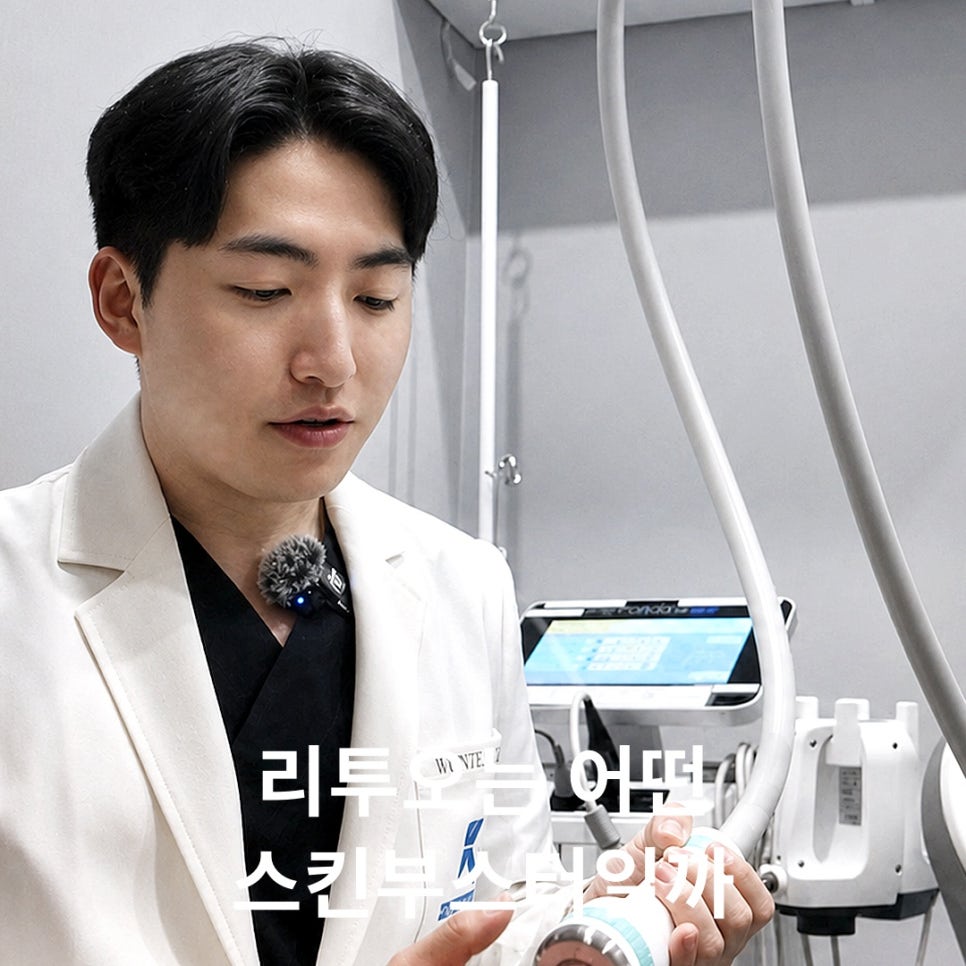
Rituo, more precisely Elravie Rituo,
is known as an ECM-based skin booster.
ECM stands for extracellular matrix.
In the skin, this term is used to describe
components such as collagen and elastin
that provide structure between cells.
Rituo uses acellular allogeneic dermis—
in other words, material derived from human dermis
from which cellular components have been removed,
leaving the structural components behind.
Simply put,
it can be understood as a method
of processing components related to the dermal structure
into a microscopic form
and injecting them.
However, this does not mean
that the skin immediately regenerates
or is restored unconditionally.
Responses may vary depending on
the condition of the skin, the injection site,
and the individual’s history of previous procedures.
How is it different from stimulation-based collagen boosters?
Well-known products such as Juvelook, Olidia, and Sculptra
are often described as inducing a collagen response
through ingredients such as PLLA or PDLLA.
This type is generally considered
a stimulation-based collagen booster.
Rituo, on the other hand,
differs in that it uses ECM components
such as collagen and elastin
derived from human dermis.
In other words, even when they are both skin boosters,
the source of their ingredients
and the way they are described are different.
This does not mean that one is necessarily better than the other.
It is better to consider them differently
depending on the condition of the skin
and the concerns being addressed.
How should human-derived ingredients be viewed?
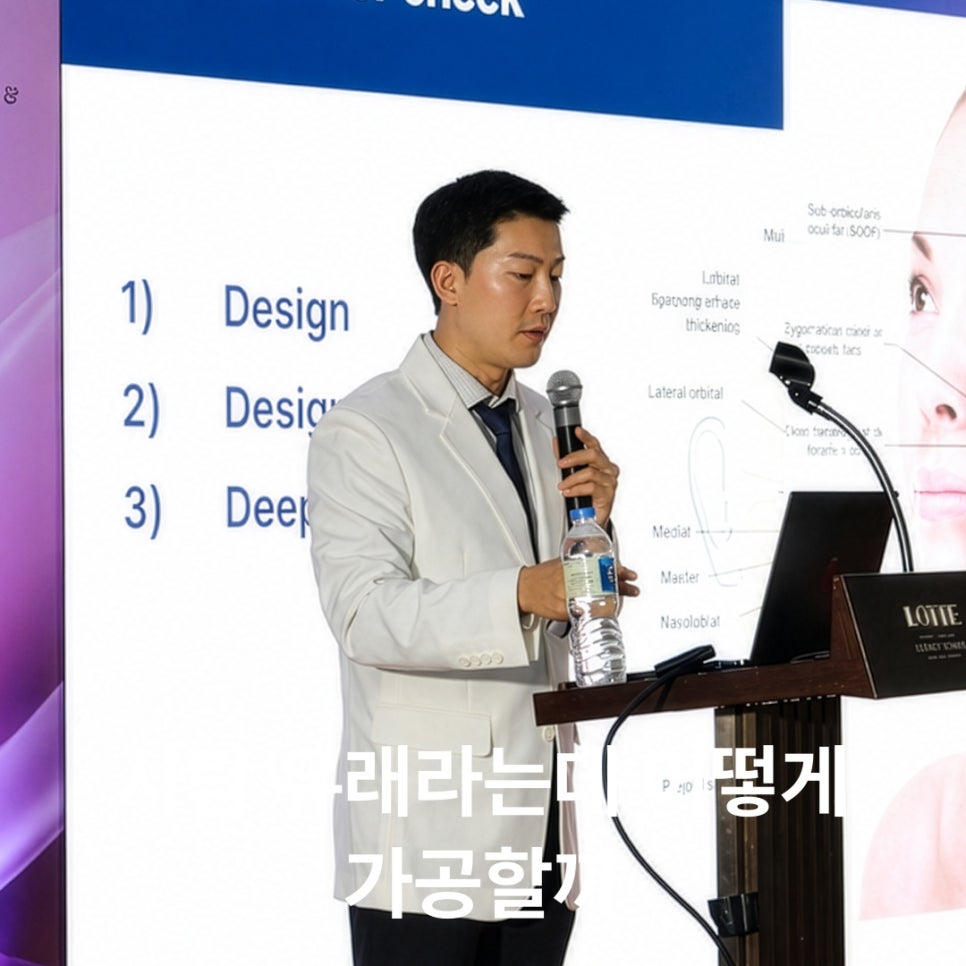
When explaining Rituo,
the term “allogeneic dermis” is often mentioned as well.
“Allogeneic” means that the tissue originated from another person.
Acellular allogeneic dermis is described as material
processed to remove cellular components
while retaining ECM components
related to the dermal structure.
However, the fact that it has undergone processing
does not mean that everyone will have the same response.
If you have a history of skin inflammation or allergies,
or have recently undergone a procedure,
it is advisable to inform your provider in advance
during your consultation.
What concerns is it used for?
ECM-based products such as Rituo
are often discussed during consultations
for concerns such as uneven skin texture, dullness,
fine lines, and reduced elasticity.
However, having these concerns
does not automatically mean that Rituo is the right choice.
Dullness may be caused by a lack of moisture,
or it may be related to a compromised skin barrier.
What looks like fine lines
may also involve skin thickness,
reduced elasticity, and facial-expression habits.
Therefore, before focusing on the product name,
it is necessary to consider
what may be causing the current skin concern.
Points to know before the procedure
Because Rituo is an injection procedure,
redness, swelling, bruising,
and injection marks may occur.
Some people may also experience
temporary unevenness or tenderness.
Rather than making a decision based on a single session,
it is often necessary to plan the number of sessions
and intervals differently
depending on the skin condition and treatment area.
What matters is not only which product is used,
but also which area is treated,
at what depth,
and in what amount it is injected.
Even with the same product,
the plan may vary depending on skin thickness
and sensitivity.
Points to check before your consultation
Before consulting about Rituo,
it is a good idea to check the following:
-
The name of the actual product being used
-
Whether it belongs to the hADM-based ECM category
-
The manufacturer and product classification
-
The injection site and depth
-
Your history of fillers and skin boosters
-
The possibility of redness, swelling, and bruising
-
An explanation of the allogeneic tissue product
If a product is described as containing
human-derived tissue components,
it is advisable to ask about anything you are unsure of in advance.
Frequently asked questions
Q. How is Rituo different from existing skin boosters?
Rituo is described as belonging to a category
that uses ECM components derived from human dermis.
It differs in the source of its ingredients
and the way it is described
from stimulation-based boosters
that induce a collagen response
through ingredients such as PLLA and PDLLA.
Q. Is one session enough?
It depends on the condition of the skin and the treatment area.
In many cases, the required number of sessions
and intervals are determined
after assessing the current condition of the skin.
Q. Is it safe because the ingredients are human-derived?
Acellular allogeneic dermis is described as material
from which cellular components have been removed
and whose dermal structural components are used.
However, responses may vary depending on
the condition of the skin, allergy history,
presence of inflammation,
and history of recent procedures.
Rituo is a skin booster described as belonging
to the human-derived dermal ingredient category,
specifically the hADM-based ECM category.
Because its ingredient source
and the way it is described differ
from existing stimulation-based collagen boosters,
it is best to understand them as separate categories.
What matters is to first determine
what is causing your skin concern,
rather than focusing on the product name.
It is advisable to identify through a consultation
whether this is appropriate for your current condition
and then make a plan accordingly.
Thank you for reading this lengthy post.
This was Wi Young-jin.