Hello.
I’m Youngjin Wi from Beauty’s Doctor.
When looking into acne scars or
deep pores,
you often come across the name
CO2 fractional laser.
However, many people become concerned
when they see the phrase
“removing the skin” in the explanation.
It is easy to wonder whether
the entire face is being peeled off
or whether the skin will become too thin.
In short,
CO2 fractional laser treatment
does not remove the entire surface of the skin all at once.
It is better understood as a method that divides
the laser beam into extremely small dots
and creates tiny channels in the areas that need treatment.
Untreated skin remains
between the dots,
and these areas serve as points that help support recovery.
The word
“fractional” in the name
is also close in meaning to
“delivering the laser in divided sections.”
What Does “Fractional” Mean?
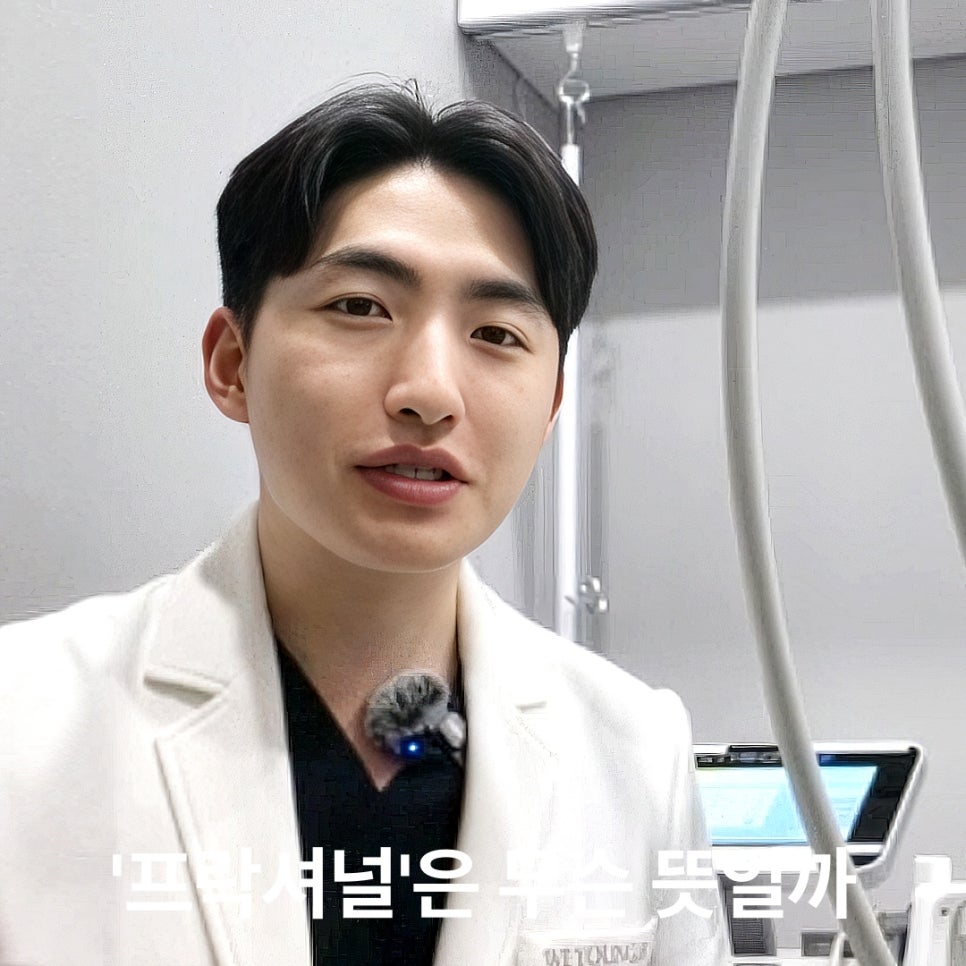
Fractional treatment
refers to a method of delivering the laser
in small dot-shaped sections
rather than applying it broadly as one continuous beam.
Tiny, dot-shaped areas of stimulation
are created in the skin,
while the areas between them remain normal skin.
This remaining skin
plays an important role during the recovery process.
Simply put,
it does not peel off the entire surface of the skin at once.
Instead, it creates multiple small channels
to induce a recovery response in the skin.
During this process,
skin responses related to collagen and elasticity
are often discussed as well.
However, this does not mean
that scars will always disappear
or that completely new skin will form.
The response may vary from person to person
depending on the depth of the scars,
skin thickness, and recovery capacity.
Why Does a CO2 Laser Affect the Skin?
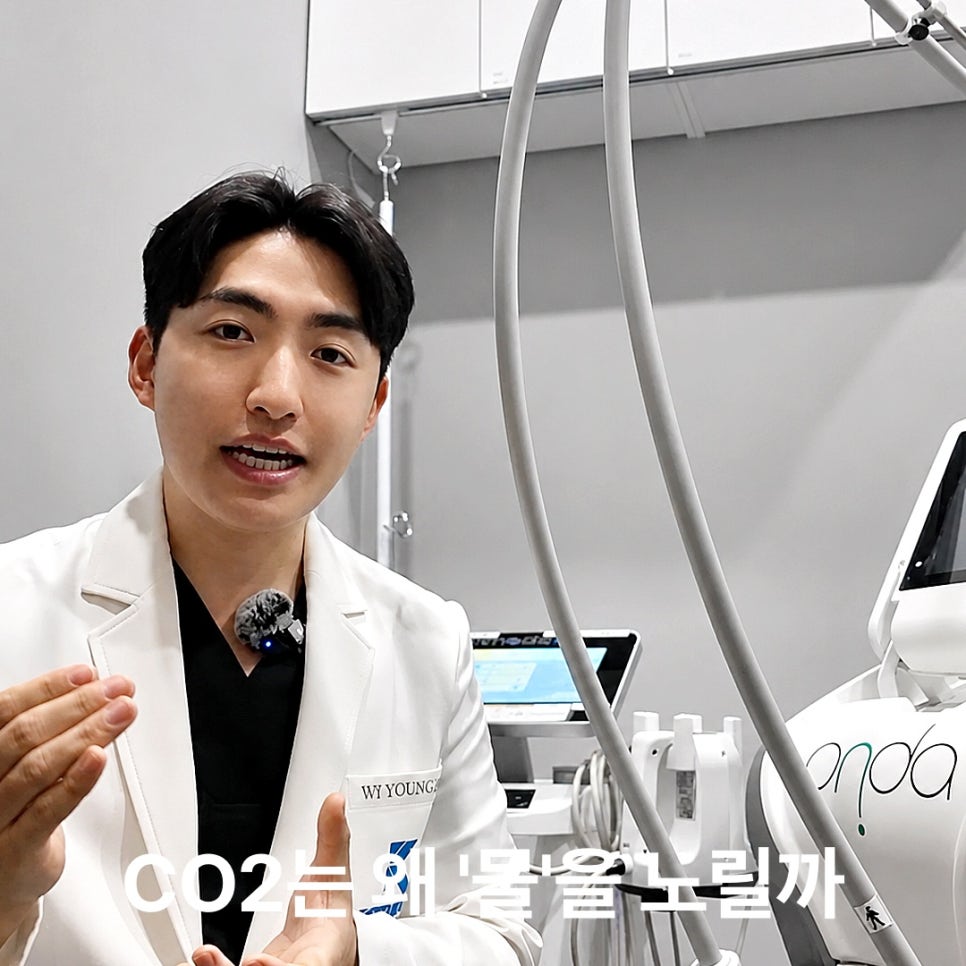
The CO2 in a CO2 laser
stands for carbon dioxide.
A CO2 laser
is explained as using a wavelength that is well absorbed by water in the skin
to deliver thermal energy to the tissue.
Because the skin contains a lot of water,
fine thermal reactions and channels
may form where the laser energy reaches.
A method that creates
actual microscopic channels on the skin’s surface in this way
is called an ablative laser treatment.
Unlike non-ablative methods that warm the surface,
it directly treats the tissue,
so the recovery period must also be taken into account.
For this reason, CO2 fractional laser treatment
is often classified as a relatively intensive procedure,
and careful consideration is needed depending on the condition of the skin.
What Concerns Is It Commonly Discussed For?
CO2 fractional laser treatment
is often mentioned in consultations about acne scars,
deep pores,
and depressed scars.
It is especially often discussed
when the scar is relatively clearly indented at the edges,
as with boxcar scars,
or narrow and deeply indented,
as with ice pick scars.
However, having scars
does not automatically mean
that CO2 laser treatment is necessary.
The appropriate approach may differ
depending on the shape and depth of the scars,
skin thickness, the possibility of hyperpigmentation,
and the recovery time available.
A concern that looks like enlarged pores
may actually involve a combination of sebum,
loss of elasticity, scarring, and skin-texture issues.
Therefore, before focusing on the name of the device,
it is necessary to determine
what may be causing your particular skin concern.
How Should the Recovery Period Be Considered?
CO2 fractional laser treatment
creates tiny channels in the skin,
so redness, stinging, warmth,
and tiny scabs may occur after treatment.
For several days,
the skin may look rough
or makeup may feel as though it does not apply smoothly.
The degree of redness
and the possibility of hyperpigmentation
may also vary depending on skin type.
Especially if your skin is sensitive
or prone to hyperpigmentation,
the treatment intensity and intervals
should be considered more carefully.
During the recovery period,
sun protection, moisturization,
and reducing irritation are important.
It is best to avoid actions that may burden the skin,
such as forcibly removing scabs,
strong peeling treatments, saunas, or drinking alcohol.
Points to Check Before Treatment
Before consulting about CO2 laser treatment,
it is a good idea to check the following:
-
What type of scar it is
-
How deep the scar is
-
Whether it is necessary to distinguish between enlarged pores and scars
-
Whether the skin is thin or sensitive
-
Whether the skin is prone to hyperpigmentation
-
Whether sufficient recovery time can be set aside
-
Whether you have received instructions on post-treatment care
CO2 fractional laser treatment
directly addresses the surface of the skin,
so post-treatment care must also be considered.
It is not a treatment that is necessarily better simply because it is performed more intensely.
It is important to adjust the necessary depth and treatment area
to suit the condition of the skin.
Frequently Asked Questions
Q. Does a CO2 laser remove the entire surface of the skin?
It does not remove the entire surface of the skin all at once.
The fractional method
divides the laser into small dot-shaped sections
and creates tiny channels
only in the areas reached by the dots.
Normal skin remains between the dots,
which can be understood as a structure that helps support recovery.
Q. Do scabs form after treatment?
Tiny scabs, redness, warmth,
and stinging may occur.
The recovery process
may vary from person to person
depending on skin type, treatment intensity, and scar depth.
Q. Is one treatment enough?
It depends on the condition of the scars or pores.
Rather than assuming that one treatment is sufficient,
treatment is often planned over multiple sessions
while allowing time for the skin to recover.
Q. Is CO2 laser treatment also used for pores?
It may be discussed when the structure of the skin’s surface is also a concern,
such as with deep pores or depressed scars.
However, the appropriate approach may differ
depending on whether the cause of the enlarged pores is sebum,
loss of elasticity, or scarring.
CO2 fractional laser treatment
is closer to a method that induces a response in the skin
by creating tiny channels in small dot-shaped areas
than to a procedure that removes the entire surface of the skin.
It is often discussed when the structure of the skin’s surface
is a concern, such as with acne scars or deep pores.
However, because it involves a recovery period and skin irritation,
it is not necessarily suitable for everyone.
The shape of the scars, skin thickness, sensitivity,
the possibility of hyperpigmentation, and lifestyle patterns
should all be considered to determine through a consultation
whether it is appropriate for your current condition.
Thank you for reading this long post.
This was Youngjin Wi.