Hello.
I’m Wi Young-jin from Beauty’s Doctor.
When looking into redness that easily appears on the cheeks or
small visible blood vessels beside the nose,
you often come across the names
V Laser and Excel V.
However,
when people see the explanation that “laser treatment reduces redness,”
many also have concerns like these:
“Does it burn red skin with a laser?”
“Could it make my skin even more sensitive?”
In short,
Excel V is not a device that erases redness
by burning the skin.
It is a laser that selectively targets
the blood vessels, which are one of the causes
of skin appearing red.
Redness is often not caused by
the surface of the skin itself being painted red.
Instead, it can appear when blood vessels
close to the skin’s surface show through.
Excel V is described as a treatment for vascular redness
that uses the way laser energy is absorbed
by pigments inside these blood vessels.
How Does Excel V Target Redness?
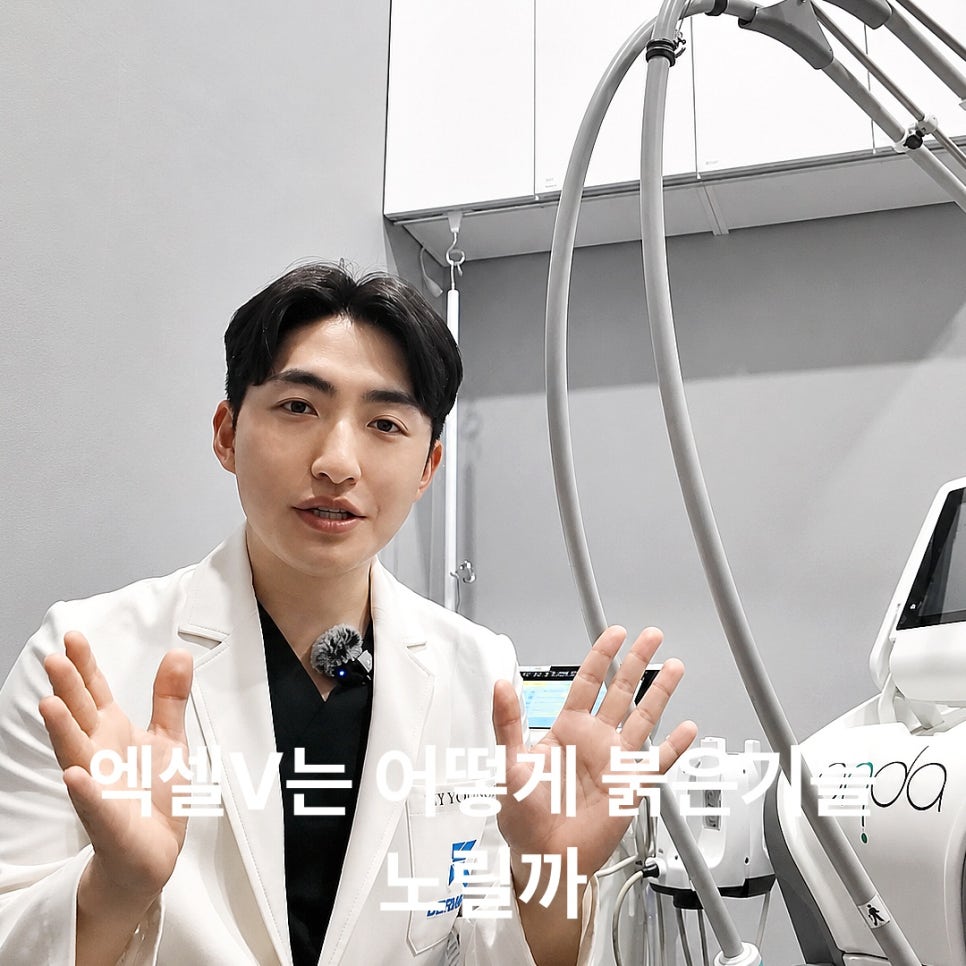
Excel V
is known as a laser device used
when treating blood vessels and pigmentation.
The key point is
that laser light is absorbed by hemoglobin
in the blood.
Hemoglobin is
the pigment in the blood
that makes it appear red.
Facial flushing and visible small blood vessels
often occur when blood vessels
close to the skin’s surface show through.
When laser energy is absorbed
by the pigment inside these blood vessels,
a thermal reaction occurs,
which can be used to help manage
vascular redness.
However, not all redness
is caused by blood vessels.
The approach may differ depending on whether it is
redness left after inflammation,
dilated blood vessels,
or a skin-barrier issue.
What Is the Difference Between 532 nm and 1064 nm?

Excel V
is known as a device that can use
two different wavelengths.
This is because the appropriate wavelength
may vary depending on the depth and type of redness.
532 nm
is often discussed for concerns closer to the surface,
such as redness in the relatively shallow layers of the skin,
fine visible blood vessels, and red marks.
1064 nm
is sometimes used when treating
deeper or thicker blood vessels.
In other words, even when the concern is redness,
the wavelength may vary depending on whether it is
superficial redness or deeper vascular redness.
During treatment,
cooling is used together to cool the skin’s surface
and reduce surface irritation.
However, which wavelength is used
and at what intensity
may vary depending on the condition of the skin
and the cause of the redness.
What Concerns Is It Commonly Discussed For?
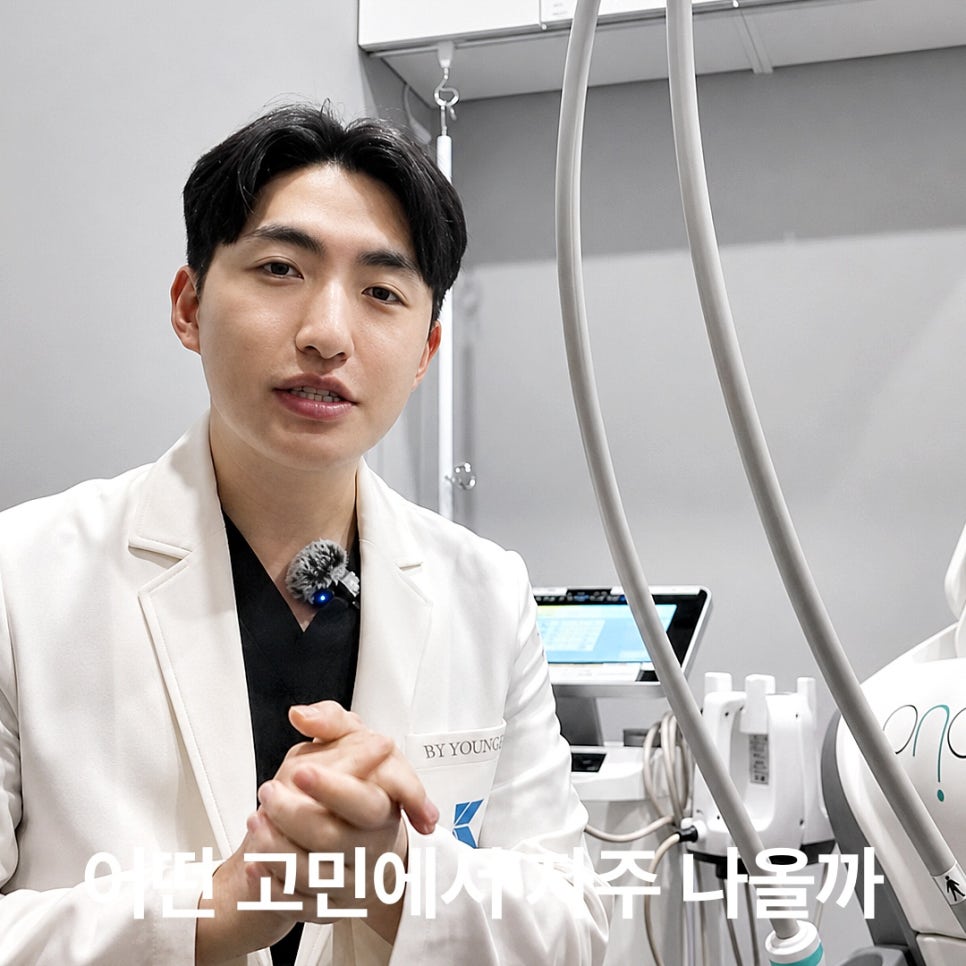
Excel V
is often mentioned in consultations for
facial flushing that develops easily,
visible small blood vessels beside the nose or on the cheeks,
and red marks left after acne.
It may also be discussed together with
concerns about blemishes or pigmentation.
However, just because the skin appears red
does not necessarily mean Excel V is needed.
The reason the skin looks red
could be dilated blood vessels,
or it could be skin-barrier damage or an inflammatory response.
If the skin is thin or sensitive,
or if it tends to develop a sensation of heat easily,
the intensity and treatment intervals
need to be considered more carefully.
Therefore, before focusing on the name of the device,
it is necessary to identify
what is causing the redness.
Things to Know Before Treatment

Because Excel V is a laser treatment,
temporary redness, a sensation of heat,
swelling, or stinging may occur afterward.
Areas where blood vessels are prominent
may look darker after treatment
or may temporarily feel more sensitive.
Rather than determining the outcome from a single session,
treatment is often planned over several sessions
at intervals of a few weeks,
while considering the condition of the skin
and the depth of the redness.
However, the number of sessions and intervals
are not fixed.
They may vary depending on skin type,
the cause of the redness,
and sensitivity.
The important point is not to use excessive intensity,
but to adjust the wavelength and intensity
to match the cause and depth of the redness.
Things to Check Before Your Consultation
Before consulting about Excel V,
it is a good idea to check the following:
-
Whether the cause of the redness is vascular
-
Whether it is flushing, visible small blood vessels, or red marks
-
Whether your skin is thin or sensitive
-
Whether your skin tends to develop heat easily
-
Which wavelength is being considered: 532 nm or 1064 nm
-
The possibility of redness and a sensation of heat after treatment
-
Treatment intervals and recovery care methods
In particular, flushing
often involves a combination of the skin barrier,
temperature changes, inflammation, and vascular responses.
Therefore, rather than simply thinking,
“Because it is red, I need a laser,”
it is important to first check
whether it is appropriate for your current skin condition.
Frequently Asked Questions
Q. Does Excel V remove redness by burning the skin?
It does not remove redness
by burning the skin.
It can be understood as a treatment for vascular redness
that uses the fact that laser energy is absorbed
by hemoglobin inside blood vessels.
Q. What is the difference between 532 nm and 1064 nm?
532 nm
is often discussed for relatively superficial flushing,
small visible blood vessels,
and red marks.
1064 nm
is sometimes used when looking at
deeper or thicker blood vessels.
The choice may vary depending on
the depth and type of redness.
Q. Is one session enough?
It depends on the condition of the skin.
Rather than deciding based on a single session,
treatment is often planned over multiple sessions
while observing the cause of the redness
and the skin’s response.
Q. Is Excel V also used for red marks left after acne?
If red marks left after acne
are related to vascular redness,
Excel V may be discussed as a treatment option.
However, the approach may differ
depending on whether the marks are pigmentation,
redness after inflammation,
or whether acne inflammation is still present.
Excel V
is not a device that erases redness
by burning the skin.
Rather, it uses a laser that reacts with pigments
inside blood vessels to address
vascular redness.
It is often discussed in consultations
for concerns that appear red,
such as flushing, visible small blood vessels,
and red marks left after acne.
However, the cause of redness
can vary from person to person.
The appropriate approach may differ
depending on whether the issue involves
blood vessels, the skin barrier,
or an inflammatory response.
It is best to confirm through a medical consultation
whether this approach is appropriate
for your current skin condition
before making a treatment plan.
Thank you for reading this long post.
This was Wi Young-jin.