Hello.
I’m Wi Young-jin from Beauty's Doctor.
When looking into scar or pore care,
you often come across the name “CureJet”
along with the explanation that it “delivers products without needles.”
But when you hear the word injection,
a needle usually comes to mind first.
So it is natural to wonder:
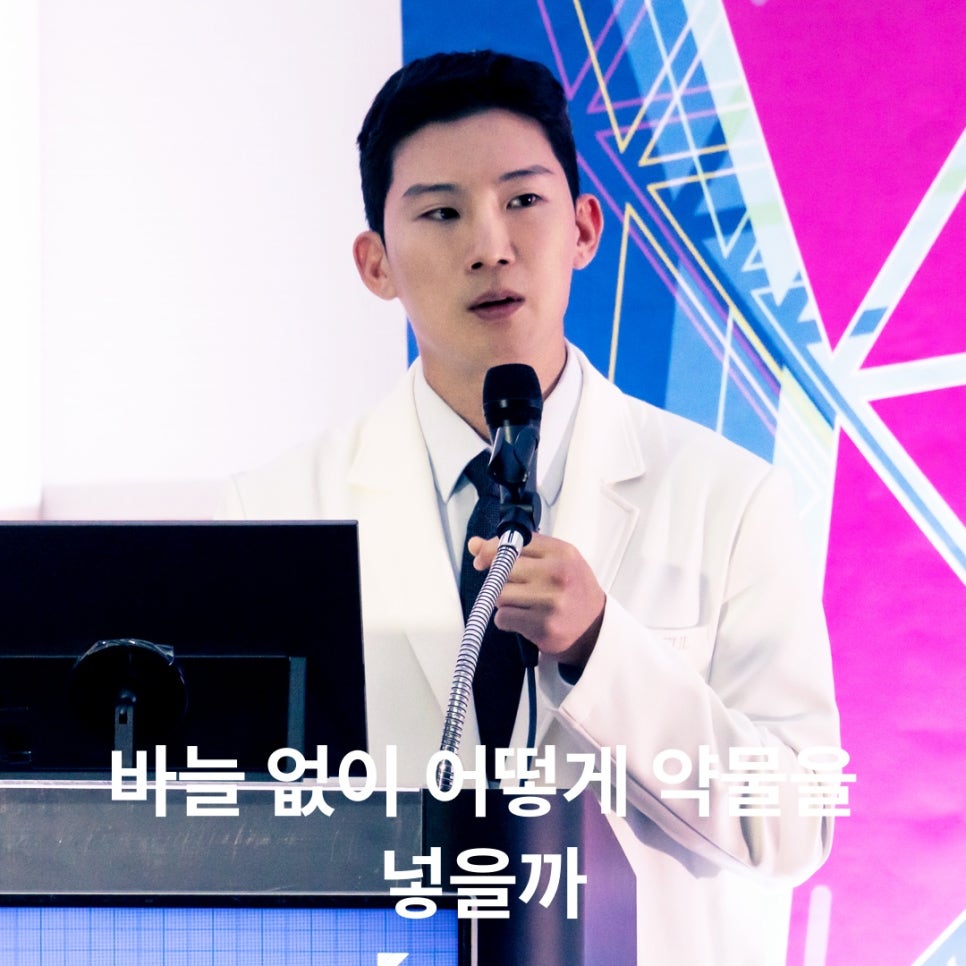
“If there is no needle,
how does the solution get inside the skin?”
In one sentence,
CureJet is a device that delivers a solution
by forcefully spraying it in an extremely thin stream
instead of puncturing the skin with a needle.
This method
is called needle-free jet injection.
As the name suggests,
it delivers a solution into the skin
by spraying it without a needle.
How Does It Deliver a Solution Without a Needle?
The key to CureJet
is the pressure that pushes out the solution.
Rather than having a needle pierce the skin,
it turns the solution itself into an extremely thin stream
and sprays it forcefully for an instant.
Just as spraying a very strong stream of water
can leave a mark on thin paper,
CureJet uses the principle of delivering a solution
into the skin by spraying it at high pressure.
An important component here
is the solenoid.
A solenoid
is made by winding electrical wire into a cylindrical shape.
When electric current flows through it, a magnetic field is created,
and this force generates momentary pressure in the solution.
That pressure sprays the solution
through the nozzle at very high speed.
Simply put,
rather than a needle creating a path,
pressure pushes the solution into the skin.
Why Is It Often Mentioned in Discussions About Scars?
CureJet is often mentioned
in connection with concerns such as acne scars,
enlarged pores, and stretch marks.
In particular, scars that are firmly attached underneath
may show limited changes when only the surface is treated.
Sometimes an indented scar remains
where acne once was.
These scars are not always just a problem with the skin’s surface;
in some cases, they also involve adhesion to the tissue underneath.
CureJet may be used to stimulate the base of a scar
through high-pressure spraying
while delivering a solution
to the depth where it is needed.
However, scars differ from person to person
in depth and shape.
Even when they look like the same type of acne scar,
the approach differs depending on whether the scar is
narrow and deep like a needle mark
or broadly indented.
Therefore, it is difficult to say that
all scars can be treated in exactly the same way
with CureJet alone.
Depending on skin thickness, recovery speed, and scar firmness,
it may also be combined with other devices or treatments.
What Solutions Are Used Alongside It?
One question people often have about CureJet is:
“What exactly is being delivered?”
CureJet itself is not a product designed
to fill something in;
it is closer to a device that serves as a pathway
for delivering a solution into the skin.
Therefore, the purpose of the treatment may vary
depending on which ingredients are used alongside it.
A skin-booster product may be used together with it
to consider skin texture and hydration,
while ingredients intended to support a collagen response
may be selected depending on the condition of the skin.
However, rather than one ingredient being unconditionally better,
what matters more is whether it suits
the scar’s shape and the condition of the skin.
Instead of deciding on a product in advance,
it is more natural to assess the scar’s depth
and the skin’s response during a consultation
and then make a decision.
Is CureJet Alone Enough?
Scar treatment often requires a combination
depending on the condition,
rather than being completed with just one device.
For example,
the approach differs when the problem is surface texture
and when it is a deeply indented scar.
A lingering red mark
and remaining indentation
are also difficult to approach in the same way.
Therefore, CureJet can be considered
one method of scar treatment,
but it is not a definitive device
that is applied identically to every scar.
It is important to consider
which scars it is being used for,
what depth is being targeted,
and which ingredients will be used alongside it.
What Should Be Checked First?
Knowing how the device works can be helpful,
but more important is determining
what type of scar you have.
The approach may differ depending on whether it is
an indented scar,
enlarged pores,
or a red mark.
You should also consider
how deep the scar is,
how sensitive the skin is,
and how quickly it recovers.
Because skin condition varies from person to person,
not everyone needs a particular treatment.
If you are looking into scar or pore care in Hapjeong,
it is best to first check your current condition
through a consultation.
After that, the safest order is to determine,
depending on your condition,
whether CureJet is suitable
or whether it would be better considered alongside another approach.
Frequently Asked Questions
Q. Does CureJet really not use needles?
Yes.
It does not work by puncturing the skin with a needle;
it sprays a solution at high pressure.
That is why it is called needle-free,
or needle-free jet injection.
However, the absence of a needle
does not mean that you will feel nothing.
The sensation and recovery process
may vary depending on the condition of the skin and the treatment area.
Q. Will my scars be filled in if I only have CureJet?
CureJet is closer to a method
that delivers a solution into the skin
and stimulates the scar area
than to a device that directly fills in scars.
Therefore, the treatment approach may vary
depending on the depth and shape of the scar
and the ingredients used alongside it.
When necessary,
it may be planned together with other devices or treatments.
Q. Is it a treatment that is completed in one session?
It is usually difficult to determine the outcome after just one session.
Scar and pore concerns are often treated in stages,
allowing time for the skin to recover
and observing its response.
The number of sessions and intervals
may vary depending on scar depth, skin thickness, and recovery speed.
Thank you for reading this long post.
This was Wi Young-jin.