Hello.
I’m Wiyoungjin from 뷰티스닥터.
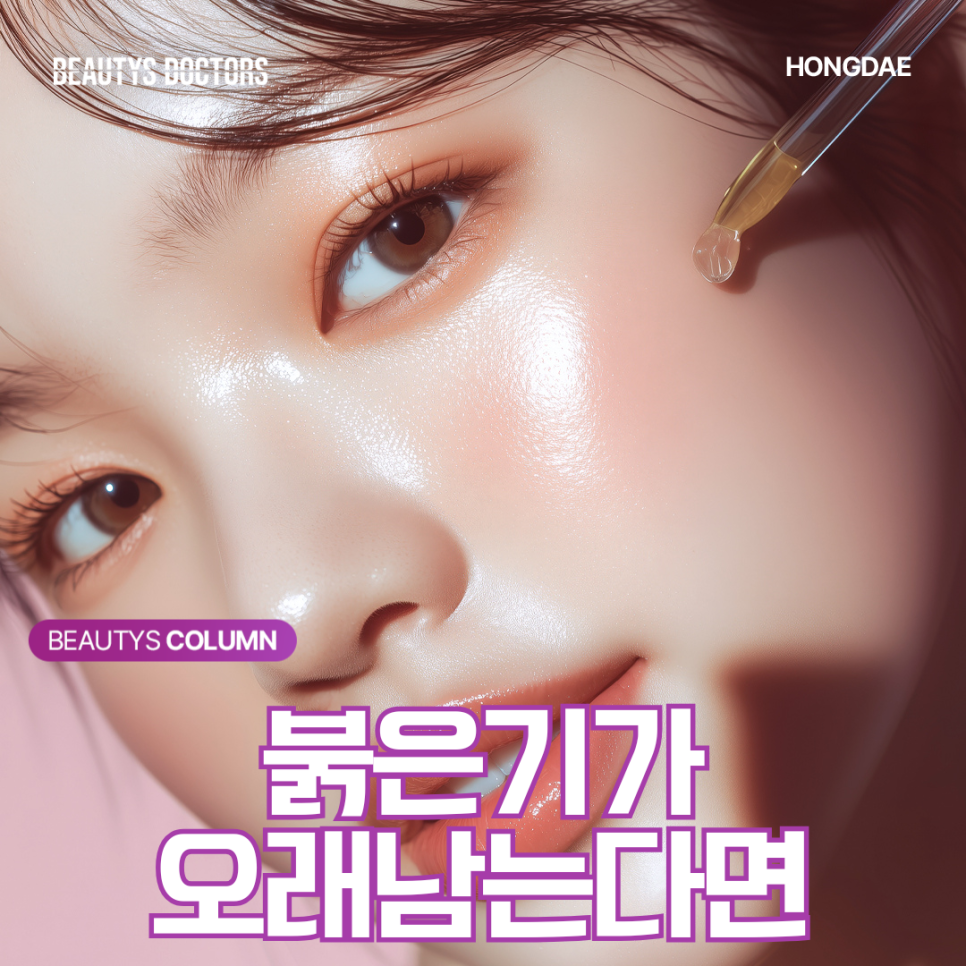
Some people notice that both cheeks look flushed every time they look in the mirror, or that their face quickly heats up after just one drink.
At first, they may simply think, “I must be someone who blushes easily,” and let it go. But at some point, the redness may stop settling down easily, leading them to search for ways to cover it with makeup.
Not all flushing is the same.
Temporary flushing that appears briefly and then disappears is different from persistent redness that does not settle down as the capillaries become enlarged.
So before looking for “a way to get rid of it in one session,” it is important to first determine what kind of redness is appearing on your face.
Common Causes of Facial Flushing
There are several patterns that can make the face turn red.
The most common is temporary blood vessel dilation caused by irritation.
When exposed to triggers such as heat, cold, spicy food, alcohol, nervousness, or exercise, the blood vessels beneath the facial skin temporarily expand and then contract again.
In this case, the redness generally settles down with time.
The problem occurs when these triggers are repeated, causing the capillaries themselves to remain enlarged and not return to their previous state easily.
When looking in the mirror, you may notice fine red vessels beside the nose or on both cheeks, or your face may remain flushed for a long time even when you are at rest.
In some cases, a chronic skin condition called rosacea may also be involved.
Unlike simple flushing, rosacea may cause stinging and burning along with redness, as well as rashes that look like small pustules.
Rosacea is a chronic skin condition in which redness and small rashes repeatedly appear, mainly around the center of the face.
Because it follows a different pattern from simple flushing, it needs to be distinguished through a medical consultation.
What Is Checked at the Clinic
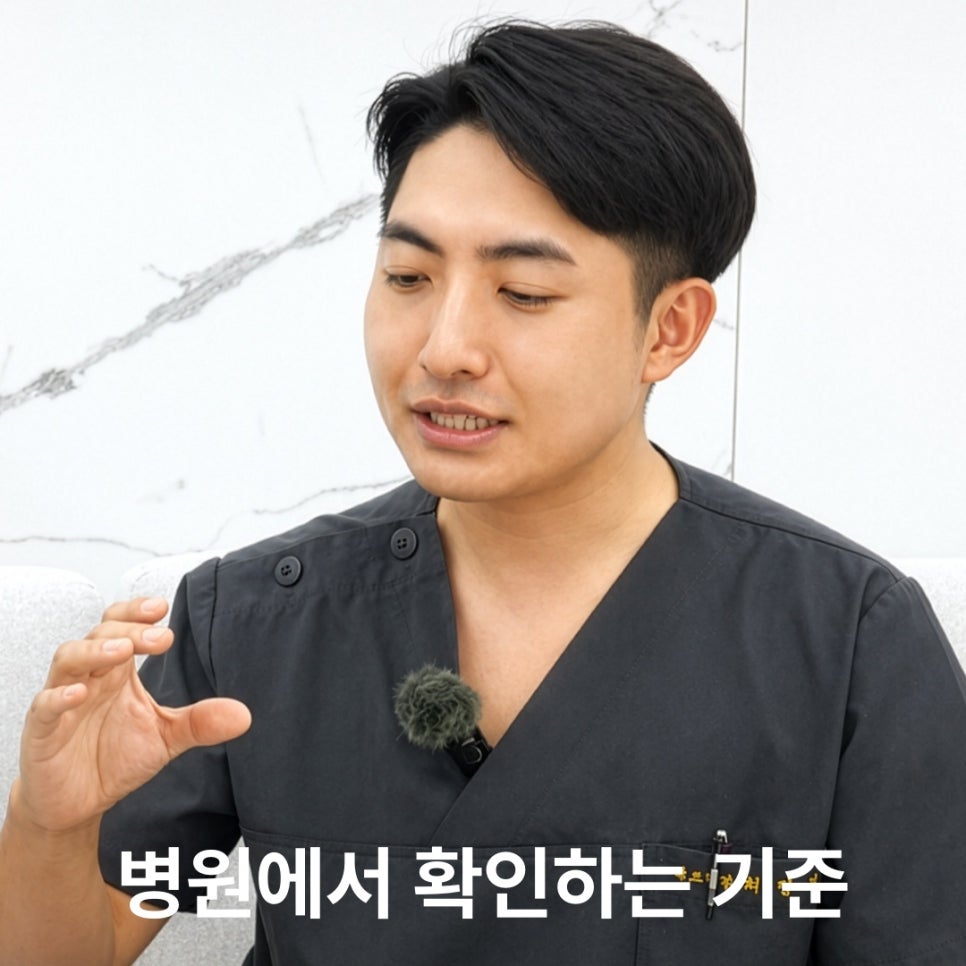
The first thing we look at during a consultation is “where the visible redness is coming from.”
The approach differs depending on whether it is irritation-related flushing that appears briefly and fades, an established state of capillary dilation, or a pattern involving rosacea.
One of the devices often used for redness is Excel V.
Excel V is a device with two wavelengths, 532 nm and 1064 nm. It is designed to allow superficial redness and somewhat deeper vascular responses to be assessed separately.
However, it is important not to hear the name of the device and immediately assume, “If I have this treatment, the redness will disappear right away.”
Even with the same device, the recommended approach and number of sessions may vary depending on the extent of capillary dilation, whether rosacea is also present, and the skin tone and sensitivity.
During a consultation, we first check the pattern in which the redness appears before deciding on a device.
We look at when it is most severe during the day, which triggers make it more noticeable, and how long it takes to settle down.
Even when the complaint is simply “my face is red,” the approach may differ if these patterns are different.
Factors That Vary from Person to Person
Flushing is strongly influenced by the living environment and the condition of the skin.
Sensitive, thin skin may respond more easily to irritation, and saunas, Korean-style bathhouses, spicy food, alcohol, and large temperature changes can also repeatedly trigger redness.
Cumulative ultraviolet exposure is also important.
Long periods of sun exposure can affect the skin barrier and vascular response, potentially leading to a pattern in which the redness remains for longer.
It is also necessary to check whether an underlying skin condition such as rosacea, seborrheic dermatitis, or atopic dermatitis is present.
Cosmetics or topical products currently in use, as well as products containing exfoliating ingredients, may also temporarily increase redness.
That is why even people who receive the same treatment for the same number of sessions do not all follow the same course.
If these variables are not considered together during the consultation, the number of treatment sessions may simply increase while the actual important cause is overlooked.
Determining Whether Treatment Is Necessary After a Consultation Rather Than Automatically Proceeding
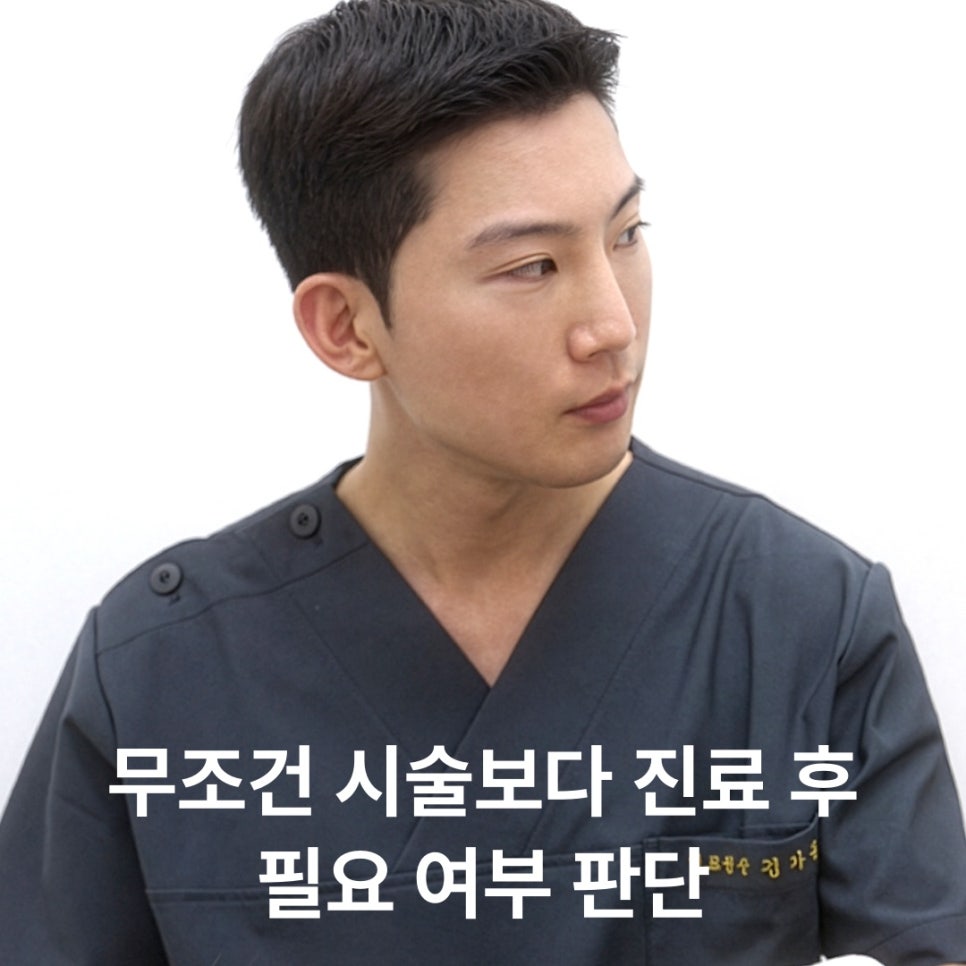
Even under the single term “flushing,” there are several different patterns.
Therefore, rather than hearing the name of a device and immediately scheduling a treatment, it is better to first identify the nature of the current redness.
Among people who have had consultations about flushing in Hapjeong, there are cases where, after an examination, we explain that “for now, reducing irritation and organizing your sun-protection routine should come before treatment.”
At 뷰티스닥터, we first assess the pattern of the current redness through a consultation, then distinguish between areas where device treatment may be necessary and areas that do not need to be treated immediately.
If treatment is appropriate, it is less confusing to make a decision after reviewing the number of sessions, intervals, and possible variables in advance.
Because each person’s skin condition is different, a particular treatment is not necessary for everyone.
If you are concerned about facial flushing, redness on the cheeks, or visible vessels beside the nose, you first need to check your current condition and determine which pattern it most closely resembles.
Frequently Asked Questions
Q. Do I need treatment if my face only turns red when I drink alcohol?
If the redness appears only as a temporary reaction to a trigger such as alcohol, it is better to reduce the frequency of the trigger and first check the condition of the capillaries rather than immediately deciding on treatment.
However, if the redness does not settle down easily and remains for a long time, it is necessary to distinguish the pattern through a consultation.
Q. Will the redness disappear after one Excel V treatment?
It is difficult to regard this as something that will be completed in one session.
Even in the same area, capillaries vary in thickness and depth, and each person responds differently.
Treatment is generally recommended over several sessions depending on the condition, and the number of sessions and intervals should be determined after they are assessed during a consultation.
Q. Wouldn’t it be enough to use cosmetics that are good for flushing?
Skincare that reduces irritation and sun protection are important basics.
However, it is difficult to address both capillary dilation and rosacea solely with cosmetics.
The management approach may differ depending on whether it is simple irritation-related flushing, capillary dilation, or a pattern involving rosacea. If the redness does not settle down easily, it is advisable to have it checked through a consultation.
Thank you for reading this long post.
This was Wiyoungjin.