Hello.
I’m Young-jin Wi from Beauty’s Doctor.
If you have ever searched for Botox in Hongdae,
you may have noticed that the treatment areas are divided into various regions,
such as the glabella, forehead, outer eye area, and square jaw.
Even when the treatment appears to be the same Botox procedure,
the criteria checked during a consultation differ depending on the treatment area and the characteristics of the muscles involved.
That is why having a general understanding before your consultation
can make it much easier to discuss
the area you want treated and your current condition.
What to Look At Differs by Treatment Area
The treatment commonly referred to as Botox
uses botulinum toxin type A
to temporarily reduce muscle movement.
Botulinum toxin type A
acts on the nerve signals transmitted to the muscles
to temporarily lessen movement.
Although the principle is similar,
the size, location, and movement of the muscles vary by area,
so the points that need to be assessed also differ.
For example, in areas with expression lines,
thin, short muscles are intertwined,
so their location and depth need to be assessed in detail.
By contrast, when examining the muscle beside the jaw, as with a square jaw,
it is common to also check the muscle’s thickness and volume,
as well as everyday chewing habits.
A method that worked well for one area
may not be equally suitable for another,
so it is important to distinguish between the different treatment areas.
The Glabella, Forehead, and Outer Eye Area Need to Be Considered Together
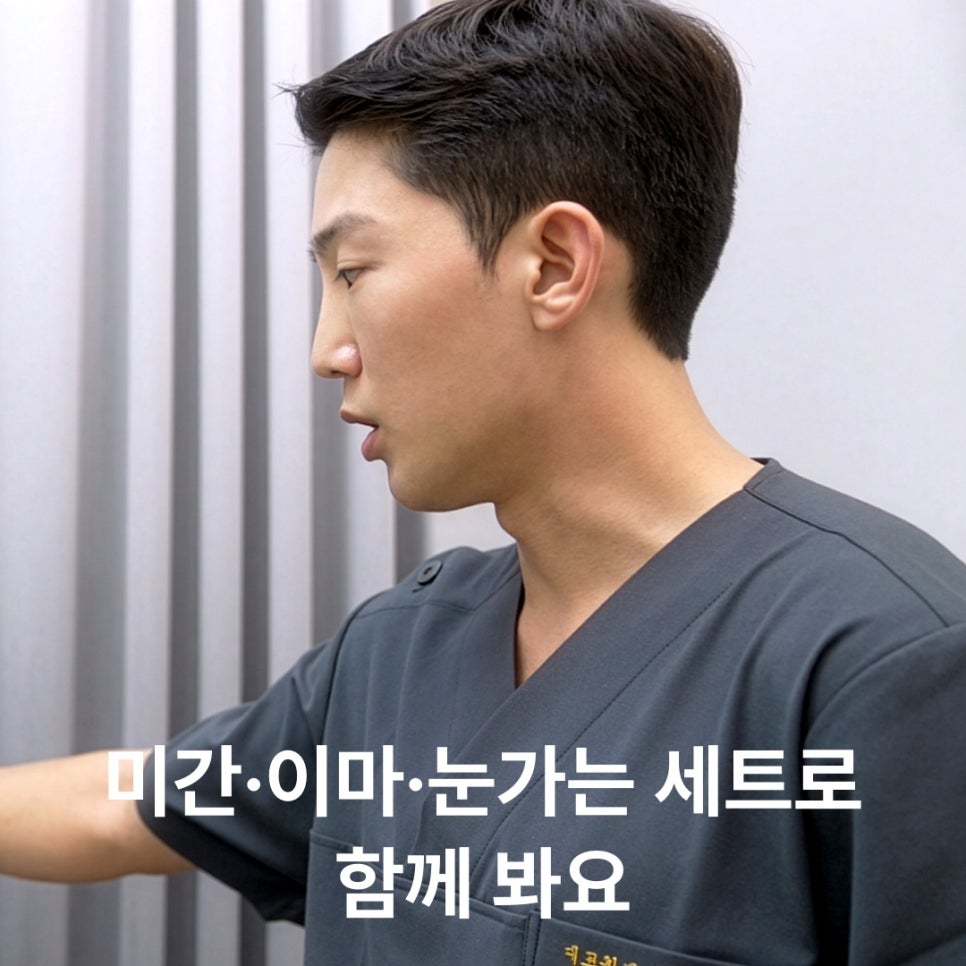
The glabella, forehead, and outer eye area
affect one another when you make facial expressions.
If movement in only one area is reduced too strongly,
movement in another area may become more noticeable,
or your expression may look unnatural.
For this reason, during a consultation,
we look at which expressions tend to create lines
and how the forehead moves when you raise your eyebrows.
Reducing movement in the forehead too much
may make the eyebrows appear heavy and lowered.
Conversely, when only the glabella is adjusted,
other lines on the forehead or around the eyes
may become more noticeable.
The approach may also differ between deep lines that have already become established
and shallow lines that appear only when making facial expressions.
Deep lines may be difficult to address sufficiently
with toxin alone,
so the consultation may include a discussion of whether to consider other approaches as well.
For a Square Jaw, the Masseter Size and Habits Are Considered Together
Square-jaw Botox generally focuses on assessing
the masseter,
the chewing muscle beside the jaw.
The masseter is the muscle beside the jaw
used when chewing food
or clenching your teeth.
When you bite down,
the firm area in front of the corner of the jaw and below the cheek
is the area associated with this muscle.
The reason the jaw may look square
is not determined by muscle thickness alone.
Bone structure, fat distribution, skin laxity,
and the overall proportions of the jawline
may all have an effect.
If you chew forcefully
or have habits such as teeth grinding or clenching,
the masseter may appear more developed.
Conversely, even when the muscle volume is not large,
the reason the face appears wider
may be related to the bone or fat distribution.
Therefore, there are cases in which a change in the contour
can be expected from square-jaw Botox alone,
while in other cases, additional approaches may need to be considered.
The interval between repeat treatments also varies considerably by individual,
depending on the degree of muscle development, chewing habits,
and the response to previous treatment.
How Are Botox and Xeomin Differentiated?
Even within the same botulinum toxin type A family,
the composition and characteristics may vary slightly by product.
Botox and Xeomin are two names
frequently mentioned in Botox consultations near Hongdae.
Botox is
a representative botulinum toxin type A formulation from Allergan Aesthetics, an AbbVie Company.
It is a product with extensive clinical experience and research data,
and is frequently discussed in consultations for expression lines.
Xeomin is
a botulinum toxin type A formulation from Merz.
It is described as a purified toxin formulation
with the complexing proteins surrounding the toxin removed.
Purified toxin refers to a formulation with reduced additional proteins
other than the active ingredient,
and may be a consideration for people with a history of repeated treatments.
However, rather than simply deciding which of Botox and Xeomin is better,
it is preferable to make a choice based on the treatment area, purpose,
and previous treatment history.
Since it can be difficult to compare the units and responses of each product directly,
an assessment based on your current condition during the consultation is necessary.
Things to Check Before Your Consultation
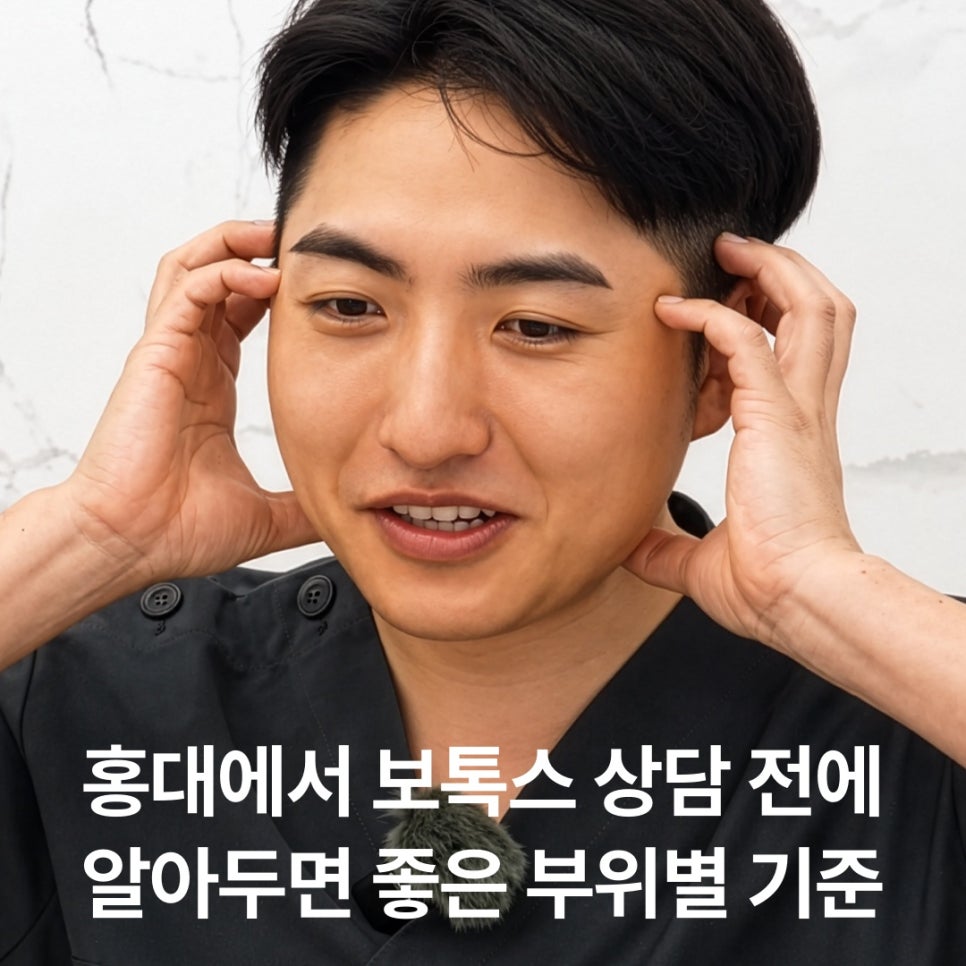
Toxin treatments gradually take effect over time
and naturally wear off as time passes.
The duration of the effects and the interval before the next treatment
can vary considerably by individual, depending on the treatment area, muscle use,
and previous treatment history.
Before your consultation, it is helpful to remember
when you last received treatment,
the product name used,
and the degree of your response at that time.
For a square-jaw consultation,
it is also useful to note whether you grind your teeth, clench your teeth,
or tend to chew forcefully.
For an expression-line consultation,
it is helpful to consider which facial expressions tend to create lines
and whether your forehead or eyebrows have ever felt heavy.
Botox is not a treatment
that is applied in the same way to every area.
Because the expression muscles, jaw muscles, bone and fat distribution,
and degree of skin laxity can all have an effect,
it is important to first assess your current condition.
If you are preparing for a Botox consultation near Hongdae,
it can be helpful to first understand
which criteria are considered for each area,
rather than deciding only on the area you want treated.
Frequently Asked Questions
Q. How long do the effects of Botox last?
A. The effects of the toxin naturally wear off over time,
so the duration can vary from person to person.
The expression-muscle area and square-jaw area
have different muscle sizes and levels of use,
so their responses and duration may also differ.
Q. What should I prepare for my first consultation?
A. It is helpful to remember the area you would like to address,
when you last received a toxin treatment,
and the product used and the degree of your response.
For a square jaw, information about teeth grinding or chewing habits,
and for expression lines, which expressions cause the lines,
can also help with the consultation.
Q. Which is more suitable for me, Botox or Xeomin?
A. Rather than being a matter of superiority,
the two products are botulinum toxin type A formulations
with different compositions and characteristics.
The choice may vary depending on the treatment area, purpose, previous treatment history,
and whether you have received repeated treatments,
so it is best to assess your current condition during the consultation.
Thank you for reading this lengthy post.
This was Young-jin Wi.