Hello.
I’m Ha-won Kim from Beauty’s Doctor.
There is one thing people who have had an Ultherapy consultation
are most curious about.
“After how many days will I start to look different?”
“When will the changes settle in?”
These are some of the most common questions.
Even when looking into an Ultherapy consultation
at a dermatology clinic near Hapjeong Station (Department of Dermatology),
the progression over time is one of the main points people ask about.
Ultherapy is different from
a treatment that immediately fills something, such as a filler.
It delivers ultrasound energy to the deeper layers of the skin,
and as the body’s regenerative response continues afterward,
it is closer to a treatment in which changes are observed over time.
So rather than judging the result immediately after the procedure,
it is better to understand the progression in stages,
such as at 1 month, 3 months, and 6 months.
What Does the Ultherapy Device Do?
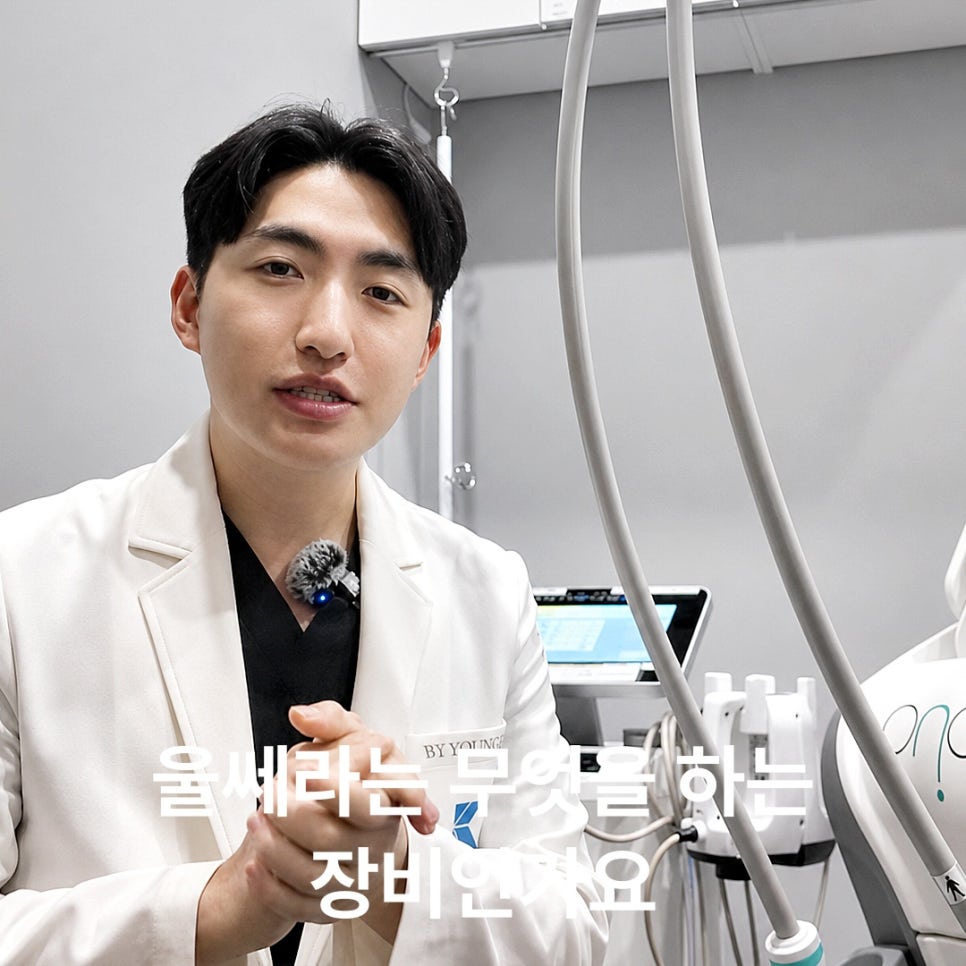
Ultherapy is a lifting device that uses high-intensity focused ultrasound,
or HIFU.
It is known for concentrating ultrasound energy
at a predetermined depth inside the skin
to create a thermal response.
HIFU
concentrates ultrasound energy at one point
to deliver heat to a specific depth inside the skin.
The SMAS layer is another structure
that often comes up during an Ultherapy consultation.
The SMAS layer
is described as the fascial layer beneath the skin
that supports the structure of the face.
When consulting about Ultherapy
at a dermatology clinic near Hapjeong Station (Department of Dermatology),
this deeper structure and the skin’s elasticity are considered together.
Because of this principle, it is easier to understand Ultherapy
not as “a treatment that immediately fills out the contours,”
but as a treatment in which the skin’s response is observed over time.
What Might You Feel Immediately After the Procedure?

Immediately after the procedure,
you may feel a slight tightening
or heaviness in your face.
Some people also feel that their facial contours
look slightly more defined when they look in the mirror.
However, sensations during this period
can include the thermal response, initial swelling, and redness,
so it is difficult to regard them as the final result.
During the first 1–2 weeks,
redness, slight swelling, heaviness,
or soreness when pressed may remain.
In most cases, patients are advised
that these symptoms will gradually subside over time.
Therefore, when having a consultation
at a dermatology clinic near Hapjeong Station (Department of Dermatology),
it is helpful to review the subsequent progression
rather than focusing only on changes seen on the day of the procedure.
How Should the Progression at 1, 3, and 6 Months Be Viewed?
Ultherapy is a treatment in which
the response inside the skin is observed over time.
For this reason, consultations often explain
changes that may occur several weeks or months after the procedure,
rather than focusing only on the immediate result.
Around 1 month,
most of the initial redness and heaviness will have subsided,
and this is considered a period when the response inside the skin continues.
Even if you do not feel a major change at this point,
that does not necessarily indicate an unusual progression.
Around 2–3 months,
it is explained as a period when some people begin to notice changes
as the collagen regeneration response continues.
However, the degree to which changes are felt at this point
can vary depending on skin thickness, the extent of sagging,
and the history of previous procedures.
The period from approximately 3–6 months
is the central time frame often explained
during an Ultherapy consultation.
The process of producing new collagen
and allowing it to settle within the tissue
does not end in just a day or two.
Therefore, if you are considering Ultherapy
at a dermatology clinic near Hapjeong Station (Department of Dermatology),
it is natural to use 2–3 months or longer
as one reference point for evaluating the changes.
Why Does It Take Time?
Ultherapy delivers ultrasound energy
to the deeper layers of the skin
to induce the body’s regenerative response.
Collagen is not tissue that is completed immediately
just because it has been stimulated.
New collagen must be produced,
organized within the tissue,
and gradually remodeled.
The speed of this process varies from person to person,
and the point at which changes are felt may also differ
depending on the condition of the skin.
Therefore, rather than viewing Ultherapy
as “a treatment that brings about a dramatic change in just a few days,”
it is better understood as a treatment
in which changes are assessed over time.
Knowing this progression before a consultation
at a dermatology clinic near Hapjeong Station (Department of Dermatology)
can help you view the course after the procedure
more realistically.
Individual Differences and What to Check During a Consultation
Even after receiving the same Ultherapy treatment,
the timing and degree at which changes are noticed
may vary from person to person.
Age, skin thickness, the extent of sagging,
facial fat distribution, and a history of previous lifting procedures
may all have an influence.
During a consultation,
we also assess which areas currently show more sagging,
what the skin’s elasticity and thickness are like,
and which lifting procedures you have previously received.
We also distinguish between
what can be addressed with Ultherapy in your current condition
and areas that may require consideration of other approaches.
Ultherapy is not a treatment
that is needed in the same way by everyone.
Depending on the individual’s condition,
the appropriate areas and intensity, shot configuration,
and whether it should be combined with other procedures may differ.
So if you are looking into Ultherapy
at a dermatology clinic near Hapjeong Station (Department of Dermatology),
it is better to discuss your current facial condition
and the progression over time together,
rather than considering only the price or number of shots.
Frequently Asked Questions
Q. Will my facial expressions feel awkward the day after the procedure?
A. Ultherapy is not a procedure that stops muscle movement,
so unlike Botox, it is not a treatment primarily associated with changes in facial expressions.
However, you may feel redness, heaviness, or soreness immediately after the procedure,
and recovery time can vary from person to person.
Q. What if three months have passed and I do not see a major change?
A. The collagen response varies from person to person.
Some people notice changes around three months,
while in other cases they may become apparent gradually during the 3–6-month period.
If the result feels different from your expectations,
it is advisable to have your current condition
and previous response reassessed during a consultation.
Q. How long do the results last?
A. The duration varies considerably from person to person.
The period for which changes are felt may differ depending on age,
skin thickness, the extent of sagging,
lifestyle habits, and previous procedures.
During a consultation, the next timing or care plan
will be determined based on your current condition
and the direction you want to take.
Thank you for taking the time to read this long post.
This was Ha-won Kim.