Hello.
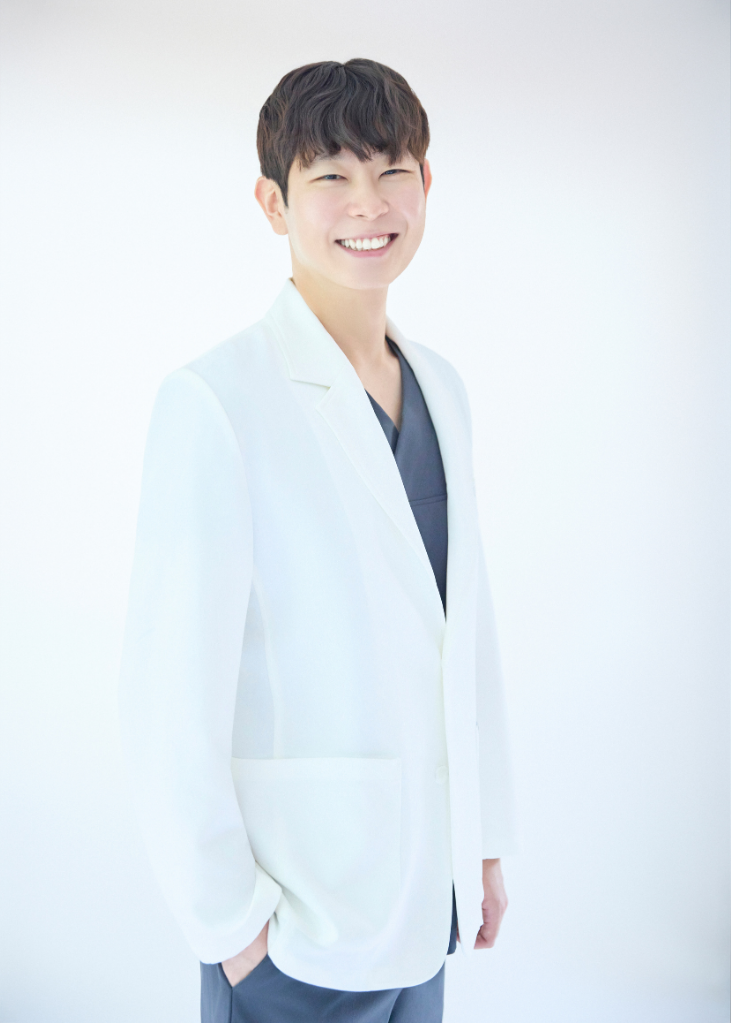
I’m Kim Ha-won, a beauty doctor.
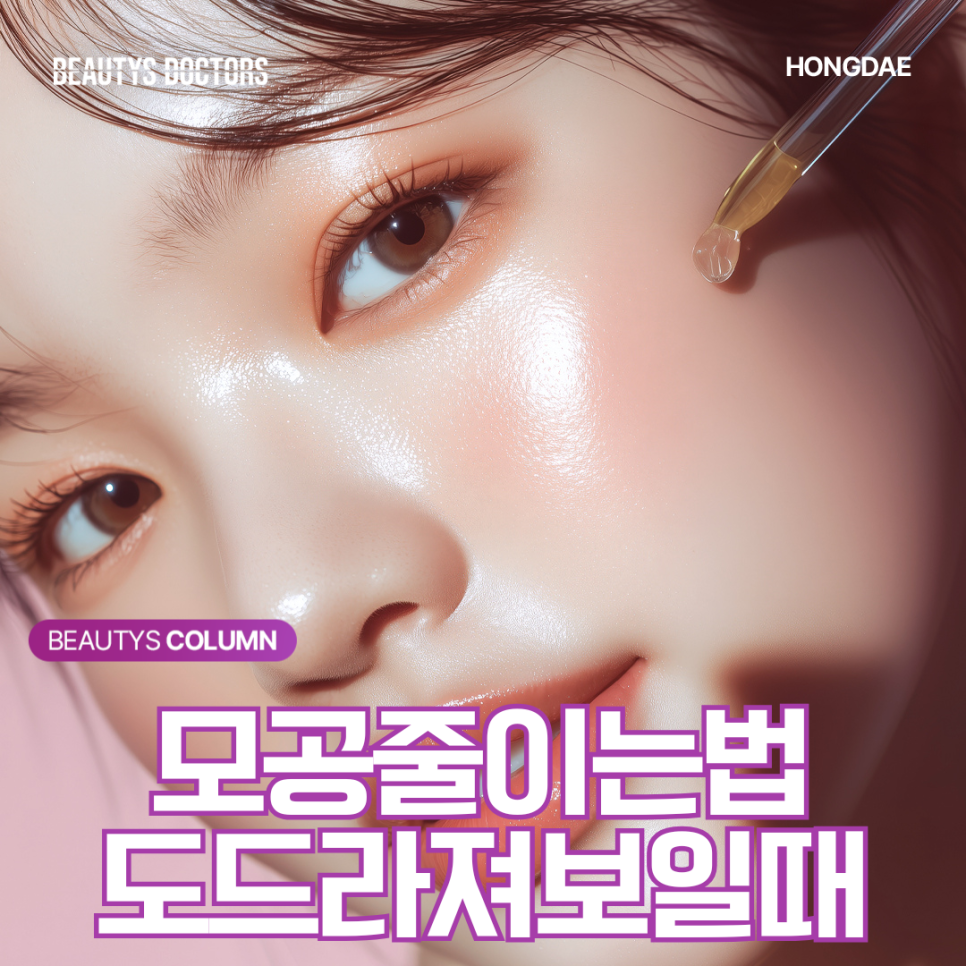
When you look closely in the mirror, there are times when the pores around your nose, cheeks, and forehead become especially noticeable.
“Why do they look larger even though I cleanse thoroughly?”
“Even when I use a face mask, the effect seems to last only briefly.”
These concerns may continue to arise.
That is why people search for ways to reduce the appearance of pores, but pores do not become prominent for just one reason.
Sebum production, skin elasticity, the condition of dead skin cells, genetic tendencies, and age-related sagging are often all intertwined.
Therefore, when it comes to pore care, the first step is to identify which factors are currently having the greatest impact rather than simply focusing on “reducing” pores.
Why Pores Appear More Noticeable
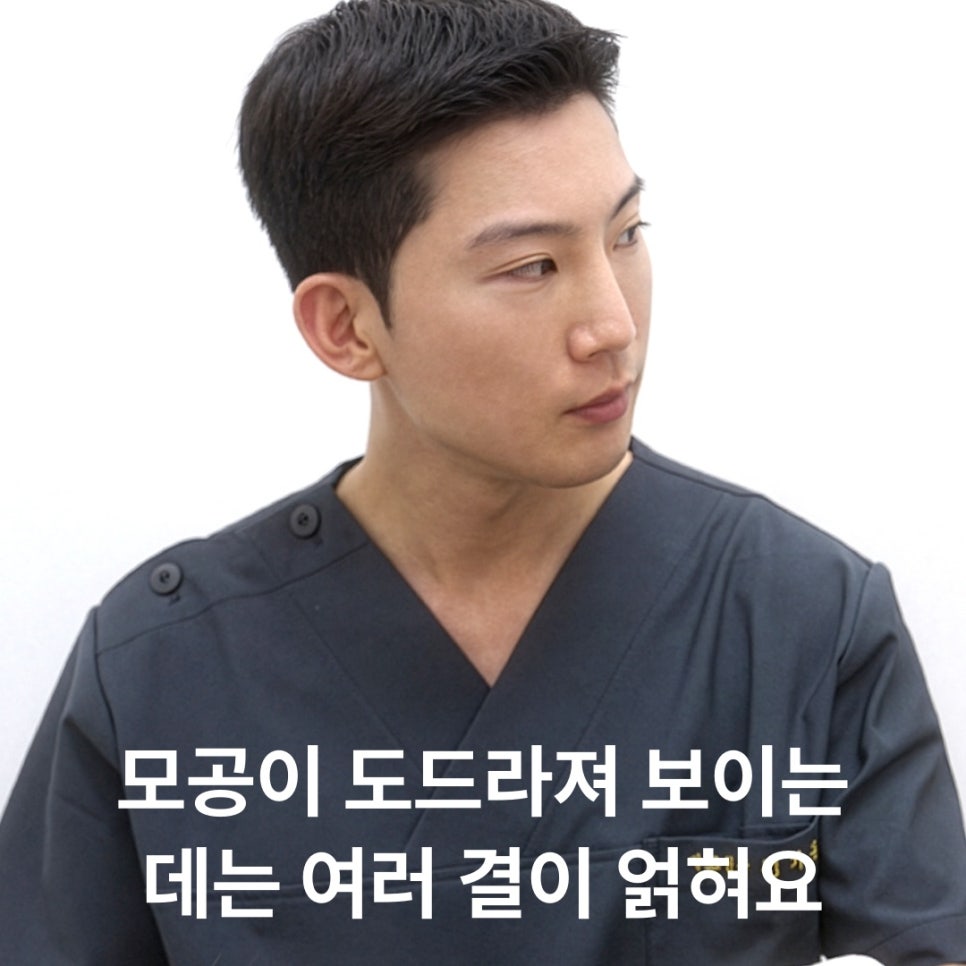
Pores are naturally the openings of ducts through which sebum reaches the surface of the skin.
They are not something that should be absent from the skin, but a normal structure everyone has.
However, they may appear larger when there is excess sebum, a buildup of dead skin cells, or reduced elasticity in the surrounding skin.
Areas with more sebum, such as the nose and forehead, often have pores that are more noticeable around the openings.
When dead skin cells or impurities accumulate, the area around the openings can become rough, and shadows may also make the pores look wider.
So, when considering ways to reduce the appearance of pores, it is important to look at sebum, dead skin cells, and elasticity together rather than focusing only on cleansing.
If you genetically have active sebaceous glands or skin on which pores are naturally more visible, these concerns may continue from an early age.
Why Do Pores Appear Larger with Age?

In many cases, pores do not actually continue to grow larger. Instead, they appear more prominent as the support provided by the surrounding skin changes.
As collagen and elastin in the skin decrease with age, the strength that supports the area around the pores may also weaken.
In particular, when cheek pores are seen together with sagging, they may appear elongated vertically or have a teardrop-like shape.
Therefore, ways to reduce the appearance of pores cannot always be approached in exactly the same way in your 20s as they are after your 30s and 40s.
It is important to distinguish whether sebum is the main factor, whether reduced elasticity is also involved, and whether sagging has contributed to the appearance.
What Can Be Addressed with Home Care
Home care is the foundation of pore care.
Gentle cleansing, moderate exfoliation, moisturizing, and sun protection should be continued consistently.
For skin with excess sebum, regularly using ingredients that help regulate sebum flow may also be beneficial.
For example, ingredients such as niacinamide, which is often mentioned in connection with sebum and skin barrier care, may be considered as part of a home-care routine.
However, if you think of reducing the appearance of pores as something that can be addressed through home care alone, you may feel that the results are limited when reduced elasticity or sagging is also present.
It is better to view home care not as a way to eliminate pores, but as basic care that smooths the skin’s surface and reduces factors that may worsen their appearance.
What Approach Is Considered During a Consultation?
During a consultation, the first step is to determine why the pores appear prominent.
We distinguish whether the main issue is excess sebum, roughness caused by dead skin cells and an uneven surface texture, or reduced elasticity accompanied by sagging.
The approach also varies depending on the cause.
If sebum production is the main concern, an approach focused on regulating sebum flow may be considered. If the surface is rough, improving the skin’s texture may also be taken into account.
If reduced elasticity is also present, it may be necessary to focus on the support provided by the skin around the pores.
For this reason, when discussing ways to reduce the appearance of pores, several approaches may be mentioned, including lasers, microneedle RF, toxin-based applications, and skin-booster treatments.
However, no single procedure is equally suitable for every pore-related concern.
The Approach Also Varies by Facial Area

Even on the same face, the reasons pores appear prominent may differ depending on the area.
Areas near the T-zone, such as the nose and forehead, tend to produce more sebum, so pores often appear round and clearly defined.
On the other hand, on the cheeks, pores may appear vertically elongated as reduced elasticity and sagging become involved along with sebum.
Therefore, when looking for ways to reduce the appearance of pores, it is better to distinguish the causes by area rather than viewing the entire face through a single approach.
During a consultation, we also review your home-care routine, exfoliation frequency, sebum levels, and history of previous procedures.
Because the reasons pores appear noticeable can vary greatly depending on the individual’s condition, it is important to determine an approach suited to your current skin.
Frequently Asked Questions

Q. Can pores be eliminated completely?
A. Because pores are a normal skin structure through which sebum is released, it is difficult to view them as something that can be eliminated completely.
Rather than trying to eliminate pores, consultations focus on identifying the reasons they appear prominent and improving the condition of the skin’s surface and elasticity.
Q. Is cleansing or using face masks alone insufficient?
A. Home care is important as basic maintenance.
However, the reasons pores appear prominent may be related not only to sebum but also to elasticity, sagging, and genetic tendencies, so home care alone may have limitations.
Q. Do pores only start to look larger as you age?
A. Not necessarily.
Sebum production and genetic tendencies can cause pores to be noticeable from an early age.
However, as reduced elasticity and sagging develop with age, pores may appear longer and more prominent.
Thank you for reading this lengthy post.
This was Kim Ha-won.