Hello.
I’m Ha-won Kim from Beauty’s Doctor.
When searching for Rejuran side effects,
the first images you often see are of red, swollen skin or bruising.
That is why many people worry before the procedure,
asking, “Is it supposed to swell this much?”
However, not every reaction that appears immediately after the procedure
indicates an abnormal reaction.
Rejuran is a procedure that uses needles
to inject its ingredients into the skin.
Therefore, it is important to understand the difference between reactions that occur during the injection process
and reactions that require further attention.
Rejuran
What kind of procedure is it?
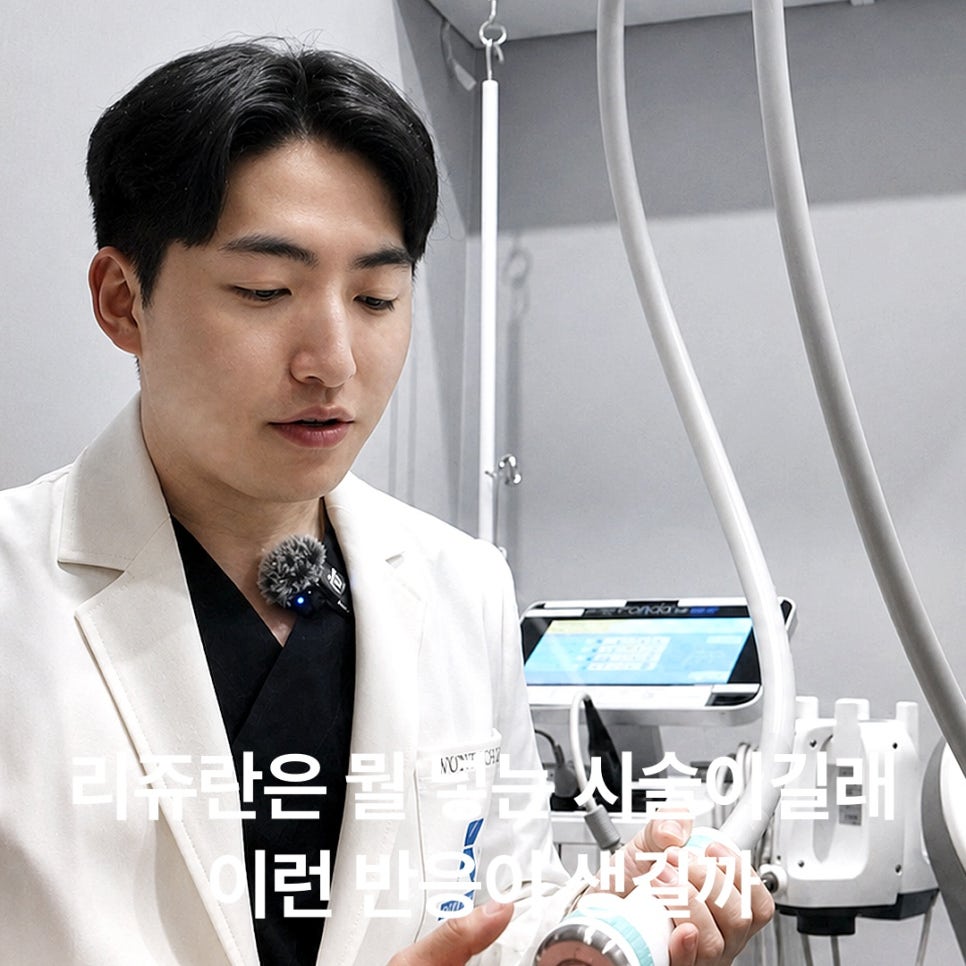
Rejuran is a skin booster that injects PN (polynucleotide) ingredients
into the dermal layer.
Rather than immediately filling in volume like a filler,
it is used to induce a response in the skin tissue.
Since injections may be administered closely together
across multiple areas of the face,
reactions caused by the injection process itself
are also fairly common, apart from those caused by the ingredients.
The appearance immediately after the procedure
may vary slightly depending on the injection depth and location,
as well as the thickness of the skin.
Reactions that are easy to mistake
for Rejuran side effects

The most common reactions immediately after the procedure
are redness and mild swelling.
Because the needle enters the skin multiple times,
temporary reactions may occur.
Bruising may also develop,
and it may appear more noticeable around the eyes and mouth,
where the skin is thinner.
As the Rejuran ingredients settle into the skin,
raised, embossed-like marks may appear.
They may be surprising at first,
but they often gradually fade over time.
You may also feel stinging
or warmth immediately after the procedure.
Many people worry that these are Rejuran side effects,
but such reactions may be included among the effects explained
to patients during the early post-procedure period.
Still, it is important to observe whether the swelling and pain
decrease over time.
Rare but important reactions
that require attention

In rare cases, an allergic reaction may occur,
or the injection site may feel firm to the touch.
Because Rejuran uses salmon-derived ingredients,
you should inform the provider in advance if you have a salmon allergy.
Since this procedure uses needles,
there is also a possibility of inflammation or infection.
If the swelling and redness continue to worsen,
or if severe pain and warmth persist
and pus or discharge develops,
it is better to contact the medical institution where you received the procedure
rather than making a judgment on your own.
In such cases, the current condition needs to be examined directly
to determine whether it is a Rejuran side effect.
If one side is unusually swollen
or the skin looks a different color than usual,
it is also better to have it checked rather than simply waiting.
How long does
recovery take?

Redness and mild swelling
often fade within a few days.
Bruising may remain a little longer,
depending on the condition of your skin.
The raised, embossed-like marks
also often gradually flatten over time.
Recovery time may vary depending on the thickness of the skin
and the injection site.
Reactions may remain visible longer in areas with thin skin,
such as around the eyes, than in other areas.
If you have an important event coming up,
it is better to leave some time before the event rather than scheduling the procedure immediately beforehand.
Rejuran is sometimes administered over multiple sessions
rather than completed in a single treatment,
so it is helpful to know that similar reactions
may recur after each procedure.
After the procedure,
aftercare is also important
On the day of the procedure,
avoid repeatedly touching the injection sites.
It is best to temporarily avoid environments with high heat,
such as saunas and heated bathhouses.
Alcohol and strenuous exercise
may also make swelling and redness last longer.
While your skin is sensitive,
reduce the use of highly irritating cosmetics,
and continue basic skin care,
including sun protection.
When washing your face,
it is better to care for your skin gently
rather than rubbing it forcefully.
What do we check
during a consultation?
During the consultation, we check your skin condition
along with whether you have recently received any procedures.
Any medications you are taking
and your history of allergies are also important considerations.
If you have a salmon allergy
or have experienced an abnormal reaction after an injection procedure,
it is best to mention it in advance during the consultation.
If there is inflammation or a wound at the treatment site,
the current condition must be assessed first.
After checking your current skin condition,
you will be advised on whether the procedure is appropriate
and how it should be carried out.
Not every procedure
is necessary for every person.
It is important to determine whether it is suitable
after considering your current skin condition
and individual characteristics together.
Frequently asked questions

Q. Is it common to feel warmth after receiving Rejuran?
Warmth or stinging
may occur immediately after the procedure.
In most cases,
these sensations gradually ease over time.
However, if the warmth and pain become more severe,
it is best to consult a medical professional.
Q. How long do the raised, embossed-like marks last?
Although it varies from person to person,
they often gradually fade over time.
The length of time they remain visible
may vary depending on the injection site and skin thickness.
Q. When should I have Rejuran side effects checked again?
If the swelling and pain continue to worsen,
or if warmth persists
and pus or changes in skin color appear,
it is best to have your condition checked
at the medical institution where you received the procedure.
Thank you for reading this long post.
This was Ha-won Kim.