Hello.
I’m Wi Young-jin from Beauty’s Doctor.
If your facial contours look less defined than before
or you feel that your skin has lost elasticity,
many people first consider
non-incisional lifting procedures.
When looking into Tune Face lifting,
rather than simply asking “how much difference will it make,”
it is important to understand
what type of energy is used,
and why the timing of results and the recovery process
can vary from person to person.
Rather than trying to resolve
every concern at once with a single procedure,
the first step is to determine
what your current skin actually needs.
Three-Line Summary
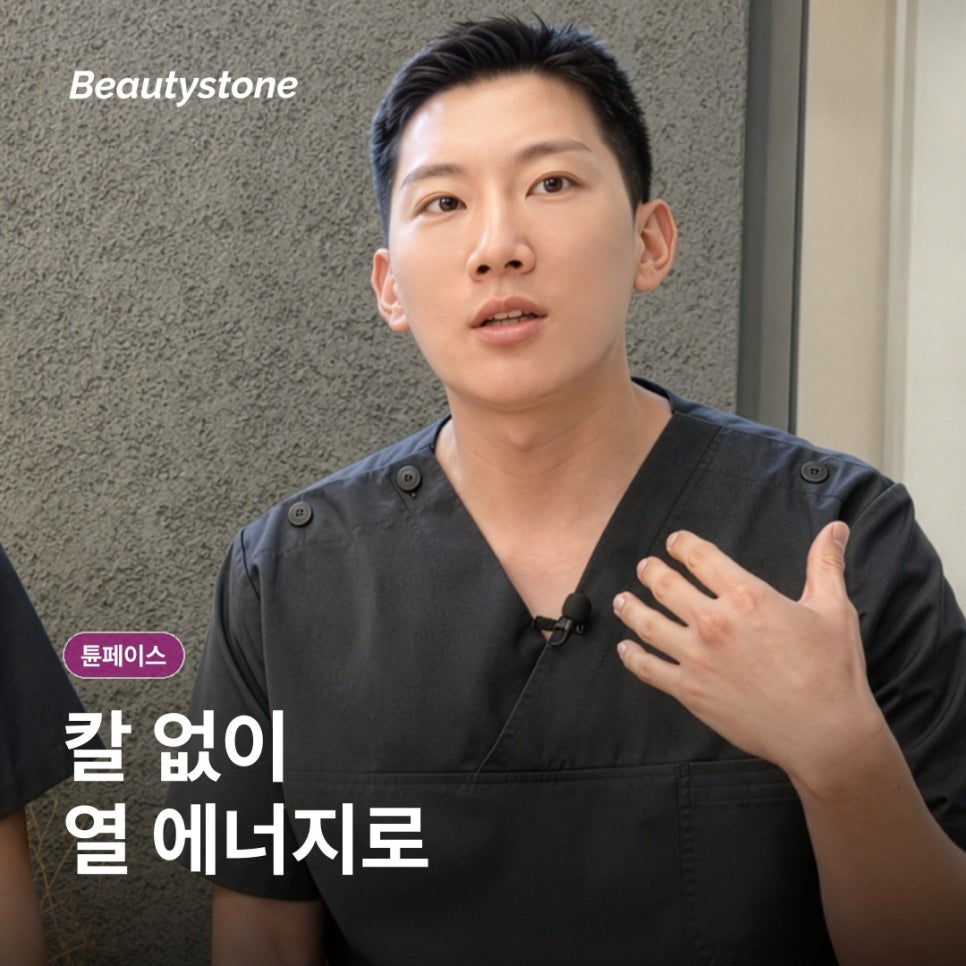
- Tune Face lifting is
a non-surgical procedure that stimulates skin tissue
with radiofrequency thermal energy.
- The timing and extent of noticeable changes
may vary depending on skin thickness,
the degree of sagging,
and lifestyle habits.
- After the procedure,
maintain moisturization and sun protection,
and consult a medical institution
if pain or blisters persist.
- How does the procedure work?

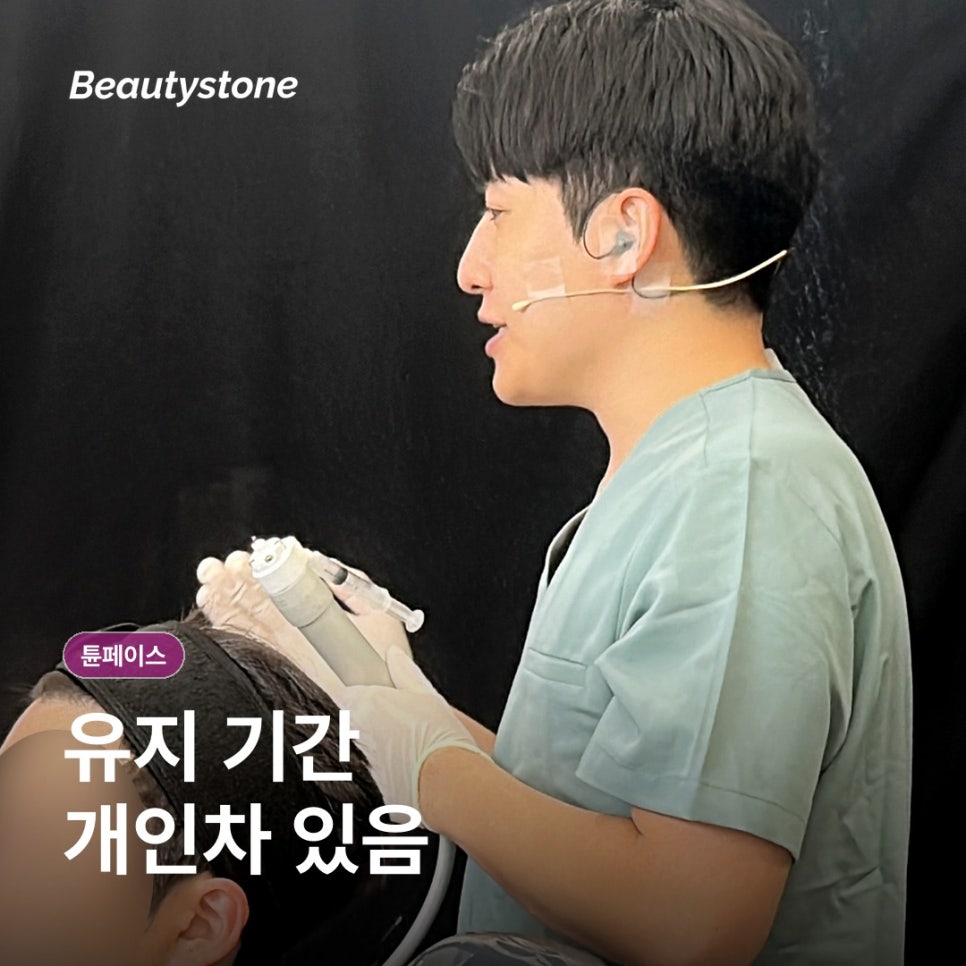
Tune Face
uses the 40.68 MHz
radiofrequency energy of the Accent Prime device
to deliver thermal stimulation
to the dermis and underlying tissue.
The principle behind Tune Face lifting
can be easily understood as inducing a thermal response
in the collagen tissue beneath the skin,
just as applying an appropriate amount of heat
to loosened fabric helps organize its texture.
However,
this does not mean that all sagging
is corrected immediately,
and the timing and extent of noticeable changes
vary from person to person.
The depth and intensity of the energy
must be adjusted after checking the skin thickness and fat volume
of each facial area,
as well as any recent laser treatments, fillers,
or thread-lifting procedures.
A consultation is necessary to determine
whether the procedure is appropriate,
as it is not needed by everyone.
- What does it feel like during the procedure?
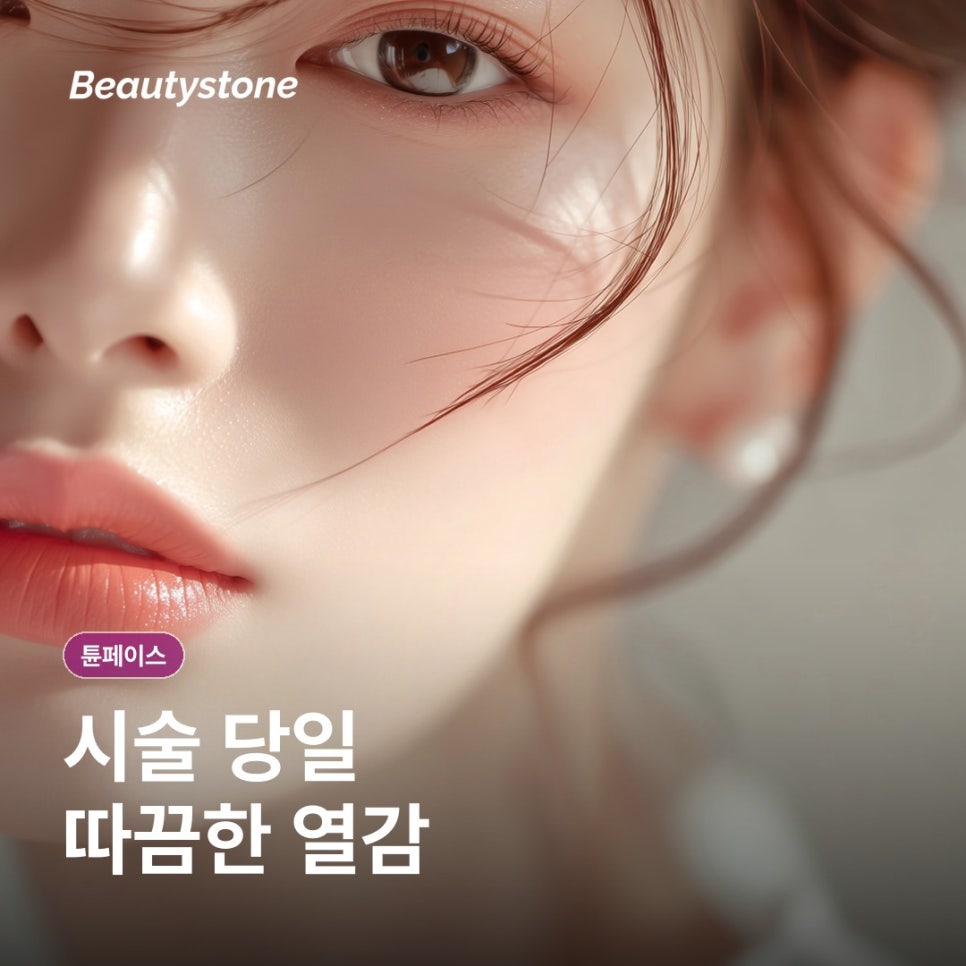
When receiving
Tune Face lifting,
you may feel warmth or a hot sensation
as the handpiece touches the skin,
along with brief prickling.
The sensation varies depending on
pain sensitivity and the treatment intensity,
and the use of anesthesia is not the same for everyone.
Before the procedure,
please inform the medical staff about
any dermatitis, wounds, or severe breakouts,
medications you are taking,
whether pregnancy is possible,
and whether you have
any medical devices inside your body.
If your skin is unusually dry
or irritated on the day of treatment,
it should be reassessed
rather than applying the planned intensity as is.
Skin depth, the appropriate intensity,
and the safety of device use
cannot be determined through self-care;
these must be assessed by a medical professional.
- How should you consider the timing and number of treatments?

With Tune Face lifting,
it is helpful to distinguish between
the temporary tightening sensation immediately after thermal stimulation
and the changes felt later
during the process of collagen reorganization.
The timing of noticeable changes and how long they last
may vary depending on the condition of your skin,
so it is difficult to specify a particular date.
Whether one treatment is sufficient
or additional treatments at set intervals are needed
depends on the degree of sagging and your goals,
as well as your response to previous procedures.
Therefore,
the number and spacing of treatments
should be determined individually by monitoring progress,
rather than relying on advertising language.
Leaving photographs taken under the same lighting and from the same angle
may help you calmly compare your progress
rather than relying on vague impressions.
- What should you be careful about during recovery?
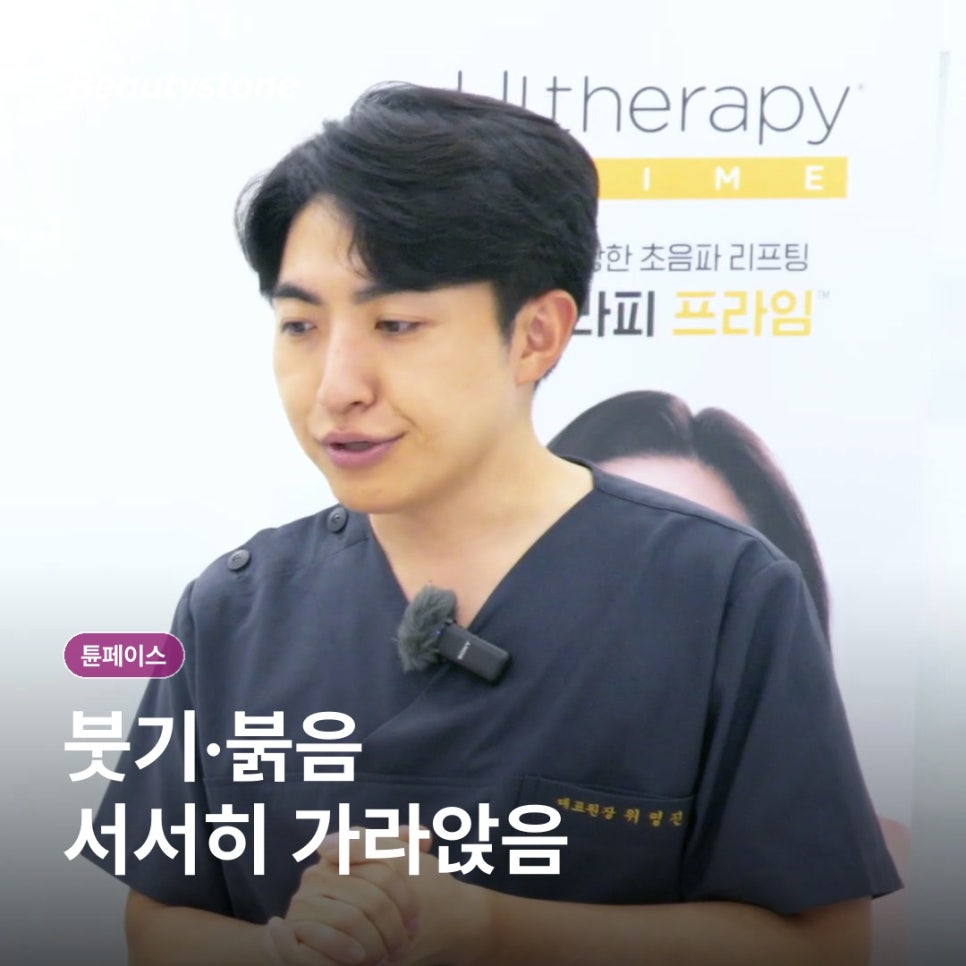
After Tune Face lifting,
redness, mild swelling, a sensation of heat,
and tenderness or aching when pressed
may occur,
and these symptoms often pass temporarily.
However, recovery speed
may vary depending on your skin condition
and the treatment intensity.
On the day of treatment,
do not wash for a long time with hot water
or rub your skin vigorously.
Wash your face briefly with lukewarm water,
then apply plenty of a gentle moisturizer.
When going outside,
use sunscreen,
and for several days,
it is best to avoid saunas, alcohol, strenuous exercise,
strong massages, and exfoliation.
Rather than immediately adding new functional cosmetics,
keep your routine simple and focus on moisturization
using products that have worked well for you before.
- Which symptoms should be reported to the clinic?
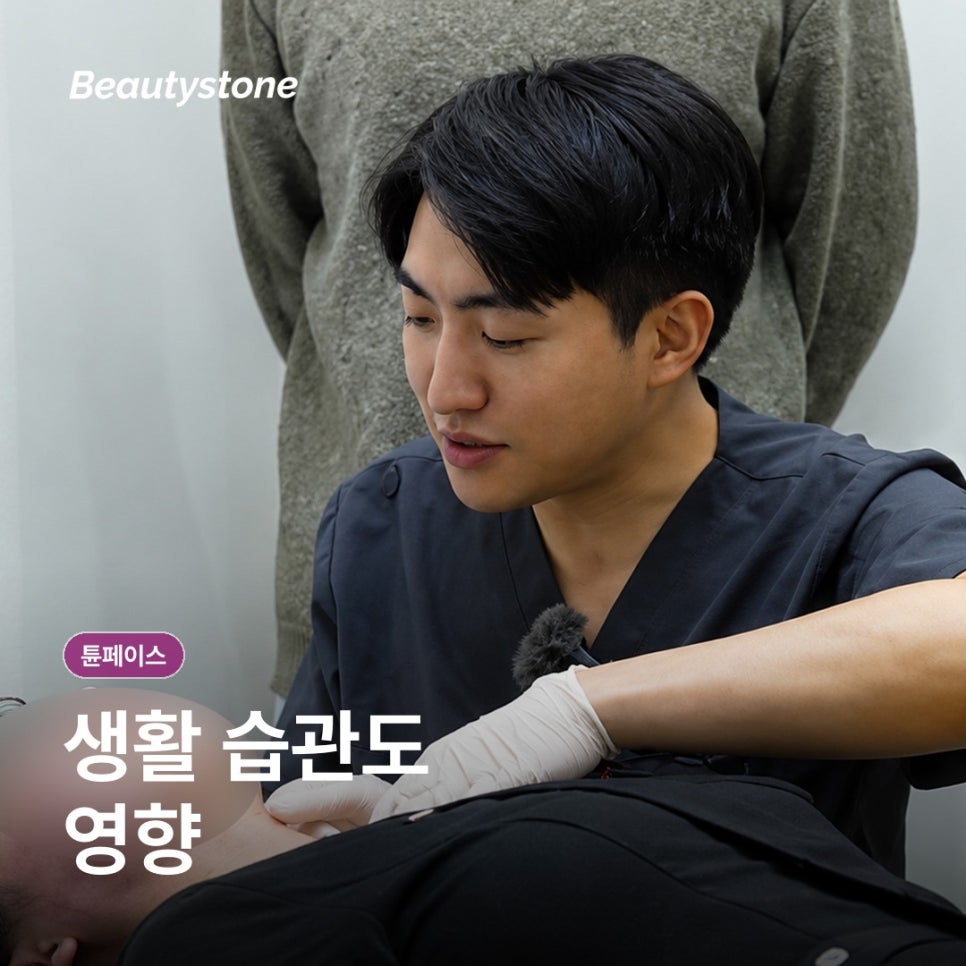
If the sensation of heat does not gradually decrease
but instead worsens,
or if pain, blisters, oozing, changes in skin color,
or pronounced swelling on only one side
persists,
do not simply wait and see on your own.
Rather than repeatedly applying cold compresses
or ointment without guidance,
contact the medical institution where you received the treatment,
inform them of your condition,
and follow their instructions.
Wrapping Up
Tune Face lifting
can be performed without incisions,
but the response and recovery pattern
may vary depending on your skin condition
and the intensity settings.
During your consultation,
please discuss not only the changes you hope to see
but also possible discomfort,
alternative procedures,
and the option of not undergoing treatment.
Frequently Asked Questions
Q1. Can I wear makeup immediately after the procedure?
If redness and heat are not severe,
light makeup may be possible in some cases.
However, if your skin is sensitive,
it is safer to avoid makeup that day
and follow your medical provider’s instructions.
Q2. Is the pain very severe?
Some people experience it as warmth or mild prickling,
but it varies depending on pain sensitivity
and the intensity settings.
If discomfort increases during the procedure,
do not try to endure it—tell the provider immediately.
Q3. Can I receive it together with another lifting procedure?
More important than the combination itself
are the order and spacing of the procedures,
as well as your history of previous treatments.
Be sure to disclose all recent procedures,
including fillers and thread lifting,
before making a treatment plan.
Q4. Will massaging at home help with recovery?
In the early stages,
strong pressure and friction
may instead cause irritation.
You can manage moisturization and sun protection yourself,
but if swelling or pain persists,
please have a medical professional check it.
Thank you for reading today.
This has been Wi Young-jin from Beauty’s Doctor.