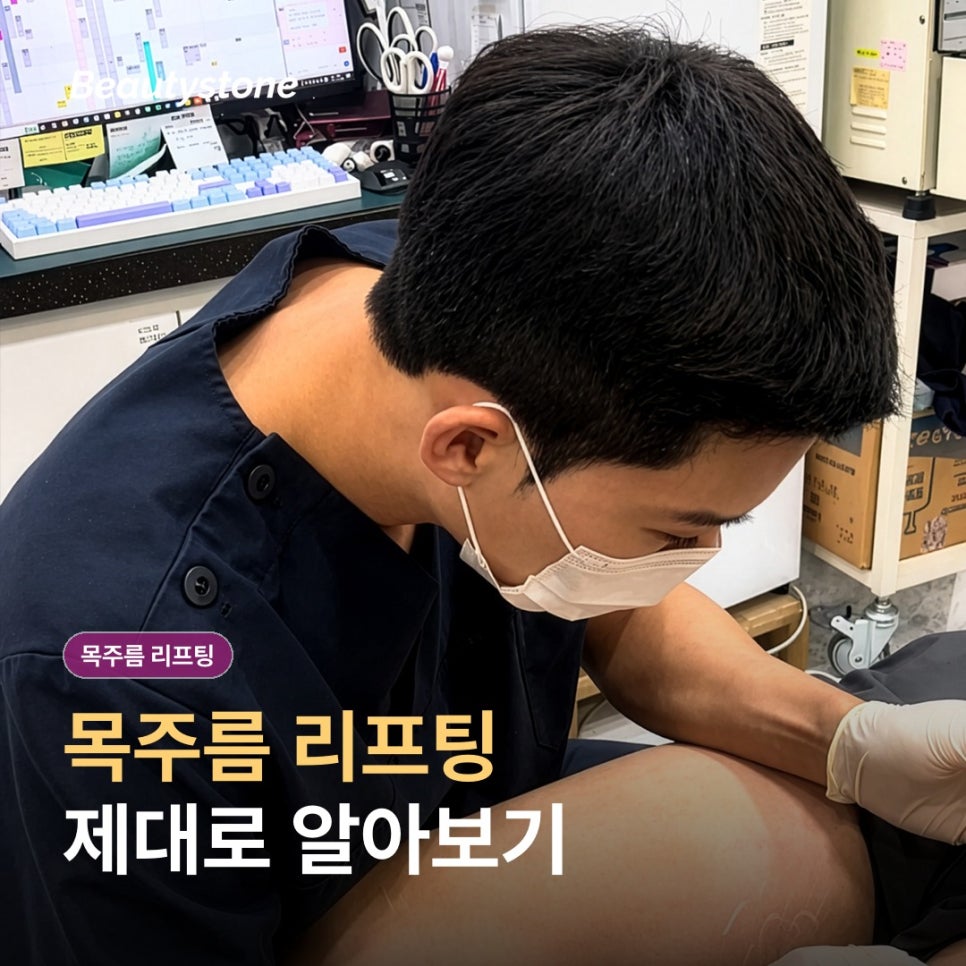
Hello.
I’m Beauty Doctor Kim Ga-eul.
The skin around the neck
is thinner than facial skin
and has fewer sebaceous glands, making it more prone to losing elasticity.
In addition, the neck moves hundreds of times a day
as we lower and raise our heads,
and repeatedly hold the posture used to look at a smartphone.
As a result,
wrinkles often become noticeable earlier than in other areas.
For this reason, more people are becoming interested in neck wrinkle lifting.
Before looking into a procedure,
it is helpful to first understand the characteristics of neck skin
and the principles behind the different approaches, as this can make the consultation process easier.
This article calmly summarizes
the characteristics of neck skin addressed by neck wrinkle lifting,
the principles behind the approaches,
the range of results that can realistically be expected,
and points to keep in mind before and after a procedure.

Three-line summary
- The effects of neck wrinkle lifting
are best understood by considering
both the approach used and the condition of the skin.
- The degree and speed of improvement
may vary depending on the thickness of the neck skin
and wrinkle-related habits.
- After the procedure,
be sure to moisturize and use sun protection.
If an unusual reaction persists,
check with a medical institution.
Why does caring for neck wrinkles feel particularly difficult?
Let’s first look at the structure of neck skin.
- Why do wrinkles appear first on the neck?

The skin around the neck
is thinner than facial skin,
and the density of collagen and elastic fibers
is relatively low.
It also has fewer sebaceous and sweat glands,
so its ability to retain oil and moisture
is relatively weak,
making it sensitive to external irritation.
In addition,
the neck is an area that frequently bends
when we lower or raise our heads,
so horizontal wrinkles can easily form along the fold lines.
When the posture of looking down at a smartphone
is repeated for long periods,
wrinkles tend to become more pronounced.
People considering neck wrinkle lifting
are generally dealing with both
the thin structure of the skin and repeated movement.
Exposure to ultraviolet rays and dryness
are also factors that can accelerate the loss of elasticity.
Applying sunscreen and moisturizer to the neck as well
as the face can be helpful as part of your daily routine.
- How do the principles differ between approaches?

Approaches grouped under
neck wrinkle lifting can broadly be divided into
ultrasound, radiofrequency, and thread-based methods.
Ultrasound methods deliver
thermal energy to deeper layers of the skin
to encourage collagen regeneration,
while radiofrequency methods
focus on evenly delivering heat over a broad area
to improve elasticity.

Thread-based methods involve
inserting dissolvable threads beneath the skin
to add physical support, so their underlying principle is different.
The recovery period,
level of discomfort, and interval between procedures
vary by method,
so it is difficult to say that one approach
is universally better than the others.
The appropriate approach may differ
depending on the condition of the neck skin
and lifestyle habits,
so it is important to make a decision
after a thorough consultation with a specialist.
Approaches to be cautious about include
deciding on a method based only on reviews,
blindly following a popular method,
or neglecting aftercare.
By contrast, a recommended approach is to
consider both the principles involved and the individual condition of the skin,
adjust the plan to the condition of the neck
through consultation with a specialist,
and consistently continue moisturizing and sun protection.
- How much improvement can realistically be expected?

One question that often comes up
when looking into neck wrinkle lifting is
how much improvement can be expected.
However, results can vary considerably from person to person
depending on skin age, wrinkle depth,
and lifestyle habits,
so it is difficult to predetermine a specific outcome.

In particular, with long-standing wrinkles caused by habits—
that is, lines that have become established through posture or facial-expression habits—
it is more realistic to aim for
a softening of the lines
rather than expecting them to disappear completely
through the approach alone.
Adjusting posture habits
and maintaining moisturizing and sun-care routines
may be helpful when done alongside treatment.

Before a procedure,
it is necessary to inform the specialist about
the condition of your neck skin, medications you are taking,
and any recent procedures.

Swelling or mild bruising after a procedure
is often considered a natural part of the recovery process,

but if unusual signs such as
pain, warmth, or a rash persist,
it is best to contact the hospital promptly for an evaluation.
In closing
Neck wrinkle lifting
is an area that requires consideration of both
the thin structure of neck skin and repeated movement,
so it is important to understand the principles of the approach before beginning.
Even when the same method is used, results can vary from person to person,
and it is also helpful to understand in advance
that long-standing wrinkles caused by habits may have limitations.

To receive an accurate assessment of your neck
and find an approach suited to you,
it is best not to skip the consultation process with a specialist.
After examining the condition of your neck skin,
we discuss a direction suited to your individual circumstances,
so if you are curious about neck wrinkle lifting,
we recommend comfortably scheduling a consultation.
Frequently Asked Questions
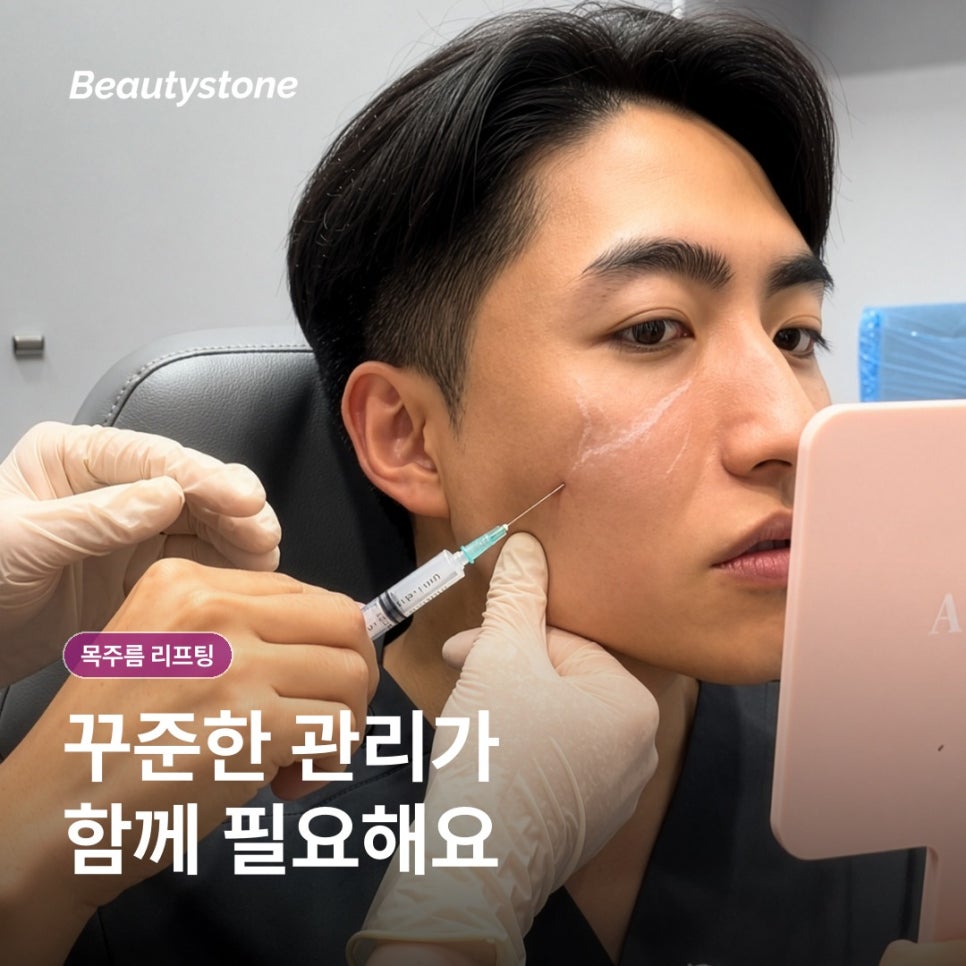
Q1. At what age should I consider neck wrinkle lifting?
There is no fixed age guideline,
and the elasticity and degree of wrinkling of neck skin differ from person to person.
If you are curious, it is best to first have your current condition evaluated
through a consultation with a specialist.
Q2. Can I return to my daily activities immediately after the procedure?
The recovery process varies depending on the method,
and swelling or mild bruising may last for several days.
For specific scheduling, consult with a specialist
and make adjustments based on your individual circumstances for safety.
Q3. Can habit-related wrinkles be improved with neck wrinkle lifting?
You may expect some softening of the lines,
but it is difficult to state that they will disappear completely.
Combining the procedure with improvements to posture habits
may help with ongoing care.
Q4. What should I be sure to check before the procedure?
You need to inform the specialist in advance about
any medications you are taking,
recent procedures, and the condition of your skin.
If you notice any unusual signs,
it is best to contact the hospital promptly.
Thank you for reading this long article today.
This has been Beauty Doctor Kim Ga-eul.