Hello.
I’m Kim Ha-won from Beauty's Doctor.
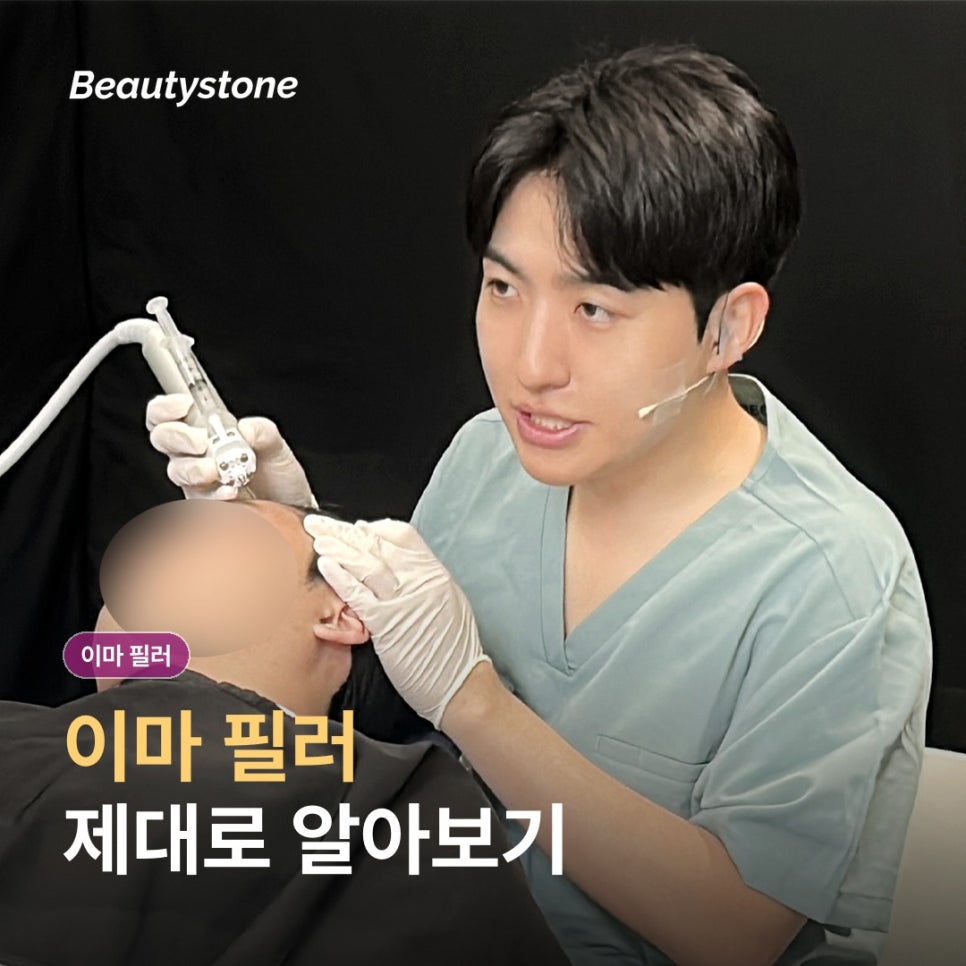
Many people look into forehead fillers because they are concerned about uneven contours or hollowness in the forehead.
The procedure is known for filling the area beneath the forehead skin with hyaluronic acid to create a smoother curve.
It is also sometimes discussed as a way to refine hollowness in the center of the forehead or around the temples.
In this article,
I have organized, in order,
how forehead fillers work,
what sensations may be felt during the procedure,
and what to be mindful of during the recovery period.
I hope this will serve as a reference when you are first exploring the procedure.
Before deciding whether to undergo the procedure,
it may be helpful to first examine your forehead structure and skin condition.
3-Line Summary

-
Forehead fillers are often discussed as a procedure intended to complement the volume and contours of the forehead and create a softer overall impression.
-
The sensations felt during a forehead filler procedure and the extent of swelling and bruising afterward may vary from person to person.
-
Although rare, if you notice abnormal signs related to blood vessels, it is important to contact a medical institution immediately.

Many people look into forehead fillers because they are concerned about uneven contours or hollowness in the forehead.
When first learning about the procedure, it is helpful to look at both how it works and the recovery process.
Forehead fillers are known to work by injecting hyaluronic acid into the tissue beneath the forehead skin to supplement areas that appear to lack volume.
In some cases, the contours of the center of the forehead or the temples are also assessed.
In this article, I will organize, in order, how forehead fillers are performed, what sensations may be felt during the procedure, and what to be mindful of during the recovery period.
Before deciding whether to undergo the procedure,
it is necessary to first check your forehead structure and skin condition.
Let’s look step by step at what forehead fillers supplement and in what order the procedure is performed.
- How do they work?

Hyaluronic acid is commonly mentioned as the main ingredient in forehead fillers.
The procedure is often described as supplementing volume by injecting small amounts into the tissue beneath the skin.
When the center of the forehead appears flat or there is a difference in the contours on the two sides,
it is important to examine the overall outline, determine which areas will be treated with forehead filler, and then plan the injection range and amount.
However, the forehead has structural characteristics that include several blood vessels passing through it.
For this reason, it is an area where the anatomical structure must be considered when performing forehead filler procedures.
The injection location and depth should be considered along with the type of product.

Therefore, before receiving forehead fillers, it is advisable to consult thoroughly with a medical professional and discuss your forehead structure, skin condition, and desired outcome.
The method appropriate for each individual may vary following an examination.
If you have previously received forehead fillers or are taking any medications, you should inform the medical professional in advance during the consultation.
Sharing your current condition accurately can help with developing a plan.
- What is the procedure like, and what common reactions may occur?

Forehead filler procedures are often performed by applying a topical local anesthetic cream or, as needed, reviewing other anesthesia options before injecting small amounts at a time.
While the forehead filler is being injected,
you may feel pressure, as though the area is being pressed, or a tingling sensation.
The intensity of the sensation varies depending on pain sensitivity and the treatment area.

After a forehead filler procedure, swelling, bruising, or an aching sensation as though the area has been pressed may occur.
These are commonly mentioned reactions, but their duration and severity vary from person to person.
On the day of the procedure, you may often be advised to avoid activities that can raise body temperature and blood flow for the period specified by the medical professional.

These activities may include saunas, strenuous exercise, and drinking alcohol.
An approach that should be avoided is making an impulsive decision without information about forehead fillers or proceeding without disclosing your previous procedures and medications.
By contrast, the recommended approach is to fully share your current condition before receiving forehead fillers, confirm the anesthesia method and post-procedure care instructions, and continue cold compresses and lifestyle care within the advised limits.
- How can the recovery period and abnormal signs be distinguished?

Swelling and bruising after a forehead filler procedure are known to last from several days to, in some cases, one to two weeks.
However, the recovery rate and severity of reactions vary from person to person.
During recovery, avoid pressing or rubbing the forehead forcefully,
and it is advisable to adjust your daily habits so that strong pressure is not applied to the treated area.
It is difficult to define the forehead filler recovery period as a fixed number of days.
As time passes, you should calmly observe whether the swelling and bruising are gradually decreasing and monitor your own changes.

In rare cases related to forehead fillers, if your skin color suddenly changes,
severe pain develops,
or vision problems occur,
it is necessary to check for possible abnormal signs related to blood vessels.
If these symptoms appear after receiving forehead fillers,

do not wait and assess the situation on your own.
It is important to contact the medical institution where you received the procedure or an emergency medical institution without delay.
Above all, you should observe the area while distinguishing the process in which common swelling and bruising gradually subside from abnormal signs that appear suddenly.
If discomfort continues longer than expected, it is also advisable to have it checked through a medical consultation.
In conclusion
Forehead fillers are a procedure that receives attention as a way to supplement forehead volume and contours,
but individual differences can significantly affect the results and recovery process.

If you are considering forehead fillers,
you should discuss your forehead condition and desired outcome thoroughly,
and confirm the available methods and precautions through a medical consultation.
During the consultation,
sharing your history of forehead filler procedures and medications,
as well as the extent of swelling or bruising you experienced previously,
may help when developing an individualized plan.
Frequently Asked Questions
Q1. How often do I need to have the procedure repeated?
The duration of forehead filler results may vary depending on an individual’s metabolism, the treatment area,
and the product and amount injected, so it is difficult to give a uniform answer.
For an accurate interval between treatments, it is best to have your current condition assessed by the medical institution where you received the procedure and receive guidance through a consultation.
Q2. Can I put on makeup immediately after the procedure?
After forehead fillers, you are often advised to postpone makeup for a certain period to reduce irritation to the treated area.
The specific timing should follow the instructions of the medical institution where you received the procedure.
Q3. How are forehead fillers different from forehead Botox?
Forehead fillers are discussed as a way to supplement volume,
whereas forehead Botox is described as working by controlling muscle movement.
The method appropriate for you should be confirmed through a medical consultation.
Thank you for reading this long article today.
This has been Kim Ha-won from Beauty's Doctor.