
Hello.
I’m Kim Ha-won from Beauty's Doctor.
When planning several treatments for skin care,
it is natural to have questions
about the order of dermatology treatments.
Laser treatments, peels, moisturizing care, and other procedures
may involve different types of treatments,
so many people are unsure whether they can be done all at once
or whether they should be spaced apart.
Even for the same treatment,
the appropriate order may vary depending on
the condition of the skin and the purpose of the treatment.
In this post, I’ve organized some general guidelines
that may be helpful when deciding the order,
along with information that may be useful to know
before a consultation.
Three-line summary

-
The order of treatments may vary depending on the type of treatment
and the recovery period.
-
It is not recommended to have an intensive treatment
and gentle care performed together on the same day.
-
It is best to determine the exact order of treatments
through a consultation with a specialist,
based on your individual skin condition.
If you are planning several treatments,
it is important to first consider that
the recovery process can vary depending on the order.
- Why should you pay attention to the order of treatments?

The skin is stimulated each time
you undergo a treatment,
and it needs a certain amount of time to recover.
If several treatments are performed close together
without considering this recovery time,
the skin may become more sensitive
or more vulnerable to irritation,
so planning the order in advance may be helpful.
In particular, if you are considering
both intensive treatments (such as lasers or peels)
and gentle care treatments,
the burden on the skin may vary
depending on which one you receive first.
These factors can vary considerably
depending on your skin type and condition,
so it is safer to coordinate the schedule
through a consultation rather than follow a fixed formula.
Considering your skin condition on the day of treatment
and the amount of time that has passed since your previous treatment
can also help you create a more stable plan.
- What criteria should be used to decide the order of treatments?

In general,
it is often recommended to plan treatments
with longer recovery periods first,
and schedule relatively gentle care afterward.
However, this is not a fixed formula,
but simply a general reference point.
The actual order of treatments
may vary depending on your skin condition
and the purpose of the treatment.

An approach to avoid is
having treatments with different levels of irritation
performed together on the same day,

whereas a recommended approach is
to coordinate the order with intervals
based on the level of irritation.
Rather than scheduling the next treatment
without checking the recovery period,
it is better to adjust the schedule
while taking that recovery period into account.
Rather than deciding the order based only on reviews
or other people’s experiences,
we recommend determining it after confirming
your individual skin condition through a consultation with a specialist.
- Points that are easy to overlook when having several treatments
together

When planning several treatments
at once,
it is easy to overlook areas where
the purposes of the treatments overlap
or irritation accumulates.
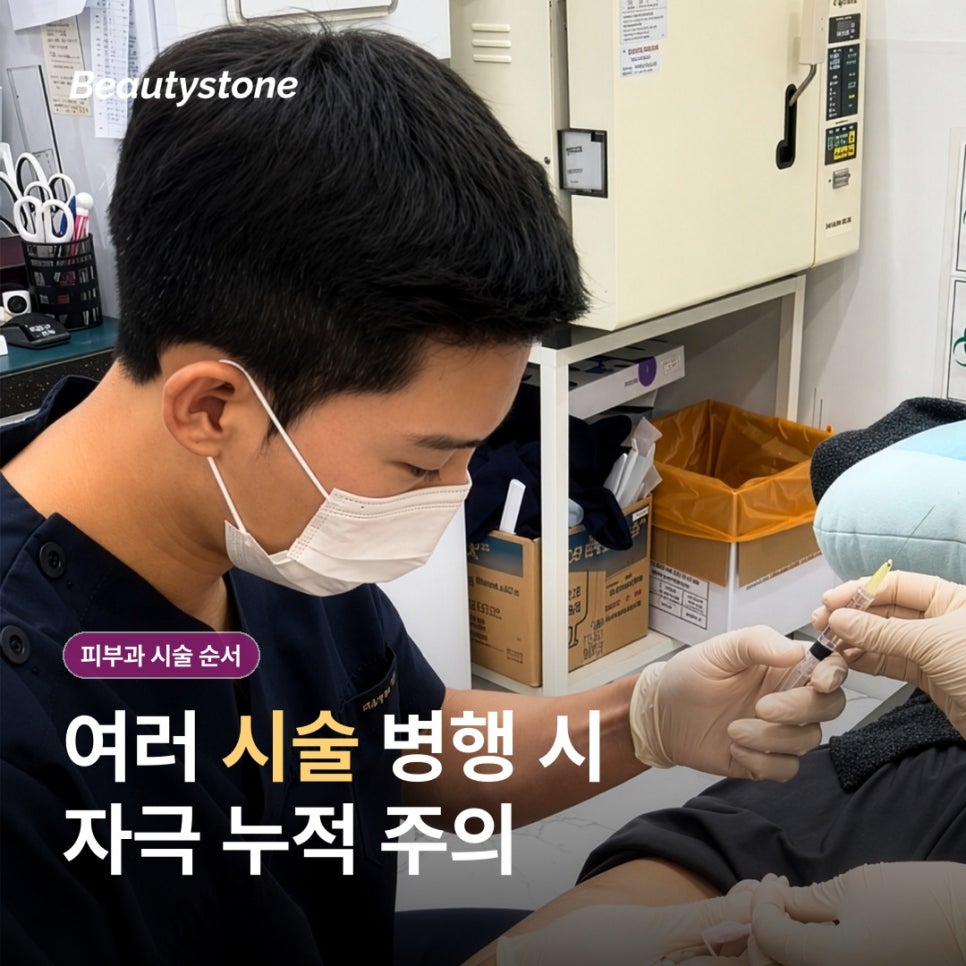
For example,
if you are planning exfoliation care and pigmentation care at the same time,
it may be helpful to separate the schedule
so that the irritation caused by both treatments
does not overlap within a similar period.
If you regularly use home-care products
(such as retinol or exfoliating ingredients),
there may also be cases where you need to temporarily adjust their use
before and after treatment.
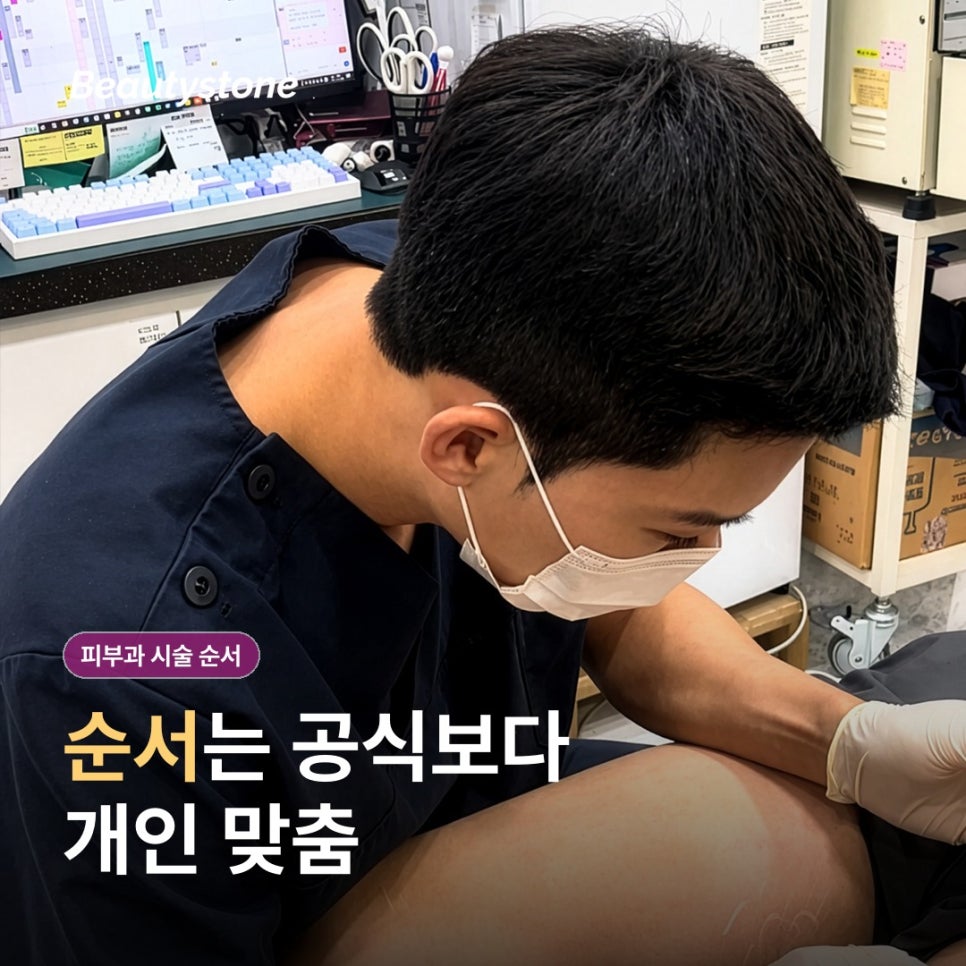
These details may also be explained differently
depending on your individual skin condition,
so it is best to tell the specialist
which products you are currently using
before the consultation.
Making a brief note of the products you regularly use
and the treatments you have recently received
can also help save time during the consultation.
To wrap up

Rather than following a fixed formula,
it is safer to decide the order of treatments
by considering your skin type, the purpose of the treatments,
and the recovery period as a whole.
Even with the same treatment,
people can differ in their recovery speed
and skin response,

so rather than following an order
you found on the internet exactly as written,

we recommend creating a plan suited to your skin condition
through a consultation with a specialist.

During consultations, we review your skin condition
and treatment history together to coordinate the order,
and if you have any questions,
you can receive detailed guidance through a consultation.
Frequently Asked Questions
Q1. Do I have to follow a specific order of treatments?
It is closer to a general reference guideline
than a fixed rule.
The order may vary depending on your skin condition
and the purpose of the treatment,
so it is best to coordinate it through a consultation.
Q2. Is it okay to have several treatments on the same day?
It depends on the types of treatments
and their levels of irritation.
Having several intensive treatments together
may place a burden on the skin,
so spacing them apart may be helpful.
In particular, after a highly irritating treatment,
it is better to allow some time
for the skin to calm to a certain extent.
Q3. Does using home-care products also affect the order of treatments?
If you are using irritating ingredients
such as retinol,
you may need to adjust their use
before and after treatment.
It is best to tell the specialist
which products you are currently using
during the consultation.
Q4. Who decides the order of treatments?

For safety, the order should be determined
through a consultation with a specialist
who has reviewed your individual skin condition
and treatment history.
Feel free to ask any questions
during the consultation.
Thank you for reading this long post today.
This has been Kim Ha-won from Beauty's Doctor.