Hello.
I’m Wi Young-jin from Beauty’s Doctor.
If you have been looking into thread lifting
because you want to define your V-line,
you may be concerned about the pulling sensation
or foreign-body sensation
that can be felt for several days after the procedure.
“Foreign-body sensation after V-line thread lifting”
is also a frequently mentioned concern
among people who have undergone the procedure,
so understanding the mechanism in advance
can help you feel more at ease.
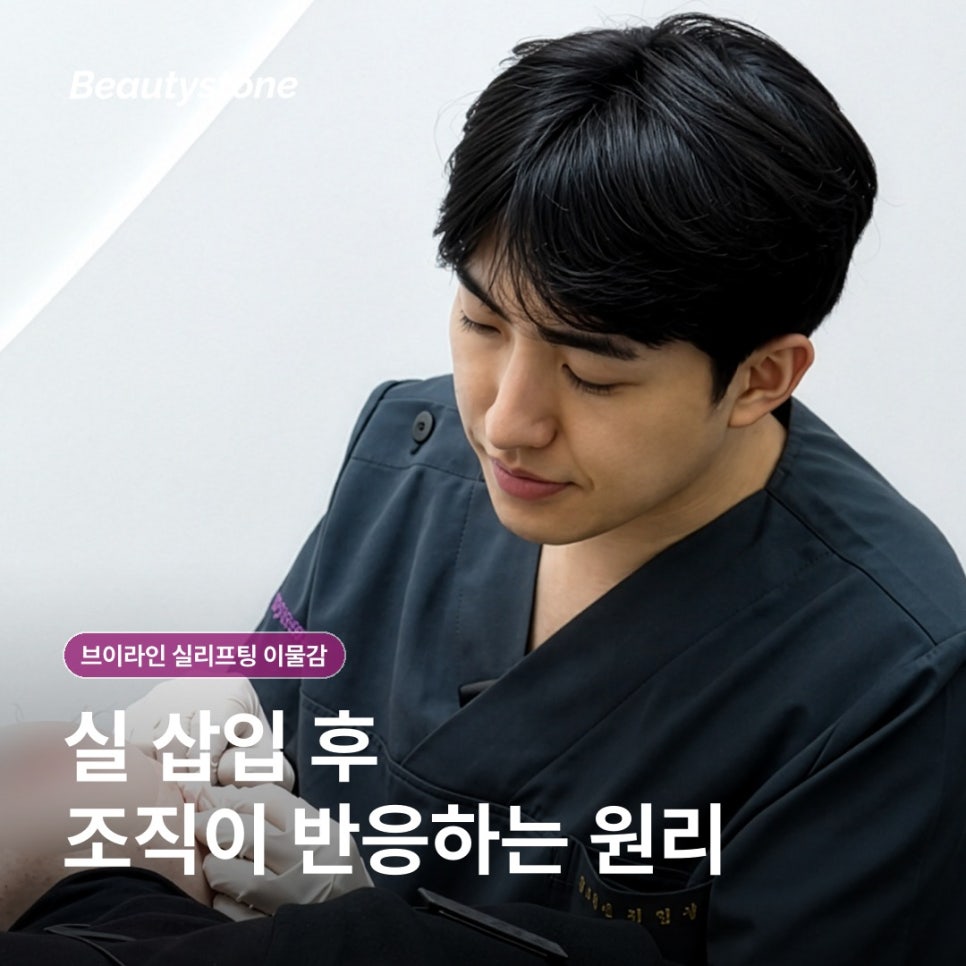
The threads are inserted beneath the skin
and work by supporting the tissue.
During this process,
when moving the facial muscles
or making facial expressions,
you may feel slight resistance,
and this sensation is often described as
a foreign-body sensation
after V-line thread lifting.
If you are wondering
how the sensation felt immediately after the procedure
may change over time,
please read through the information below.
Three-line summary
- A foreign-body sensation after V-line thread lifting
is one of the common reactions
that may be felt after the procedure.
- As the threads settle into place,
a pulling sensation or foreign-body sensation
may appear for a certain period.
- The severity of symptoms varies from person to person,
so if unusual signs persist,
it is advisable to consult a specialist.
Let’s first take a look at
why a foreign-body sensation
after V-line thread lifting occurs.
- Why does a foreign-body sensation occur after V-line thread lifting?
Thread-insertion procedures
involve placing several thin threads
beneath the skin
into a specific layer
to pull and support the tissue.
Before the threads settle into place,
the tissue may respond to the foreign material
beneath the skin,
which can cause a feeling of tightness or pulling,
along with areas of firmness.
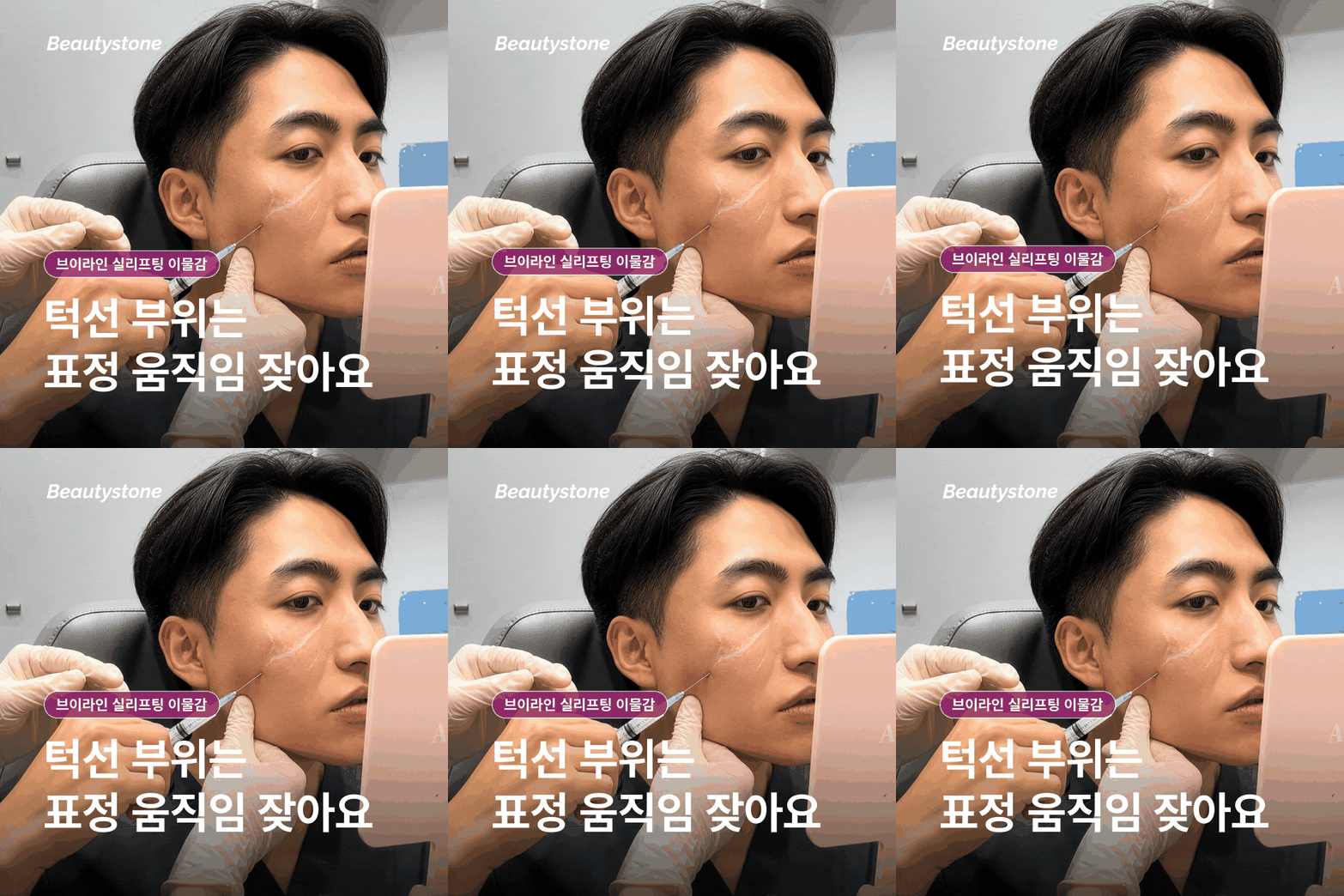
In particular,
areas such as the jawline or cheeks,
where facial movements occur frequently,
may feel more noticeable
because the direction in which the threads pass
overlaps with muscle movement.
For these reasons,
a foreign-body sensation after V-line thread lifting
may vary from person to person
depending on the treatment area,
the insertion depth,
and the number of threads.
- When does the foreign-body sensation after V-line thread lifting decrease?
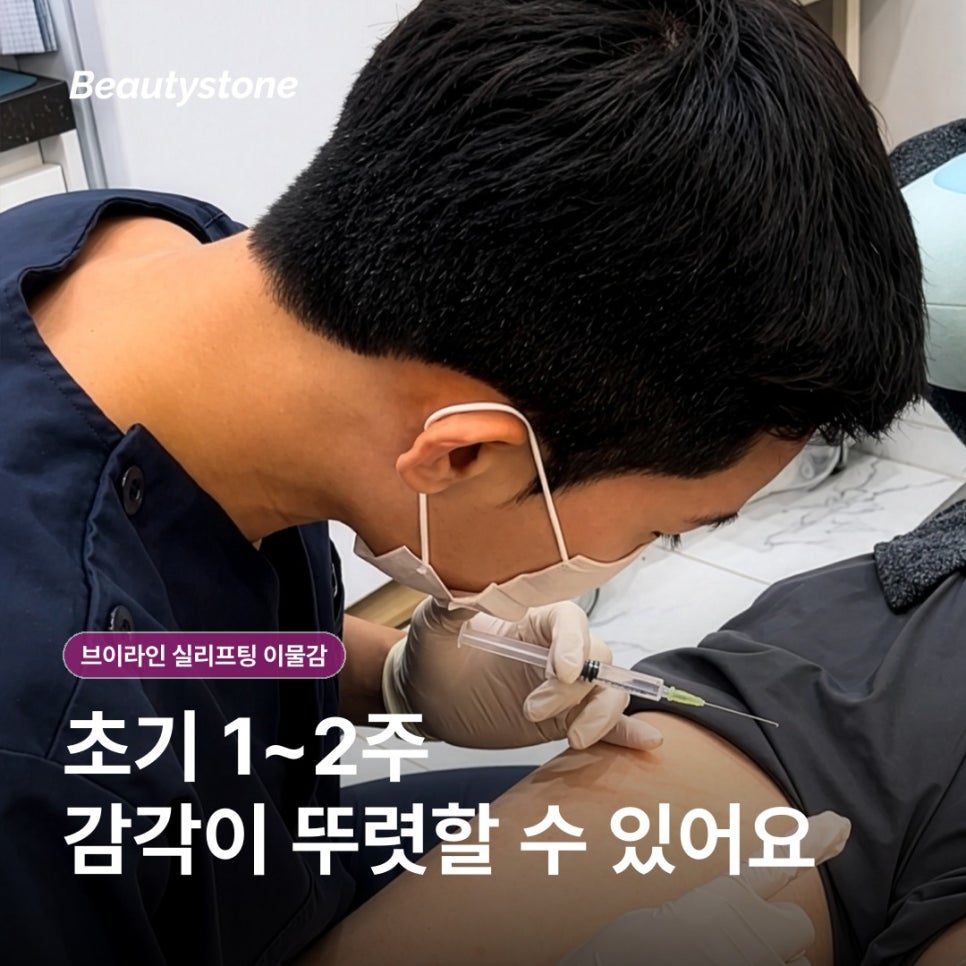
In many cases,
the sensation feels particularly noticeable
during the first one to two weeks after the procedure,
then gradually becomes less pronounced
as the tissue adjusts to the threads.
However, this process varies considerably from person to person,
so it is difficult to determine a specific recovery time.
Approaches to avoid include
pressing firmly on the face to check the area,
repeatedly forcing large facial expressions,
or arbitrarily increasing the dose of pain medication
when pain or swelling is present.

Instead, recommended approaches include
waiting for your body to gradually adjust
while making natural facial expressions,
keeping your expressions gentler than usual,
and contacting the clinic for confirmation
if your recovery seems unfamiliar or unusual.
Rather than trying to forcibly eliminate
the initial reaction,
it may be helpful to observe
the natural course of recovery.

However,
if swelling or pain becomes more severe,
or is accompanied by unusual signs such as warmth or discharge,
do not dismiss it based on your own judgment.
Contact the clinic
and have your condition checked.
- How should you manage a foreign-body sensation after V-line thread lifting?

During the recovery period,
avoid excessive massage or pressure,
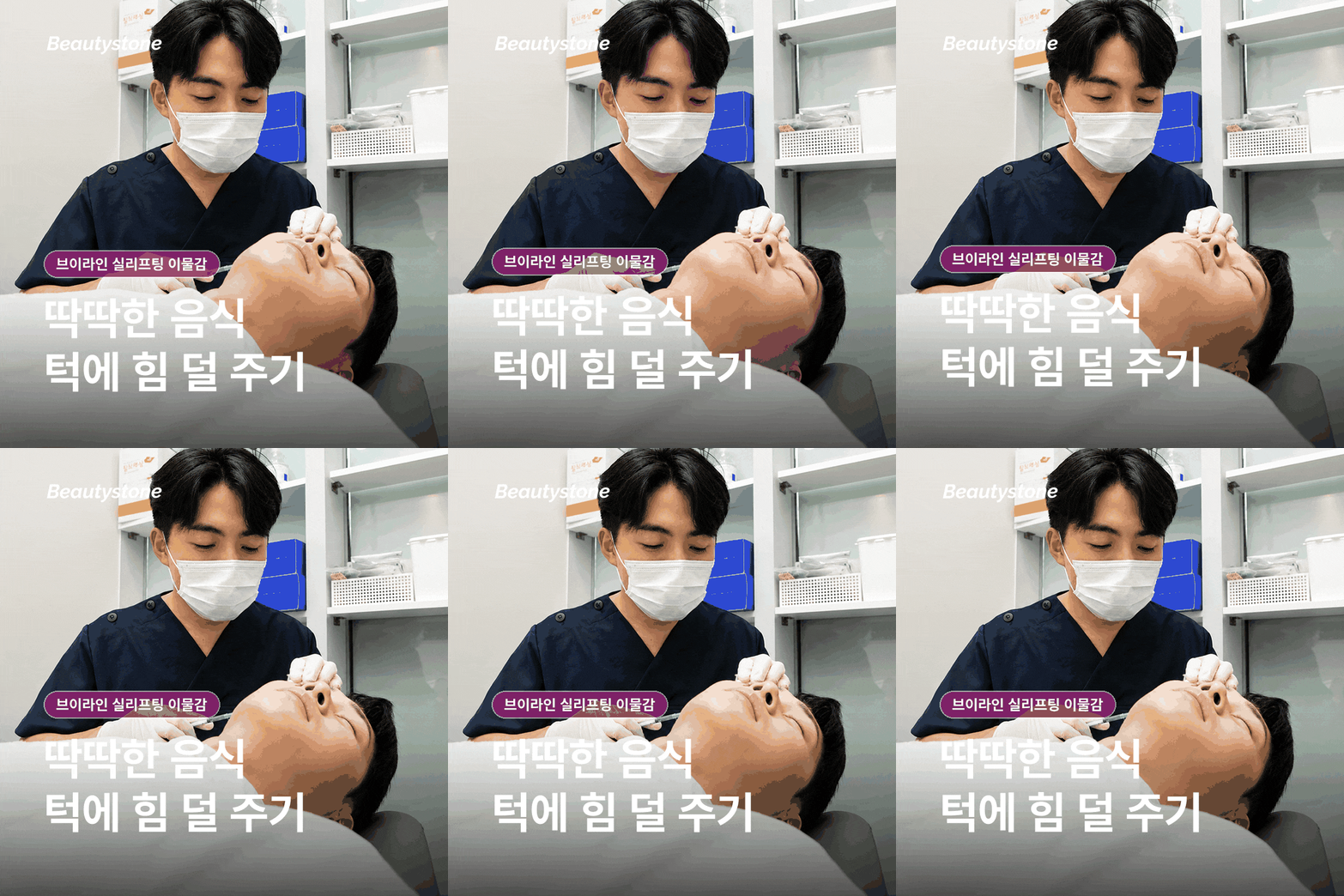
and be careful not to put excessive force on your jaw
when chewing hard foods.
It is also generally advisable to avoid
high-temperature environments,
such as saunas or heated bathhouses,
for the time being.
Sleeping position
may also have an effect,
so rather than sleeping on your stomach,

it is often recommended
to lie on your back.
If the foreign-body sensation
persists for a long time or gradually worsens
despite these care measures,
it is better to consult a specialist
and have the thread position and condition checked
rather than relying on your own judgment.
In closing
A foreign-body sensation
after V-line thread lifting
is a natural reaction that may occur
because of the nature of the procedure,
but its intensity and duration
vary greatly from person to person.

Before the procedure,
have a thorough consultation with a specialist
and share information in advance
about your skin condition and lifestyle habits.
This can help you understand
the reactions that may occur after the procedure.
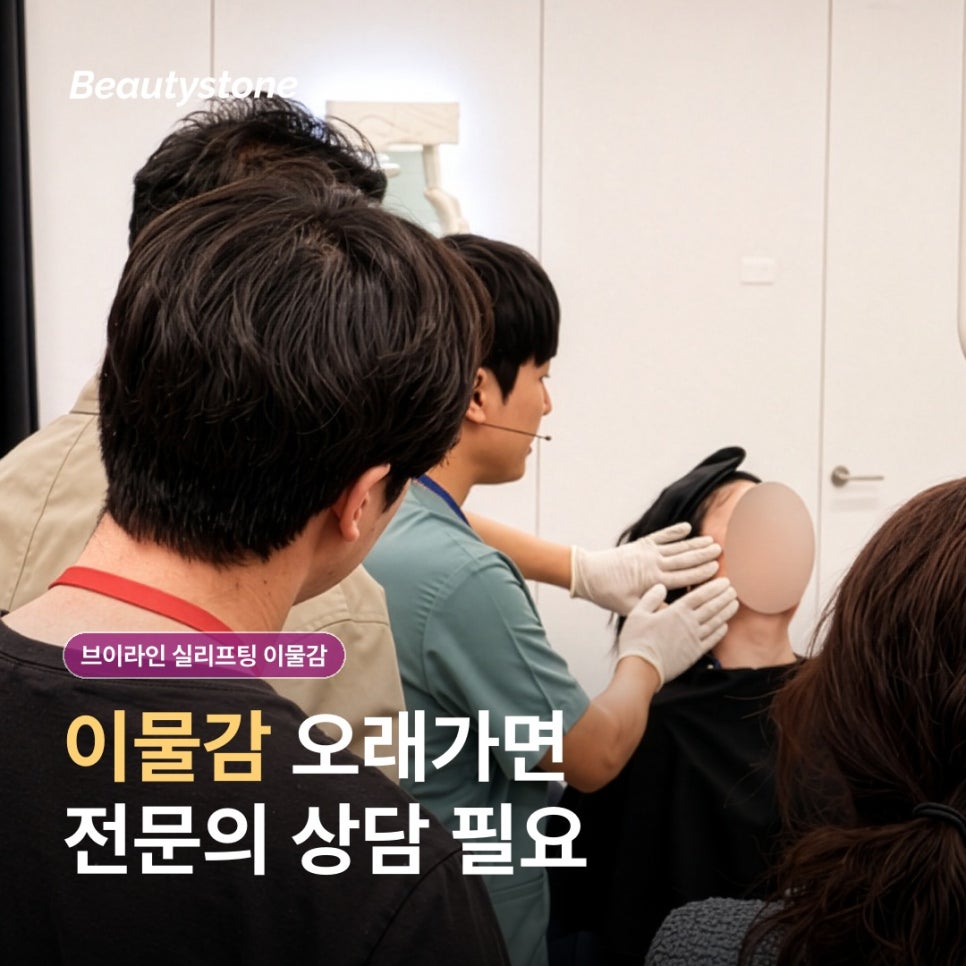
If the sensation does not improve over time
or signs such as swelling, pain, or warmth
appear together,
do not assess the situation yourself.
It is recommended that you have your condition checked
through a consultation with a specialist.
Above all, before the procedure,
it is essential to consult a specialist
to confirm whether this is an appropriate method for you.
Frequently Asked Questions
Q1. How many days does a foreign-body sensation after V-line thread lifting last?
Although it varies from person to person,
it is commonly particularly noticeable
during the first one to two weeks
and then gradually becomes less pronounced.
However, because individual differences are significant,
it is difficult to specify an exact duration.
If it persists for a long time,
it is advisable to consult a specialist.
Q2. If the foreign-body sensation is severe,
does the thread need to be removed immediately?
Rather than attempting to remove the thread
based on your own judgment,
visiting the clinic
and having your condition checked
should come first.
The appropriate response may vary
depending on the insertion site and severity,
so a consultation with a specialist is necessary.
Q3. Can I massage the area to reduce the foreign-body sensation?

During the early recovery period,
excessive massage or pressure
may instead cause irritation,
so it is best to be cautious.
If you would like to know how to care for the area,
it is recommended that you receive guidance suited to your condition
through a consultation.
Q4. Does the V-line area have a greater foreign-body sensation than other treatment areas?
It has been explained that areas such as the jawline,
where facial movements occur frequently,
may make the sensation
feel more noticeable,
but this also varies considerably from person to person,
so it is difficult to make a blanket statement.
For accurate answers to your questions,
consult a specialist.
Thank you for taking the time to read this long post.
This has been Wi Young-jin from Beauty’s Doctor.