Hello.
I’m Wi Young-jin from Beauty’s Doctor.
When facial redness and a burning sensation recur,
you may think of various causes,
such as whether your cosmetics are unsuitable
or whether your body produces too much heat.
However, redness does not appear for just one reason.

Temperature changes and UV exposure,
alcohol, spicy foods, stress,
and the condition of the skin barrier can overlap and trigger a reaction.
3-Line Summary
-
Managing facial flushing begins by recording the situations in which redness appears and how long it lasts.
-
Cleansing, moisturizing, and UV protection can serve as basic steps for reducing irritation.
-
If the redness persists or is accompanied by eye discomfort, the cause should be distinguished through a medical consultation.
-
Why does the face become red so easily?

The blood vessels in the face can temporarily dilate
in response to heat, cold,
exercise, or stress.
Sometimes the redness subsides after a short time,
but the redness may also linger, accompanied by visible small blood vessels or stinging,
as well as papules and dry eyes.
At this point, it is necessary to determine whether it is simply a sensation of heat,
or whether recurring inflammatory disease
or contact irritation may be involved.
This is why it is difficult to determine the cause
based only on the visible color of the skin.
It is also important to note whether burning is more pronounced
when cleansing or applying cosmetics,
and whether the redness appears only in specific situations
even though the skin is usually fine.
These are important clues when deciding how to manage it.
- Which irritants should be reduced first?
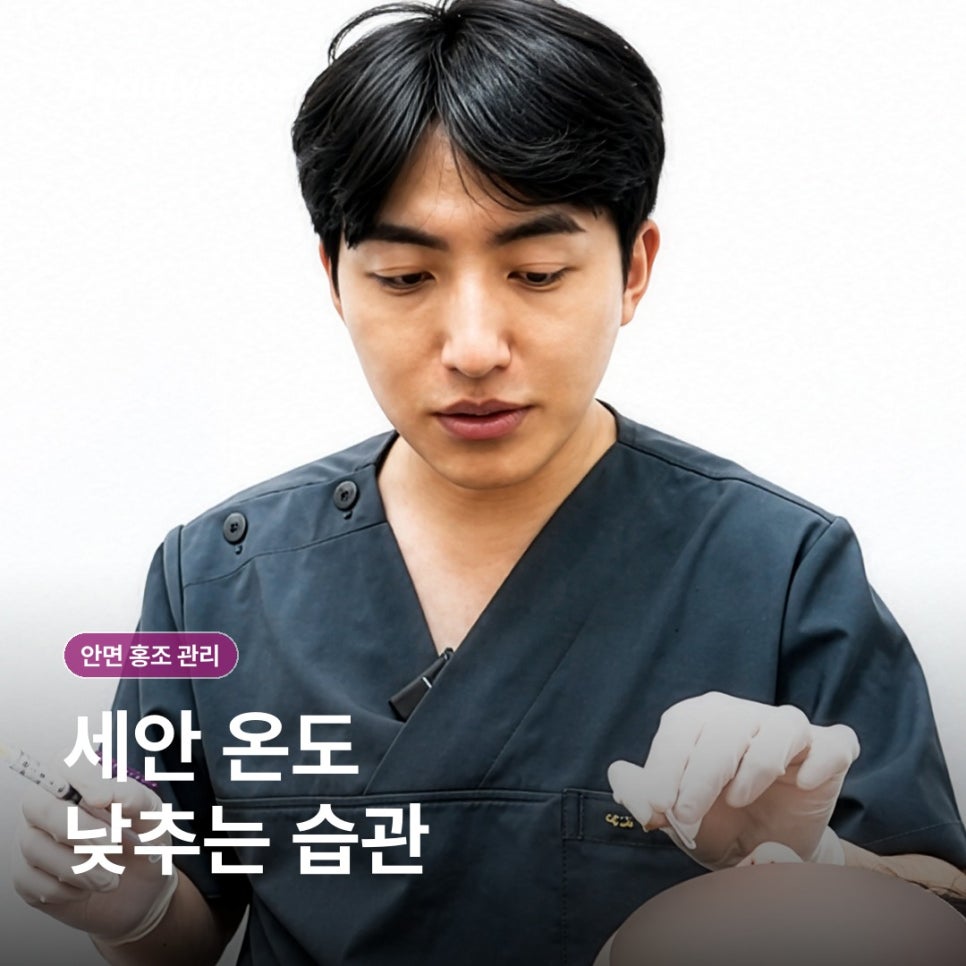
When managing facial flushing,
the first things to review are
how you cleanse and use cosmetics.
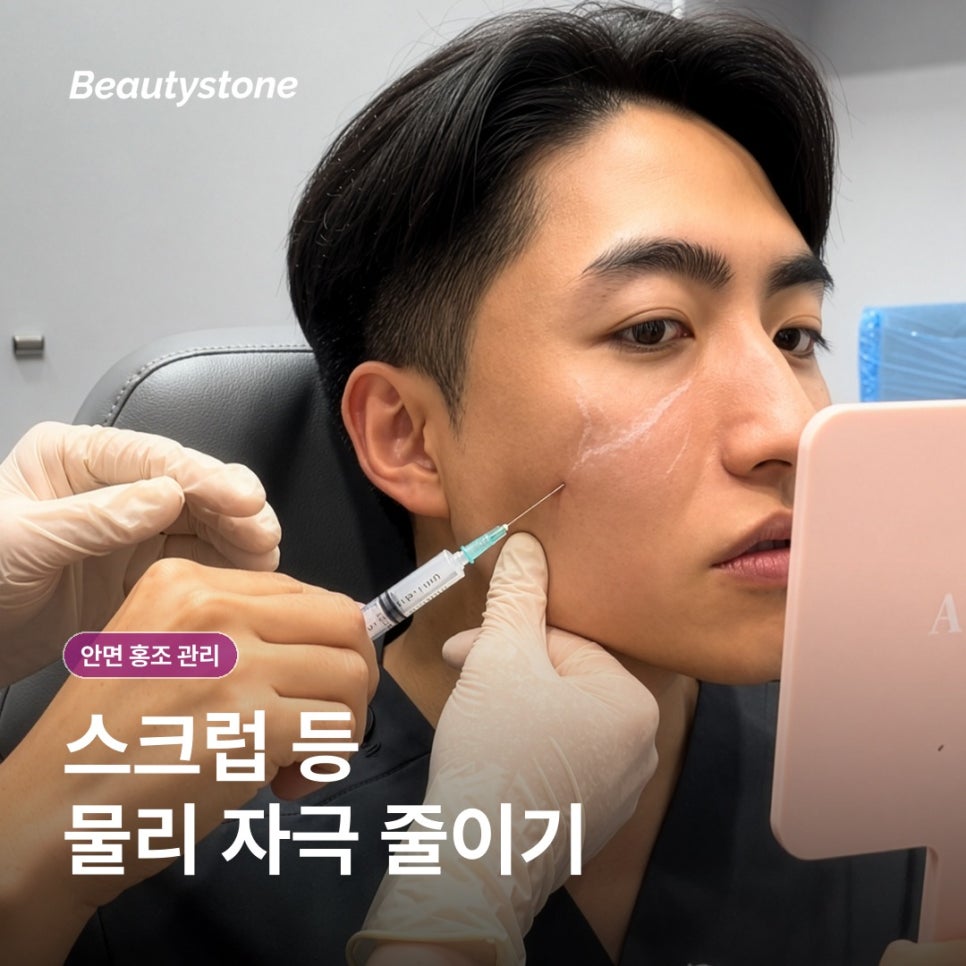
Practices to avoid include
washing for a long time with hot water,
repeatedly using scrubs and peels,
and changing several products at once.
Instead, cleanse briefly with lukewarm water,
then pat the moisture away without rubbing.
Take a break from products with a strong fragrance
or those that sting after application,
and use a gentle moisturizer to reduce dryness.
Adding new products one at a time
makes it easier to identify any reactions.
- How should lifestyle habits be recorded?
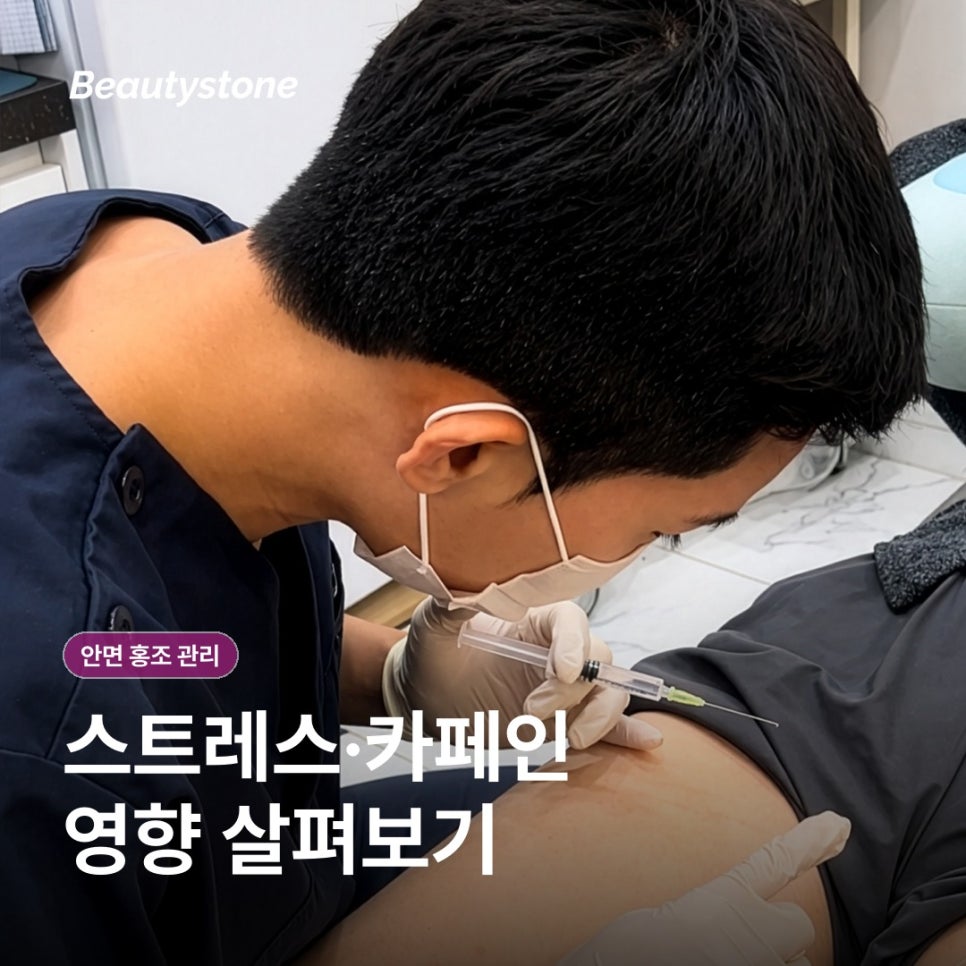
The situations that trigger redness vary from person to person.
To help manage facial flushing, record by date
exposure to hot indoor environments and cold wind,
hot drinks, spicy foods, alcohol,
exercise, and stress.
It is also helpful to record when the face became red
and how long it took for the redness to subside,
as well as whether burning or stinging occurred.
Above all, rather than eliminating every factor at once,
it is more realistic to identify the factors
that repeatedly seem connected to your symptoms.
Apply sunscreen before going outdoors,
and use a hat or shade as well.
If the product itself stings, review its formulation and ingredients.
- How do medical consultations and procedures differ?
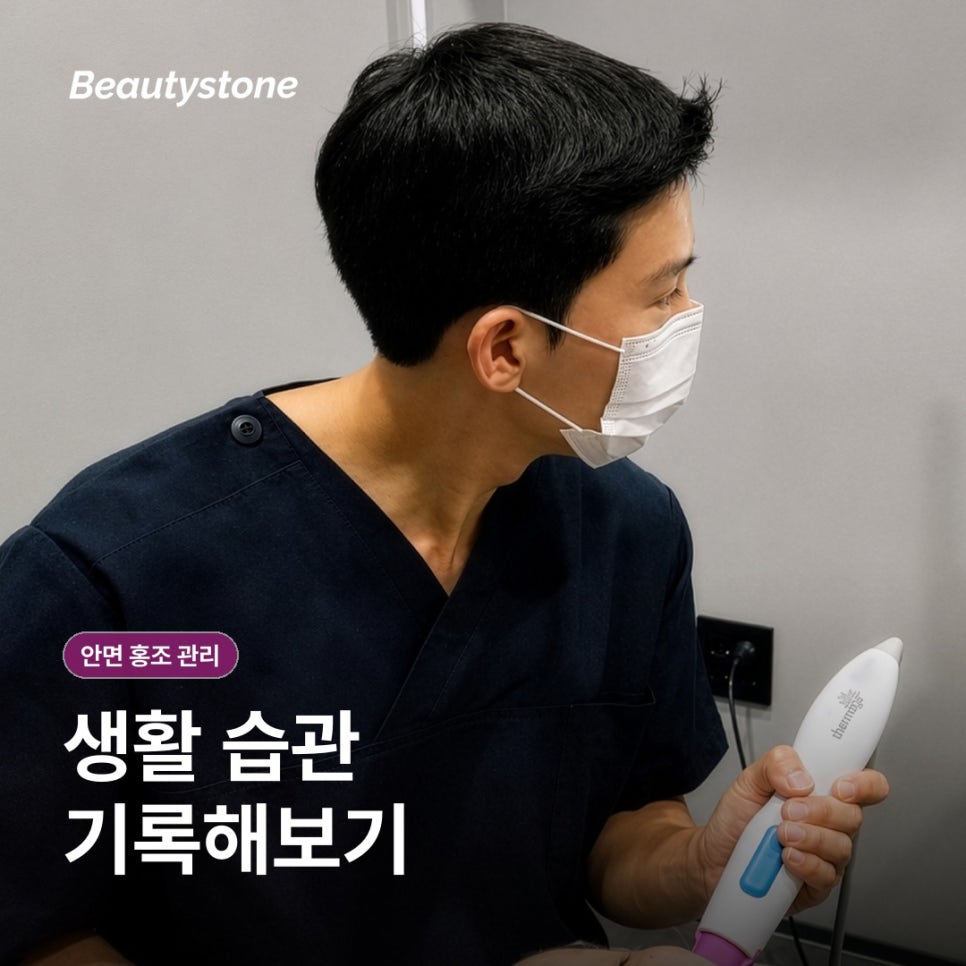
Self-care involves reducing irritation
and protecting the skin barrier.
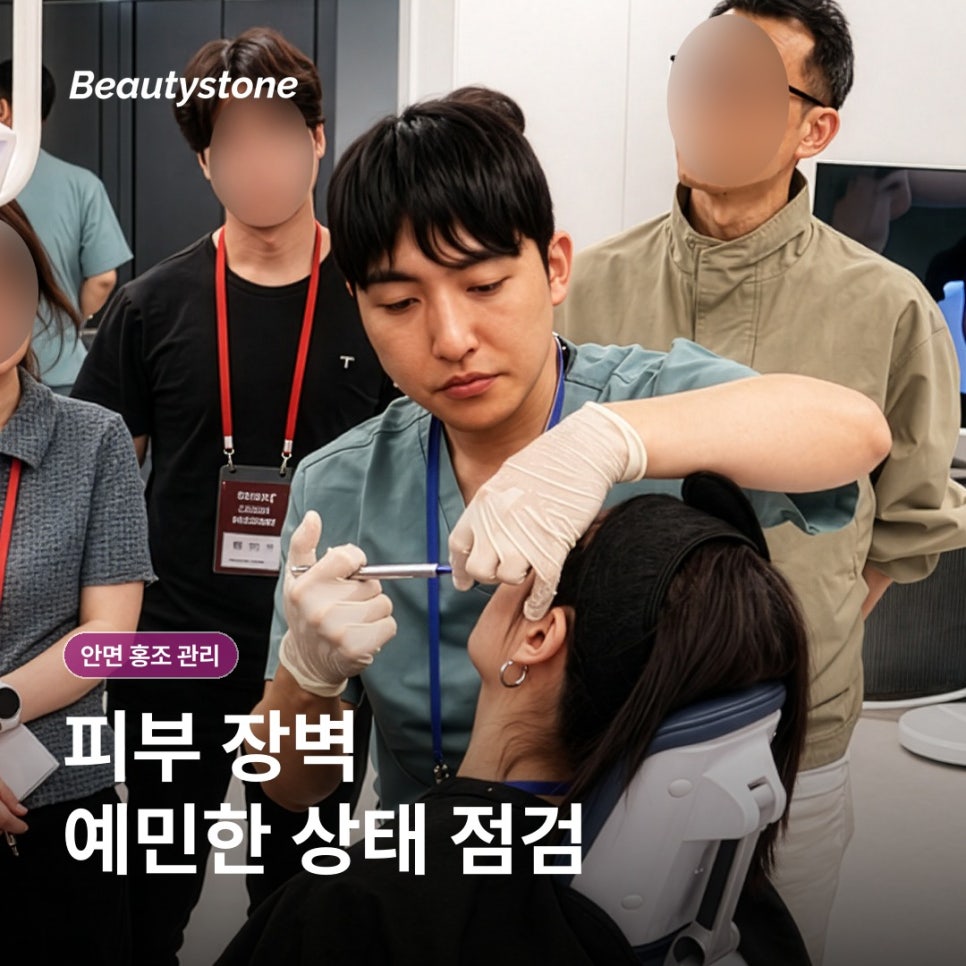
During a medical consultation, the clinician determines whether redness and blood vessels are the main features,
and checks whether papules, pustules, or eye symptoms are also present.
Before your consultation, briefly organize information about when the symptoms began,
any medications you are taking,
recent procedures,
and the ointments and cosmetics you use.
This can help with the medical history-taking process.
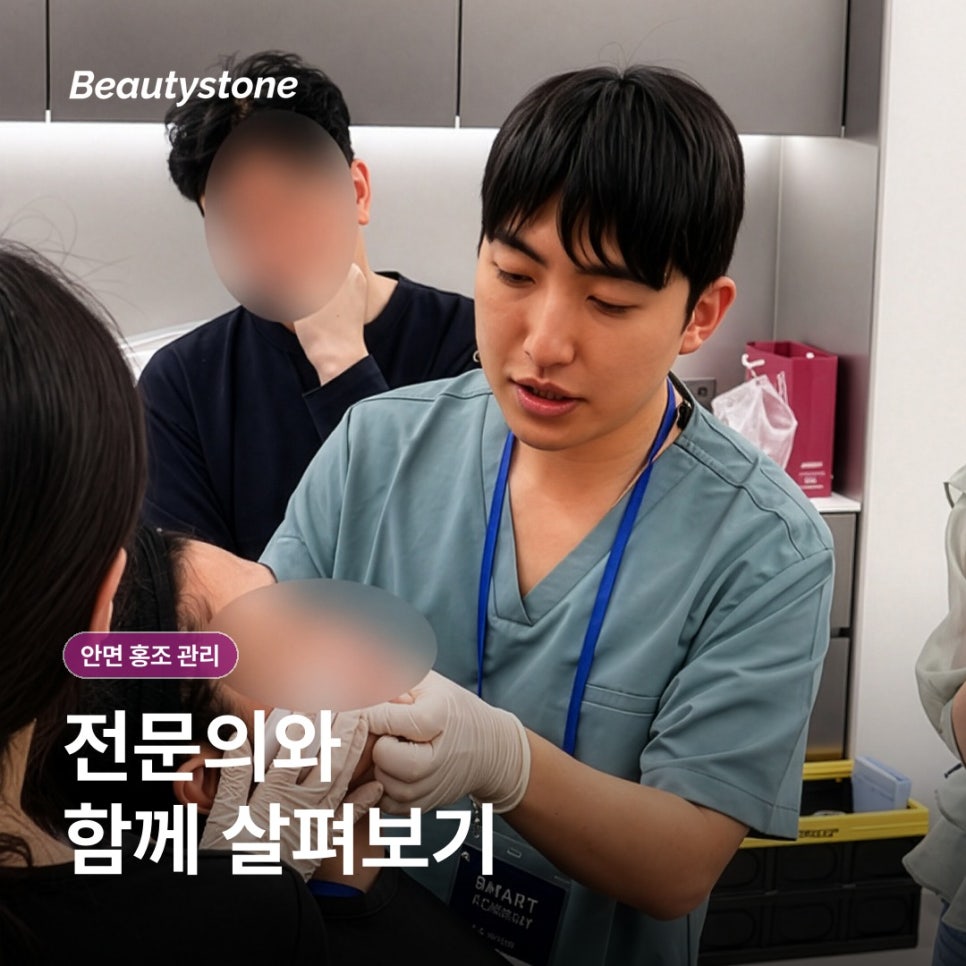
Keeping dated photos taken in natural light
makes it easier to compare how long the redness persists.
Depending on the observed pattern, management of facial flushing may involve considering
topical or oral medication,
or light- and laser-based procedures targeting blood vessels.
Light- and laser-based procedures may cause
stinging or a sensation of heat,
and redness or mild swelling may appear immediately afterward.
The intensity experienced and recovery time
vary depending on the individual’s skin condition.
The number of sessions and intervals cannot be determined uniformly for everyone.
After a procedure, be sure to moisturize and use UV protection,
and avoid saunas, excessive alcohol consumption, vigorous exercise, and exfoliation
for the period recommended by your provider.
- Which symptoms require contacting a medical institution?

Even if you continue managing facial flushing,
if the redness gradually lasts longer,
or pain, swelling, oozing,
or recurring inflammatory lesions develop,
you should have the cause reevaluated through a medical consultation.
If your eyes become severely bloodshot
or are accompanied by pain, light sensitivity,
or blurred vision,
please do not delay in seeking advice.
In particular, if blisters or severe pain appear after a procedure,
or if unusual symptoms persist or worsen,
contact the medical institution where you received the procedure.
In Closing

Managing facial flushing
is not only about covering the redness;
it is more about carefully distinguishing
triggering factors and skin reactions.
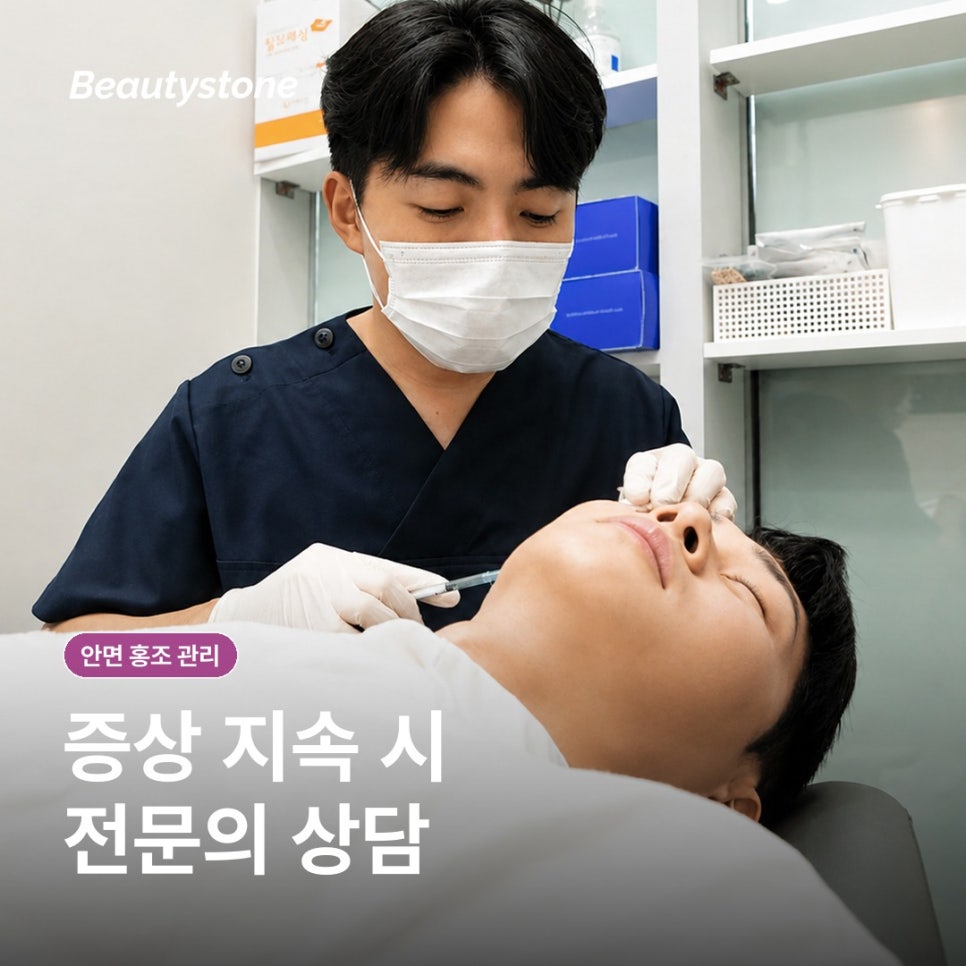
Start by reviewing cleansing and moisturizing,
as well as UV protection,
but not everyone needs the same products or procedures.
If discomfort continues even after adjusting your lifestyle habits,
please consult a medical professional
to determine whether further care is needed.
Frequently Asked Questions
Q. Can washing my face with cold water help?
Water that is excessively cold or hot can be irritating.
Wash briefly with lukewarm water
and reduce rubbing motions.
Q. How long should I stop exfoliating?
While stinging and a sensation of heat are present,
it is advisable to stop using scrubs or peels.
The appropriate time to resume may vary
depending on your current condition and the products you use.
Q. Should I get laser treatment right away when my face is red?
The approach varies depending on the cause of the redness
and any accompanying symptoms.
It is appropriate to first distinguish the condition through a medical consultation,
then determine whether treatment is needed,
as well as the number and intervals of sessions.
Q. Will changing only my cosmetics make things better?
If product irritation is the cause,
this may help,
but if a vascular reaction or inflammatory disease is also present,
lifestyle management alone may not be sufficient.
Thank you for reading this lengthy post today.
This has been Wi Young-jin from Beauty’s Doctor.