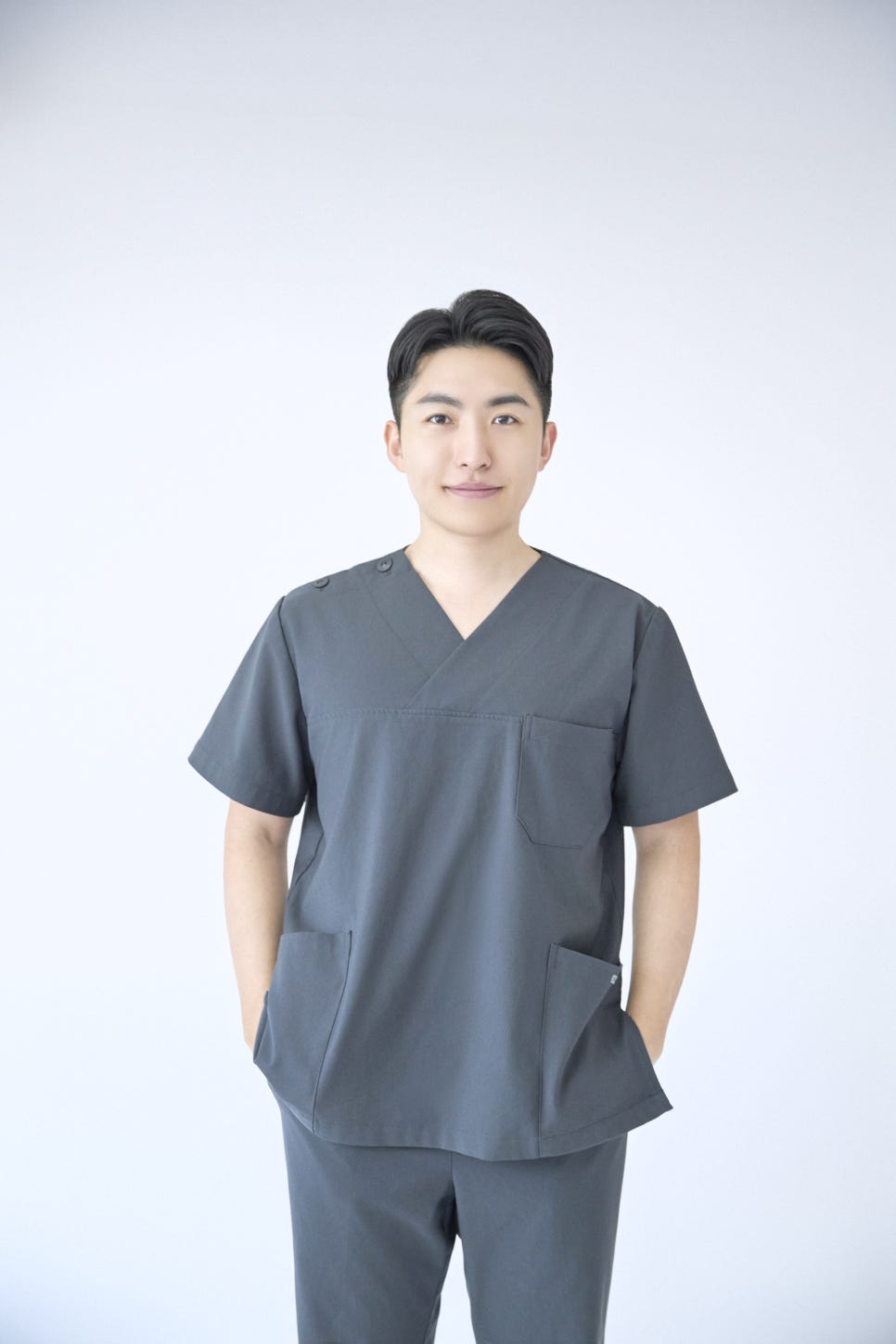
Hello.
I’m Wi Yeong-jin from Beauty Doctor.
If your face flushes easily or
small blood vessels around the cheeks and nose become prominent,
you may start looking into vascular laser treatments.
However, facial redness can appear
not only when blood vessels are dilated,
but also due to irritation of the skin barrier, inflammatory conditions,
or a reaction to changes in temperature.
Therefore, when considering Red Touch,
rather than deciding based only on the device name,
the cause of the current redness
should be identified first.
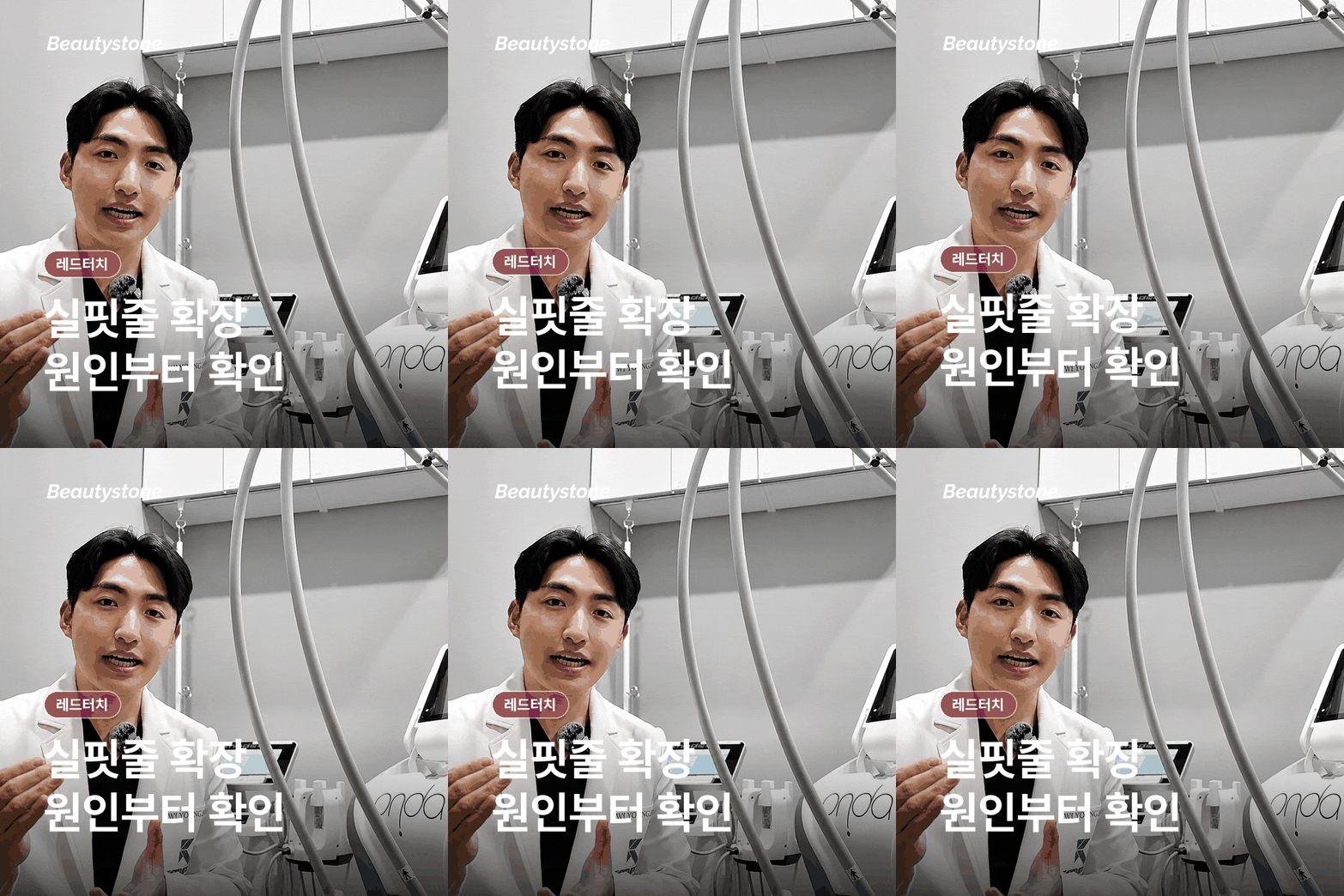
Three-line summary
-
Red Touch is a vascular laser treatment that uses the property of hemoglobin in the blood absorbing light of a specific wavelength.
-
The treatment plan and recovery process may vary from person to person depending on the cause of facial redness, the depth of the blood vessels, and skin sensitivity.
-
After treatment, maintain moisturization and use sun protection, while reducing stimuli that raise the skin temperature, such as alcohol, saunas, and strenuous exercise.
- How does Red Touch work?

Red Touch is known as a device that uses the property of hemoglobin in blood vessels absorbing energy at a specific wavelength.
It delivers light energy to prominent small blood vessels or red areas,
providing selective heat stimulation to the vessel walls.
Rather than simply heating the entire skin surface,
it is closer to a process in which the settings direct energy primarily toward
vascular structures that appear red.
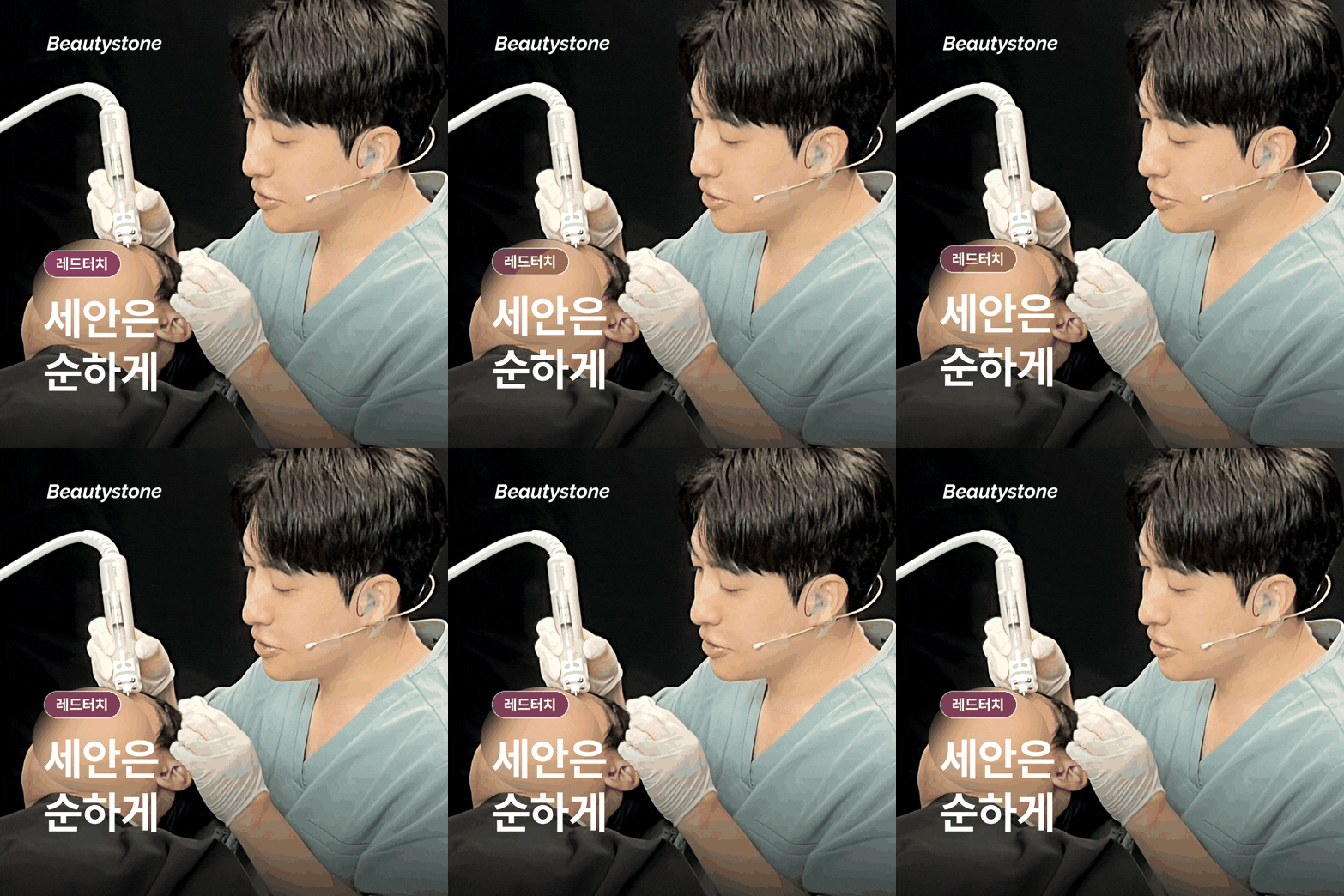
During treatment, you may feel a prickling sensation or brief warmth,
like the light snap of a rubber band.
Areas where blood vessels are concentrated, such as beside the nose or around the nostrils,
may feel slightly more noticeable than the cheeks,
but the perceived intensity varies from person to person.
- Can it be used for all types of facial redness?

It is not appropriate to assume that all facial redness
is caused only by dilated blood vessels.
If your skin stings and becomes red after cleansing
or using cosmetics, irritation of the skin barrier may also be present,
and if scaling or itching occurs as well,
inflammation should be considered.
In contrast,
if your entire face flushes easily after being in a hot environment, exercising, or drinking alcohol
and the redness lasts for a long time,
the contribution of vascular reactivity should be assessed.
If papules or pustules, eye redness, and dryness are also present,
rather than considering laser treatment alone,
possible related conditions should first be distinguished.
Therefore, Red Touch is not a treatment that everyone needs,
and its necessity should be confirmed through a medical consultation.
- What should you tell the provider before treatment?

Before your consultation, it is helpful to briefly record when the redness began
and how long it takes to subside
after your skin becomes red.
Please also note situations that make the symptoms more noticeable,
such as drinking alcohol, eating spicy food, exercising, feeling tense,
or experiencing differences between indoor and outdoor temperatures.
Tell the medical provider about ointments and cosmetics you have used recently,
medications you are currently taking,
and any history of other laser treatments.

Whether you bruise easily
or tend to heal slowly,
as well as whether there is inflammation or dermatitis
in the treatment area, should also be checked when planning the treatment.
The number of sessions and the intervals between them
depend on the extent of the redness and the thickness of the blood vessels,
as well as skin sensitivity
and recovery speed, so they are difficult to determine uniformly.
- How does the skin react after treatment?

Immediately after treatment, redness, warmth,
and mild swelling may occur temporarily.
Blood vessels that were originally prominent
may briefly look darker or redder,
so the course should not be judged based only on the appearance immediately after treatment.
In most cases, the skin is monitored as it settles,
but the timing of recovery and the degree of the reaction
may vary depending on each person’s skin condition.
Things to avoid include washing your face with hot water for a long time,
using scrubs or peeling products,
and repeatedly rubbing the treated area.

By contrast, recommended care includes
using a gentle cleanser, maintaining moisturization,
and applying sunscreen
thoroughly.
Alcohol, strenuous exercise, saunas, and jjimjilbang facilities
can dilate blood vessels and

raise the skin temperature,
so avoid them during the period specified by your provider.
- Which symptoms require contacting a medical provider?
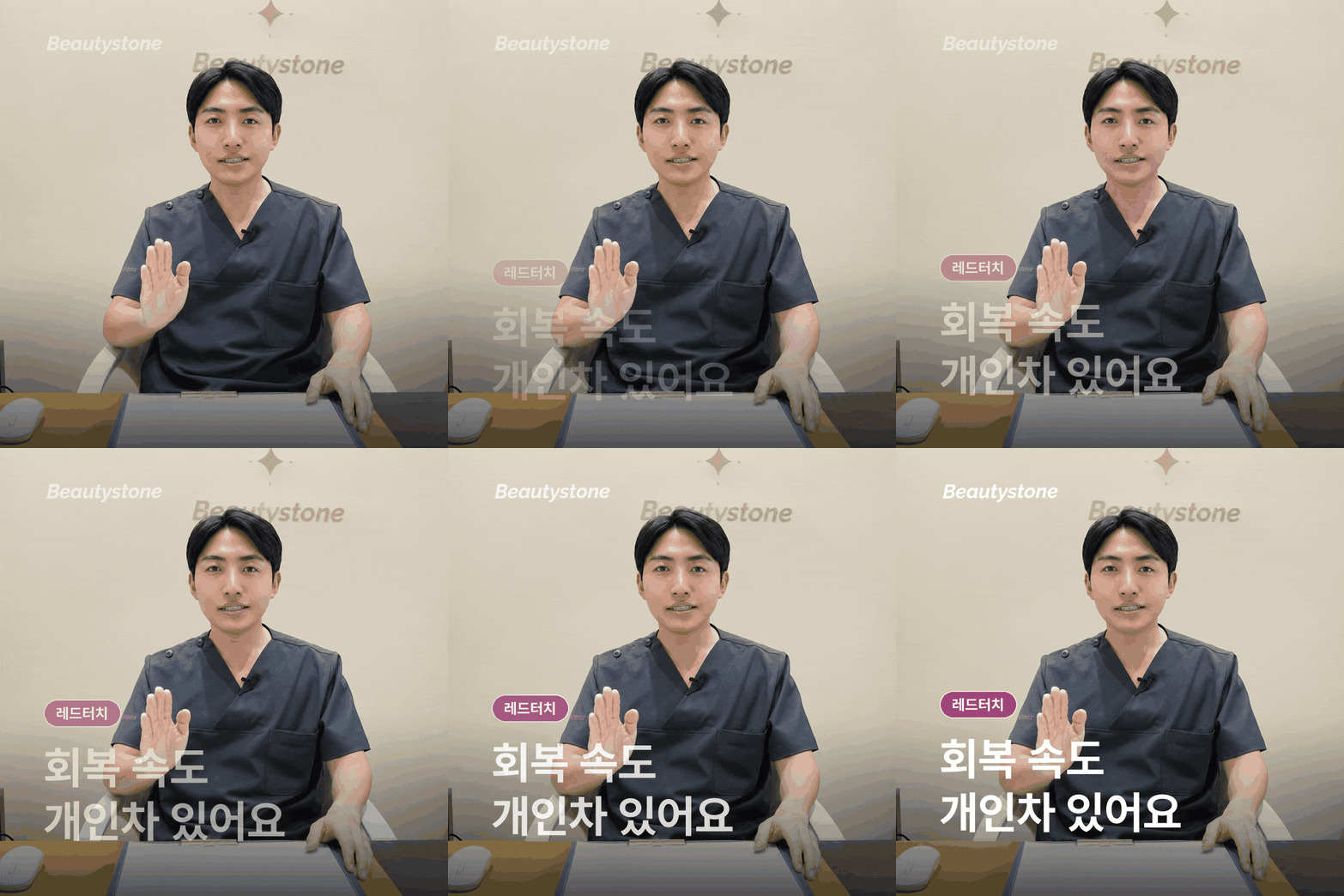
It is important to observe whether the redness that appears after treatment
gradually decreases over time.
However, you should make contact if pain progressively worsens,
or if blisters, oozing, sudden swelling,
or a distinct change in color appears.
If the skin feels severely hot or burning,
or pain continues when touched,
have the condition checked rather than adding ointments on your own.
In particular, if unusual symptoms persist or worsen,
contact the medical institution where you received treatment
and follow the appropriate guidance.
In closing
Red Touch
is one of the vascular laser treatments
that may be considered for facial redness and visible small blood vessels.
However,
there are many possible reasons for facial redness,
so it is difficult to determine whether it is suitable for your current condition
based on the treatment name alone.

The situations that trigger the redness and how long it lasts,
accompanying symptoms,
and any history of previous treatments
should all be considered before choosing an approach suited to you.
Rather than hastily deciding on the number of sessions,
please consult a medical provider to confirm whether treatment is needed,
the intervals between sessions,
and how to manage recovery.

Frequently asked questions
Q. Is Red Touch very painful?
You may feel prickling or brief warmth
depending on the treatment area and intensity.
The sensation may be slightly more noticeable around the nose,
where blood vessels are concentrated,
but the perceived pain varies from person to person.
Q. Does the redness subside immediately after treatment?
Immediately after treatment, the redness may temporarily
appear more pronounced due to the heat stimulation.
Rather than assuming that it will subside right away,
it is appropriate to calmly observe the skin’s reaction
during the period specified by your provider.
Q. Are there cases in which treatment may be difficult to receive?
If there is inflammation or a wound on the skin,
or depending on the medications you are taking and your recent treatment history,
the plan may vary.
Be sure to inform the provider fully during the consultation
about your health status, including whether you are pregnant
and any underlying conditions.
Q. Can it be performed together with other treatments?
Whether treatments can be combined and the order in which they are performed
will be determined differently depending on your current skin condition and the type of treatment.
Rather than arbitrarily scheduling treatments close together,
coordinate the intervals with your medical provider
so that the recovery periods do not overlap.
Thank you for taking the time to read this long post today.
This has been Wi Yeong-jin from Beauty Doctor.