Hello.
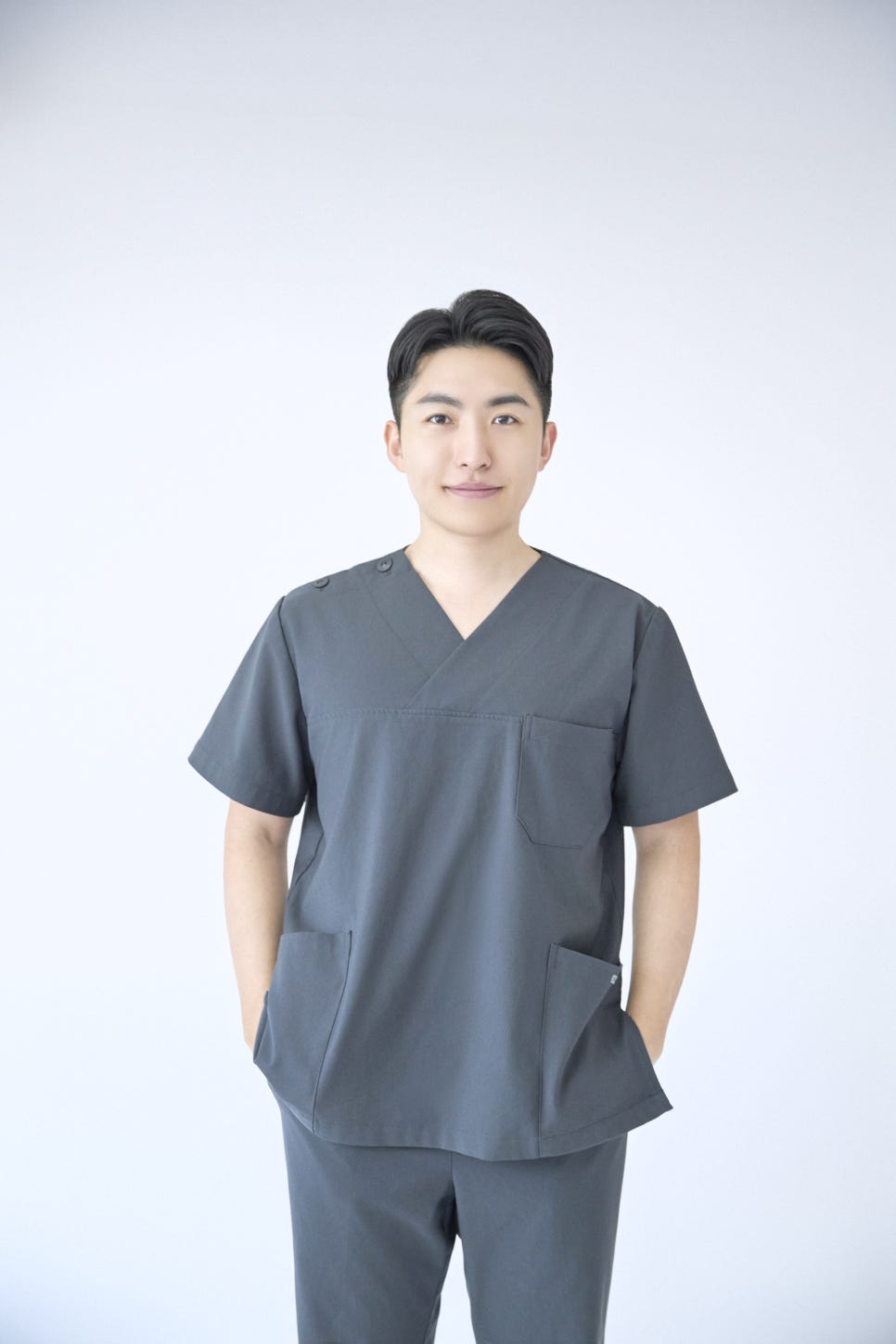
I’m Wi Young-jin from Beauty’s Doctor.
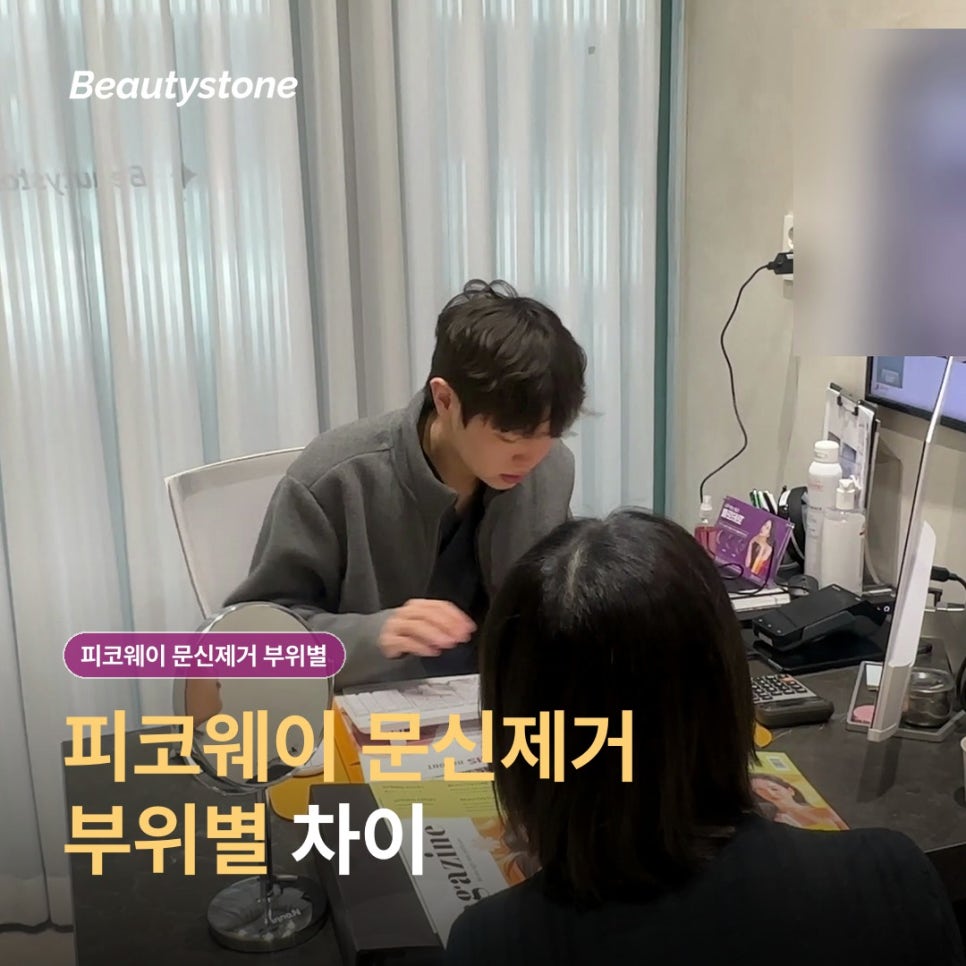
When discussing tattoo removal,
I often hear the question:
“Since the same device is used,
does the process vary significantly
depending on the treatment area?”
A tattoo on the arm
and one on the ankle
may appear to differ only in location,

but in reality, they can experience quite different levels of friction and movement in daily life,
as well as different degrees of sun exposure.
Therefore, when creating an area-specific
PicoWay tattoo removal plan,
we consider more than whether the skin is thin
or thick.
We also examine
the tattoo’s color,
the depth of the ink,
traces of overlapping tattoos,
and the skin’s current condition.
Three-point summary
- Differences in PicoWay tattoo removal by area
may be influenced more by the tattoo’s color and depth,
as well as the skin’s response,
than by location alone.
- Areas that move frequently or are repeatedly touched
by clothing and shoes, such as the wrists and ankles,
require care to reduce friction during recovery.
- Rather than fixing the number and interval of treatments
from the beginning,
it is more natural to adjust them
after checking the skin’s recovery
after each session.
- Does the laser response change depending on the area?
PicoWay is a picosecond laser
that delivers energy to tattoo pigments
over an extremely short period of time
to break the ink particles into smaller pieces.
However, the fact that the same device is used
does not mean that every tattoo
will respond in the same way.
Depending on whether it is black,
or contains red or green,
whether the ink is densely applied,
or whether it was layered multiple times
like a cover-up tattoo,
the wavelength and settings used may differ.
For this reason,
when providing area-specific
PicoWay tattoo removal consultations,
we generally avoid deciding in advance
that treatment will be quick or take a long time
based solely on location.
This is because a more realistic plan
can be created only after also considering
the skin tone and existing scars,
as well as whether the person
has previously undergone tattoo removal.
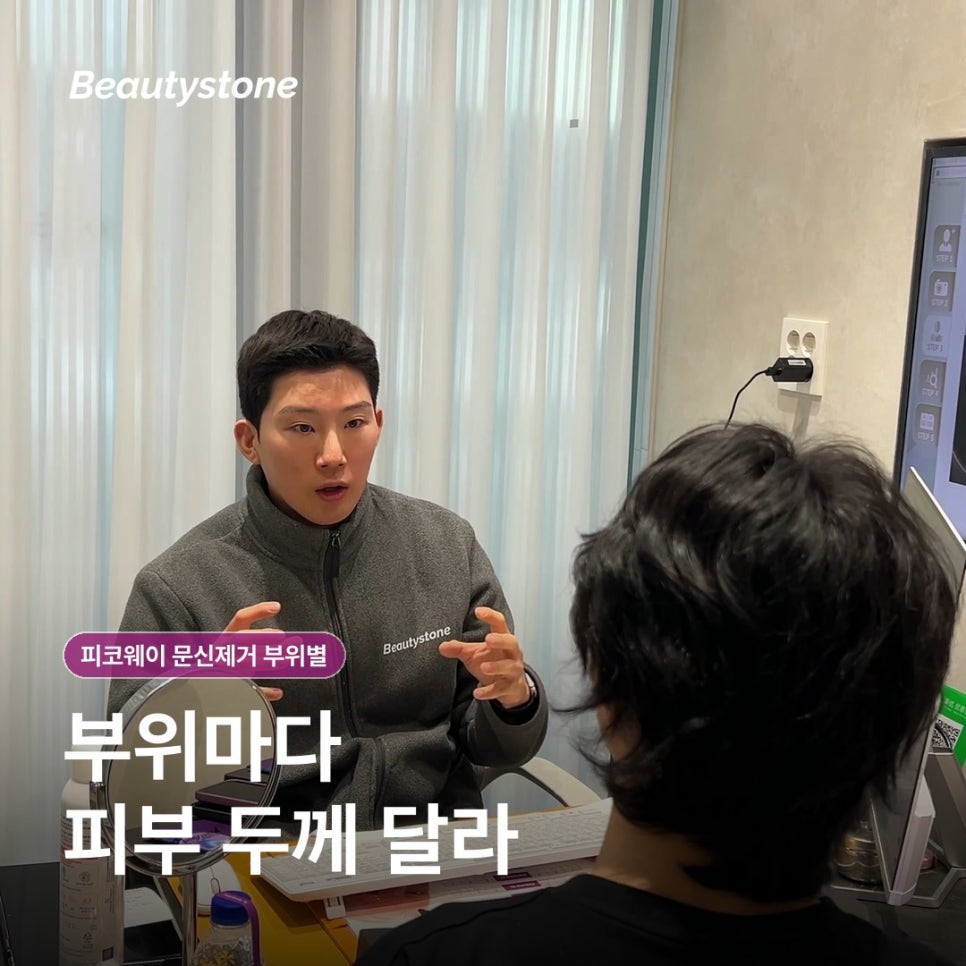
- What should be considered for the arms, shoulders, and back?
The arms and shoulders are exposed
to sunlight more often than you might expect.
In summer, people spend longer periods
wearing short sleeves,
and bag straps or sleeve cuffs
may repeatedly rub against the skin.
If you have tanned before or after treatment,
or if the skin is red and overheated,
the treatment schedule may need to be adjusted.
The back often has large tattoos,
and it can also be difficult to check the area
in a mirror or apply ointment and moisturizer evenly
on your own.

Therefore, if the treatment area is extensive,
it is helpful to decide during the consultation
whether to treat everything at once
or divide the treatment into multiple sessions
while monitoring the recovery process.
After treatment,
rather than forcibly removing scabs or flakes,
wear soft clothing
and continue moisturizing and protecting the skin from the sun
as instructed.
- Why do the wrists and ankles require a little more attention?
Watches and bracelets come into contact with the wrists,
while the ankles are frequently rubbed
by socks and shoes.
Because there is more irritation during movement
than when staying still,
tight accessories or shoes
may feel uncomfortable while redness or swelling remains.
Tattoos near the fingers or toes

are on areas with many skin folds and limited surface area,
so we examine the borders more carefully.
That does not mean
that the laser is always used at a lower intensity
simply because the skin is thin.
For area-specific
PicoWay tattoo removal,
we monitor the pain response,
check the ink density and changes in the skin,
and adjust the treatment area and energy separately
if necessary.
- What changes may occur immediately after treatment?

During treatment,
you may feel a stinging sensation like a rubber band snapping
and brief warmth.
Areas with dense pigment
or located close to bone
may feel somewhat more distinctly sharp or tingling.
Immediately afterward,
the area may appear whitish,
or small blisters and scabs may develop
along with a burning sensation, redness, and swelling.
Pain varies from person to person
depending on the area, tattoo density,
and treatment size.
For the time being, avoid hot water, saunas,
and strenuous exercise,
and do not forcibly remove scabs or flakes.
If the pain gradually worsens,
or if large blisters and discharge,
or spreading redness and warmth develop,
contact the medical institution where you received treatment.
- How are the number and intervals of treatments determined?
It is difficult to accurately determine
the total number of tattoo removal sessions
based on the response from just one treatment.
It depends on whether the tattoo is solid black
or contains multiple colors,
and professionally applied tattoos
do not necessarily progress in the same way
as tattoos applied relatively shallowly.
When monitoring the progress of area-specific
PicoWay tattoo removal,
if possible, take photos under similar lighting
and from similar angles.
Check not only how much the color has faded,
but also whether the redness and scabs
have sufficiently subsided.

Shortening the interval
does not necessarily mean the process will finish faster.
The skin should be given sufficient time to recover
before proceeding with the next session
in order to reduce unnecessary irritation.
In closing
An area-specific approach to
PicoWay tattoo removal
does not end with simply dividing areas
into the arms and back, or the wrists and ankles.
To create a plan suited to your daily life,
we need to consider the tattoo’s color and depth,
skin tone and scars,
as well as how frequently the area
experiences friction in everyday life.
During the initial consultation,
rather than asking only,
“How many sessions will it take?”
also ask what criteria are used
to decide on the next session
and what you should be careful about
during recovery.
Frequently asked questions
Q. Does an ankle tattoo take longer than tattoos on other areas?
The treatment period cannot be assumed to be longer
simply because the tattoo is on the ankle.
The ink’s color, depth, and density,
whether it is a cover-up,
and the recovery status after each session
all need to be considered together.
Q. How should I care for an area like the back that I cannot reach?
Check in advance which areas need cleansing and moisturizing,
and if it is difficult to manage the area on your own,
it is better to ask someone nearby for help.
Do not remove scabs with your hands
or rub them forcefully with a towel.
Q. Do I need to shave the tattooed area before treatment?
Shaving may be necessary
for areas with a lot of hair.
However, if you get a cut while shaving,
the treatment schedule may change,
so prepare according to the instructions
provided by the medical institution where you made your appointment.
Q. When can I exercise after treatment?
This depends on the tattoo’s size and location,
as well as the degree of redness and swelling.
Take a short break from exercise that causes significant heat and friction,
and resume it at the recommended time
after the skin has calmed sufficiently.
Thank you for reading this long post today.
This has been Wi Young-jin from Beauty’s Doctor.