Hello.
I’m Kim Ga-eul from Beauty’s Doctor.
When brown spots that were not previously present
begin to appear one by one on the face or backs of the hands,
it is easy to assume that they are age spots
that have developed with age.
Some spots have a smooth surface,
while others are slightly raised
or feel rough to the touch,
so many people look into age-spot treatment.
However, not all lesions
commonly called age spots
are the same type.
Flat solar lentigines
and raised seborrheic keratoses
have different appearances and treatment methods,
and they can sometimes resemble other pigmented lesions.
Therefore, rather than choosing a laser type first,
the first step is to determine what the lesion is.
3-Line Summary
- Brown lesions called age spots
may include different types,
such as solar lentigines and seborrheic keratoses.
- Age-spot treatment is selected according to the color,
thickness, and degree of surface elevation,
using either pigment lasers
or removal methods as appropriate.
- After treatment, do not forcibly
remove scabs. Continue moisturizing
and protecting the skin from ultraviolet rays,
while watching for any unusual signs.
- Why do age spots develop?

It is difficult to explain the cause of age spots
simply as exposure to ultraviolet rays alone.
Solar lentigines, which appear as flat brown spots,
are closely associated with
cumulative ultraviolet exposure over a long period.
They are common on areas that are frequently exposed to sunlight,
such as the face, forehead, and backs of the hands.
Seborrheic keratoses, on the other hand,
are benign epidermal lesions that develop after adulthood.
Their surfaces may be rough,
or they may look raised, as if attached to the skin.
Seborrheic keratoses are influenced by
family history and age,
and no definitive way to prevent them is known.
Therefore,
it is difficult to treat all age spots
as ultraviolet-related pigmentation
using the same method.
It is necessary to examine whether the color is uniform,
whether the borders are regular,
and whether the surface is flat
or raised. If necessary, they should be distinguished
through examination with a magnifying device.
Lesions that have recently grown rapidly
or changed in color or shape
should be diagnosed before cosmetic treatment.
- What is the principle behind age-spot treatment?

For flat solar lentigines,
lasers or light-based treatments
that respond to pigment may be considered,
using the property of melanin pigment
to absorb light energy.
Seborrheic keratoses, which are thicker and raised,
may be treated with resurfacing lasers,
electrocautery,
cryotherapy,
or scraping methods.
However, methods that break pigment into smaller particles
are not applicable to every age spot.
The approach varies depending on the depth and thickness
of the lesion.
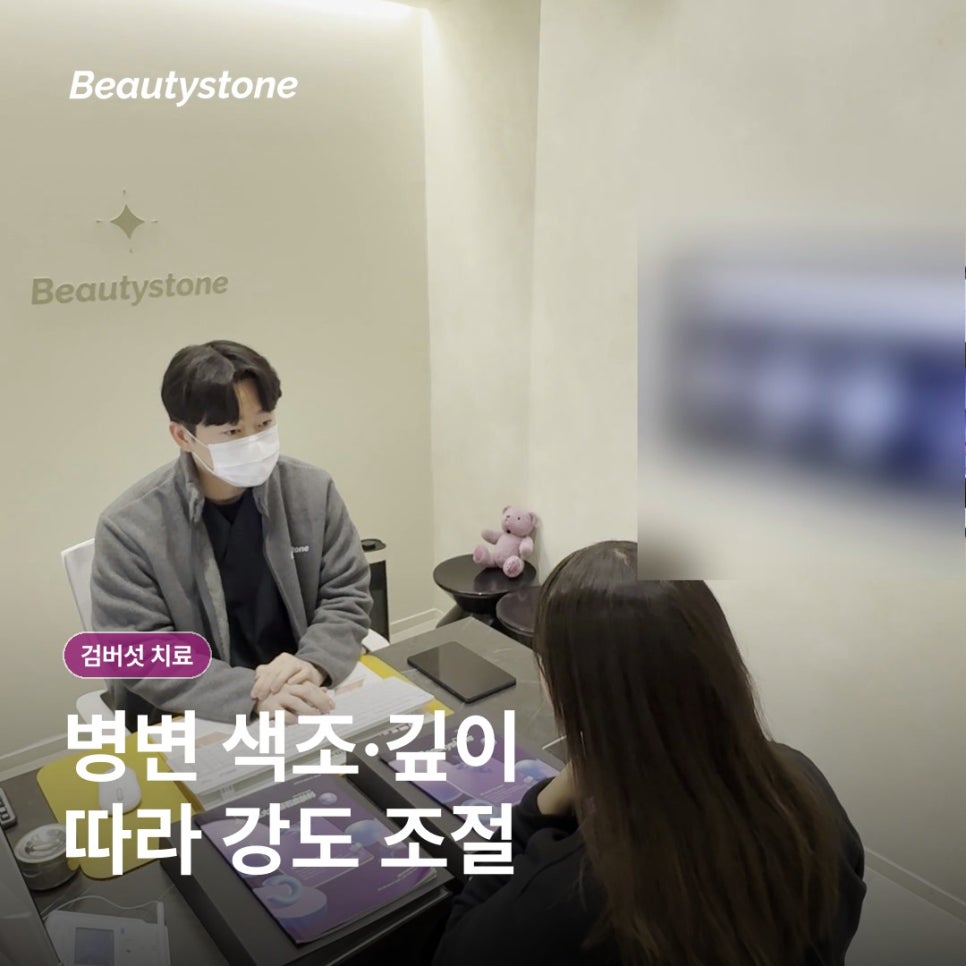
During treatment,
you may feel a stinging sensation
like a rubber band lightly snapping
or a brief feeling of heat.
The degree of discomfort varies
depending on the lesion’s location and number,
the method used, and skin sensitivity.
Rather than treating it intensely all at once,
it is more appropriate to assess the remaining color
after recovery
and determine whether additional treatment
is needed based on the skin’s response.
- What should be checked before and after treatment?
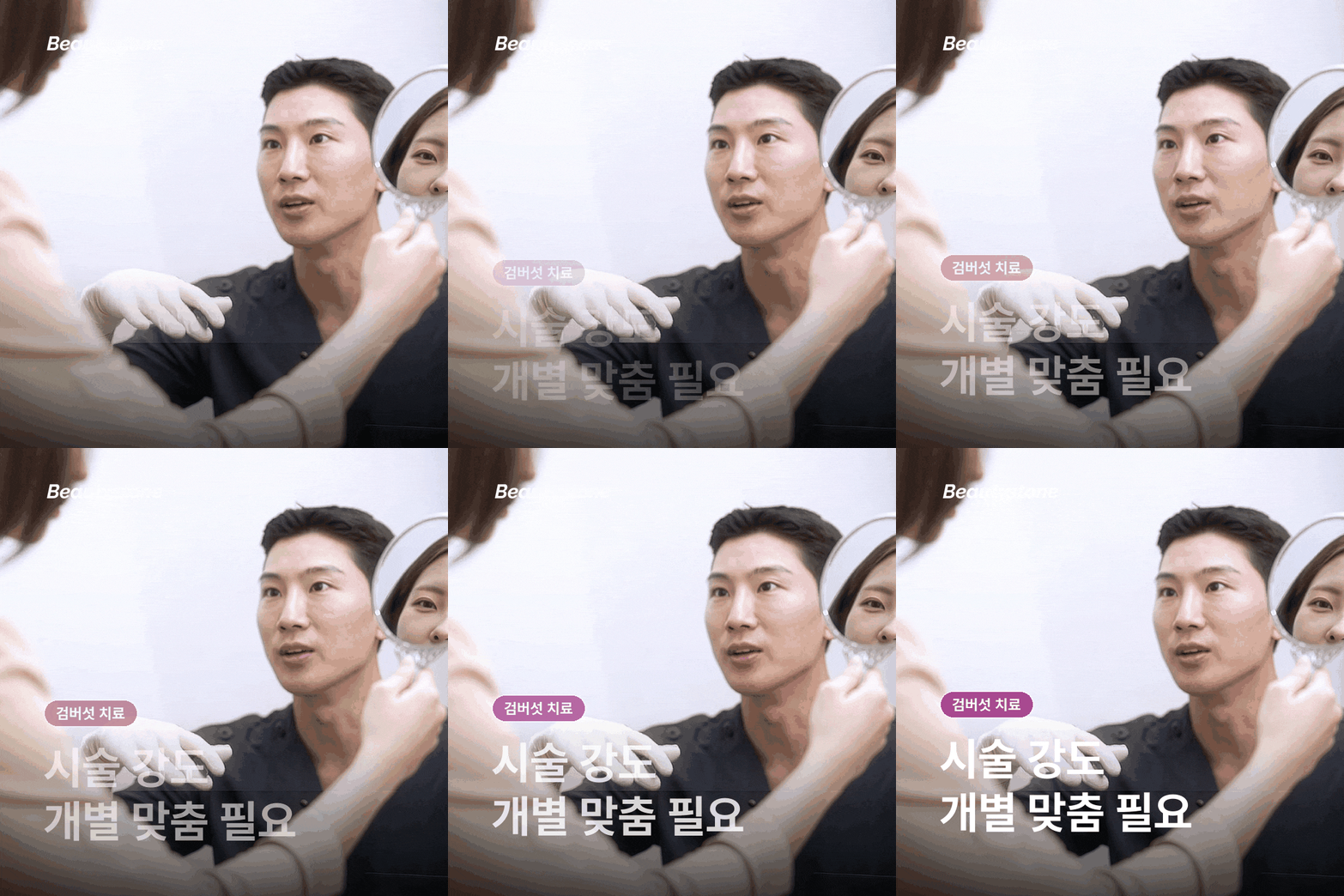
Before age-spot treatment,
tell your medical provider when the lesion developed
and whether there have recently been changes
in its size, color, or shape.
Your current medications and allergies,
any history of wounds that healed poorly,
and any recent laser or peeling treatments
should also be reviewed.
If you have dermatitis or a wound,
or if your skin has recently been exposed to strong sunlight,
treatment may be rescheduled until the skin has calmed down.
Immediately after treatment,
redness and a burning sensation,
mild swelling, or small scabs may appear.

At this time,
removing scabs by hand can delay recovery
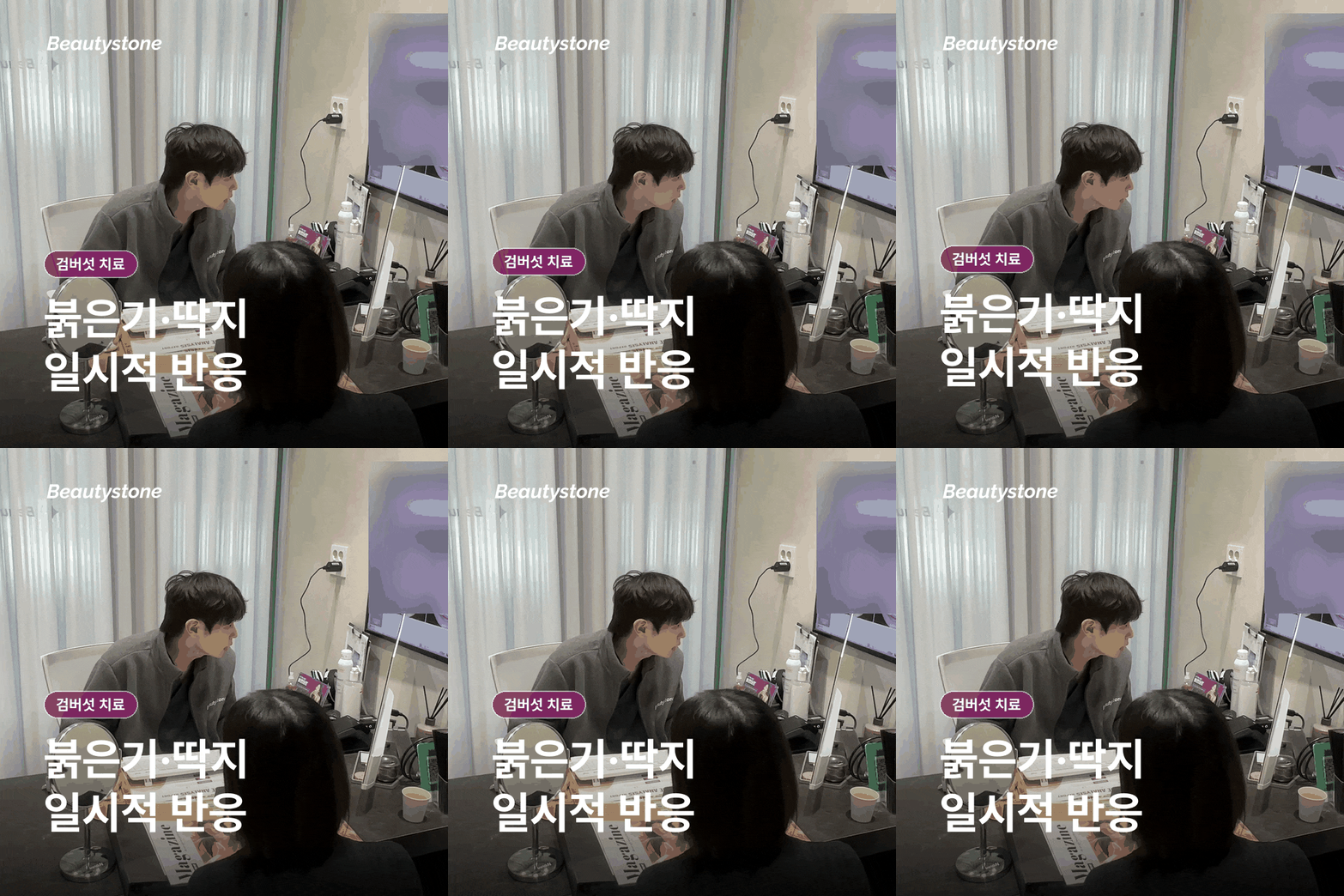
and may leave pigmentation behind,
so wait until they fall off naturally.
If pain becomes worse over time,
or if large blisters, discharge,
or spreading redness appears,
do not simply wait and watch; contact a medical institution.
- How can you protect against ultraviolet rays and manage recurrence?
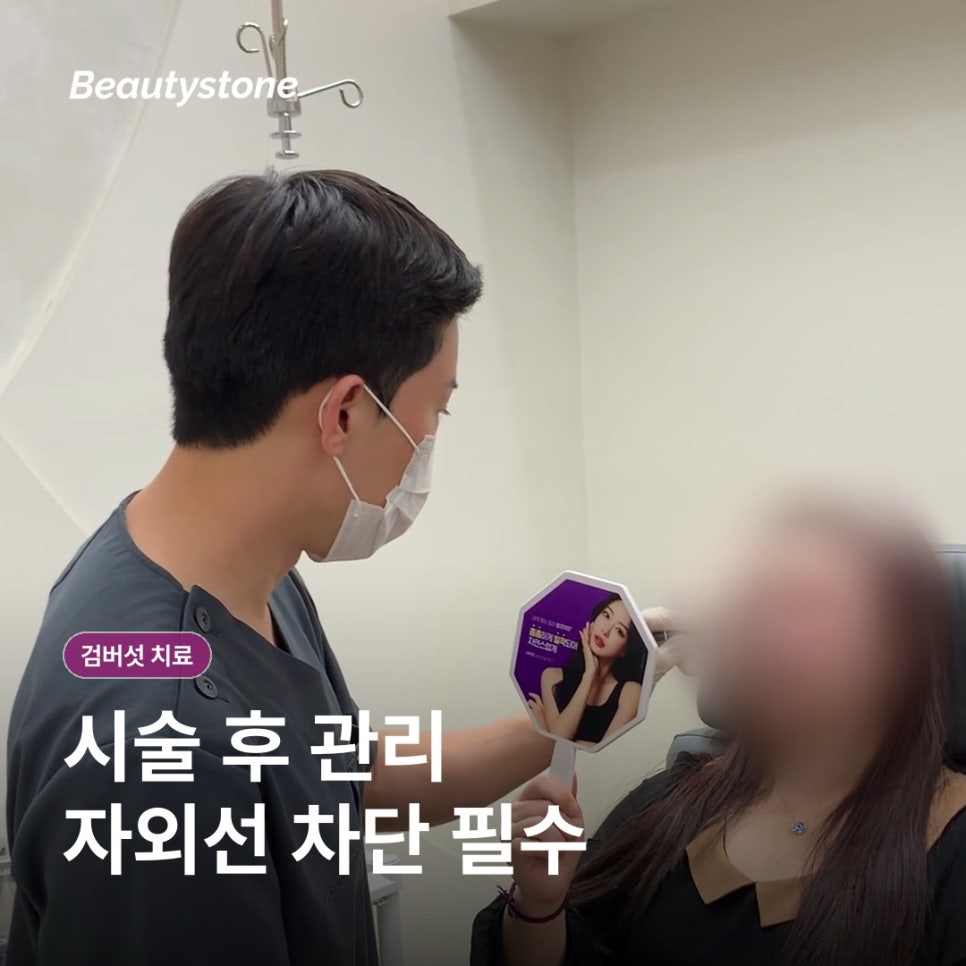
After treatment,
use a gentle moisturizer
to prevent the skin from becoming dry.
Before going outside,
apply sunscreen.
If you are outdoors for a long time
or sweat heavily,
it is better to reapply it as appropriate.
Physical methods of blocking sunlight,
such as wearing a hat or using a parasol,
may also help reduce the development
of new solar lentigines.
During the early recovery period, reduce sauna use,
heated bathhouses,
hot baths, strenuous exercise, and alcohol consumption.
Avoid care that rubs areas with scabs,
such as scrubs, peels, and vigorous massages.
Some color may remain
at the treated site,
or temporary pigmentation may appear
during the recovery process.
New lesions may also develop in other areas.
In particular, if a lesion suddenly grows,
appears to contain multiple colors,
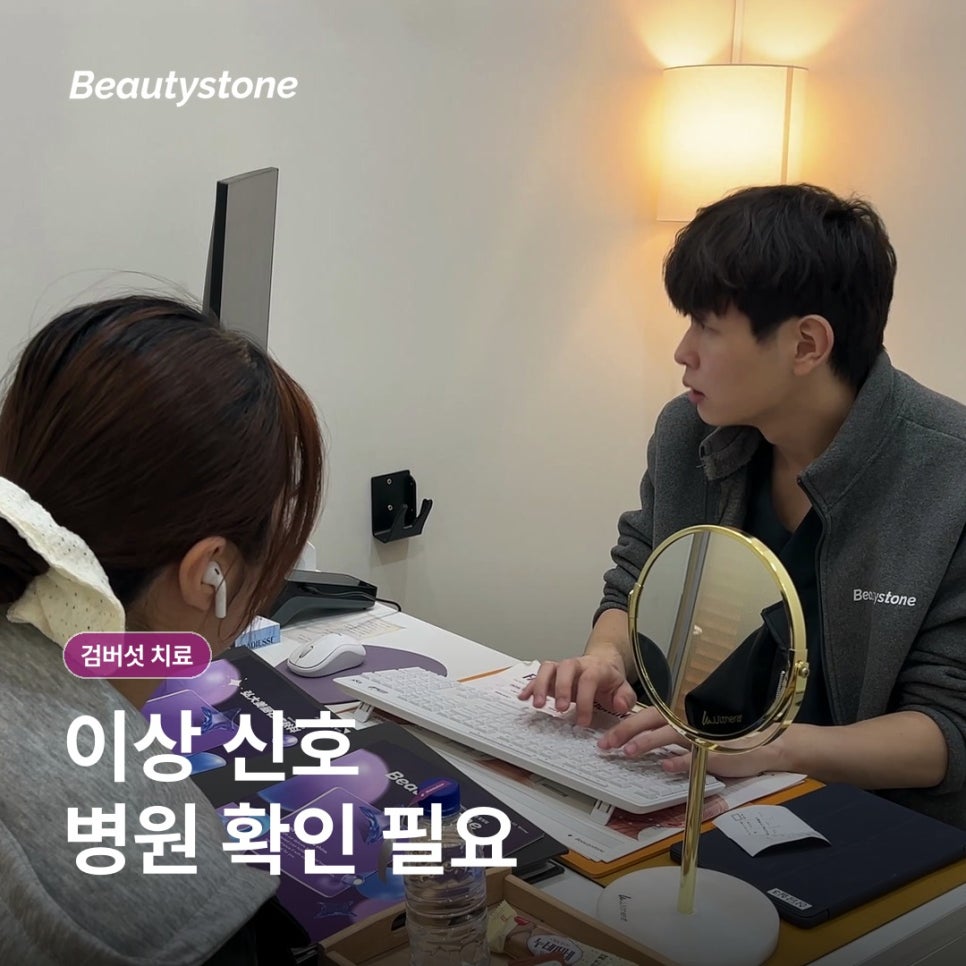
or repeatedly bleeds,
or if there is a wound that does not heal,
you should not assume it is an age spot; seek medical evaluation.
In closing
Age-spot treatment is not a process
of removing every brown lesion with the same laser.
It is first necessary to determine
whether the lesion is a flat solar lentigo
or a thicker
seborrheic keratosis
before choosing a method suited to its current condition.
The number of treatments needed
and the recovery period also vary
according to the lesion’s color and depth,
number, and the skin’s response.
Rather than deciding on the number of treatments from the beginning,
make the next plan after the initial treatment
by observing how the scabs fall away
and checking the remaining color.
Frequently Asked Questions
Q1. Can age-spot treatment be completed in one session?
Shallow, small lesions may become lighter
after a single treatment.
However, additional treatment may be needed
depending on their thickness, depth, and number,
so the remaining lesions should be checked after recovery.
Q2. Can scars remain after age-spot treatment?
Depending on the depth of treatment,
the method used,
and the individual’s healing response,
there is a possibility that pigmentation changes or marks may remain.
It is important not to forcibly remove scabs
and to follow the recommended aftercare instructions.
Q3. How are age spots different from melasma?
Age spots may appear as single lesions
with relatively distinct borders,
or their surfaces may be raised.
Melasma, on the other hand,
often appears as broad, irregular patches
spreading across both cheekbones and the forehead.
Because they can be confused based on appearance alone,
they should be distinguished through a medical evaluation before treatment.
Q4. Can recurrence be prevented after age-spot treatment?
Even if the treated lesion has been cleared,
new spots may develop with continued ultraviolet exposure
and skin aging.
Consistent protection from ultraviolet rays
and regular skin checks are necessary,
but it cannot be guaranteed that new spots will never appear.
Thank you for reading this long post today.
This has been Kim Ga-eul from Beauty’s Doctor.