Hello.
I am Wi Young-jin from Beauty's Doctor.
When the area below the cheeks and the jawline look heavy,
many people look into thread lifting to refine the contours
without incisions.
When searching for the effects of catgut lifting,
people naturally wonder how much tightening can be seen immediately after the procedure
and how long that appearance will last.
However, even when the procedure is described under the same name,
the material and thickness of the thread, its surface structure,
and the fixation method may differ.
Therefore, rather than focusing only on the procedure name,
it is important to first confirm which thread is placed in which layer.
3-Line Summary
- Catgut lifting involves inserting absorbable threads beneath the skin
to support the tissue or induce a response in the surrounding area.
- To assess the effects of catgut lifting, examine the contours
after the swelling has subsided rather than immediately after the procedure.
- Because the threads are absorbed over time,
the perceived duration can vary depending on sagging and skin condition.
- How does it support the tissue?
Thread lifting involves inserting threads beneath the skin
and using their placement direction and fixation strength
to support sagging tissue.
Threads with barbs or those that anchor into the tissue
may produce a relatively direct physical tightening effect.
By contrast, smooth, fine threads
are less focused on pulling the tissue up strongly
and more focused on observing the tissue response around the threads.
Lifting using absorbable threads takes into account
both the initial support
and the subsequent tissue response,
but the scope can vary depending on the type of thread and the procedure method.
During your consultation, ask specifically about the product name and thread structure,
the layer and direction of insertion,
and the degree of tightening that can be expected.
- When should you assess the effects of catgut lifting?

Immediately after the procedure, tension from the threads
combined with swelling and a feeling of tightness
may make the facial contours appear to have changed significantly.
It is difficult to conclude that the initial appearance
will remain unchanged.
After the swelling and bruising have subsided
and the threads have settled into the tissue,
the contours and left-right balance should be assessed again.
Small-scale studies on thread embedding observed possible changes
in facial wrinkles and laxity,
but because these were single-group studies with a small number of participants,
it is difficult to apply the results
directly to everyone.
In particular, the actual degree of noticeable change
may vary depending on skin thickness, the amount of fat,
and the direction in which sagging occurs.
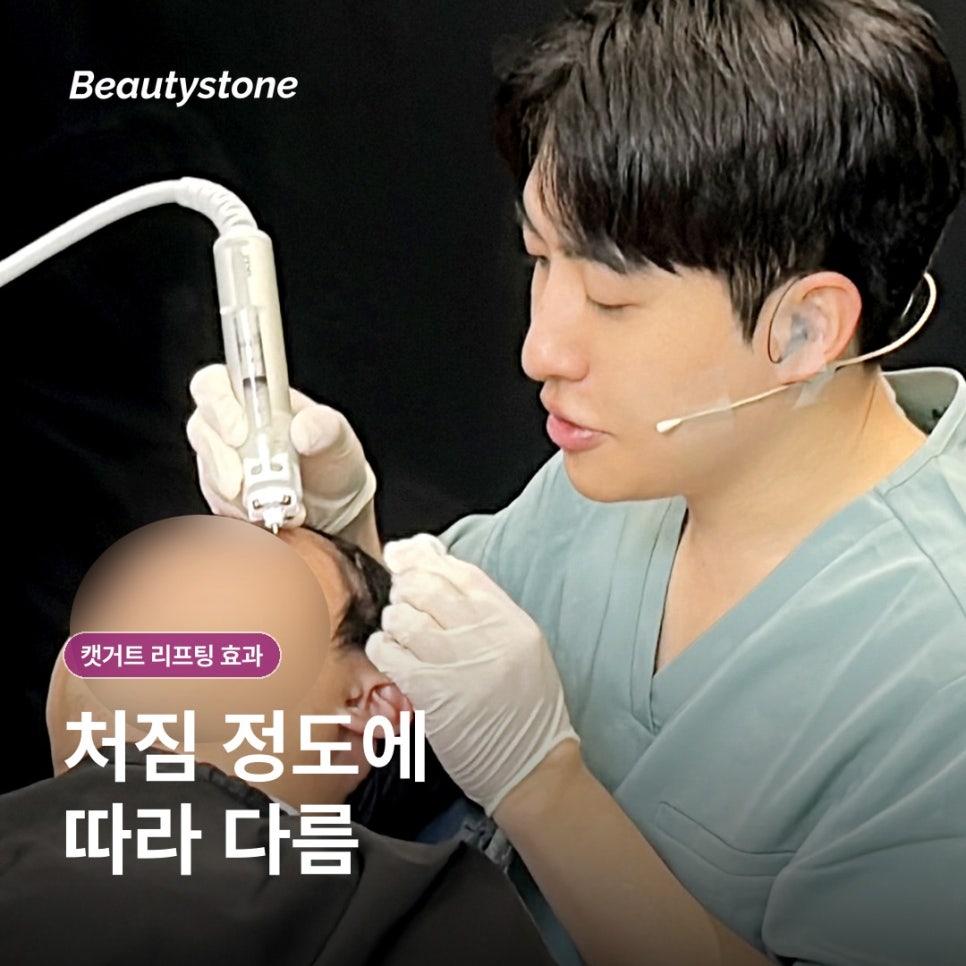
Rather than evaluating the result immediately after the procedure,
it is not too late to decide whether additional treatment is needed
after observing the recovery process.
- How should you view the duration and limitations?
Because absorbable threads gradually break down in the body,
it is difficult to regard the procedure as one that fixes tissue permanently.
Around the areas where the threads are placed,
the tissue response and collagen reorganization
continue over a certain period of time.
The extent of these changes and how long they last
may vary depending on skin thickness, the degree of sagging,
and the individual's recovery response.
Above all, gravity and skin aging continue even after the procedure,
so it is difficult to conclude that a single treatment's changes
will remain exactly the same.

Mild sagging
and sagging caused by thick, heavy tissue
may have different ranges of expected results.

If the sagging is pronounced,
compare other lifting methods as well
rather than simply increasing the number of threads,
and first check whether your current concern falls within the scope of thread lifting
rather than deciding on the duration in advance.
- What should you check before and after the procedure?
Before the procedure, tell the medical professional about any medications you are taking and allergies,
as well as whether you tend to bleed or bruise easily.
You should also provide information about any recent fillers and Botox,
laser, radiofrequency, or ultrasound treatments,
as well as any history of previous thread lifting.
If you have dermatitis, a wound,
or an inflammatory lesion,
the procedure may be rescheduled until the skin has calmed down.
During the procedure, discomfort may include
the prickling sensation of the needle entering,
a feeling of the tissue being pulled,
and temporary soreness.
During the early recovery period,
do not press firmly on the treated area
and postpone massages and saunas,
as well as alcohol and strenuous exercise, for a while.
Cleanse gently
and continue moisturizing and using sun protection.
If pain worsens, redness and warmth spread,
or pus or exposed thread is visible,
inform a medical institution about your condition.
You should also seek evaluation if indentations and asymmetry continue to worsen
or if decreased sensation or changes in facial movement occur.
In Closing
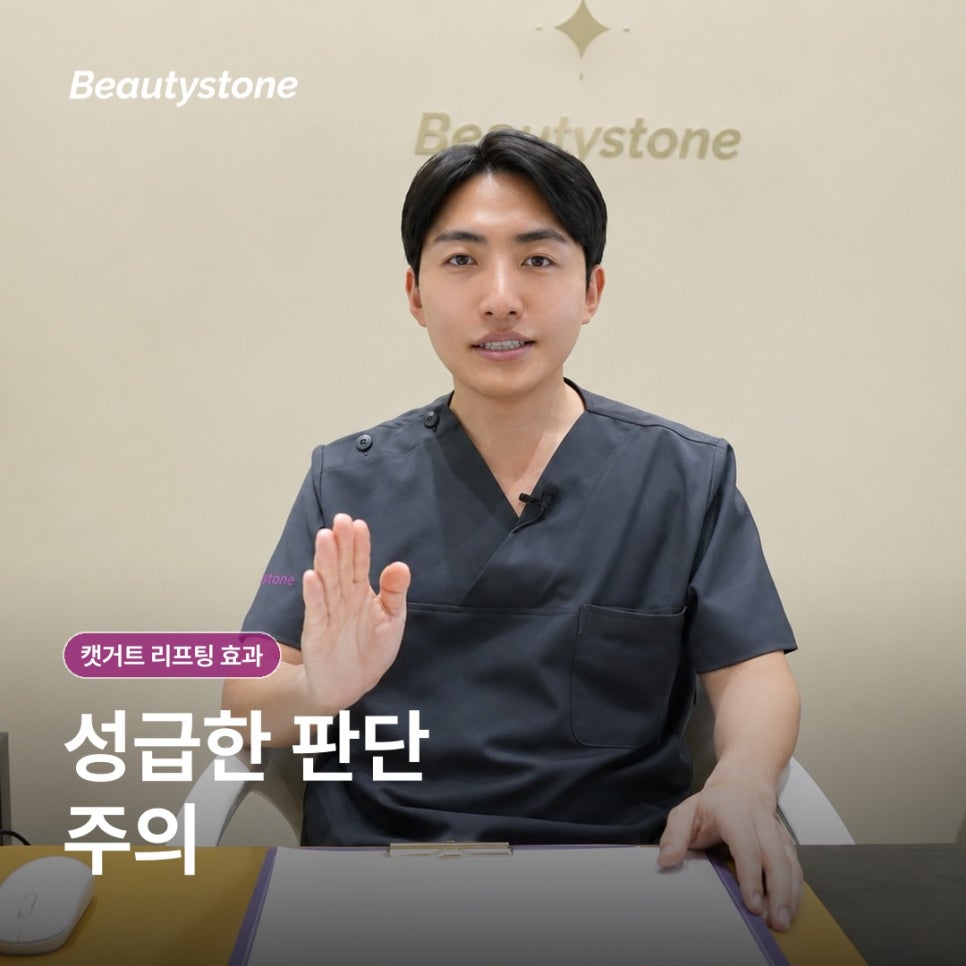
The effects of catgut lifting depend less on how many threads are inserted
than on whether they are placed in directions appropriate for the sagging.
Rather than judging the result only by the swelling and tightening immediately after the procedure,
examine the contours and left-right balance
after the swelling has subsided.

The expected changes
and the perceived duration
may vary depending on the thread structure and the degree of sagging.
After receiving an explanation of the possible range and limitations,
deciding whether to undergo the procedure is a realistic approach.
Frequently Asked Questions
Q1. Are the effects of catgut lifting visible immediately?
The area may appear tightened due to the tension of the threads,
but swelling and a feeling of tightness
may also be reflected in the initial appearance.
Check the actual contours again
after the swelling has subsided.
Q2. How long does it last?
The perceived duration may vary depending on the thread structure,
the treatment area,
and the individual's tissue condition.
Rather than assuming a fixed duration,
decide when additional care may be appropriate based on the progress.
Q3. Can I undergo the procedure even if the sagging is severe?
Whether the procedure is possible
and the range of changes that can be expected
should be considered separately.
If the tissue is heavy and the sagging is substantial,
other methods can also be compared.
Q4. What symptoms should prompt me to make contact?
If pain and swelling gradually worsen,
or redness, warmth, discharge, pus,
or exposed thread appears,
inform a medical institution.
Persistent indentations and asymmetry,
decreased sensation, or changes in facial movement
are also signs that require evaluation.
Thank you for reading this long post today.
This has been Wi Young-jin from Beauty's Doctor.