Hello.
I’m Kim Ga-eul from Beauty’s Doctor.
When your jawline looks less defined than before or
you feel that your skin has lost elasticity,
you may start looking into radiofrequency lifting.
However, when you read treatment reviews,
you see everything from comments that redness and heat are common
to concerns about burns or hollowing in the cheeks.
“Is it normal for my face to feel hot
and swollen?”
“What symptoms mean
that I should contact
a medical institution right away?”
Oligio is a treatment that delivers
thermal energy into the deeper layers of the skin,
so temporary skin reactions may occur.
That is why, when assessing
Oligio side effects,
it is important not only to note that a reaction has occurred,
but also to observe whether it decreases over time.
Conversely, you should also check whether the pain or swelling
is gradually becoming more severe.
Today, we will distinguish between reactions that may commonly occur
and signs that require further attention.
3-Line Summary
- Redness and heat,
mild swelling, and tenderness
may occur immediately after treatment.
- Most reactions gradually fade over time,
but the recovery rate varies depending on
skin thickness and the treatment area.
- If severe pain, blisters,
weeping, or changes in skin color occur,
you should notify the medical institution where you received treatment.
- How does Oligio work?
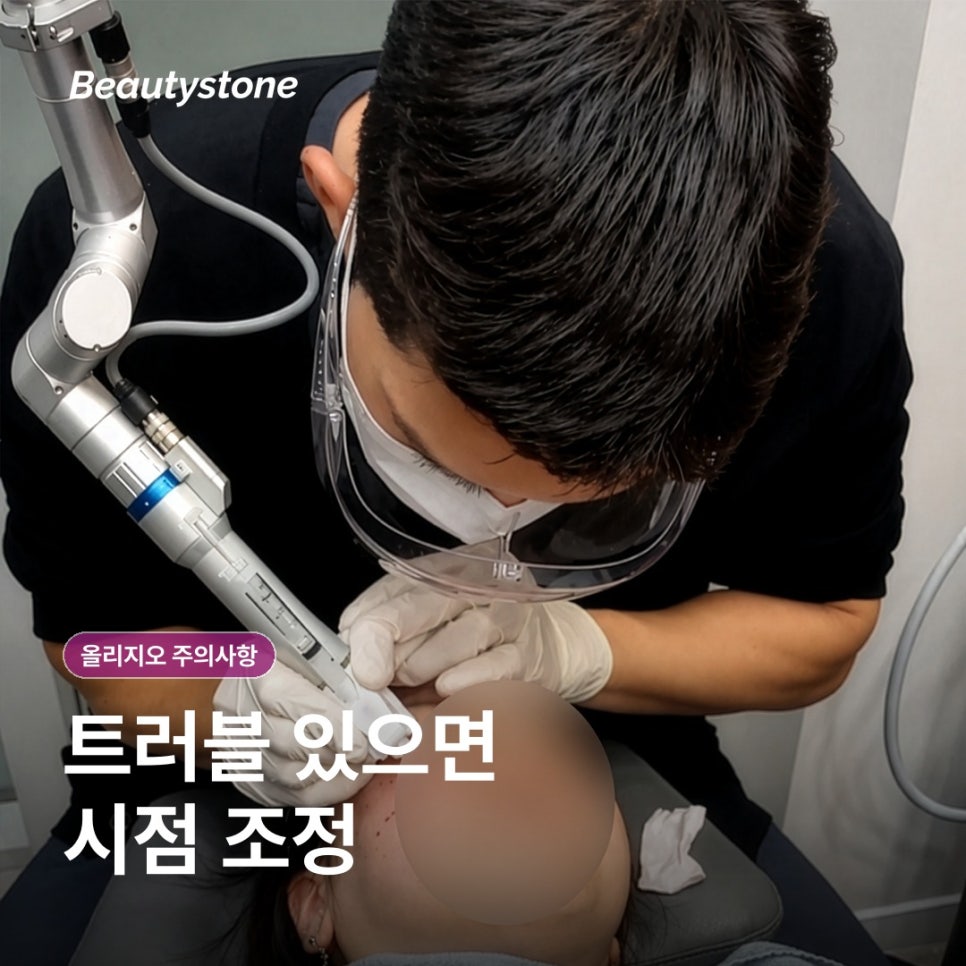
Oligio works by delivering monopolar radiofrequency energy
into the deeper layers of the skin
to create a thermal response.
This process is intended to induce collagen contraction
and subsequent remodeling,
thereby helping manage skin elasticity and texture.
However, because this treatment uses heat,
increasing the intensity and number of shots unconditionally
does not necessarily lead to better results.
This is because areas such as the thin skin around the eyes and temples,
as well as the cheeks and jawline, where there is less fat,
may be difficult to treat using the same settings.
Therefore, during your consultation,
rather than asking only how many shots you will receive,
ask which areas will be treated and at what intensity,
and how skin thickness and facial volume
will be taken into account.
- How are common reactions different from warning signs?
When you search for Oligio side effects,
the reactions mentioned most often
are redness and heat.
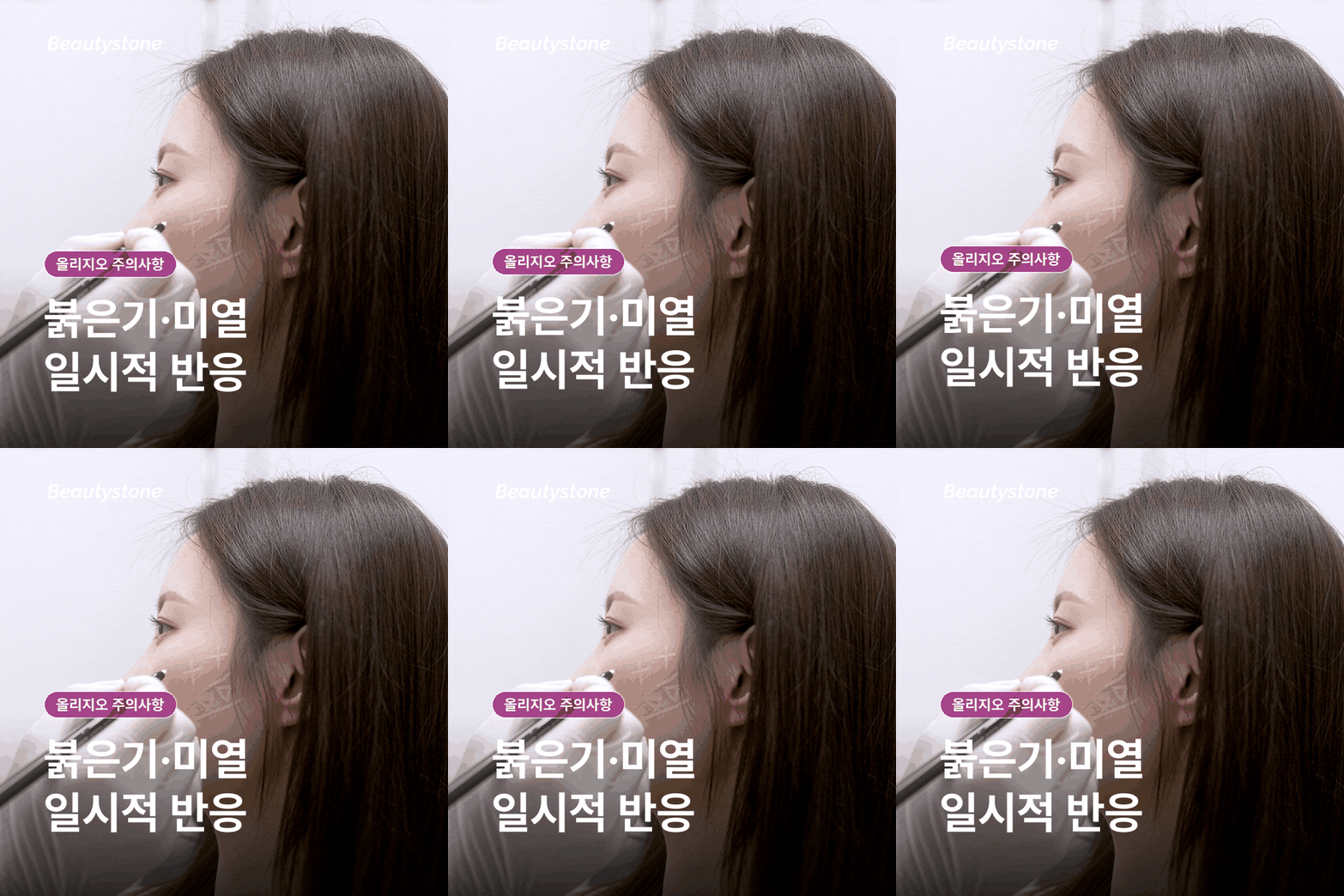
Immediately after treatment, your face may feel warm,
or you may experience mild swelling and
temporary soreness when pressed.
Fine flakes may also appear
as the skin becomes dry.
These reactions generally become more comfortable
gradually over time.
Conversely, if the pain keeps getting stronger
or the swelling does not subside and instead increases,
you should have your condition checked.
Do not overlook large blisters and weeping,
an area that becomes noticeably white or brown,
or numbness that spreads over a wider area.
If your facial expressions move awkwardly on only one side
or the pain is severe enough to make it difficult to fall asleep,
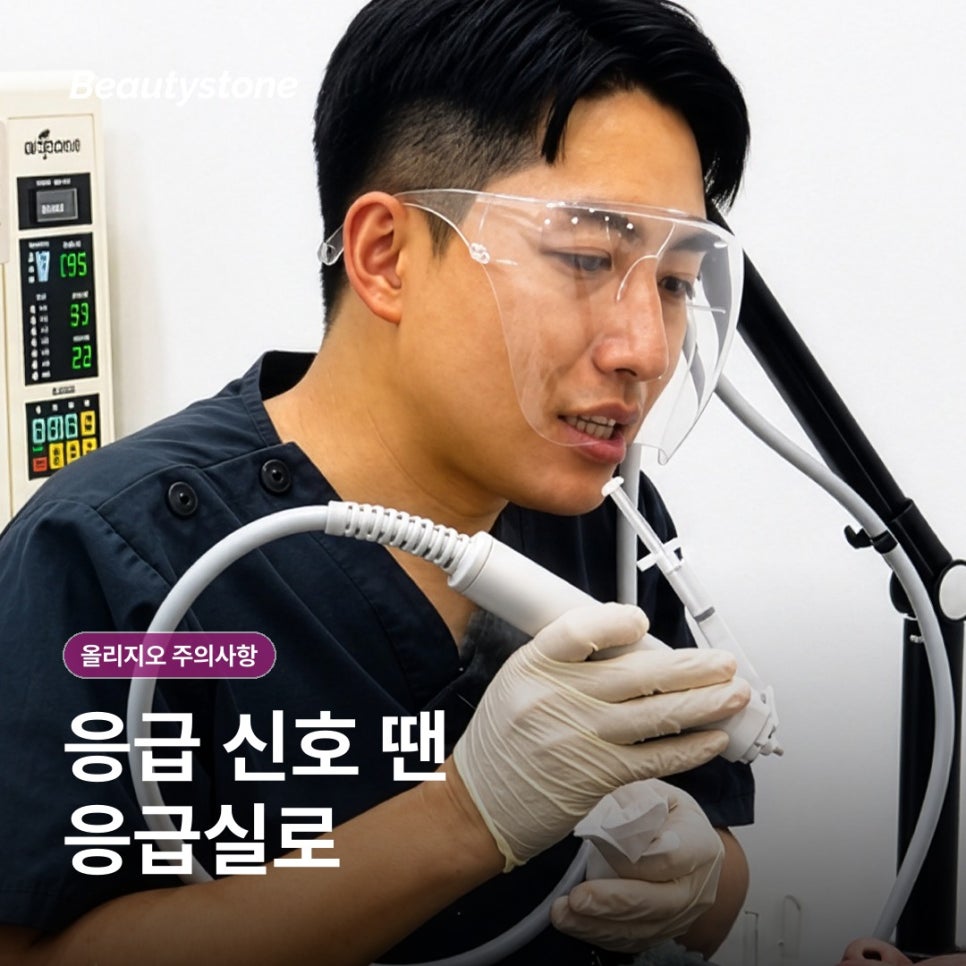
contact the medical institution where you received treatment immediately.
- What should you disclose before treatment?
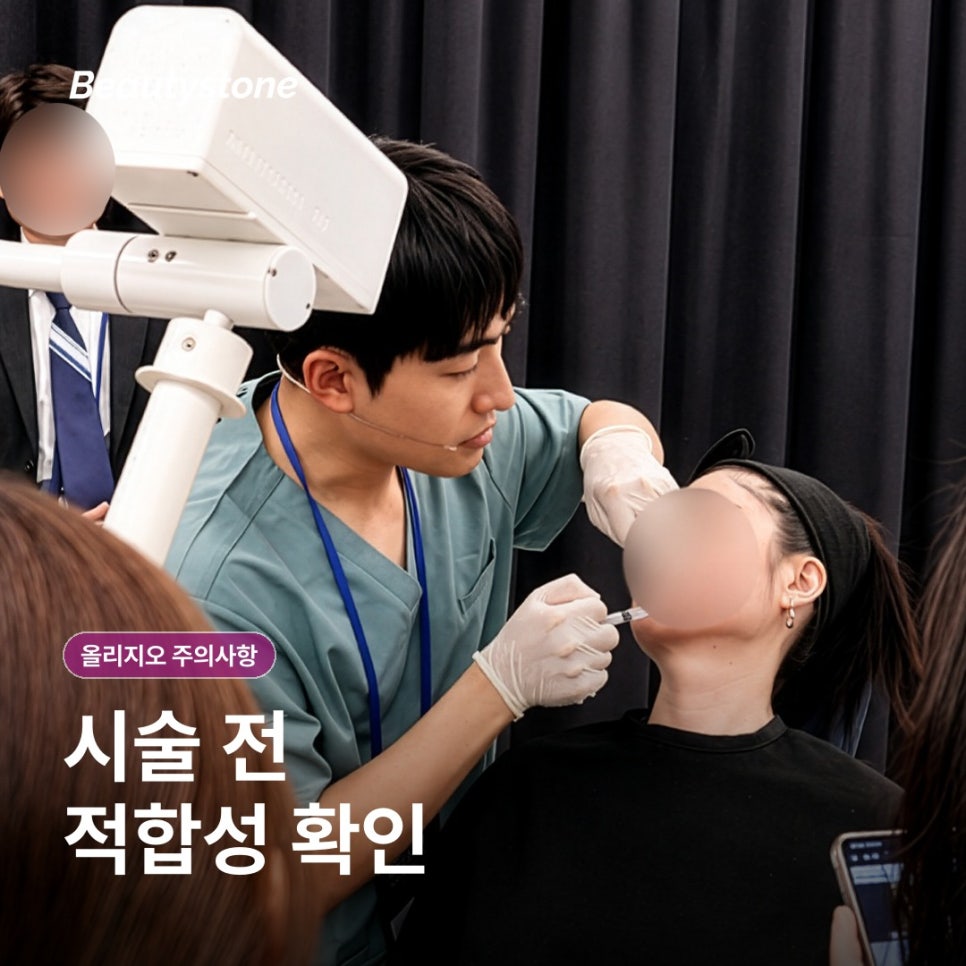
Preparation to reduce the possibility of Oligio side effects
begins during the consultation stage.
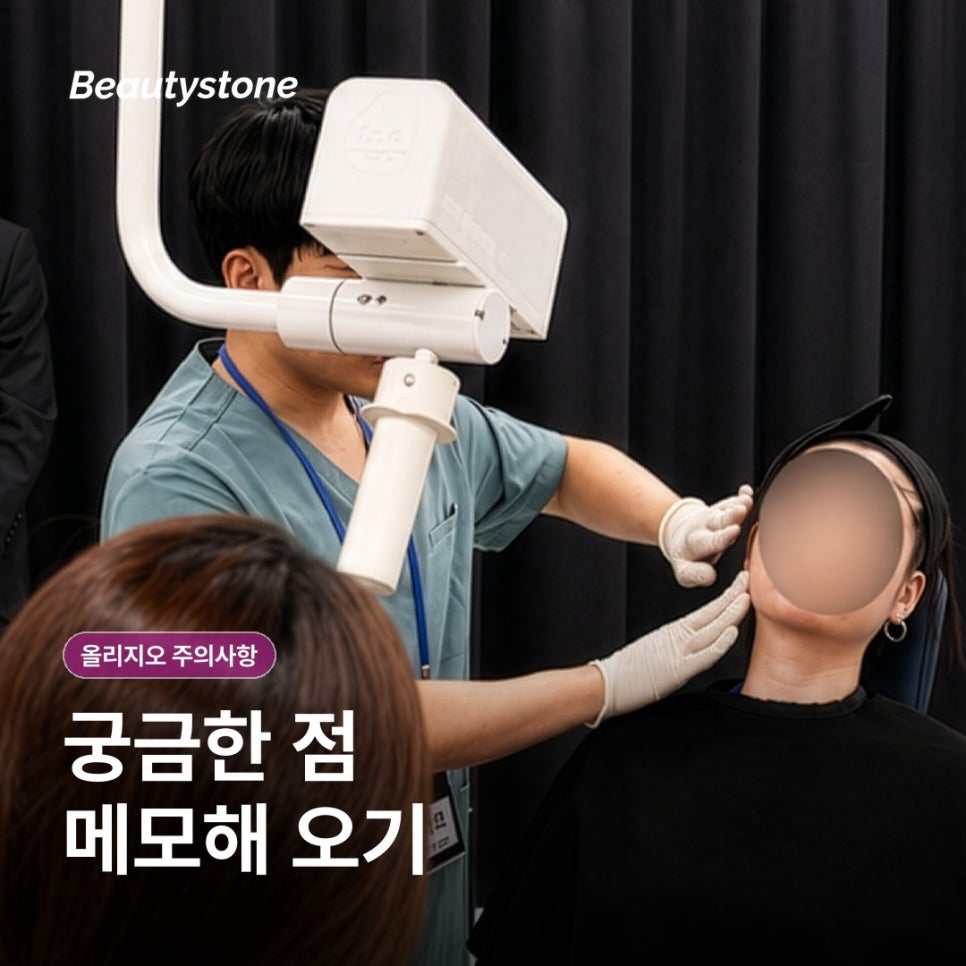
Tell your provider about any medications you are taking,
allergies,
whether you are pregnant or breastfeeding,
and your history of skin conditions.
If you have an implanted electronic device,
such as a pacemaker,
or a metal implant in the treatment area,
be sure to separately confirm whether treatment is possible.
Recent radiofrequency or ultrasound lifting and laser treatments,
as well as fillers, thread lifting, and surgeries,
should also be considered when determining the treatment area and interval.
If you previously experienced prolonged swelling or pain after lifting,
or changes in skin color or abnormal sensations,
be sure to discuss the affected area and recovery period as well.
If sharp pain at one point or heat that is difficult to tolerate
repeatedly occurs during treatment,
do not simply endure it—tell your provider immediately.
- How should you care for your skin during recovery?
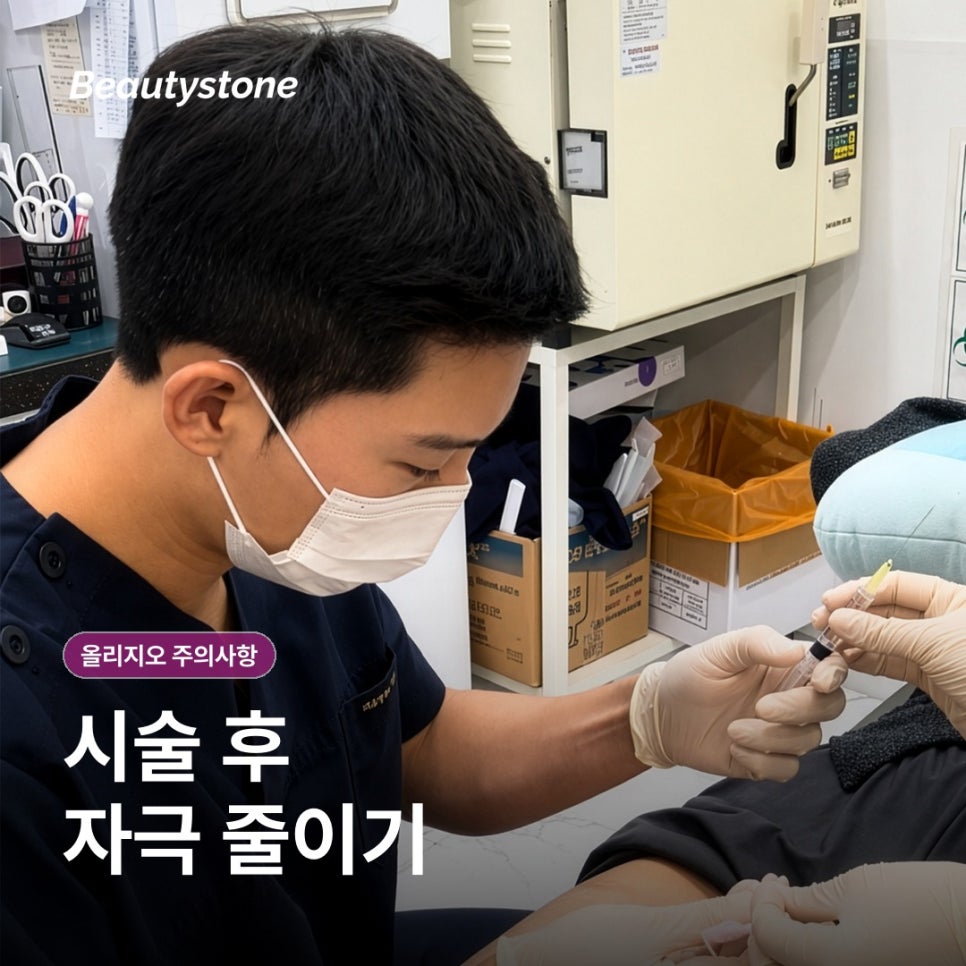
On the day of treatment, gently wash your face with lukewarm water
and avoid rubbing your skin forcefully.
If your skin feels dry,
apply a gentle moisturizer,
and remember to apply sunscreen when going outdoors.
If redness and stinging remain,
postpone scrubs, peels, and heavy makeup for a while.
Also, it is better to avoid strenuous exercise and alcohol,
saunas and heated rooms, hot baths,
and vigorous facial massages.
If you are planning other radiofrequency or ultrasound treatments,
or laser treatment,
rather than continuing with them intensively on the same day,
determine the interval after checking your skin’s reaction.
If blisters develop, do not pop them yourself
or apply ointment without guidance.
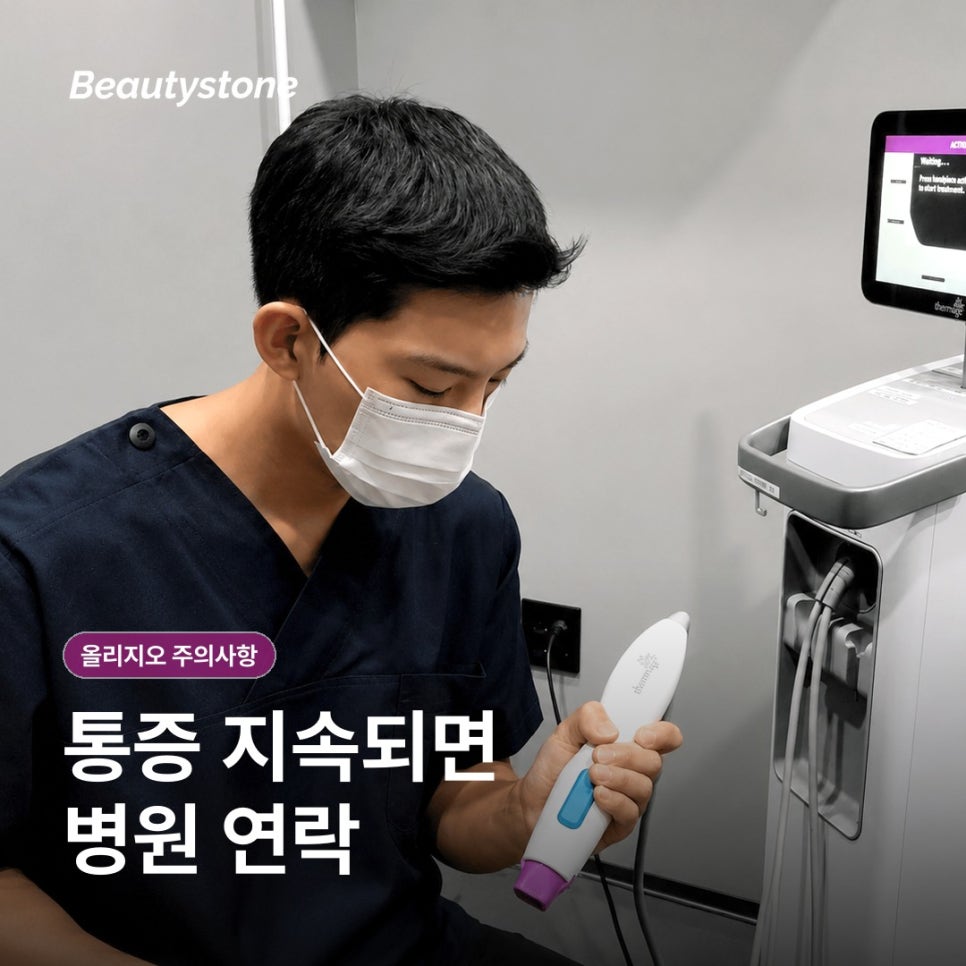
If pain, heat, or swelling continues to worsen,
or if weeping or changes in skin color appear,
take photos and contact the medical institution where you received treatment.
In Conclusion
With Oligio side effects,
it is important to distinguish between common recovery reactions
and signs that require evaluation.
Even if redness and heat occur,
if they gradually decrease over time,
you can observe the progression.
However, if pain and swelling worsen,
or blisters, weeping, changes in skin color,
or abnormal sensations appear, you should not wait.
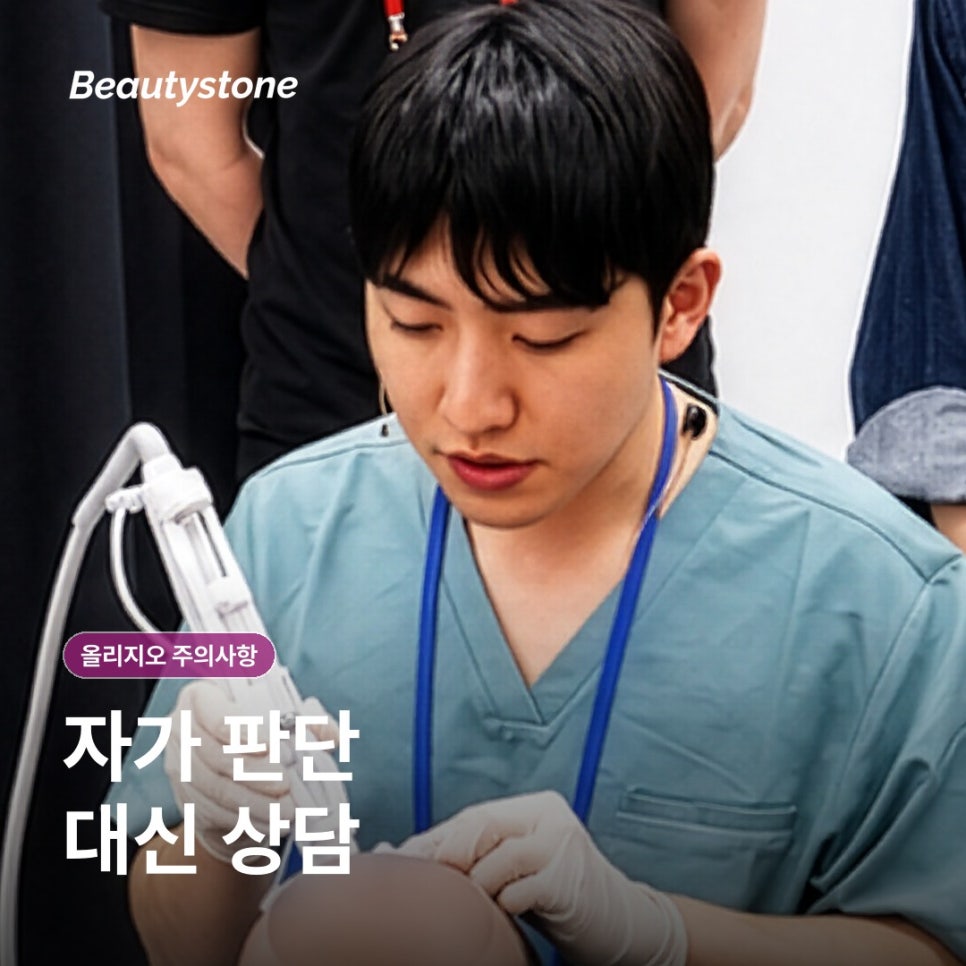
During your consultation, rather than comparing only the number of shots and price,
ask how the intensity is determined for each area
and how it will be adjusted if the pain is severe.
It is also important to ask in advance
where to contact and who will monitor your progress
if an abnormal reaction occurs.
Frequently Asked Questions
Q1. How many days can redness remain after treatment?
Recovery time varies depending on the condition of your skin
and the treatment area.
Observe whether the redness is gradually fading,
and contact the provider if it becomes darker or the pain worsens.
Q2. Can I apply makeup immediately after Oligio?
It may be possible if your skin feels comfortable and there are no wounds.
If redness and stinging remain,
give heavy makeup a break for a while.
Q3. Can cheek hollowing occur if I have little facial fat?
It does not necessarily occur,
but areas with less fat require more careful decisions
about intensity and treatment range.
Q4. What should I do if blisters develop?
Do not pop them yourself or apply ointment without guidance.
Inform the medical institution where you received treatment about your condition.
Thank you for reading this long post today.
This has been Yeong-jin Wi from Beauty’s Doctor.