Hello.
I’m Beauty’s Doctor Wi Young-jin.
“After the procedure, my face is red and feels hot.
Is this level of reaction normal?”
“I’m worried that my cheeks look more hollow
or that blisters might form.”
People researching Densiti are curious not only about its effects,
but also about the changes that may occur afterward.
In particular, when you search online,
everything from redness to burns and cheek hollowing
appears all at once,
which can make it even more confusing to know what to watch and when to make contact.
That is why Densiti side effects should be distinguished not by the name of the symptom,
but by whether the symptom decreases over time
or, conversely, becomes worse.
Three-line summary
- Mild redness and warmth, swelling, and dryness
may occur early on
and generally tend to gradually subside.
- Rather than assuming that cheek hollowing is caused solely by the device,
consider the original volume and fat distribution,
changes in body weight,
and the areas where energy was applied.
- If pain increases or blisters, oozing,
or noticeable skin-color changes appear,
do not wait for your scheduled appointment—have it checked.
What kind of procedure is Densiti, and what are the common reactions?
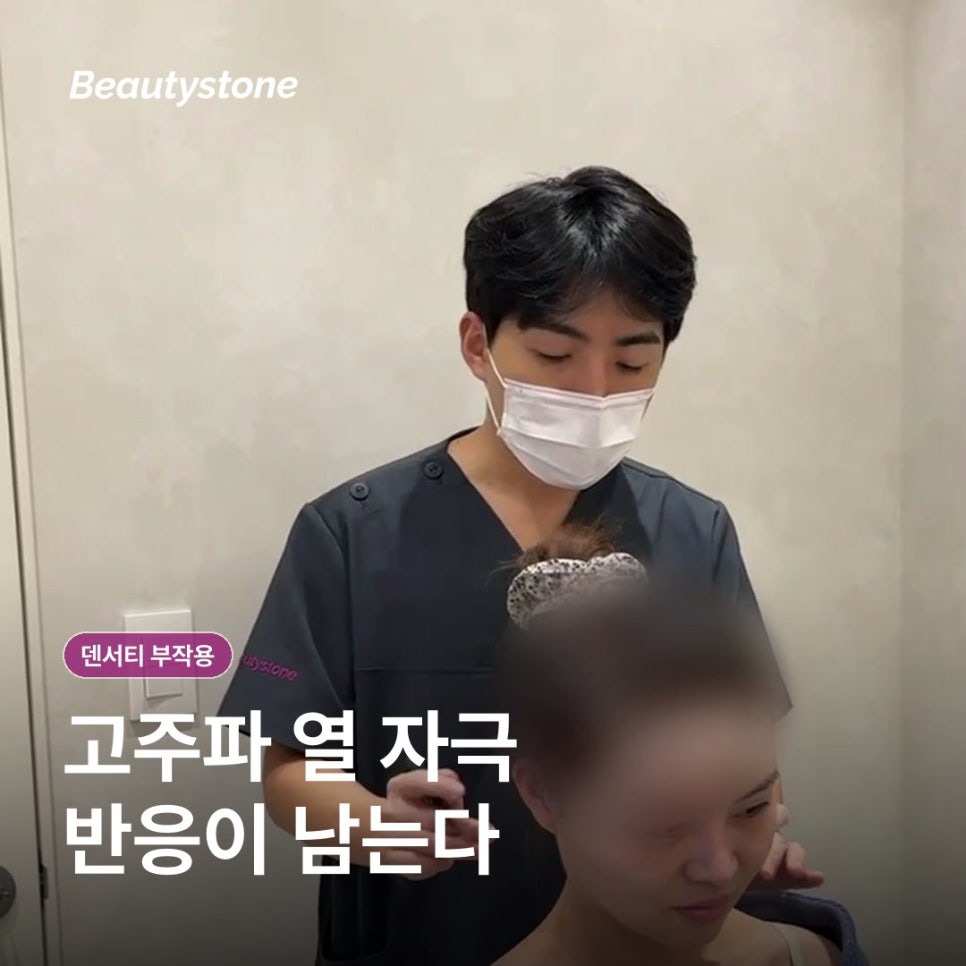
Densiti
uses 6.78 MHz radiofrequency energy
to generate heat through the resistance of skin tissue.
It uses monopolar and bipolar radiofrequency,
and is also equipped with functions that check skin temperature and impedance
while cooling the surface.
However, the fact that it has a cooling function
does not mean that the same intensity
can be applied to every type of skin.
The sensation during the procedure and the recovery response may vary
depending on skin thickness, contact conditions, the amount of fat in each area,
and the degree to which heat overlaps at a single point.
Immediately after the procedure, your face may become red,
or you may feel mild warmth, swelling, and tenderness.
Your skin may also feel drier and tighter than usual,
or slightly more sensitive when touched.
The important thing is to observe whether these reactions
decrease over time.
Why are people concerned about burns and cheek hollowing?
Because radiofrequency procedures use heat,
if intense stinging heat continues in one area
or blisters and oozing develop, possible heat damage should be checked.
If you experience unbearable heat
during the procedure or a sharp, stabbing pain,
do not simply endure it—let the practitioner know immediately.
By contrast,
cheek hollowing should be viewed somewhat differently.
If you naturally have little facial fat
or a hollow area beneath the cheekbones,
hollowing may appear more pronounced simply because swelling has subsided
or the lighting has changed.
If you have recently lost volume through dieting
or have also undergone other ultrasound or radiofrequency procedures,
it can also be difficult to attribute the cause to just one factor.
Without photos taken before the procedure,
it can be difficult to distinguish pre-existing differences between the two sides
from newly developed changes.
Therefore, rather than focusing only on matching the number of shots,
it is important to divide the areas where volume should be preserved
from those where an elasticity response should be encouraged,
and to plan the energy according to skin thickness and fat distribution.
What should be checked before and after the procedure?
Before the procedure,
inform the practitioner about any medications you are taking and allergies,
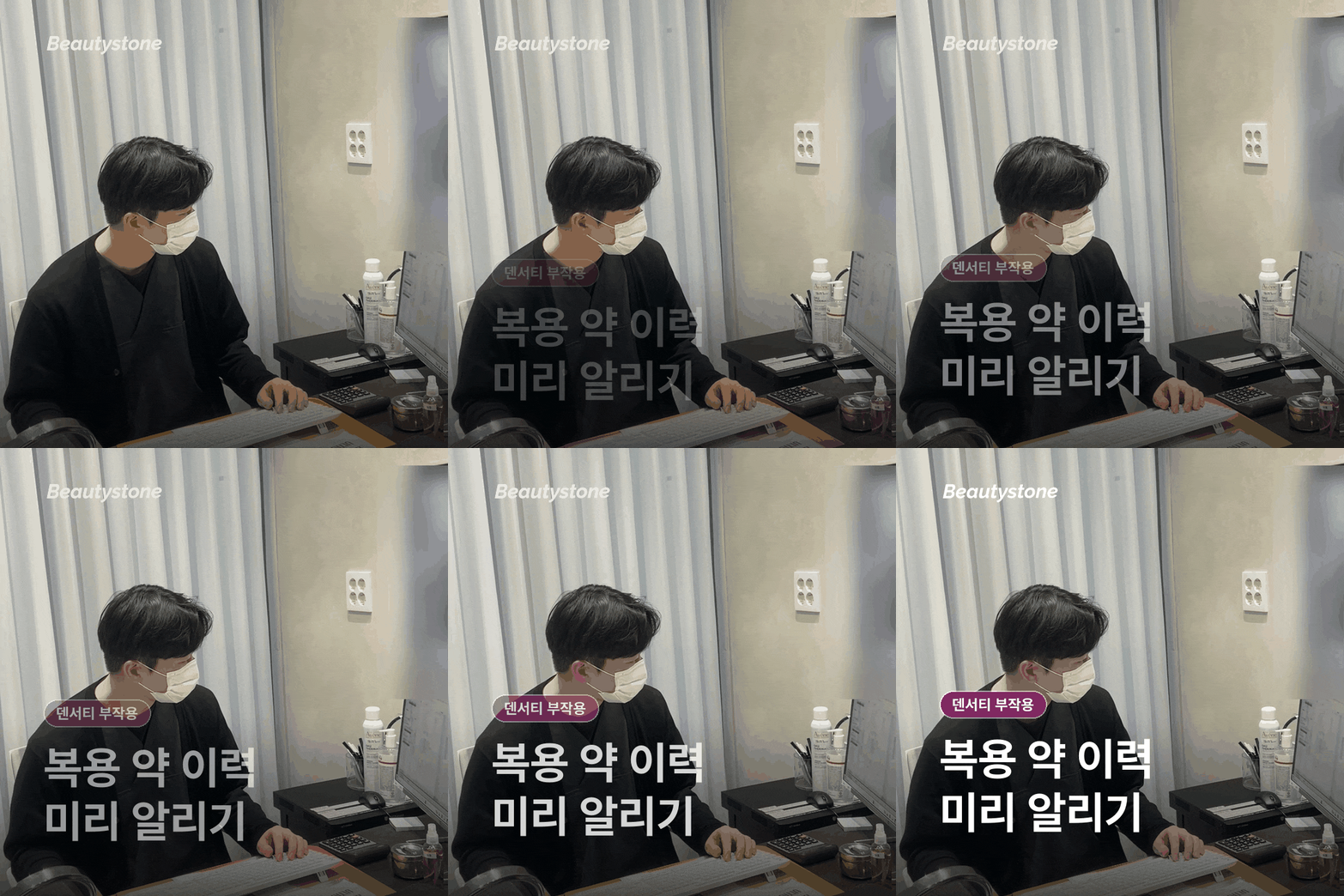
whether you are pregnant or breastfeeding,
your history of dermatitis and facial flushing,
and any recent fillers, thread lifting procedures, or laser treatments.
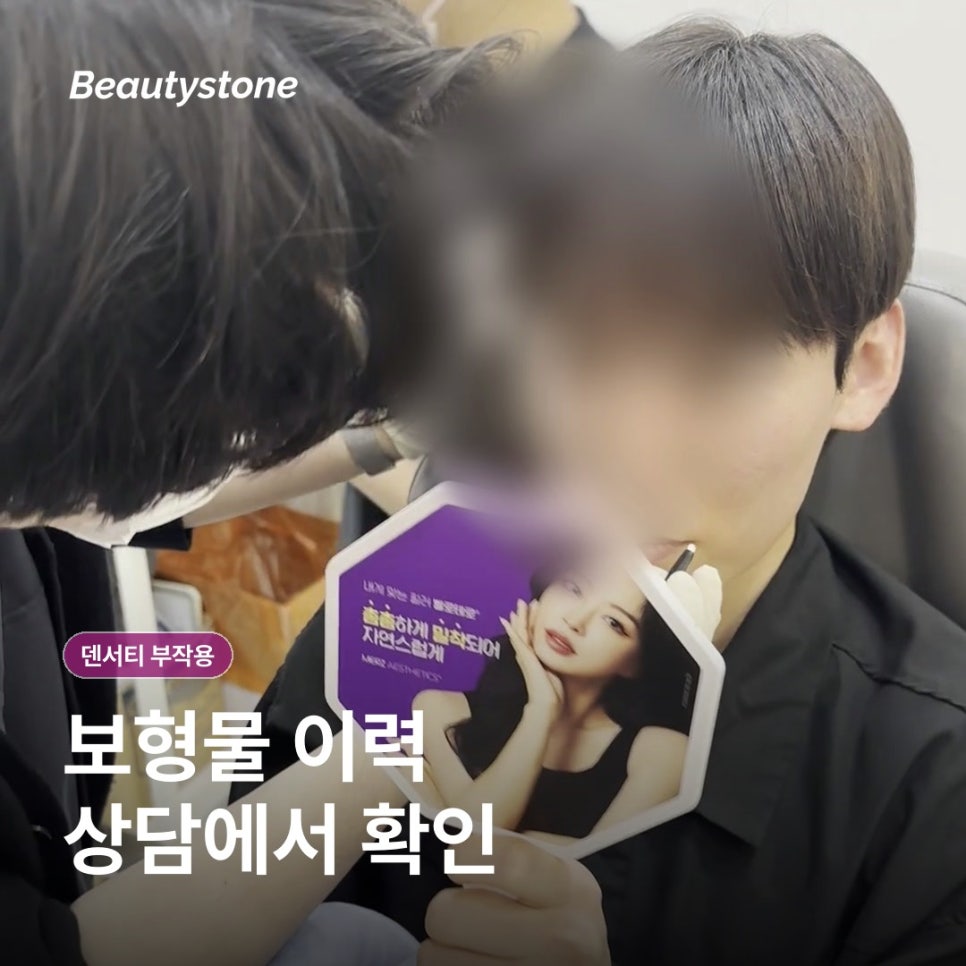
If you have metal or an electrical device in your body,
also check separately whether radiofrequency treatment is appropriate.
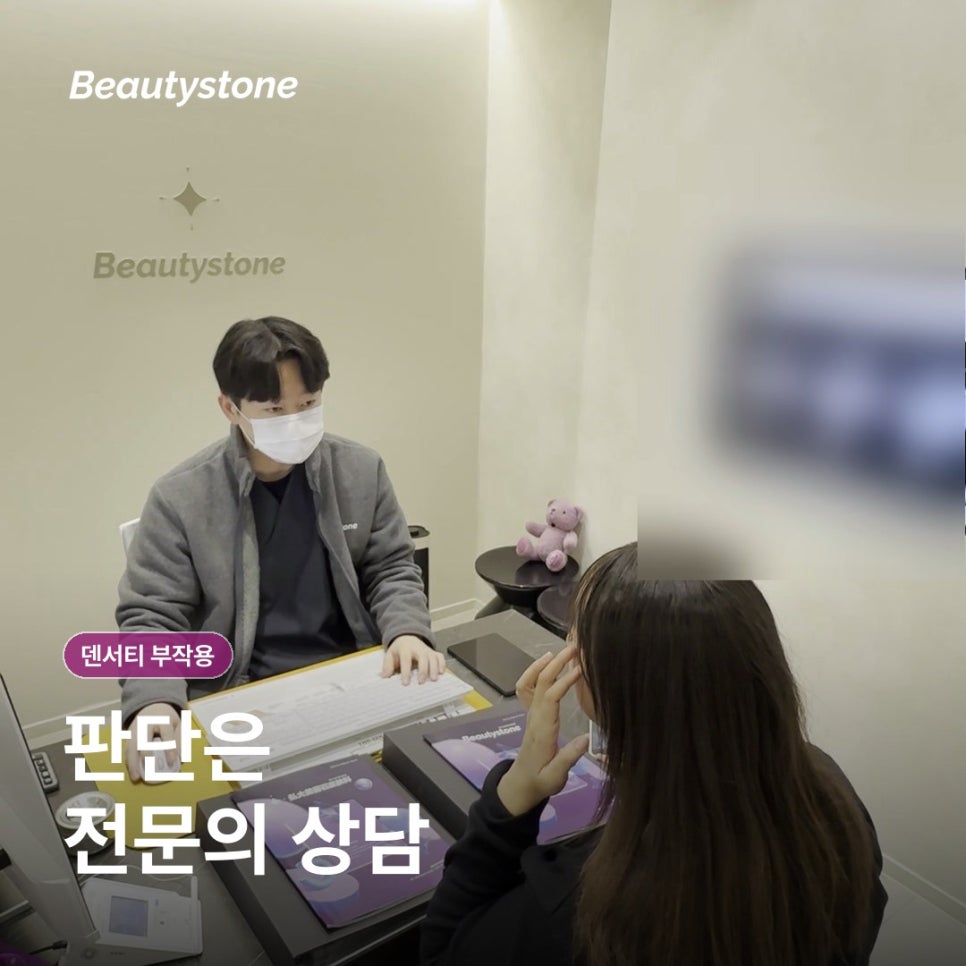
During your consultation,
rather than asking only about the number of shots or the tip name,
it is better to confirm how the practitioner divides the areas where volume should be preserved,
such as the center of the cheeks and beneath the cheekbones,
from areas requiring elasticity management,
such as the jawline.
After the procedure,
wash your face gently with lukewarm water
and pay attention to moisturizing and sun protection.
While redness and warmth remain,
it is better to postpone alcohol, strenuous exercise, saunas, and hot baths,
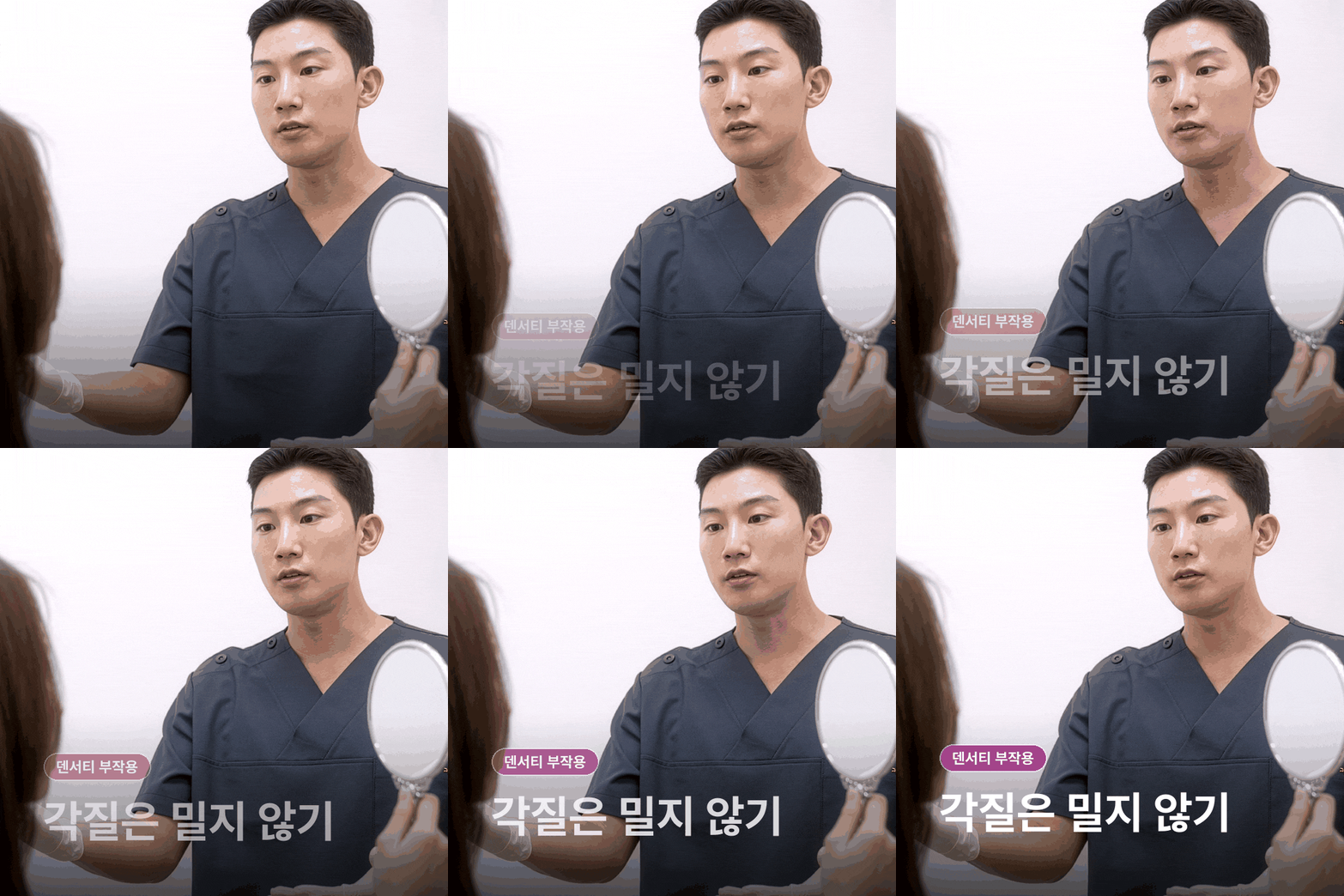
facial massages,
and exfoliation.
Take photos before the procedure under the same lighting
and with the same facial expression,
and make sure you receive advance guidance on the treatment plan for each area,
when to check your progress,
and what changes should prompt you to make contact if an unusual reaction occurs.
When should you contact a medical institution immediately?
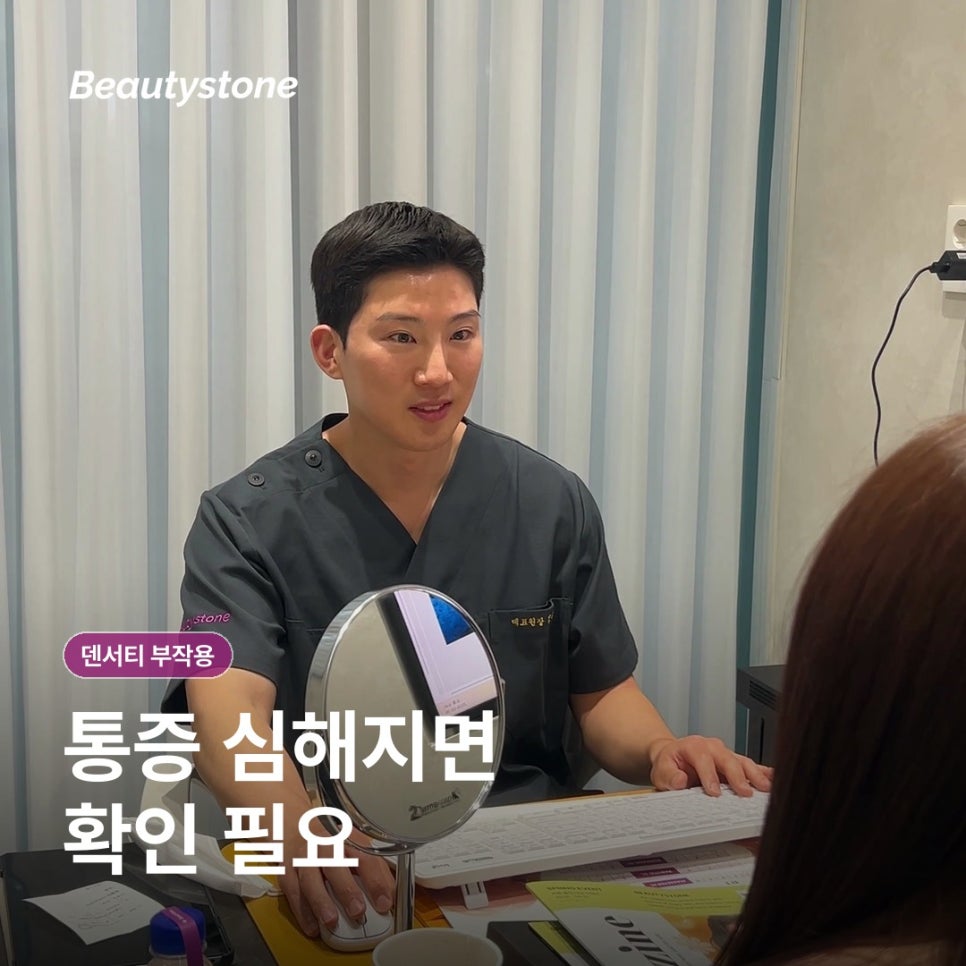
Among the Densiti side effects, the signs that require attention
are changes that become stronger over time.
You should make contact if pain or warmth becomes more severe,
if swelling increases on only one side,
or if blisters, oozing, or discharge develop.
You should also have it checked directly if the skin becomes unusually white or brown,
if sensation becomes dull,
or if an awkward feeling affecting only one side of your facial expression continues.
Write down when and where the symptoms began,
what the pain feels like, and how quickly it is changing.
Keeping front and side photos
under the same lighting
can also help communicate your current condition.
If you have a fever
or the pain is severe enough to interfere with sleep,
do not delay by trying to endure it with painkillers.
Inform the medical institution of your current condition immediately.
In closing
The key to reducing Densiti side effects
is not simply receiving the treatment at the lowest possible intensity.
It is about distinguishing the areas of your face that need to be protected
from the areas where heat should be delivered.
If you have little cheek fat
or already have hollowing beneath the cheekbones,
rather than choosing based on a popular shot count,
first check your current skin thickness and fat distribution,
as well as your history of previous procedures.
After the procedure, rather than simply being told that everything is fine,
you should receive specific guidance on which reactions to observe
and which changes should prompt you to make contact.
Frequently asked questions
Q1. How many days are redness and warmth considered normal?
Rather than a set number of days,
what matters is whether they gradually decrease.
If they become more pronounced or pain also increases,
your current condition should be checked.
Q2. If my cheeks look hollow after the procedure, is it immediately a side effect?
Early swelling, the conditions under which photos were taken,
and a pre-existing decrease in volume may overlap.
It is best to compare before-and-after photos taken under the same conditions
and check whether the hollowing persists.
Q3. Can I wash my face and apply makeup on the same day?
Instructions may vary depending on your skin’s reaction and the treatment area.
Follow the guidance from the medical institution where you received the procedure
regarding when to wash your face and apply makeup.
Q4. If a blister forms, can I apply ointment?
Rather than popping it or applying ointment on your own,
send photos and a description of your symptoms to the medical institution where you received the procedure
and confirm how it should be managed.
Q5. Can I receive another lifting procedure on the same day?
Whether procedures using different energy sources, such as ultrasound and radiofrequency,
can be performed together should be determined based on your facial fat and skin condition,
as well as your recent treatment history, including the order and treatment areas.
Thank you for reading this long post today.
This has been Beauty’s Doctor Wi Young-jin.