Hello.
I’m Kim Ha-won from Beauty’s Doctor.
If the area below and beside the cheekbones looks hollow,
while the area around the jaw looks heavy and broad,
it is easy to wonder:
“Can I simply fill the hollow areas with filler?”
“Should I have a lifting treatment first?”
The commonly used term “peanut-shaped face”
is not an official medical diagnosis.
It refers to an appearance in which the midface looks slender,
while the cheekbones and lower face appear relatively prominent.
However, the same appearance
may actually result from a loss of volume,
or the center may look hollow
because existing tissue has shifted downward.
Therefore, when considering peanut-shaped face filler,
it is more important to distinguish
cheek hollowing from sagging first
than to decide what to inject.
- Why should cheek hollowing and sagging be distinguished first?

When cheek hollowing is the main issue,
the actual volume around the temples, below the cheekbones, and in the lateral cheeks decreases,
creating deep shadows in the midface.
If you have recently lost weight
or noticed that facial fat has decreased compared with older photos,
a reduction in volume may be a significant factor.
On the other hand, when sagging is the main issue,
cheek tissue moves downward,
making the area below the cheekbones look empty,
while the area around the mouth and jawline becomes heavier,
which can make the difference between the upper and lower facial widths appear greater.
Changes such as thinner skin
and reduced elasticity,
along with the natural width of the cheekbones and jaw,
also have an effect.
The appropriate approach to the same contour concern
can vary depending on facial structure,
fat distribution, and skin thickness.
The aspect directly addressed by peanut-shaped face filler
is “insufficient volume.”
Therefore, in a face where sagging and skeletal structure play a major role,
it can be difficult to achieve the desired appearance with filler alone.
If the injection location and amount are not appropriate,
the lateral cheeks may look wider,
or the heaviness of the lower face may become more pronounced.
- How are fillers and collagen boosters different?
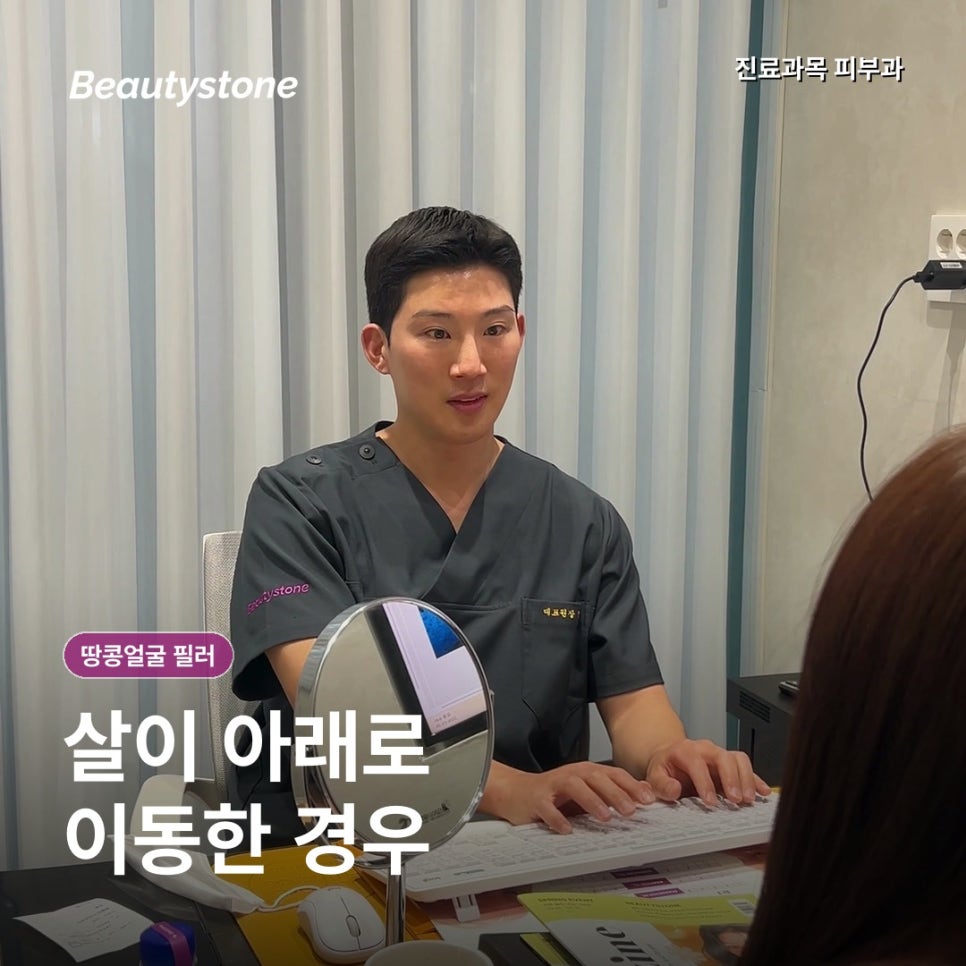
Hyaluronic acid filler
involves injecting a gel-like substance into hollow areas
to adjust volume and contours relatively quickly.
The amount to fill in each area
can be planned in detail,
and, when necessary,
adjustment may be considered using hyaluronidase.
However, the approach of “filling every hollow area completely”
can instead feel excessive for a peanut-shaped face.
Although the transition below the cheekbones may become smoother,
the overall face may look wider,
or the balance between the front and lateral cheeks may be disrupted,
making the result feel unnatural.
Collagen boosters
refer to treatments such as PDLLA or PLLA
that induce a collagen response within the skin.
Unlike filler, the amount injected does not immediately
become the finished volume.
Instead, skin thickness, elasticity,
and the sense of continuity across a broader area
are assessed over time.
Because changes appear gradually
and the number and intervals of treatments vary from person to person,
if you expect a rapid change in volume
before an important event,
the criteria for choosing a collagen booster differ from those for filler.
Ultimately, these two treatments are less like competing options
and more like tools with different purposes and timelines.
If sagging is also present,
it is necessary to determine during consultation
whether to address volume first, lifting first,
or to approach different areas separately.
- What should I check first for my face?

When looking in the mirror,
try to determine whether the shadow below the cheekbones is what you notice first,
or whether the heaviness around the mouth and jawline
catches your attention first.
Recent weight changes, older photos,
and the difference between lying down and sitting
are also useful information for a consultation.
If you have previously received filler, a collagen booster,
or a lifting treatment,
it is helpful to organize, as far as you can remember,
the product name, treatment area, and timing before your consultation.
Temporary swelling and bruising,
as well as soreness when pressed,
may occur after treatment.
Unless the clinic has given you different instructions,
it is best not to press or massage
the injection area forcefully.
If pain becomes increasingly severe,
or the skin turns white or appears mottled like a net,
and blurred vision or eye pain occurs,
do not wait—contact the medical institution where you received the treatment immediately.
If a hard nodule or swelling persists for a long time,
it is better to have your current condition checked
rather than continuing to touch the area yourself.
Wrapping up

The goal of peanut-shaped face filler
is not to fill every hollow area,
but to create a natural transition
between the cheekbones, midface,
and lower face.
Depending on whether insufficient volume is the main issue
or reduced skin support and sagging are more significant,
the order of filler, collagen boosters,
and lifting treatments may vary.
During your consultation,
ask first:
“Does my face look more hollow,
or does it look like the tissue has shifted downward?”
It is also helpful to confirm specifically
which areas should be filled
and which areas, on the contrary,
should not be touched.

Frequently Asked Questions
Q1. Won’t peanut-shaped face filler make my face look larger?
It depends on the injection location and amount.
If the lateral cheeks are filled excessively,
the face may look wider,
so the extent of hollowing and the proportions of the entire face should be considered together.
Q2. Which is more natural, filler or a collagen booster?
Naturalness depends less on the product name
than on whether the treatment matches the current cause and goal.
Filler may be considered when rapid volume adjustment is needed,
while a collagen booster may be considered
if you want to observe gradual changes in the skin.
Q3. Is it possible if I previously received filler at another clinic?
Whether it is possible depends on the product that remains and its location.
Letting the provider know when and where the treatment was performed
and which product was used can help with the consultation.
Q4. How long does peanut-shaped face filler last?
It varies depending on the product and injection layer,
the movement of the treatment area,
and the individual’s metabolic rate.
Rather than deciding on a time period first,
it is better to check the amount currently remaining
and the balance of the face before determining the timing of the next treatment.
Thank you for reading this long post today.
This has been Kim Ha-won from Beauty’s Doctor.