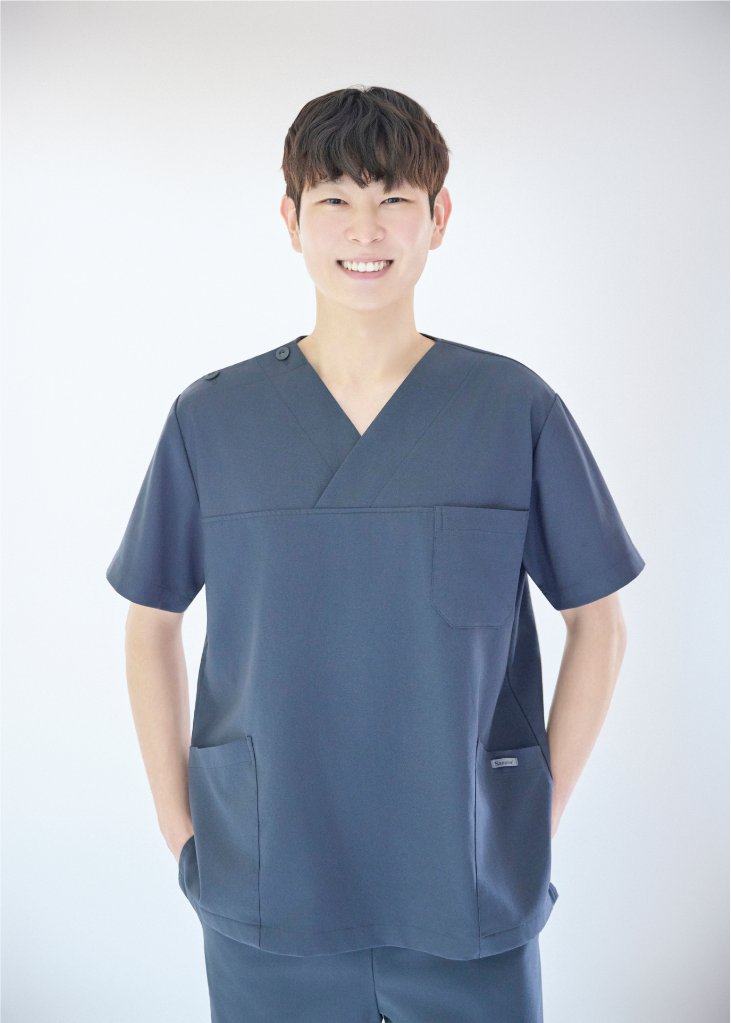
Hello.
I’m Kim Ha-won from Beauty’s Doctor.
“Nasolabial folds have become deeper, but filler feels too burdensome.
Can Sculptra improve them naturally?”
This is a question I often hear during consultations.
To get straight to the point, Sculptra
is different from a procedure that immediately fills nasolabial folds like filler.
If reduced volume in the anterior cheeks and midface
is making the nasolabial folds appear deeper,
it is closer to a treatment approach in which
surrounding tissue gradually becomes more refined
through a collagen response.
On the other hand, if the folds crease strongly when you make expressions
or a deep line has already become established,
Sculptra alone may not be enough
to achieve the desired change.
3-Line Summary
-
The tautness immediately after treatment
is a change caused by the injected solution
and swelling combined, not the final result.
-
The actual effect of Sculptra on nasolabial folds
is assessed gradually over several weeks.
-
In clinical studies,
results were observed for up to approximately two years,
but the duration varies from person to person.
1) Is Sculptra suitable for everyone with nasolabial folds?

Nasolabial folds are not simply a problem of one line.
The causes can differ: the skin may have folded because the anterior cheek has hollowed,
the groove may have become more pronounced due to reduced elasticity,
or sagging in the midface and habitual facial expressions
may both be contributing factors.
Sculptra is a treatment that involves injecting PLLA
to stimulate collagen production within the skin.
Rather than immediately filling a space
like hyaluronic acid filler,
it allows time for the skin to respond on its own
and creates gradual changes.
Therefore, instead of making a decision based only on the nasolabial folds,
the reduced volume in the anterior cheeks, skin thickness,
and the degree of sagging should also be assessed
before planning the treatment area and amount.
If hollowing is the main issue, Sculptra
may be considered,
but if deeply etched lines or significant sagging are the main concerns,
another approach may also be necessary.
2) Will the effect be visible immediately like filler?

Immediately after treatment,
the nasolabial folds may look lighter and the face may appear tauter
because of the diluted injected solution and swelling.
However, when the moisture and swelling subside after a few days,
you may feel that the area looks as it did originally again.
It is too early to conclude at this point
that the effect has disappeared.
The initial tautness and the actual collagen changes
follow different timelines.
Official overseas materials indicate that
many clinical study participants began to see gradual changes
after about one month.
Therefore, rather than looking only at the appearance on the day of treatment,
it is better to compare photographs taken under the same lighting and with the same facial expression
over intervals of several weeks,
after the swelling has subsided.
3) How long does the effect of Sculptra on nasolabial folds last?
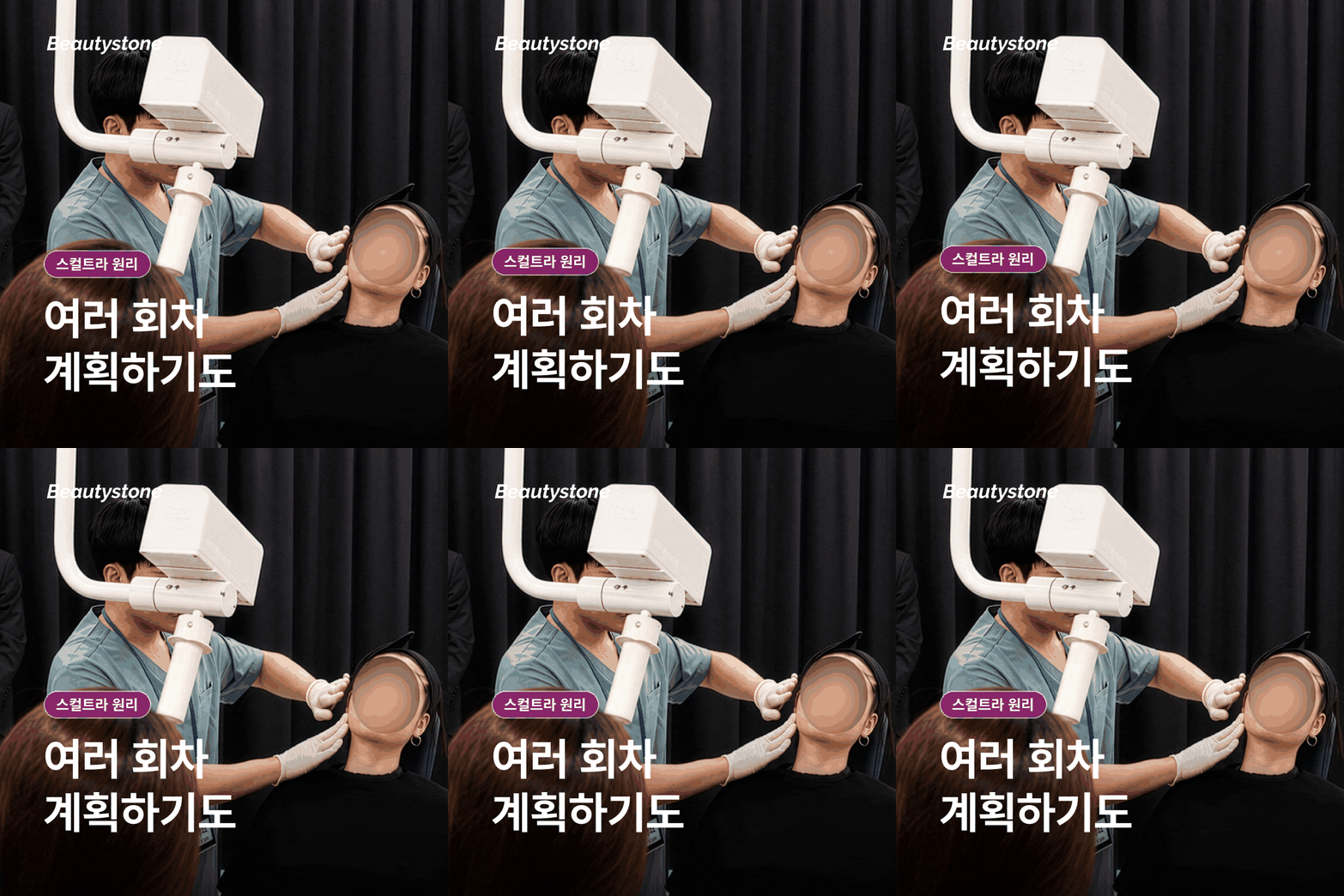
Official overseas materials present clinical results showing
that the changes from Sculptra lasted for up to approximately two years.
Studies involving nasolabial folds have also reported improvements observed
for up to approximately 25 months after the final treatment.
However, this does not mean that “one treatment guarantees
that everyone will maintain the results for two years.”
The lasting impression can vary depending on the initial degree of hollowing and skin thickness,
the amount used and number of treatments,
and where and at what depth the product was placed.
If your weight changes significantly
or sagging in the surrounding tissue progresses,
you may feel that the nasolabial folds have become deeper again,
even if the collagen response remains.
Therefore, when considering how long Sculptra lasts,
it is better not to focus on a single number,
but to assess how the contours around the nasolabial folds have been maintained.
4) Do I have to receive three treatments?

Sculptra is often introduced as a treatment plan
in which the effect is not completed by injecting a large amount at once,
but is instead administered in two or three sessions
over several months while monitoring the skin’s response.
However, three sessions are not necessarily the right answer for everyone.
If the hollowing is mild,
you may monitor the results after one session,
while if the volume loss is broad and noticeable,
additional treatment can be considered in stages.
The important thing is not to keep adding more product at short intervals
simply because the immediate change appears small.
If additional treatment is performed before the swelling and tissue response have settled,
it may be difficult to accurately assess
overcorrection or differences between the two sides.
Temporary bruising, swelling, redness,
and tenderness may occur after treatment,
and in rare cases,
firm-feeling nodules may develop.
This is why the injection depth and dilution, the distribution method,
and post-treatment care are emphasized.
If swelling or pain gradually worsens,
or a firm lump remains for a long time,
contact the clinic where you received the treatment
rather than simply waiting and managing it yourself.
In closing

To properly assess the effect of Sculptra on nasolabial folds,
rather than asking, “What should be injected into the folds?”
first determine, “Why have the folds become deeper?”
If reduced volume in the anterior cheeks and midface is the main issue,
Sculptra may be a natural treatment option,
but if deeply creased lines or sagging have a major influence,
other methods may also need to be considered.
During your consultation, ask these three questions.
Which has a greater influence on my nasolabial folds:
hollowing or sagging?
When will the effect begin,
and based on what criteria will it be compared?
Rather than deciding on additional treatment based on a date,
what changes will determine whether I should proceed?
After assessing your current facial structure and skin condition,
determining the necessary treatment range and number of sessions
is a way to consider both the duration of Sculptra’s effects
and your satisfaction with the results.
Frequently Asked Questions
Q1. Will Sculptra immediately smooth out my nasolabial folds?
Immediately after treatment, the folds may look lighter
because of the injected solution and swelling,
but this is not the final result.
The actual changes are assessed over several weeks
as the collagen response progresses.
Q2. Does the effect of Sculptra on nasolabial folds last for two years?
Clinical results have been observed for up to approximately two years,
but the same duration is not guaranteed for everyone.
Q3. Do I have to receive three treatments for nasolabial folds?
Treatment may be divided into several sessions,
but this depends on the degree of hollowing and the skin’s response.
Rather than fixing the number of sessions from the beginning,
it is important to assess the progress after one session.
Q4. Which is better for nasolabial folds, filler or Sculptra?
Filler is a way to restore volume relatively quickly and precisely,
while Sculptra creates gradual changes through a collagen response.
Rather than deciding that one is better,
it is preferable to consider both the cause of the deeper folds
and the desired speed of change before choosing.
Thank you for reading this long post today.
This was Kim Ha-won from Beauty’s Doctor.