
Lost teeth, weakened function
What should you do?
You need implants!
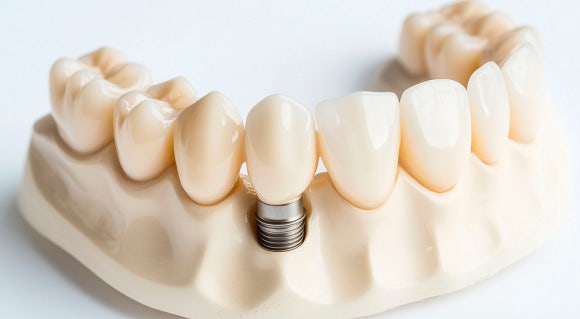
Everyone knows that it is important to take good care of natural teeth and keep them healthy for a long time. However, there are times when tooth loss becomes unavoidable. When a tooth must be extracted due to cavities, an accident, gum disease, or other reasons, how to replace that missing space becomes a very important issue for oral health.
Teeth do more than simply chew food. They play various roles, including supporting jawbone health, maintaining the alignment of neighboring teeth, aiding pronunciation, and even shaping the face. That is why if tooth loss is left untreated, many more problems can arise than you might expect.
In today’s post, we will take a closer look at why implants are needed when teeth are lost and what treatment process is involved in placing them. If you are preparing for an implant procedure, please read on carefully.

Tooth loss should be replaced with an implant.
There are around 20 teeth in our mouths. Because of that, losing one tooth may not cause immediate major discomfort, but over time the surrounding teeth may tilt or shift into the empty space. This movement can disrupt the bite, place strain on the temporomandibular joint, and further lead to reduced chewing function and systemic issues such as indigestion.
In addition, if the missing space is left untreated for a long time, the alveolar bone that supported the tooth gradually resorbs. This can lead not only to changes in facial shape, but also to a situation where bone grafting may be needed later due to insufficient alveolar bone when getting implants.
Therefore, if you have lost a tooth, it is important to place an implant that can replace it. An implant is a dental treatment in which an artificial root is placed into the alveolar bone to replace the missing tooth, and a crown is attached on top to restore function.
It is often compared with dentures or bridges, but implants can be used independently without relying on neighboring teeth, which means they do not damage adjacent teeth. In addition, because they can reproduce an appearance similar to that of natural teeth, they are a treatment with a high level of satisfaction.
How is an implant procedure carried out?
Implant treatment is not a simple procedure that ends with a single visit. It is a dental treatment that is carried out in multiple stages after establishing a careful treatment plan based on the individual’s oral condition, the reason for tooth loss, and other factors.
① Detailed examination and consultation
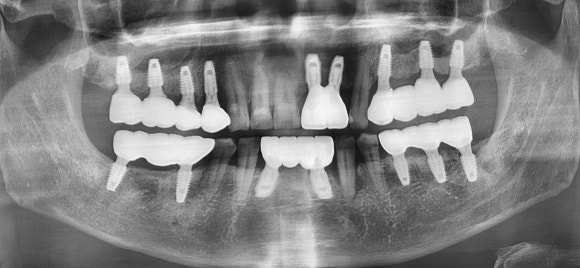
First, before proceeding with the implant treatment, it is important to assess the oral condition. Using dental photos, panoramic X-rays, CT scans, and more, the oral structure is analyzed, and the condition of the gum bone, nerves, and surrounding teeth is carefully checked.
② First surgery (placement)
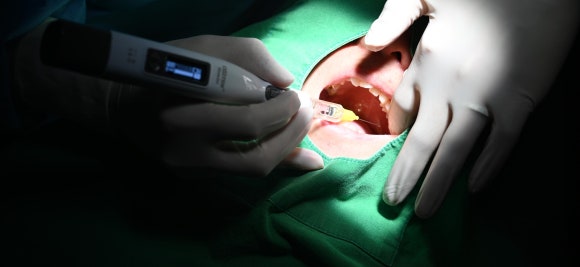
Next, the main surgery is performed. The artificial root is placed into the alveolar bone. This is done under anesthesia, and if the condition of the alveolar bone at the placement site is judged to be poor, additional treatment such as bone grafting or sinus lift surgery may be necessary.
③ Healing period (osseointegration)
After placement, the artificial root is given about 2 to 4 months to bond stably with the alveolar bone. This period is called the osseointegration period, and it is an essential healing phase for using the implant stably later on.
④ Second surgery (abutment connection and impression taking)
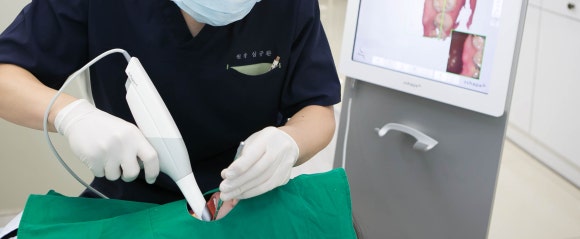
Once it is confirmed that the alveolar bone and artificial root have fused well, preparation begins for the fabrication of the prosthetic restoration. After connecting the abutment to the artificial root, an intraoral impression is taken in order to make the crown that will be attached on top.
⑤ Prosthetic restoration placement
Once the crown is fabricated, it is connected to the abutment, completing the implant treatment.
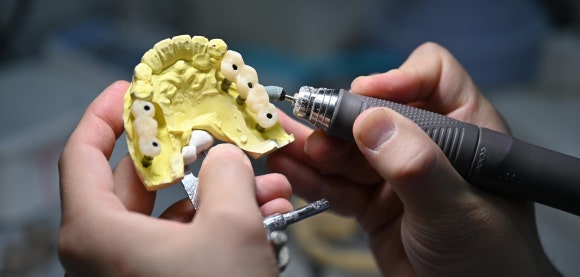
As you can see, implants are not a treatment that is completed in a short time. Because treatment must be planned after examining various factors from multiple angles, it should be performed by medical staff who are not only meticulous but also have diverse experience and skill in implants.
| Therefore, when choosing a dental clinic for implants, it is good to look at the following points. | Is there abundant clinical experience and case experience related to implants? | Is it a place that creates a treatment plan suited to me? | Is it a place that explains the treatment process in detail? | Are the implant materials used certified products with recognized reliability? | Is it a place where you can receive care all the way through post-operative management? |

You should choose implants carefully. Please refer to the information above and find the implant dental clinic that is right for you. That is all for today’s post. I will briefly introduce E-Pyeonhansesang Dental Clinic, which wrote today’s post, and then conclude. Thank you.
At E-Pyeonhansesang Dental Clinic, Hwagok Branch (main branch), Director Shim Gyu-hwan, a specialist in integrated dentistry, is in charge.
At E-Pyeonhansesang Dental Clinic, Gangseo Branch, Director Kang Dong-wook, a specialist in integrated dentistry, is working.
The main branch is located a 2-minute walk from Exit 7 of Hwagok Station,
and the Gangseo Branch is located a 1-minute walk from Exit 10 of Gayang Station.
We provide not only wisdom tooth extraction, laminate cosmetic treatments, and general dental care,
but also implant treatment (conscious sedation therapy).

| *This post was written by [E-Pyeonhansesang Dental Clinic, Hwagok & Gangseo Branch] in compliance with the Medical Advertising Act for informational purposes. The effects of all treatments may vary depending on the individual’s condition, and side effects may occur, so please consult with the medical staff thoroughly before treatment. |