
Are you worried about wisdom tooth extraction?
If you know it needs to be removed but are hesitating,
you clicked on the right post.
Hello, this is E-Comfortable Dental Clinic. Today, we prepared this post to help those who are curious about wisdom tooth extraction. Many people may have vague fears or questions before having a wisdom tooth removed. One of the things many people wonder about is whether it will hurt when the wisdom tooth is extracted, or not.
Even if two people both have wisdom teeth extracted, one may say it was not painful while another says it was difficult, and that alone can make you tense up. This is because the difficulty of wisdom tooth extraction can vary from person to person. So why do these individual differences occur? Today, we will explain in detail why the difficulty of wisdom tooth extraction differs from person to person, along with post-treatment precautions.
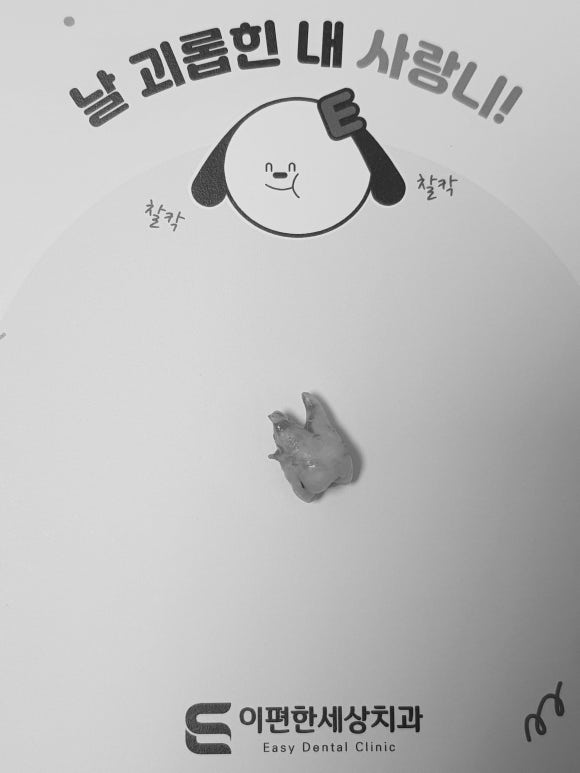
Photo date: 2023.11.21 / *Attached image for illustrative purposes.
The difficulty of wisdom tooth extraction,
why does it differ from person to person?
Many people find wisdom tooth extraction difficult, and one reason is the pain and discomfort that occur during and after the extraction. However, not every wisdom tooth extraction is painful and difficult. In some cases, the tooth can be removed relatively easily and recovery can also be quick.
The reason why pain and discomfort during and after extraction vary from person to person is that the eruption position and direction are all different. Accordingly, the difficulty of extraction differs, and in cases where the extraction is difficult, whether the gum must be incised or whether the extraction takes longer can also affect recovery afterward.
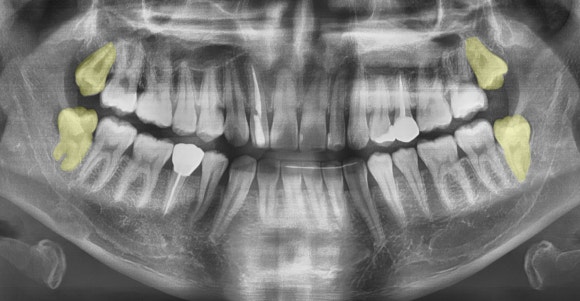
Photo date: 2024.06.04 *Attached image for illustrative purposes
Usually, if the tooth has erupted normally behind the gums of the upper or lower jaw, extraction is relatively easy. However, if it has erupted only partially or is buried in the jawbone, the gums may need to be incised or some bone removed during extraction. In particular, horizontally impacted wisdom teeth tend to be more difficult to extract, and because of this, extraction time becomes longer, increasing the likelihood of bleeding and pain.
In addition, the roots of the wisdom tooth are also an important factor in extraction. If the roots are simply short and not strongly fused to the jawbone, the tooth can be removed easily. However, if the roots are long and curved like a hook, or if they are strongly fused to the jawbone, the tooth may need to be separated into several pieces or removed with greater force, which can increase pain and discomfort.
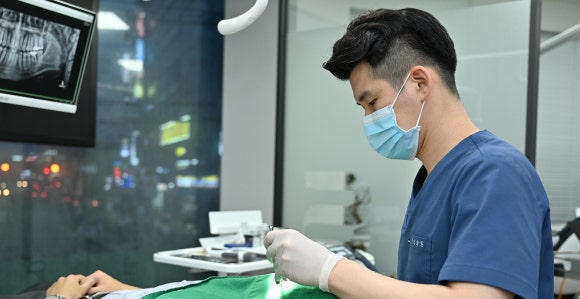
When extracting a wisdom tooth,
what are the key points to consider?
Wisdom tooth extraction may seem like simply removing one tooth, but in reality there are several factors to consider. Broadly speaking, wisdom tooth extraction can be divided into diagnosis - extraction - recovery.
| step 01. Diagnosis |
During the diagnosis stage, the shape of the wisdom tooth before extraction and its relationship with surrounding tissues are carefully examined. A panoramic X-ray is taken first to understand the rough structure, and then a CT scan is performed if necessary. Through this, the shape of the wisdom tooth, its distance from nearby nerves, and in the case of the upper jaw, its distance from the maxillary sinus are examined more carefully to establish an extraction plan.
| step 02. Extraction |
Next, the actual extraction is performed, and anesthesia is administered beforehand. If needed, the extraction can also be performed under conscious sedation (sleep treatment). After anesthesia, the jawbone and gums are incised (in some cases, the tooth is extracted without incision), and then the tooth is sectioned and removed according to its shape.
At this time, it is important to extract the tooth as delicately as possible so as not to damage the surrounding tissues, minimize bleeding, and, if the gums were incised, suture them well.
| step 03. Recovery |
Extraction does not end there. The final recovery stage is also important. During recovery, proper care is needed to minimize discomfort as much as possible and allow the incision site to heal quickly. Immediately after extraction, it is important to stop the bleeding as soon as possible, and afterward, it is important to take good care so that the blood clot (scab) that forms in the extraction site does not come off too early.
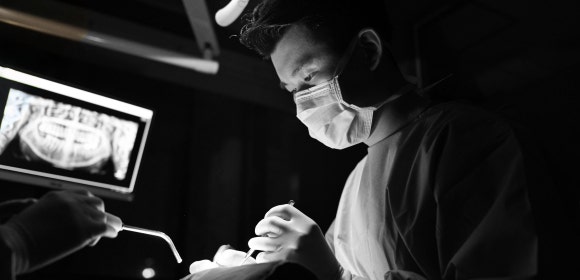
Extraction does not happen all at once; it proceeds step by step, so it is important to receive treatment and guidance appropriate to each stage. To do that, you should check the following:
| Check PointㅣDid they carefully examine the shape of the wisdom tooth during the diagnosis process? Was the extraction process carried out smoothly according to the shape of the wisdom tooth? Did they provide detailed post-extraction precautions? |
You should carefully look into these things. Therefore, when looking for a dental clinic for wisdom tooth extraction, please choose one after considering these points. Thank you for reading this long post together, and I hope it was helpful. That is all for today. Thank you.

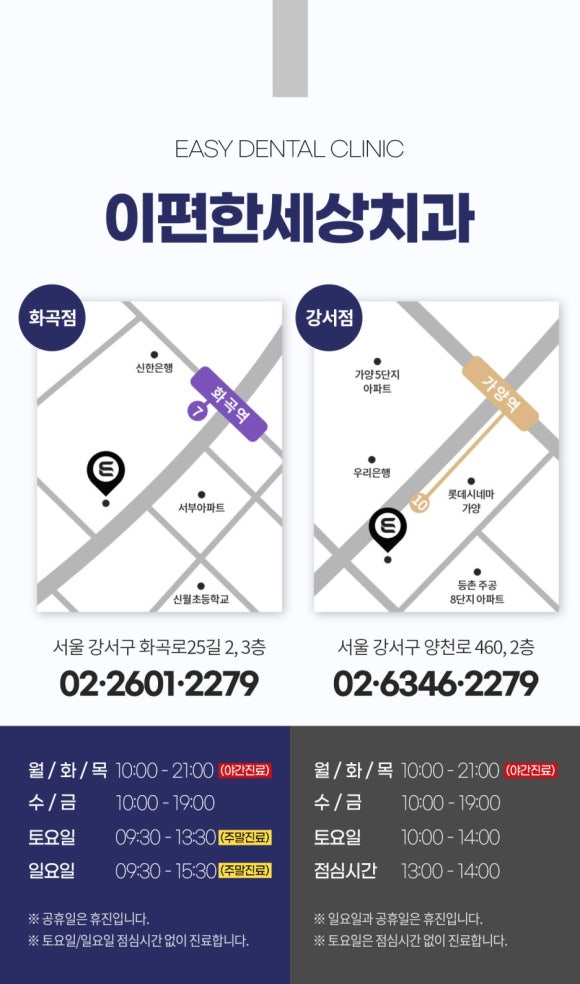
At E-Comfortable Dental Clinic Hwagok Branch (main branch), Dr. Shim Gyu-hwan, a specialist in integrated dentistry,
At E-Comfortable Dental Clinic Gangseo Branch, Dr. Kang Dong-wook, a specialist in integrated dentistry, is working.
The main branch is located 2 minutes on foot from Exit 7 of Hwagok Station,
and the Gangseo branch is located 1 minute on foot from Exit 10 of Gayang Station.
We provide wisdom tooth extraction treatment under conscious sedation (sleep anesthesia).
Thank you.
| *This post was written by [E-Comfortable Dental Clinic Hwagok & Gangseo Branch] for informational purposes in compliance with the Medical Advertising Act. The effectiveness of all treatments may vary depending on individual conditions, and side effects may occur, so please consult with medical staff sufficiently before treatment. |