Hello.
This is E-Comfort Dental Clinic.
When you meet someone, where does your gaze
first go?
It goes to the face.
And among the features of the face,
one of the important elements that
determine first impressions is
the teeth.
Therefore, if the teeth are uneven
or the shape of the teeth is not ideal,
it is difficult to create a clean and bright image.
Among them, there is a type of teeth
called “okni,”
and in the case of okni, because the teeth are not
shaped nicely, the impression may seem stern.
Also, not only from a simple aesthetic perspective
but also in terms of dental function,
it can have an effect, so if necessary,
it is better to receive orthodontic treatment.
Today, along with the exact meaning of okni,
we will take a detailed look at why
okni should be treated.
What does okni mean?
In everyday life, when looking at someone
whose teeth are not evenly aligned,
people say they “look like they have okni.”
So what exactly does okni mean?
In fact, okni is not the official term
used in dentistry.
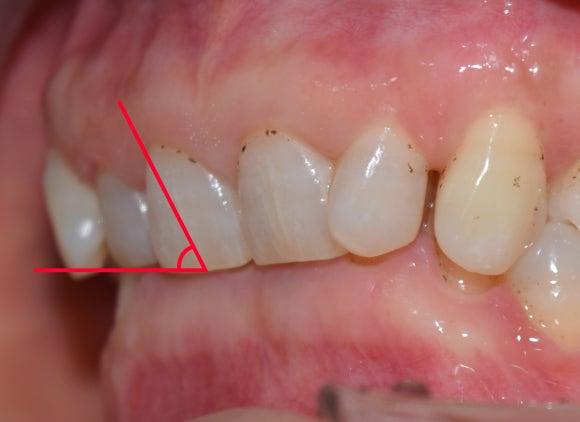
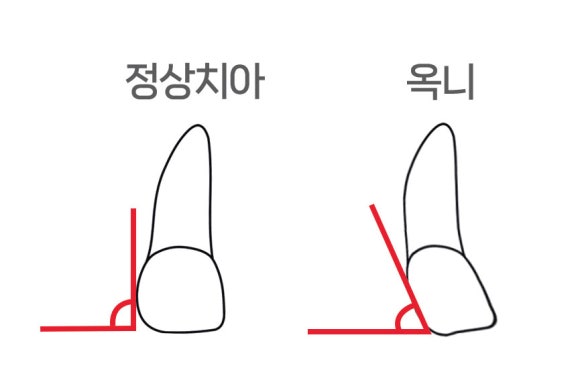
In general, when teeth are pushed inward,
this is called okni.
When viewed from the front, the teeth are angled inward,
so the lower teeth often protrude farther
forward than the upper teeth.
This is an important issue that also affects the bite.
Therefore, if okni is severe,
it is advisable to visit a dental clinic,
receive an accurate diagnosis,
and then decide whether orthodontic treatment is needed.
What causes okni?
Then why does okni occur?
The causes of okni can largely be divided
into two types.
If the original structure of the teeth has been pushed inward
due to genetic factors,
there is a high possibility that okni will occur.
Therefore, if one of your parents has okni,
it is likely that okni developed
due to genetic factors.
Okni can also develop due to acquired factors.
Habits such as breathing through the mouth,
or thumb-sucking for long periods of time,
can affect the direction of jaw growth and the shape of the teeth,
leading to okni.
Why should okni be corrected?
When okni occurs, it affects the bite
and the teeth are not properly aligned,
so aesthetics can be reduced.
However, many people do not feel inconvenienced
by okni and think, “Do I really need to get it corrected?”
Orthodontic treatment is not simply
a dental procedure for aesthetics.
When the bite is reversed,
or when the teeth are uneven,
making oral care difficult,
and when the position is abnormal,
making it difficult to cut or chew food,
it is important to restore dental function
through orthodontic treatment.
The same applies to okni.
When the front teeth are pushed inward,
it becomes difficult to cut food,
so you end up relying on the molars when chewing,
and this can easily cause the molars to wear down.
In addition, okni can easily strain the temporomandibular joint.
It disrupts the bite between the upper and lower jaws,
which creates prolonged tension in the jaw joint.
As a result, it can cause jaw pain, headaches,
and facial pain.
Lastly, speech problems may occur.
Because the angle of the front teeth is different from the normal angle,
sounds such as “s” and “j” may be difficult to pronounce.
Therefore, if these problems occur,
orthodontic treatment is recommended at that time.
Okni is more than just an aesthetic issue;
it is a factor that affects overall oral function.
Therefore, to fundamentally restore dental function,
orthodontic treatment is recommended at this time.
At the dental clinic, by comprehensively examining
a person's jawbone condition and bite,
the angle of the front teeth,
and the condition of the surrounding teeth,
we hope you can regain a healthy mouth
through orthodontic treatment.
Thank you.