Hello.
This is E-Pyeonhan Sesang Dental Clinic.
Lately, we have often been seeing patients who come to the clinic to have their wisdom teeth extracted.
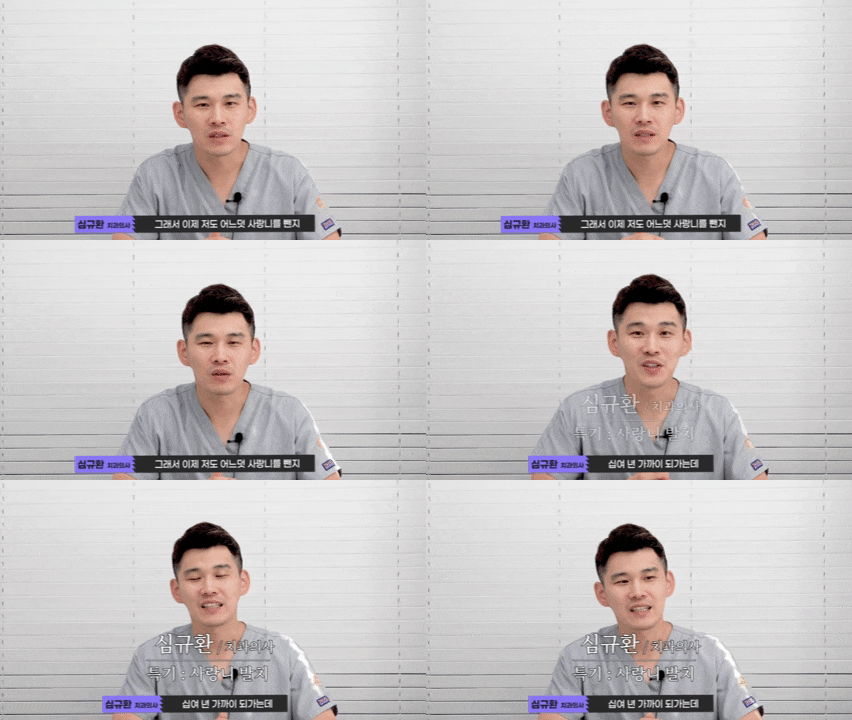
After working as a dentist for quite some time,
I have seen many different cases of wisdom teeth,
but the cases that are most regrettable are when patients come in for extraction after swelling has already appeared in the gums around the wisdom tooth.
Symptoms of swollen gums around a wisdom tooth
should never be ignored or brushed off lightly,
because in many cases the situation gets worse.
With that in mind, today I’d like to look at
why swelling occurs in the gums around wisdom teeth,
and why you should not endure it.
Why the gums around a wisdom tooth swell
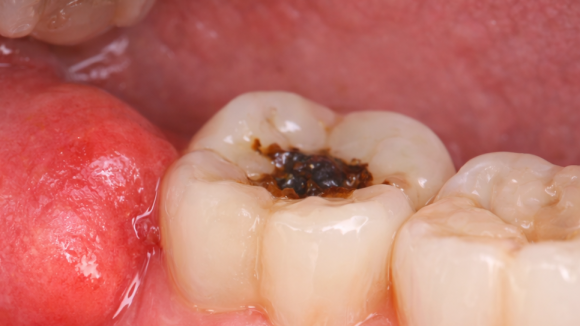
The most common reason the gums around a wisdom tooth swell
is inflammation around the crown,
which is the visible part of the tooth.
Wisdom teeth usually grow in deep areas that are difficult to reach even with brushing,
so bacteria and food particles can remain trapped
between the adjacent tooth and the wisdom tooth,
leading to inflammation.
In addition, if a wisdom tooth in only the upper jaw or lower jaw erupts first,
or if both upper and lower wisdom teeth have grown in
but do not fit together properly when biting,
the tooth may press on or bite into the gums every time you chew,
causing irritation, wounds, and inflammation.
Why it is dangerous to endure
swollen gums around a wisdom tooth

In the early stages, swelling of the gums around a wisdom tooth
is not severe
and may begin as only mild discomfort
when pressed or irritated.
At this point, many people do not feel that it is serious
and delay visiting the dentist.
As inflammation becomes deeper,
the treatment process becomes more complicated,
so it is important to visit the dentist as soon as possible,
receive appropriate treatment,
and proceed with wisdom tooth extraction.
If inflammation is left untreated until it becomes severe,
pain will gradually worsen,
the face may swell as well,
and in severe cases pus may form in the gums.
Once pus has formed,
it is difficult to improve the symptoms with anti-inflammatory medication alone,
and the pus must be drained through an incision.
If the inflammation spreads to the surrounding muscles
or soft tissues,
it can also cause fever and systemic symptoms.
While this is an extreme example,
the oral cavity contains many blood vessels and lymphatic vessels,
so there are many pathways through which inflammation can spread,
and it should absolutely not be taken lightly.
Can’t it be handled easily at home?

You may sometimes see posts online saying that gargling with salt water
or taking anti-inflammatory pain relievers
makes it bearable.
Of course, home care can sometimes help relieve pain or symptoms
for a short time.
However, because the underlying cause of inflammation
and the limitations of managing the area around a wisdom tooth
are difficult to resolve on your own,
we recommend visiting a dentist as much as possible
to hear a professional opinion.
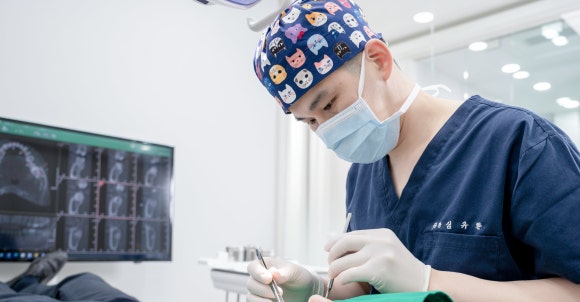
Has the gum around your wisdom tooth started to swell?
If you are diagnosed before the inflammation worsens,
it often improves sufficiently with cleaning or medication.
So if you are reading this because the gums around your wisdom tooth feel uncomfortable,
don’t be too frightened,
and we recommend visiting a nearby dental clinic as soon as possible for an examination.
If you live near the E-Pyeonhan Sesang Dental Clinic Hwagok branch or Gangseo branch,
you are welcome to visit our clinic. ^^
We will always provide kind treatment and consultation.
Thank you for reading today.