Gayang Station Scaling: Check This If Your Gums Keep Swelling and Bleeding.
Hello.
This is E Pyeonhansesang Dental Clinic.
“My gums bleed whenever I brush my teeth.”
“My gums constantly feel swollen.”
“It doesn’t hurt, so I’ve just left it alone.”
Many people do not consider
bleeding gums to be a serious symptom.
They may brush it off by thinking,
“It’s probably because I’m tired,”
or “I must have brushed too hard,”
and many seem to think
that it will get better if they endure it for a few days.
However, when we examine
our patients’ oral conditions in the clinic,
we quite often find that these symptoms
are the beginning of gum disease.
We will explain
why the gums may frequently swell or bleed
and in which cases a dental checkup is needed.
Bleeding gums are not normal.
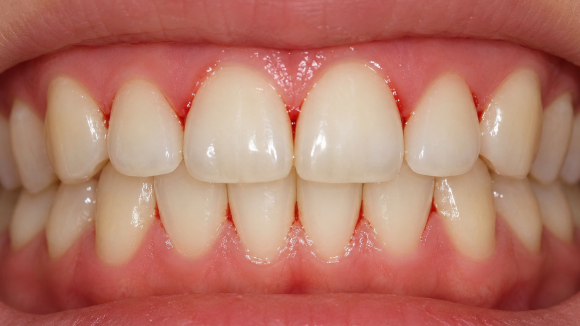
The first point I would like to make is that
healthy gums do not bleed easily when brushing or flossing.
Some people occasionally wonder,
“Isn’t it normal for the gums to bleed a little every time I brush?”
This is not true.
Bleeding gums are, in most cases,
a sign that inflammation has developed in the gum tissue.
Just as a wound on the skin bleeds,
inflamed gums can also bleed
with even very minor stimulation.
In particular, if the bleeding occurs repeatedly,
it is not simply a matter of changing your toothbrush;
you need to check the health of your gums themselves.
Plaque and tartar are the causes of swollen gums
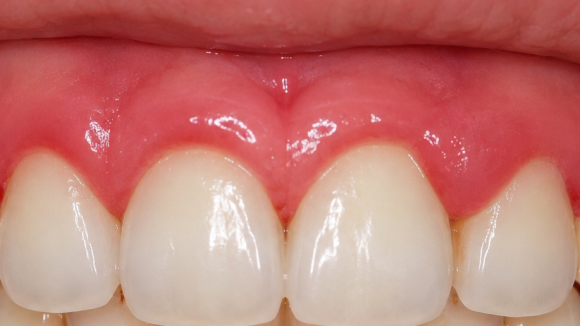
Many people think that swollen gums are caused by
fatigue or stress,
but in fact, the most common causes are plaque and tartar.
Of course, stress and fatigue can also affect gum health.
When you do not get enough sleep or your immune system is weakened,
your gums may swell or bleed more easily than usual.
However, even in these cases,
inflammation is usually already present in the gums,
and the underlying cause is more often tartar.
If food particles are not removed properly
after eating,
bacteria gather and form plaque.
Over time, this plaque hardens
and turns into tartar,
and bacteria can easily attach to the surface of the tartar as well.
These bacteria continuously irritate the gums,
causing inflammation that eventually makes the gums swell,
turns them red, and causes bleeding.
No matter how thoroughly you brush,
firmly hardened tartar cannot be removed.
If a significant amount of tartar has built up,
or it has been more than six months since your last scaling,
we recommend getting scaling at a dental clinic.
If any of these apply to you, visit a dental clinic.
Sometimes the gums may become temporarily sensitive,
causing discomfort for a day or two.
However, if the symptoms recur or gradually worsen,
rather than expecting them to improve on their own,
it is better to have the cause checked at a dental clinic.
| Checklist | Every time I brush my teeth, my gums bleed | The bleeding continues for more than a week | The same area keeps swelling whenever I am tired | The swelling returns after subsiding | My breath has become worse than usual | Brushing does not improve my bad breath | Discharge or something resembling pus appears when I press on my gums |
If any of these apply to you,
we recommend visiting a dental clinic as soon as possible
for an examination by a dental professional.
Just like other tissues in the body,
the gums send various signals whenever a problem develops.
If you have recently noticed frequent bleeding whenever you brush
or your gums tend to swell often,
rather than dismissing it as insignificant,
it would be a good idea to check the current condition of your gums.
Simply taking a little interest in your gums
and caring for them regularly
can help you maintain healthy gums and an oral environment. ^^
This was E Pyeonhansesang Dental Clinic.
Thank you.