Are you afraid of pain at the dentist?
What we do to make treatment less painful
Hello.
This is 이편한세상치과 강서점.
Do you have a fear of the dentist?
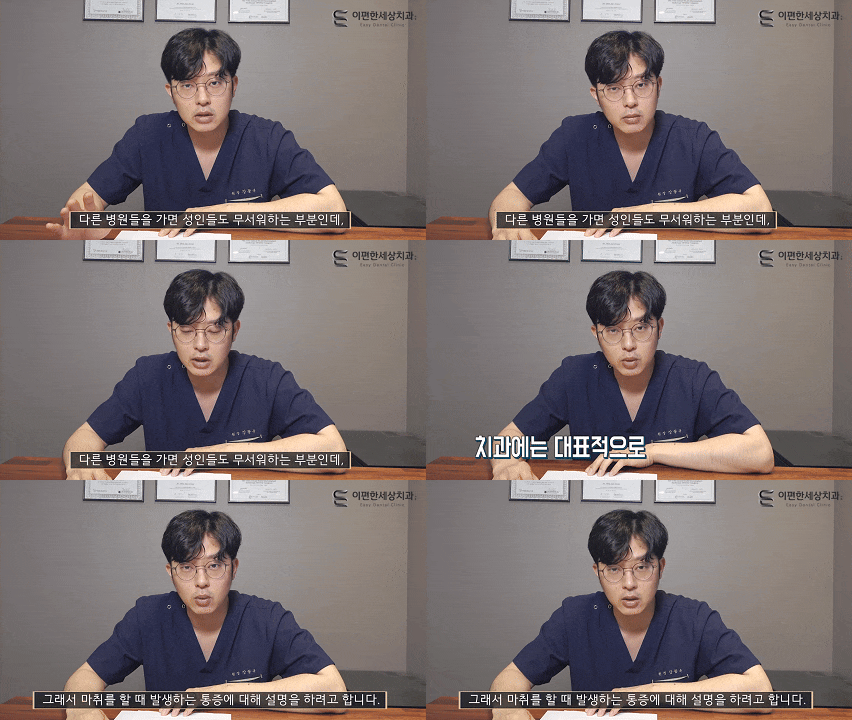
The biggest concern for people who are afraid to cross the threshold of a dental clinic is pain.
There is the dull, tingling pain felt when receiving an anesthetic injection,
as well as fear of the needle itself.
Even when they know they need dental treatment, they sometimes avoid visiting the dentist because of these concerns.
But did you know that
if the dental professionals make even a little effort,
this kind of pain can also be reduced?
Today, I would like to talk about the things we pay attention to at 이편한세상치과 강서점 to ease our patients’ concerns, even if only a little.
Numbing the gums first before administering anesthesia?
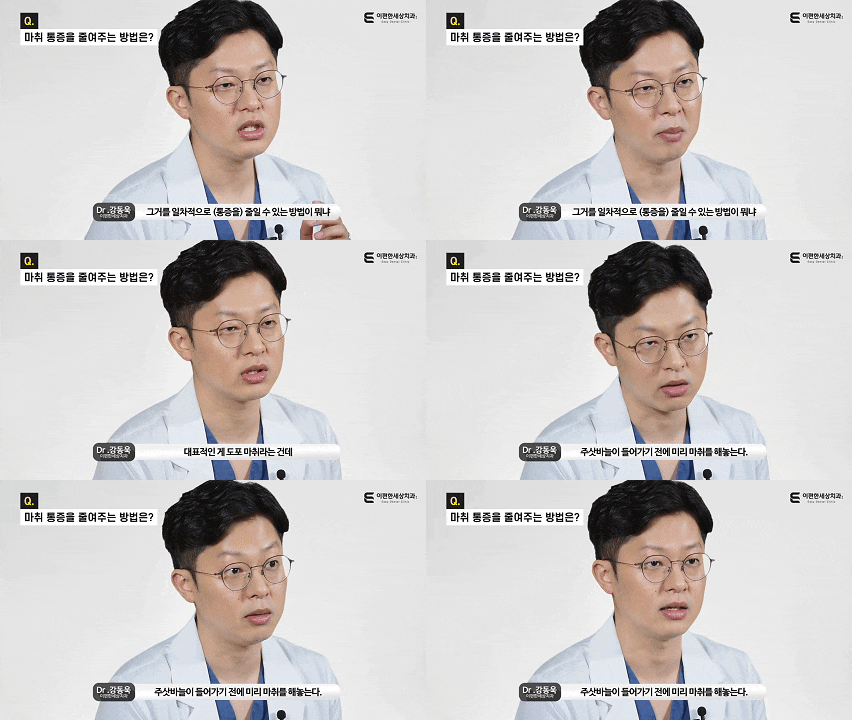
What comes to mind first when you think of dental anesthesia?
I think most people would answer, “an injection.”
However, before using an anesthetic injection, we may first apply a topical anesthetic to numb the surface of the gums.
This temporarily reduces sensation in the mucous membrane around the treatment area using a gargle-type or spray-type anesthetic.
Using this method can reduce the discomfort when the needle first touches the tissue, and it can also help reduce pain during treatments such as scaling.
Of course, we cannot say that topical anesthesia means
“the anesthetic injection will not hurt at all”
or
“you will not feel anything during scaling,”
but
we can describe it as an auxiliary step intended to reduce the tension felt at the very beginning of anesthesia or treatment.
We use a pain-reducing anesthesia device.
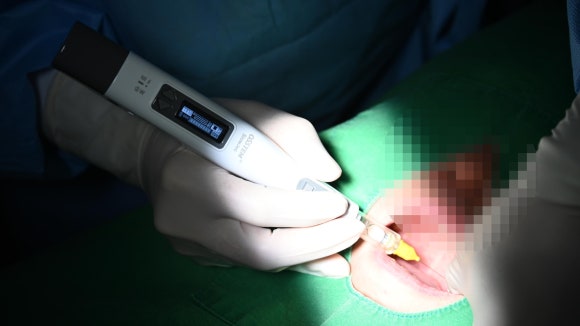
The dull ache and discomfort felt when an anesthetic injection is administered occur when the anesthetic solution rapidly enters the tissue and causes the pressure to rise suddenly.
Therefore, injecting the required amount of anesthetic solution slowly and at a consistent rate can reduce changes in pressure and lessen discomfort.
The equipment used to apply this principle
is a pain-reducing anesthesia device. It is also sometimes called a painless anesthesia device.
Because we cannot say that pain disappears 100 percent, I think the term “pain reduction” is more appropriate.
In the past, medical professionals had to adjust the injection speed based on the sensation in their hands and their experience. Using an appropriate tool like this can help provide treatment aimed at reducing pain.
Providing psychological reassurance is also important.
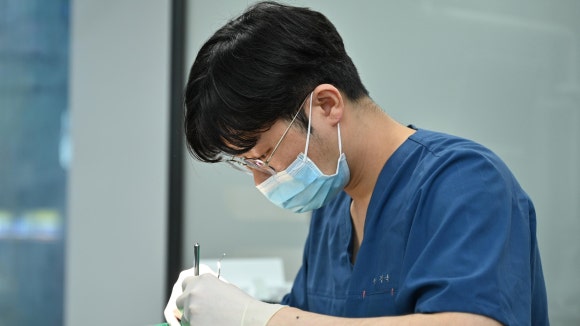
The pain and discomfort a patient feels during dental treatment are not determined solely by physical stimulation.
I believe that a patient’s tension and anxiety can also affect how they experience pain.
Many patients sit in the chair with their shoulders tense, clench their hands tightly, and startle at even the buzzing sound of the treatment instruments moving.
In this state, even a small stimulus can feel much stronger, and after the treatment ends, the entire body may feel sore as the tension wears off.
That is why one thing I personally consider important is a kind, clear explanation from the dental professionals.
Even when using a scaling instrument, rather than suddenly placing it in the patient’s mouth,
“We’re going to apply the anesthetic, so it may sting a little.”
“The treatment instrument is going in now.”
“We’re going to spray water now, so please don’t be too startled.”
“Please give me a signal if you feel uncomfortable.”
These are the kinds of brief explanations we try to provide.
With just one sentence, patients can anticipate what is happening during treatment, which can help ease their tension.
Doctor… please make it hurt as little as possible…
I think this one remark from a patient contains their fear of the dentist, their concerns about treatment, and their past negative experiences.
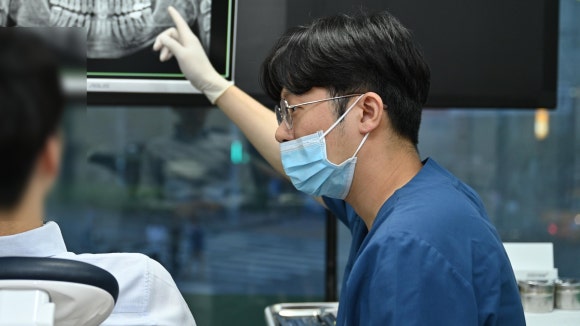
Of course, dental professionals cannot completely eliminate all pain, but I believe it is possible to make an effort to reduce discomfort, even if only a little. ^^
And these days, more and more dental clinics are making efforts like these.
So please do not indefinitely postpone dental treatment simply because you are afraid of pain. We recommend visiting a dental clinic that works to manage pain and receiving at least an examination before it is too late.
I hope today’s post has helped ease your concerns about dental treatment and the pain associated with anesthesia, even if only a little. With that, I will say goodbye.
This was 이편한세상치과 강서점.
Thank you for reading to the end.