There are several reasons people choose Invisalign, a clear orthodontic appliance.
One of them may be that they want to avoid the complex appliances used in traditional braces.
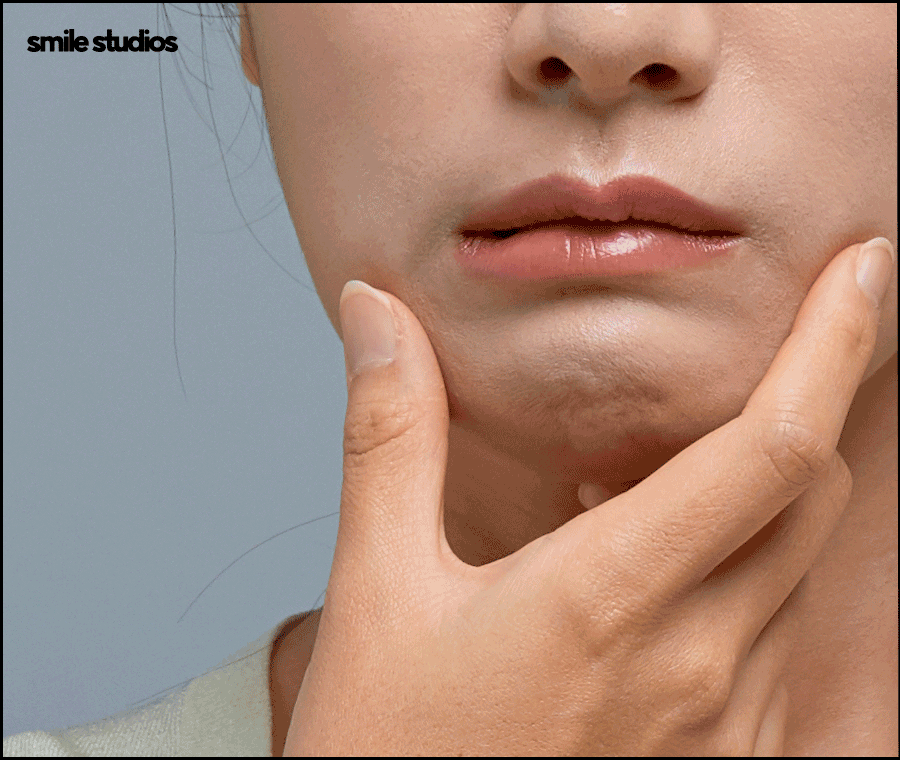
So many people expect that they will not need to wear rubber bands.
To give the conclusion first, Invisalign rubber bands are needed in most cases.
Although the appliance looks clear and simple, it is often necessary for achieving the best results.
The role of Invisalign rubber bands
Their main role is to precisely adjust the bite between the upper and lower teeth.
The appliance alone can align the permanent teeth neatly.
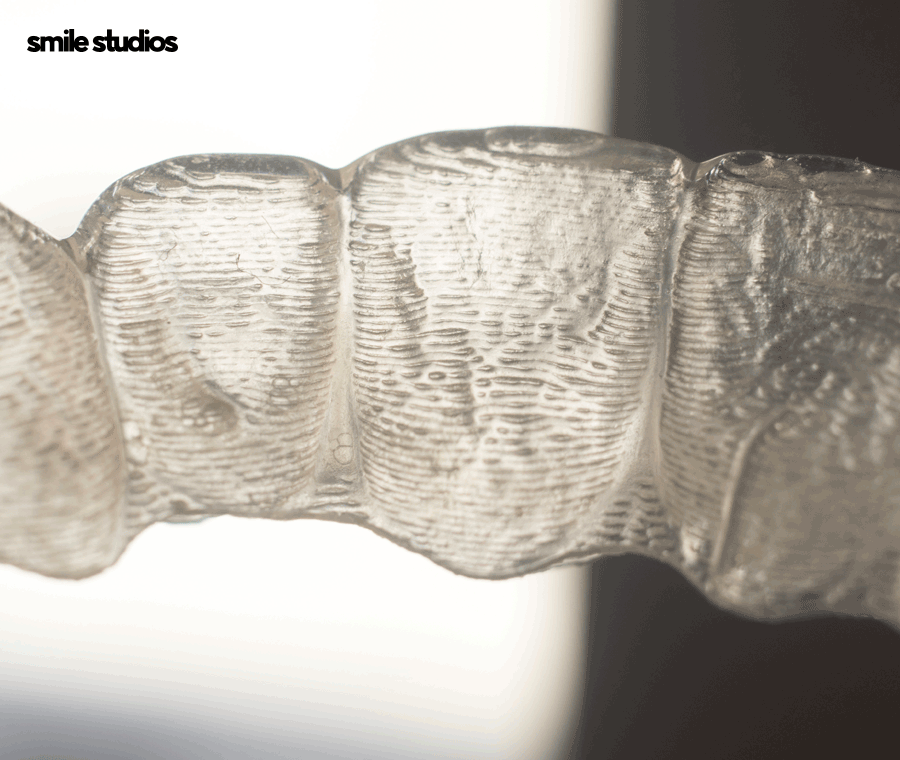
However, there are limits to how well it can make the upper and lower jaws fit together perfectly.
So this helps make up for those limitations and allows the natural teeth to fit together harmoniously.
In particular, it plays an important role in vertical bite adjustment in the molar area and in adjusting the front-to-back position of the front teeth.
It also helps improve treatment speed.
When used together with the appliance, teeth can move in the desired direction more quickly and effectively.
How to wear rubber bands
You may be wondering how they can be attached to a transparent plastic appliance.
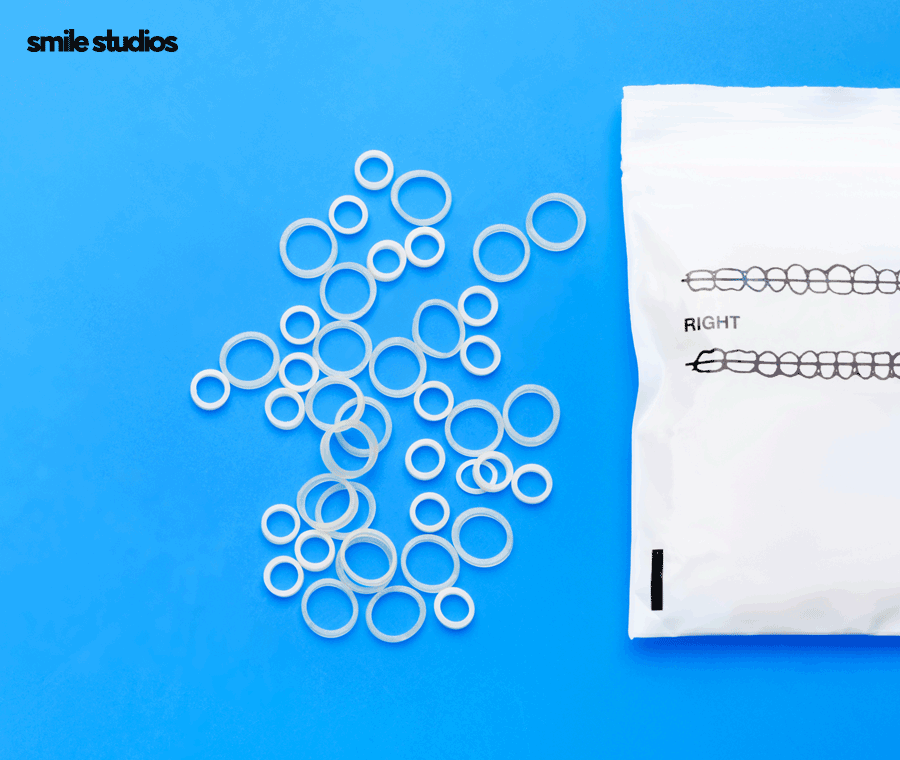
Surprisingly, there are several methods, and it is a good idea to check which method the clinic applies.
- Button cutout method
You can see an area that is rounded out in a specific section.
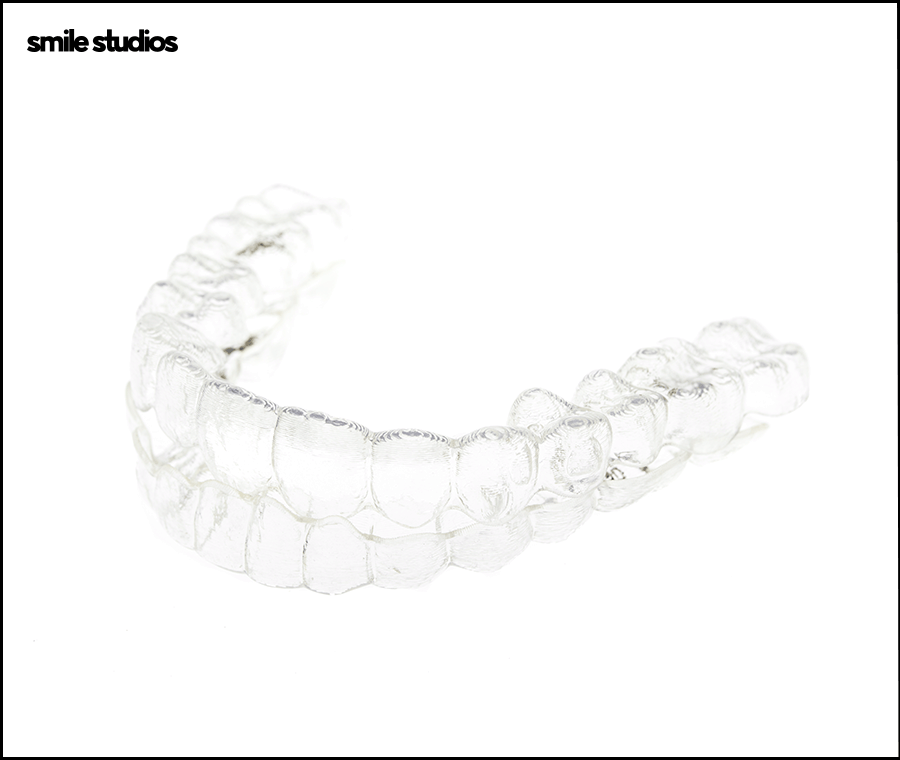
A small button can be attached to the tooth here, and the rubber band can be hooked onto it.
If necessary, the medical staff may also trim the appliance additionally.
- When the appliance itself has a hook attached
If it has a built-in hook, it can also be connected to a mini screw through that hook.
It can also be hooked between the upper and lower permanent teeth to adjust the bite.
- Power arm
Another method is to install a long hook-shaped attachment on the tooth or appliance.
The reality of wearing them
However, attaching Invisalign rubber bands is not as easy as it sounds.
Since the appliance is worn for more than 20 to 22 hours a day, having the patient attach them additionally can be burdensome.
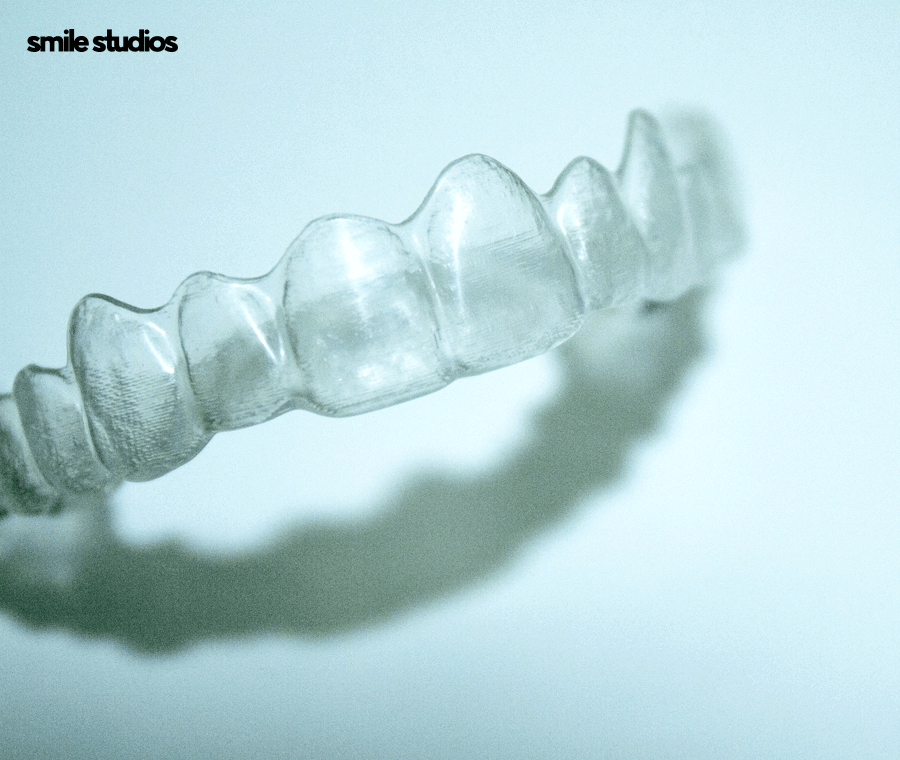
They must be worn throughout the day and removed and reattached each time you eat or brush your teeth.
It is also important to attach them precisely in the correct position yourself, which can be inconvenient and difficult.
In particular, for office workers or students, replacing them may not be easy, and the time they can be applied may become insufficient.
Other treatment options
If so, you may be wondering whether there are other ways to reduce this wearing burden.
Methods using mini screws are receiving a lot of attention.
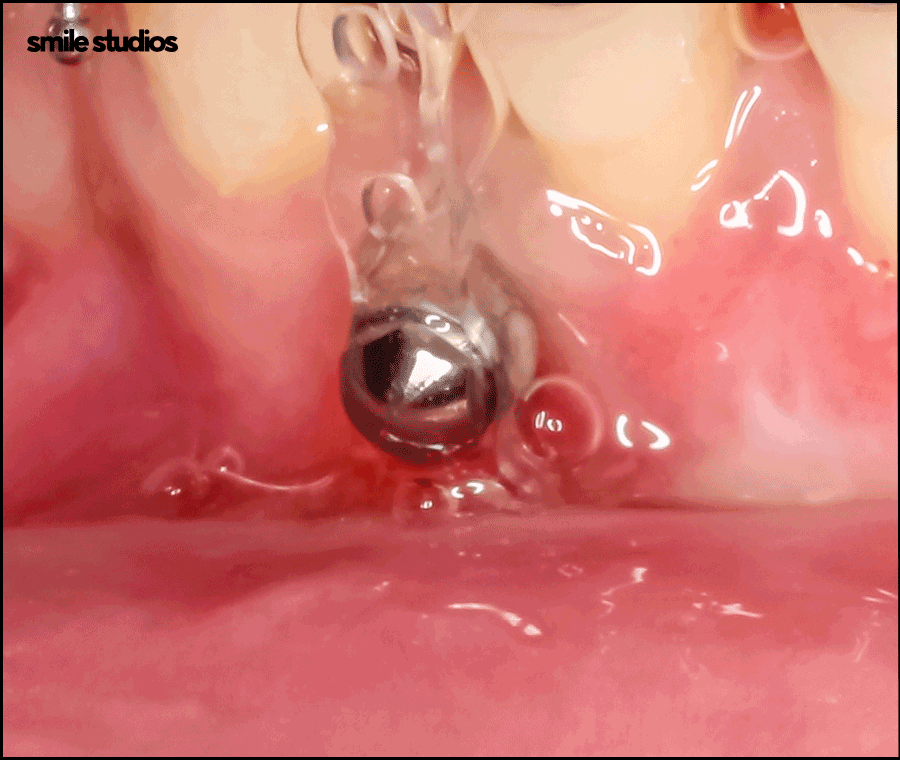
This involves placing small screws into the alveolar bone and using them as anchors.
Through this, the necessary force can be applied without the patient having to attach the rubber bands themselves, reducing the burden of compliance.
However, because it is a procedure, some discomfort may need to be tolerated.
Still, if you want to avoid the inconvenience of having to attach rubber bands every day, it can be a convenient option.
As a result, the effectiveness may be reduced or the treatment period may be extended.
A choice for results
Whether to wear them should ultimately be decided by considering expectations for the treatment results and the individual’s ability to comply.
If you want reliable results, wearing them may be a good idea.
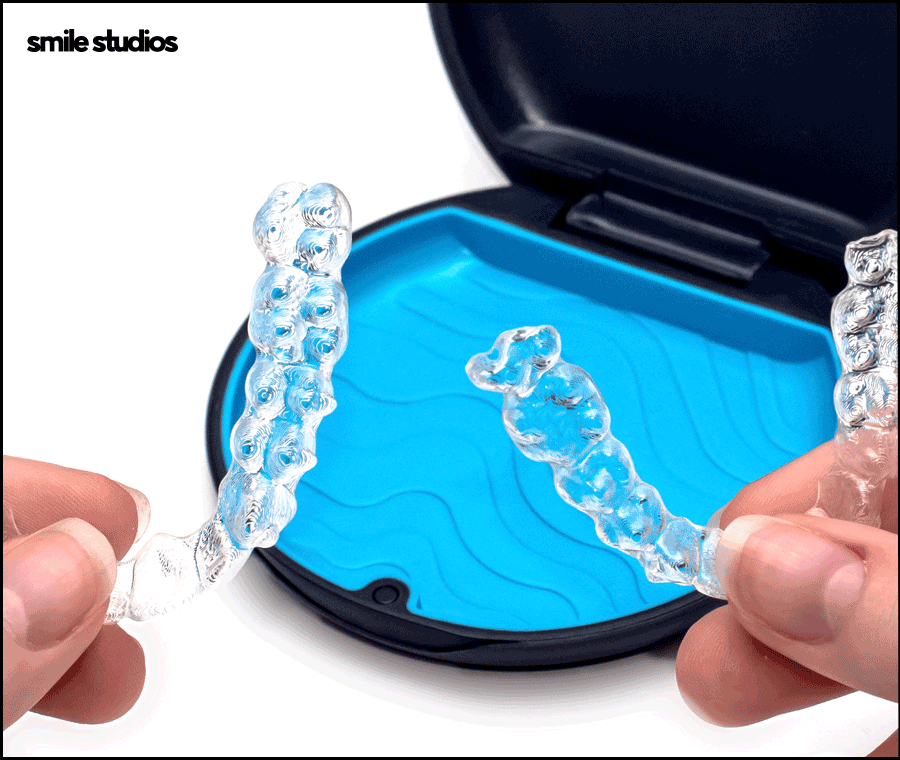
That is because they are important not only for aligning the natural teeth but also for creating a clearly functional bite.
However, if convenience is the priority, treatment can also be carried out with the appliance alone.
In this case, the efficiency may be somewhat lower, but that can vary from person to person.
And before starting, it is important to have a thorough consultation with the medical staff.
At that time, it is best to make a plan by comprehensively considering your dental condition, goals, and lifestyle.
Also, please look into whether Invisalign rubber bands will be used and begin with the method that fits your situation.