
If you are undergoing clear aligner treatment, you may have heard the term "attachment" at least once.
Invisalign attachments are one of the key elements of treatment and an important device that greatly affects the success rate.
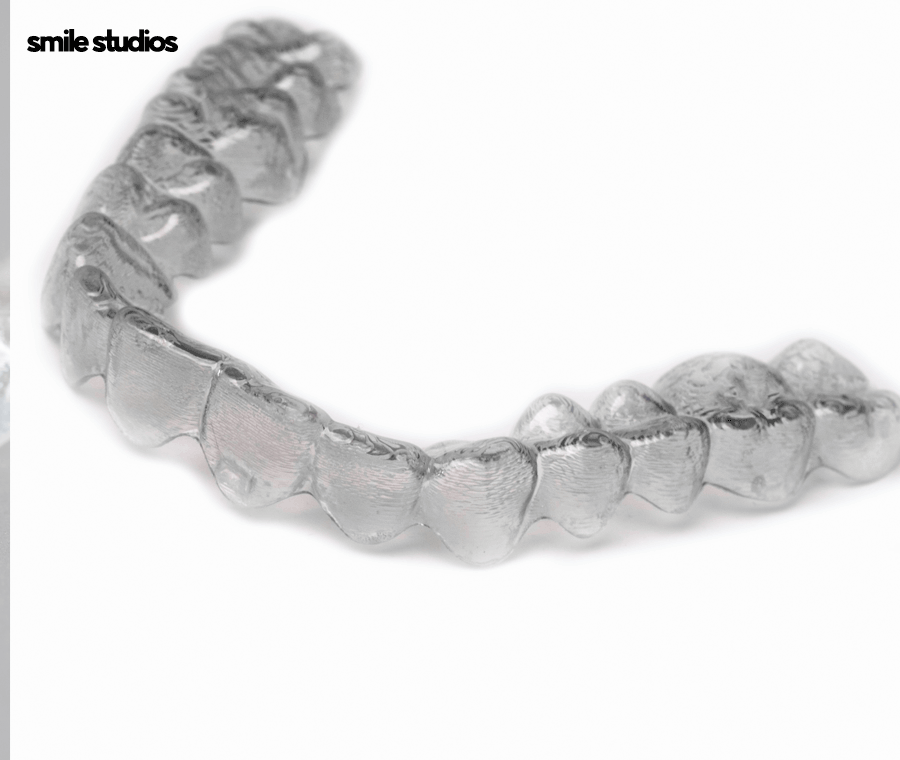
Many people often do not know the exact principle or how to care for them.
So today, we are going to take some time to look at this device.
What Are Invisalign Attachments?
They are small resin bumps attached to the surface of the teeth, helping the aligners move the teeth more effectively.
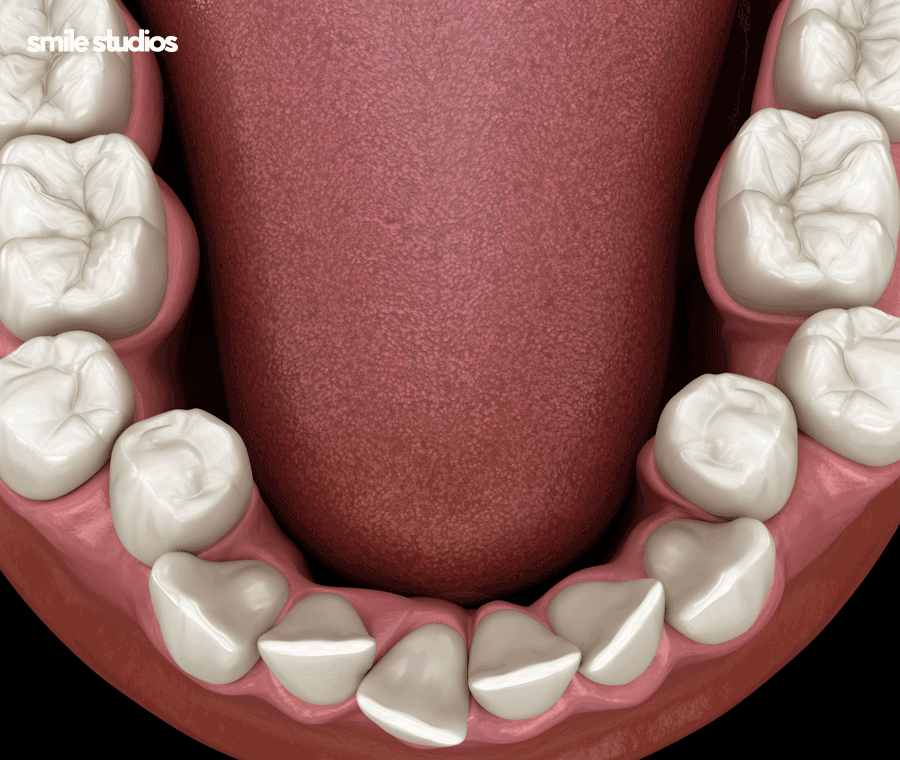
They function much like a handle, making even complex tooth movements possible.
Principle of Attachment
The process of attaching these to the teeth is more precise and scientific than you might think.
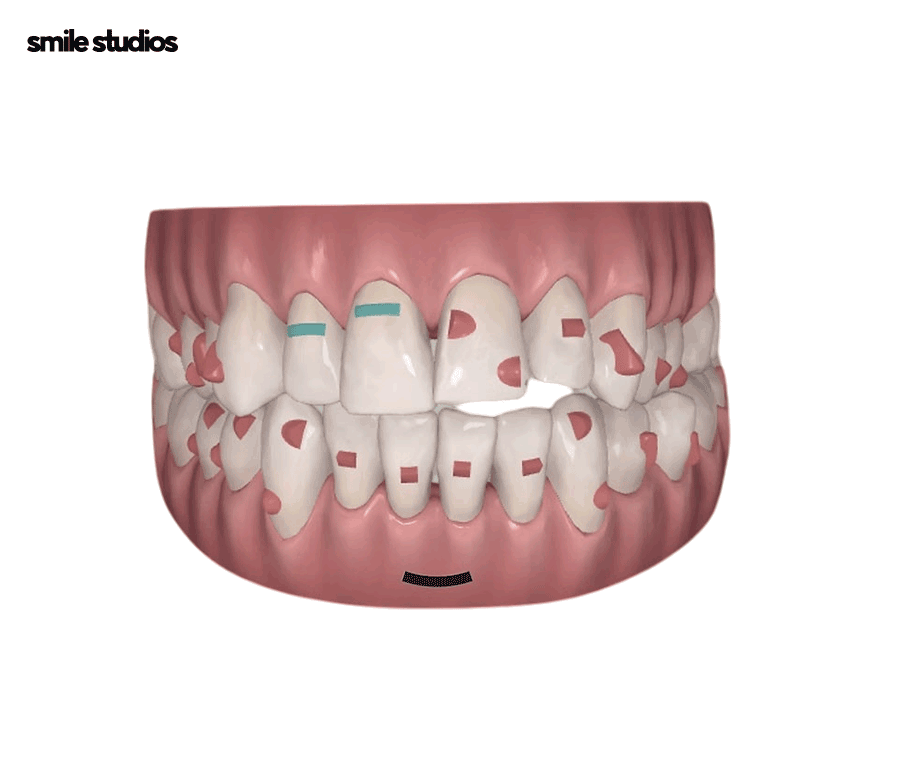
First, the clinic scans the patient's mouth to create a three-dimensional digital model.
In this process, the exact location, size, and shape of the attachments needed for each permanent tooth are calculated accurately.
A specially made template is used during placement.
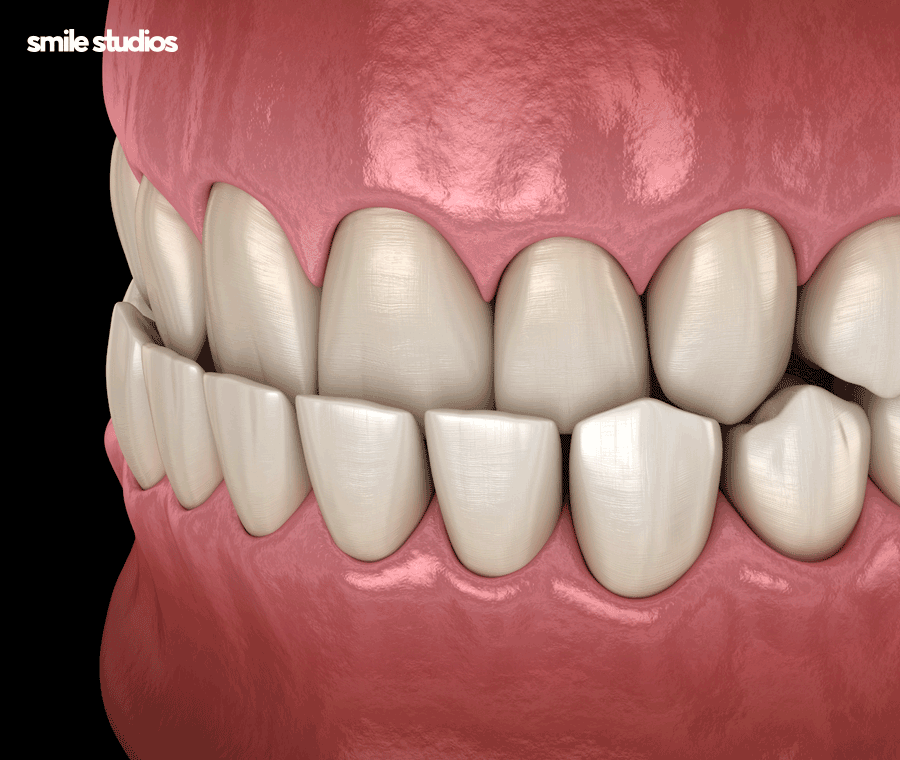
It serves as a guide that marks the exact position where the device will go, and it is designed to fit precisely on the surface of the natural tooth.
Dental composite resin is placed inside, and the resin is hardened using a light-curing unit.
The resin used at this time is made in a color similar to the tooth color.
It offers not only aesthetics but also enough strength to effectively transmit orthodontic force.
After placement, the correct interlocking with the aligner is checked, and adjustments are made if necessary so that treatment can be effective.
Various Shapes and Functions
Invisalign attachments perform different functions depending on their shape and position.
There are various forms such as oval, square, and triangular, and each is designed for a specific direction of tooth movement.
Devices for rotational movement are usually attached to canines and front teeth, and they have shapes specialized for rotation correction.
For vertical movement, they help move the natural tooth up and down, and are mainly applied to molar areas.
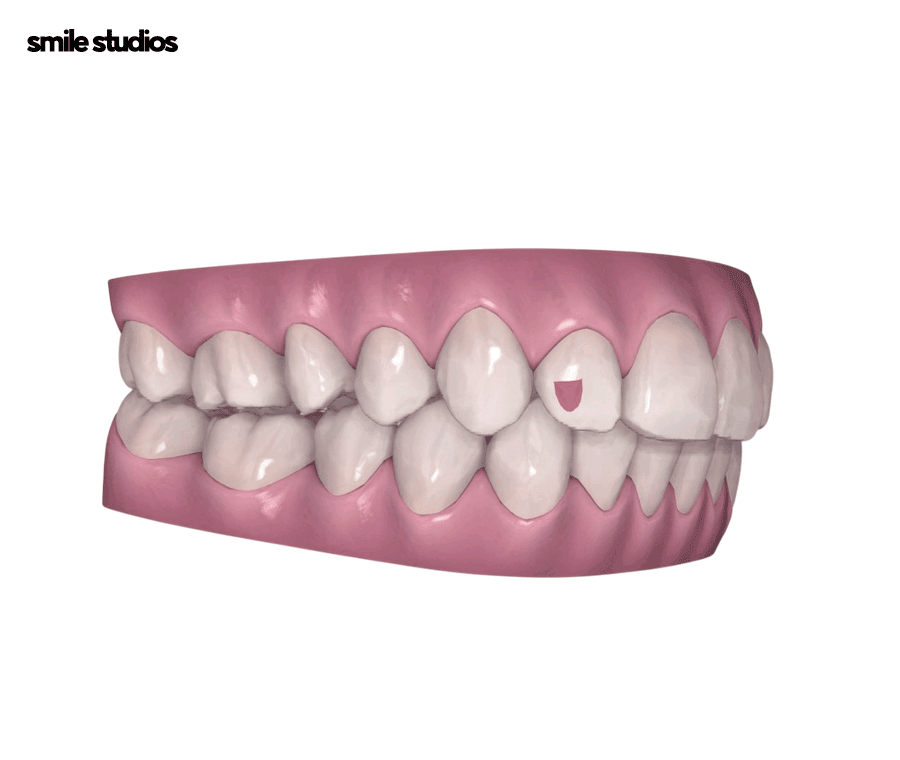
Devices that control root movement are designed to selectively move only the root part of the tooth.
This makes it possible to achieve complex movements that are difficult even with conventional bracket treatment.
In this way, each shape is individually designed and made according to the treatment plan, helping achieve successful results.
What to Do Immediately If It Falls Off
However, there may be times when it suddenly comes off or falls out during use.
In that case, do not panic and respond step by step.
First, check the detached area and look for any sharp edges around it.
If any residue remains and irritates the tissues inside the mouth, you may carefully remove it with a soft toothbrush or similar tool.
You can continue wearing the aligner as usual.
If one falls off, the entire process does not stop, because the others continue to transmit force.
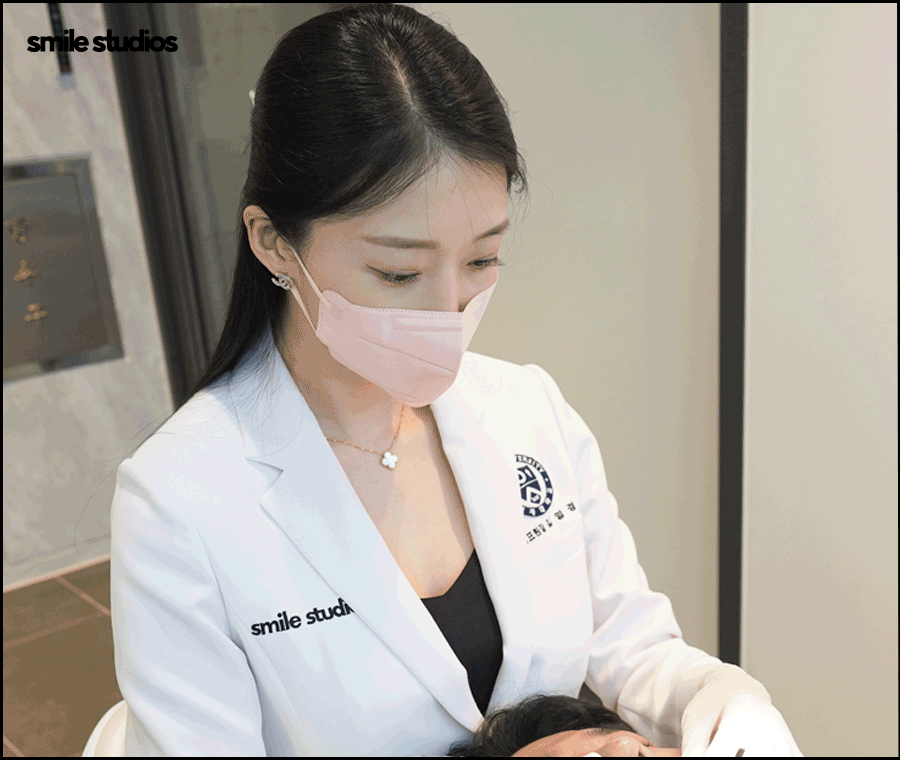
However, movement of the affected permanent tooth may be somewhat limited, so you should contact the clinic as soon as possible.
You should also set a time to have it reattached so that the treatment plan does not change or the treatment period is extended.
Causes of Detachment and Prevention Methods
You may be wondering why it comes off in the first place.
A common cause is removing the aligner incorrectly, such as pulling on only one side or applying excessive force.
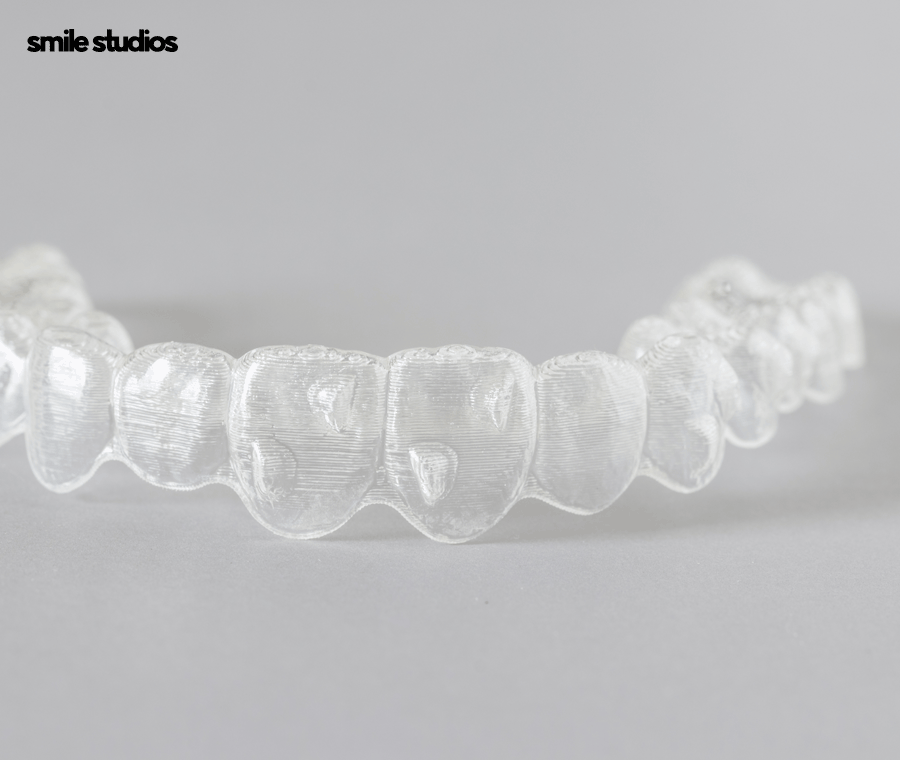
At that time, too much pressure may be transmitted to the Invisalign attachment, causing it to fall off.
Therefore, the correct removal method is to take it out in order, starting from the back molar area.
The front teeth area is especially prone to detachment, so please remove that area carefully at the end.
When putting it back on, it is also important to insert it while applying even pressure overall.
In daily life, it is best to avoid hard or sticky foods as much as possible.
When wearing the device, it is recommended that you do not consume food other than water.
Precautions for Care
When attachments are in place, you should brush even more thoroughly.
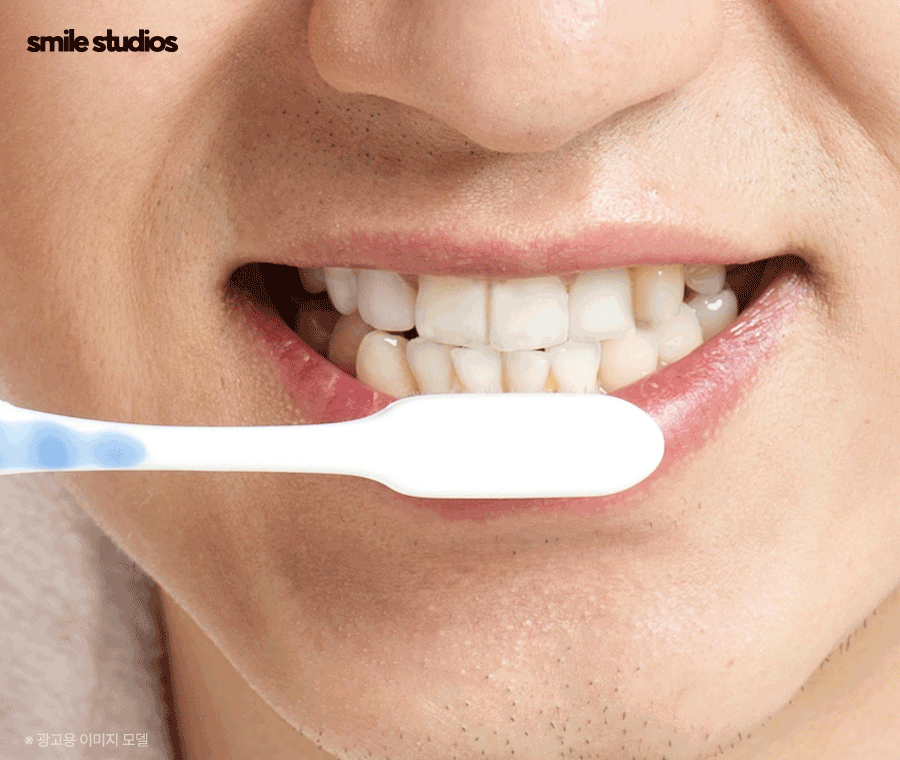
Food debris and bacteria can easily build up around them, so it is good to clean the area carefully with a toothbrush.
When using floss, it may catch on the area, so it is important to use it slowly and carefully.
It is also advisable to visit the clinic regularly for checkups.
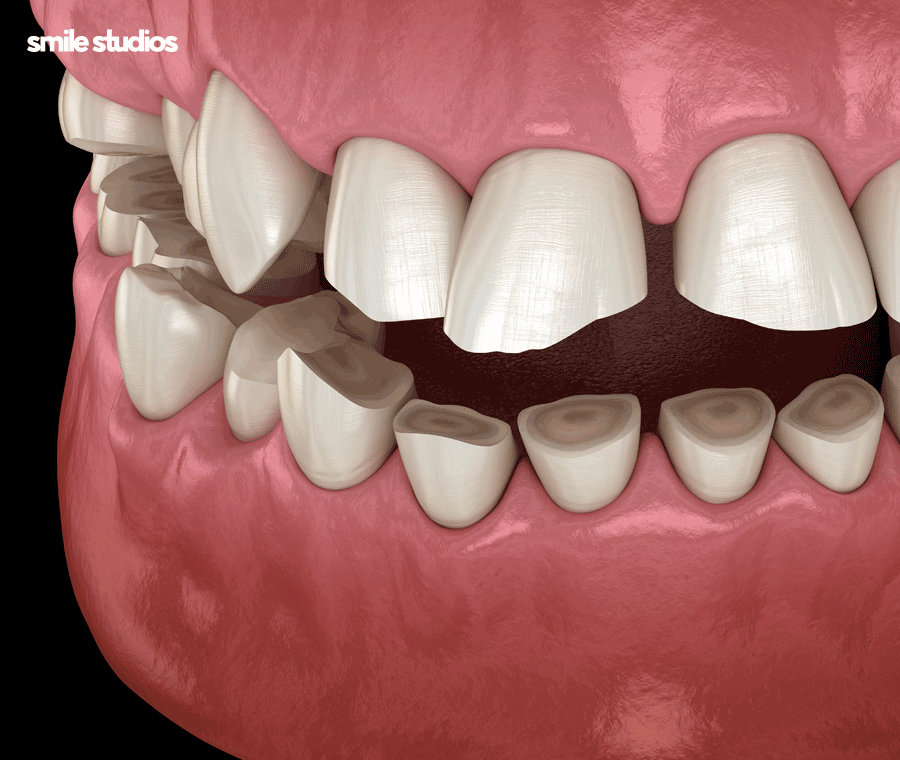
This is because it allows early detection of minor damage or wear that is difficult to see with the naked eye, making it possible to respond quickly.
As one of the key elements of orthodontic treatment, I hope you receive effective treatment through proper understanding and care.

If a problem occurs, I recommend visiting the clinic immediately and receiving help from the medical staff.