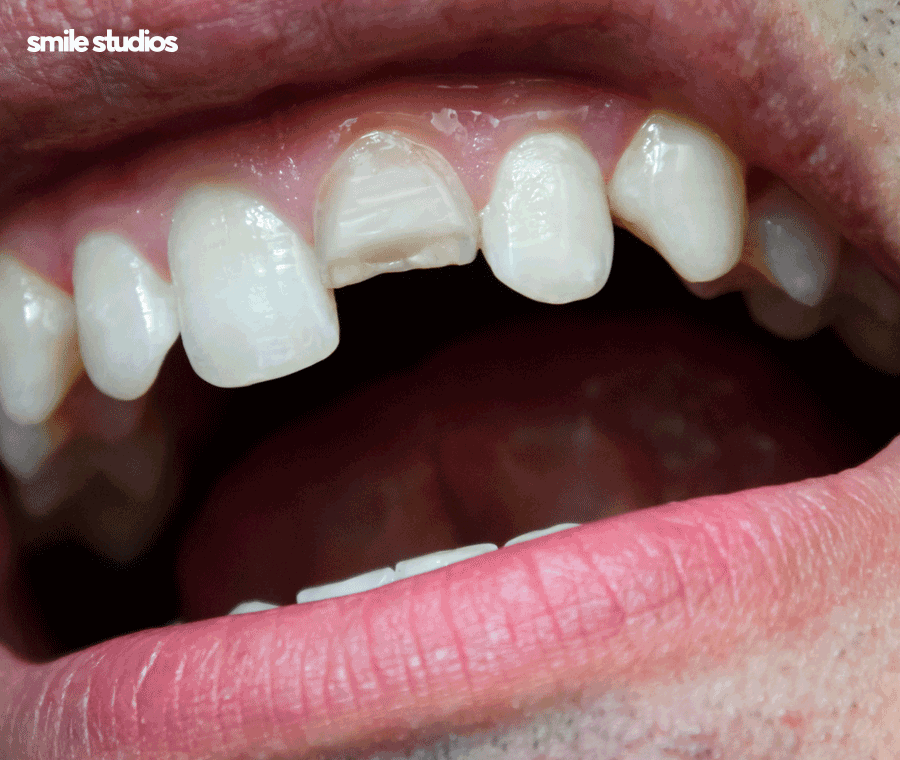
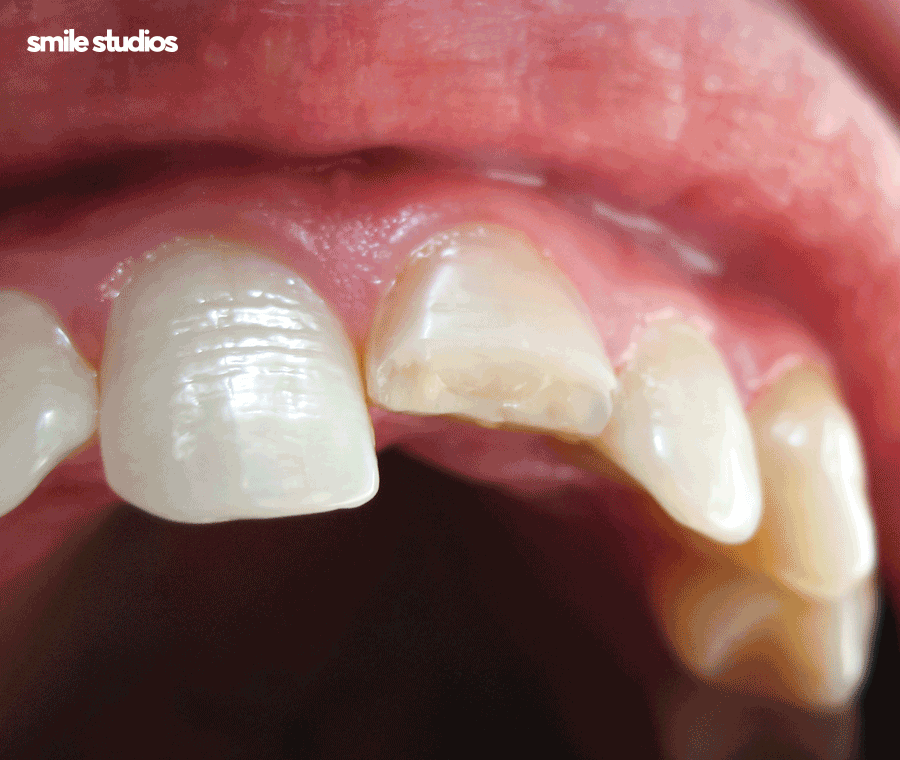
When a tooth is slightly chipped, you may think it will be fine because there is no major discomfort or pain right now.
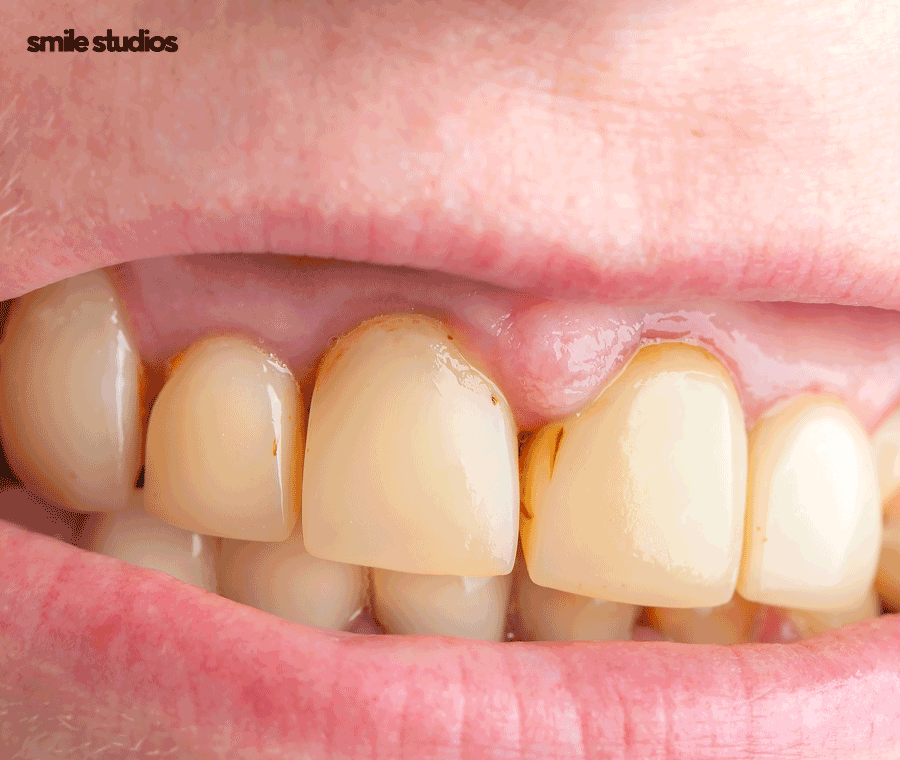
You may even think it will naturally recover over time, like a broken fingernail.
However, this kind of thinking can be the most dangerous trap.
If treatment for a chipped tooth is delayed or neglected, a small crack can eventually lead to losing the tooth.
The beginning of a vicious cycle created by neglect
Damaged natural teeth never heal on their own; instead, the problem becomes more severe over time.
The first risk is bacterial invasion.
Food debris and bacteria can settle into the cracked gap, sharply increasing the risk of cavities.
If the dentin or other inner layers are exposed, you will feel sensitivity and pain whenever you eat foods with temperature differences.
At first, it may only happen occasionally, but it can gradually develop into persistent pain, seriously affecting daily life.
In addition, while treatment for the chipped tooth is delayed, it becomes difficult to chew with the damaged area.
As a result, excessive stress is placed on the opposite side teeth, increasing the risk of damage to other teeth as well.
Complications that worsen step by step
If a chipped natural tooth is left untreated, not only appearance problems but also medical complications can occur.
At first, it begins as a tiny surface crack, but it gradually deepens and can eventually reach the inner nerve.
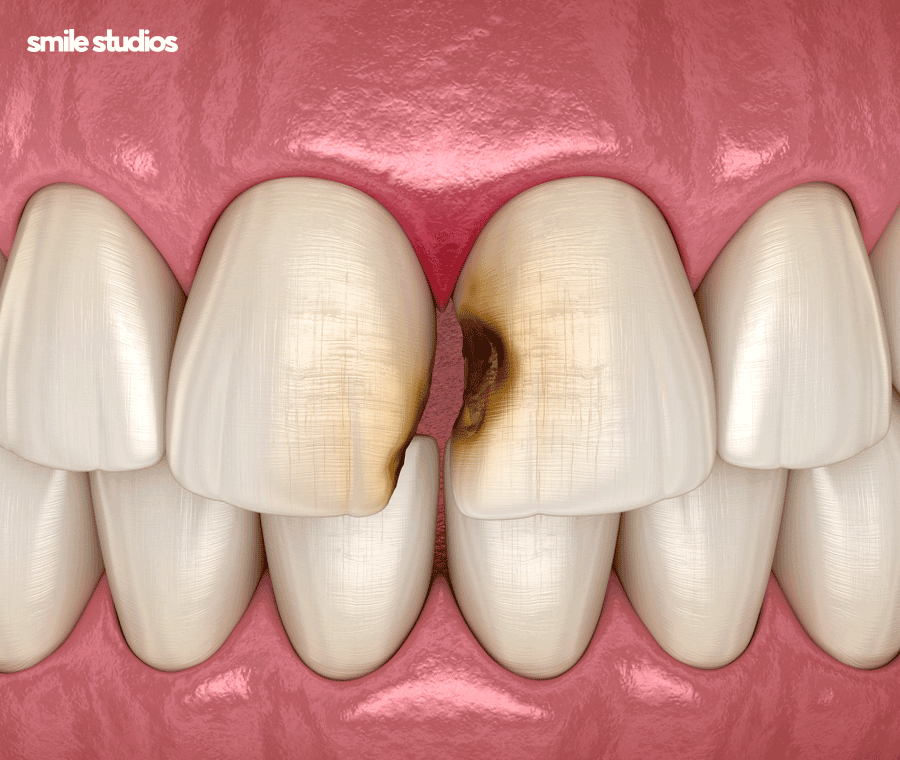
As bacteria enter the interior, inflammation can develop.
This is accompanied by severe pain, and if it spreads to the root tip, it can damage surrounding tissues such as the gum bone.
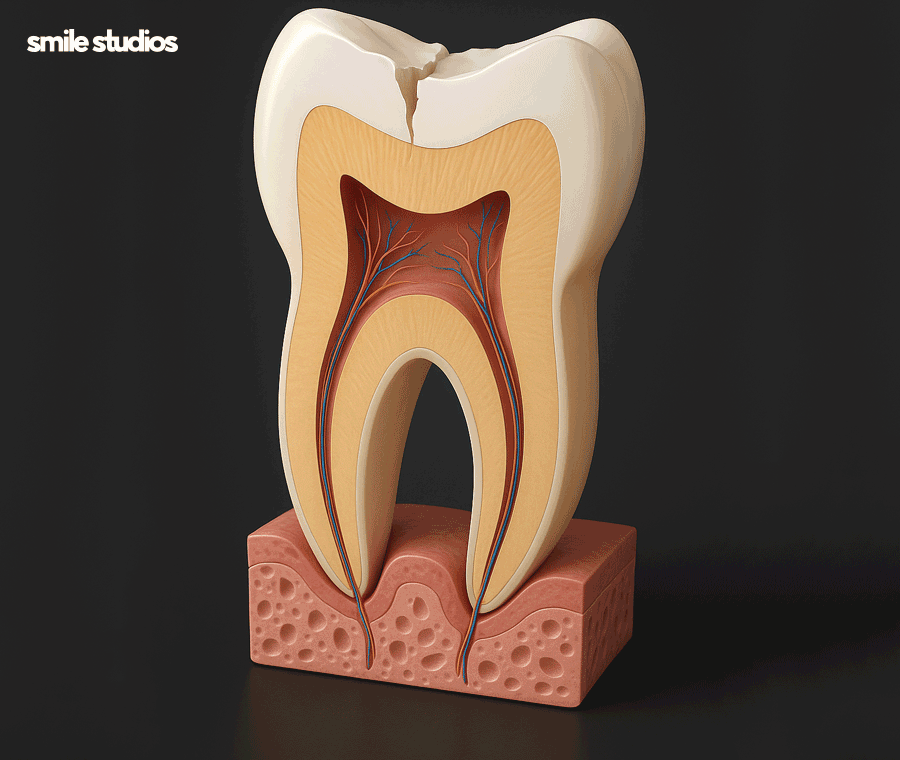
Furthermore, an abscess may form in the gum area, causing swelling and pus, and there is also a risk of it spreading throughout the body.
The final result is tooth loss
If the timing is completely missed, you may eventually reach a situation where the precious tooth can no longer be preserved.
If the crack has progressed to the tooth root, inflammation may recur because even if a crown is applied, problems continue from inside.
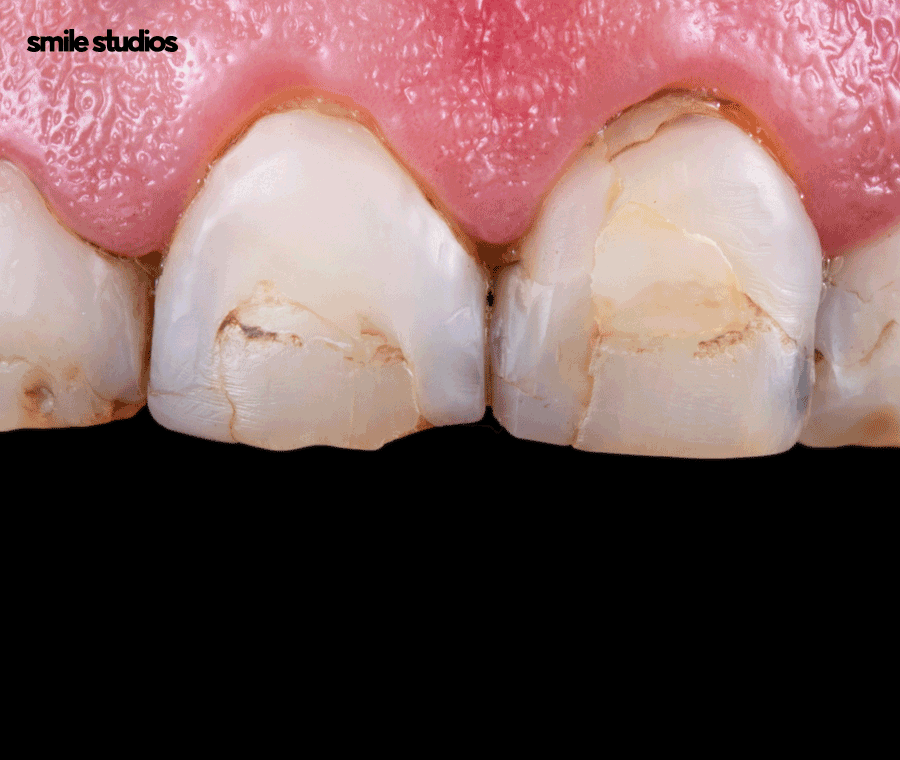
In such cases, extraction may be the only option.
And once a permanent tooth is removed, it does not grow back.
When a natural tooth is lost like this, the space must be filled with a prosthetic such as an implant.
However, compared with a natural tooth, there are inevitably limits in terms of function and lifespan.
In addition, the loss of a permanent tooth can cause bite problems, leading to a vicious cycle that results in fracture of other natural teeth and temporomandibular joint disorders.
How to protect a tooth with laminate veneers
Fortunately, if treatment for a chipped tooth is performed early, it is possible to preserve the permanent tooth and achieve excellent results.
In particular, the no-preparation method is drawing attention as an effective way to treat chipped natural teeth.
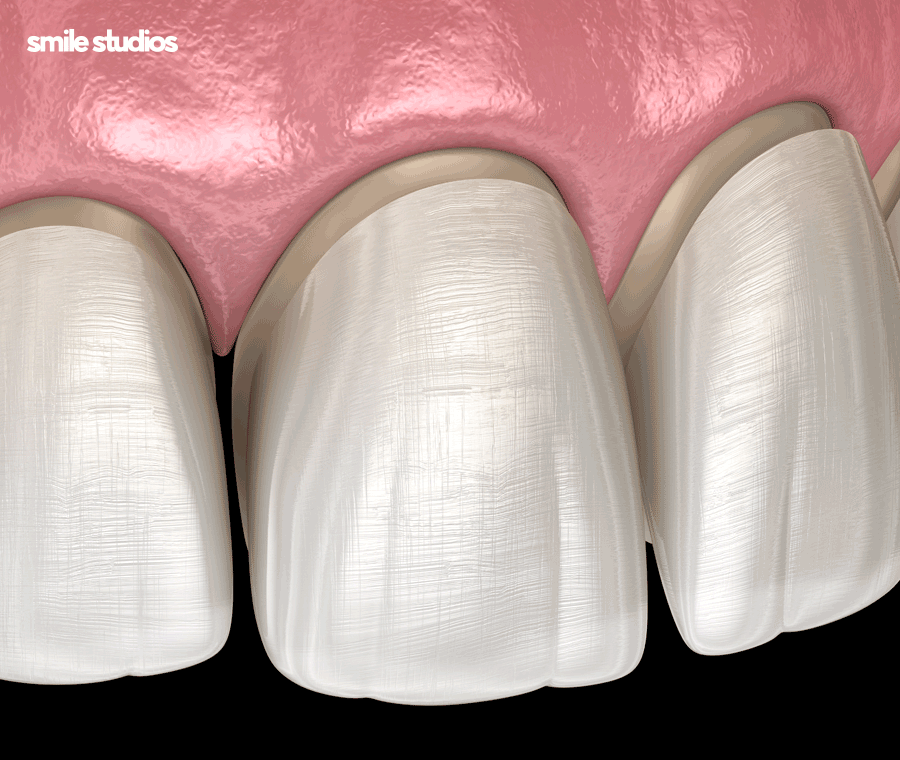
This method can be described as attaching an extremely thin ceramic plate, around 0.1 mm, to the affected area without shaving the existing permanent tooth.
This allows the damaged area to be restored naturally while preserving as much of the original healthy tooth structure as possible.
The advantage of this approach is that it can minimize damage as much as possible.
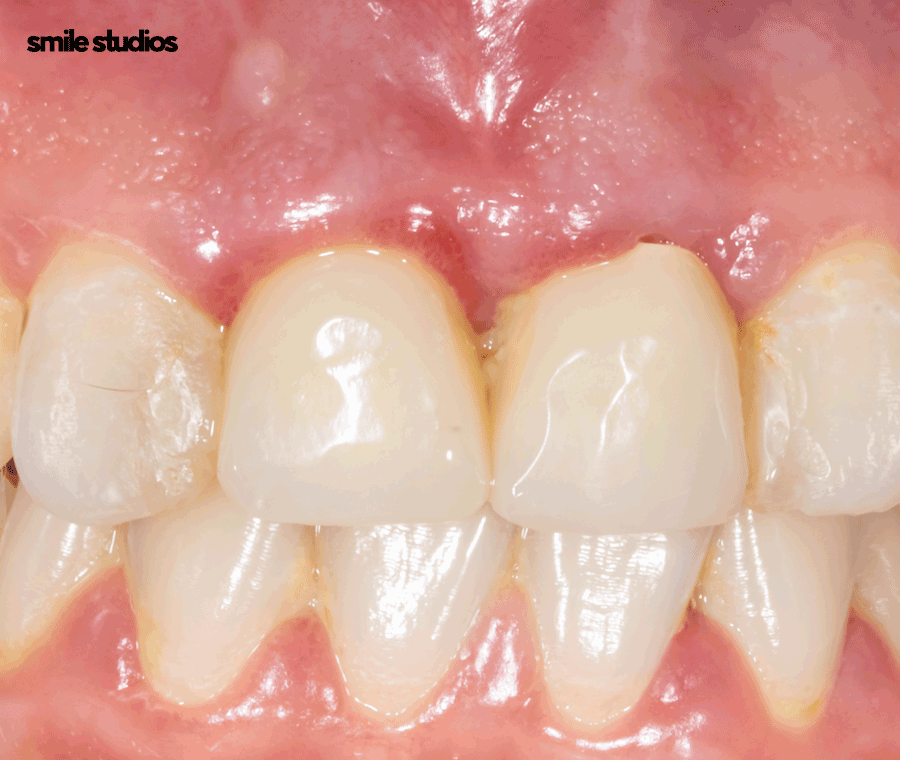
Unlike the past, when substantial tooth reduction was necessary, the enamel can be preserved almost as it is, which is beneficial for long-term health.
It also allows the transparency and color of the ceramic material to be made very similar to the tooth.
So even after the procedure, a natural appearance can be achieved.
It is also excellent in terms of strength and provides durability that allows long-term use.
Conclusion
A chipped natural tooth does not necessarily require a major procedure.
However, you should remember that if it is left untreated, a small problem can lead to a serious situation.
If appropriate action is taken early, the permanent tooth can be kept healthy for a long time.
And this can become the foundation of lifelong oral health.
If you discover any abnormality in a permanent tooth, do not leave it untreated; please consult a medical professional.