
Seoul Full-Mouth Implants / "I Came from Gyeongsang-do." Treatment for Anterior Tooth Protrusion Caused by Periodontitis
(+How Many Visits Are Needed for Seoul Full-Mouth Implants?)
Hello.
#SeoulFullMouthImplants #GangnamWhiteDreamDental Clinic
What is the main cause of tooth loss?
Cavities? No. It is periodontitis, also known as gum disease.
This periodontitis occurs due to calculus, which forms when foreign matter and bacteria remaining in the mouth combine.
In the early stage, calculus accumulates only above the gums, starting with symptoms such as swollen gums and bleeding.
Gradually, calculus builds up to the tooth roots, and symptoms of gum bone loss appear.
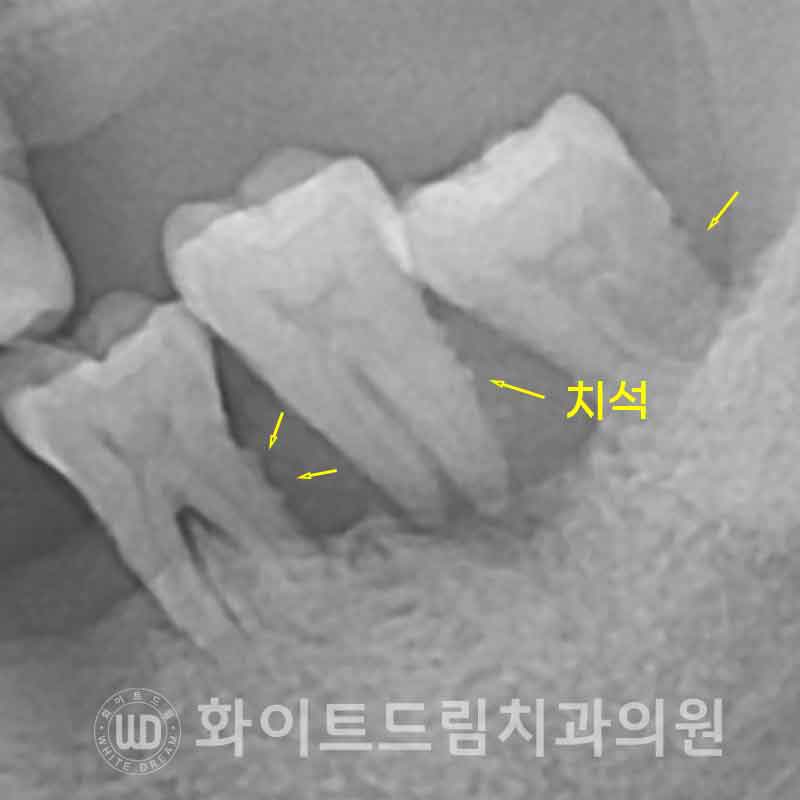
▲ This is a condition in which a large amount of calculus has formed all the way to the tooth roots, visible on X-ray.
When the gum bone dissolves, symptoms such as loose teeth and pus coming from the gums appear,
but because the symptoms of early gum disease are subtle, many people do not notice it.
So the treatment time is missed,
and we often see cases where patients visit only when the condition has become so severe that extraction is necessary.
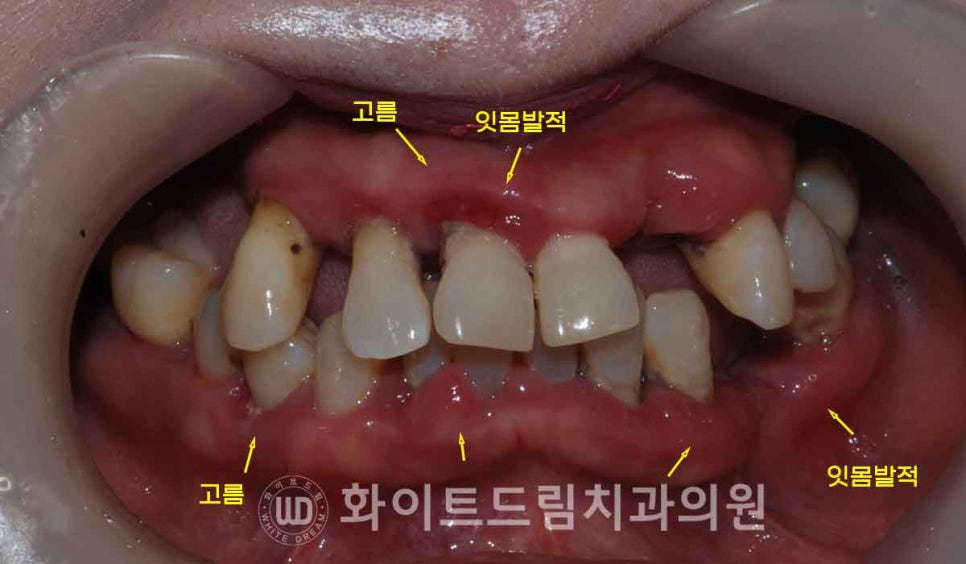 ▲ This is the initial intraoral photo of a patient whose teeth had already been lost in large numbers due to severe periodontitis,
with the remaining teeth also shaking severely.
Today, we have prepared a treatment case in which the treatment timing was missed, and after all the upper and lower teeth had to be extracted,
implant treatment was the only option.

This patient came from far away in Gyeongsang-do for full-mouth implant treatment
to our Gangnam White Dream Dental Clinic.
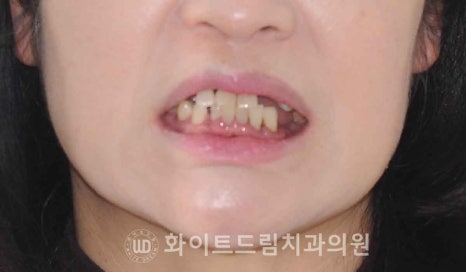
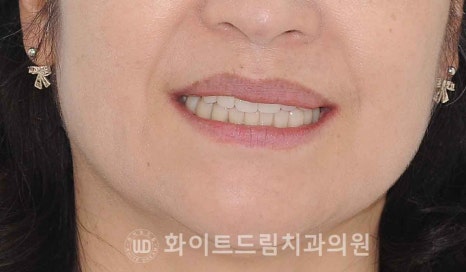
[Same person, photographed in the same environment / Photo location: White Dream Dental Clinic Gangnam Branch ]
Total treatment period: 24.02.17 - 24.08.08 (6 months)
How long does the treatment take?
How many visits are needed?
Many people are curious about
the full-mouth implant treatment process and duration in Seoul, so let’s take a look together. ^^
This is the initial X-ray of the case we prepared.
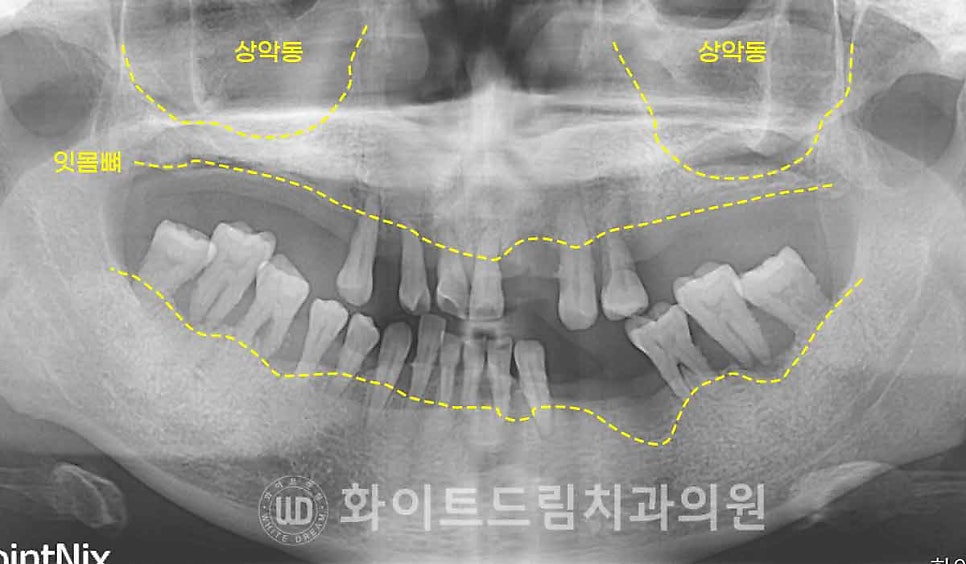
Many teeth had already been lost,
and due to severe periodontitis, the height of the gum bone was uneven.
Because the extent of alveolar bone destruction and the timing of bone destruction in the gums are different,
people with chronic periodontitis have this characteristic of uneven gum bone height.
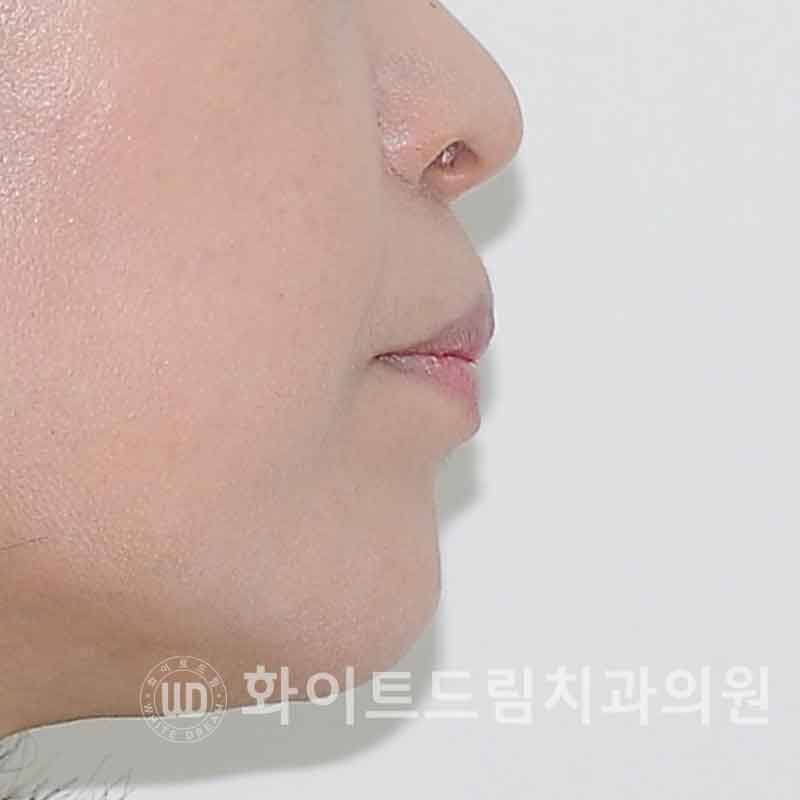
In addition, when looking at the patient's pre-treatment side profile,
there was a condition in which the mouth appeared protruded due to the teeth.
 Was the teeth always protruded like this?
No.
When the molars on both sides are lost, the chewing force shifts to the front teeth.
In addition, if the occlusal height of the teeth (the height at which the upper and lower teeth bite together)
has lowered due to the loss of molars on both sides, the force applied has no choice but to become stronger.
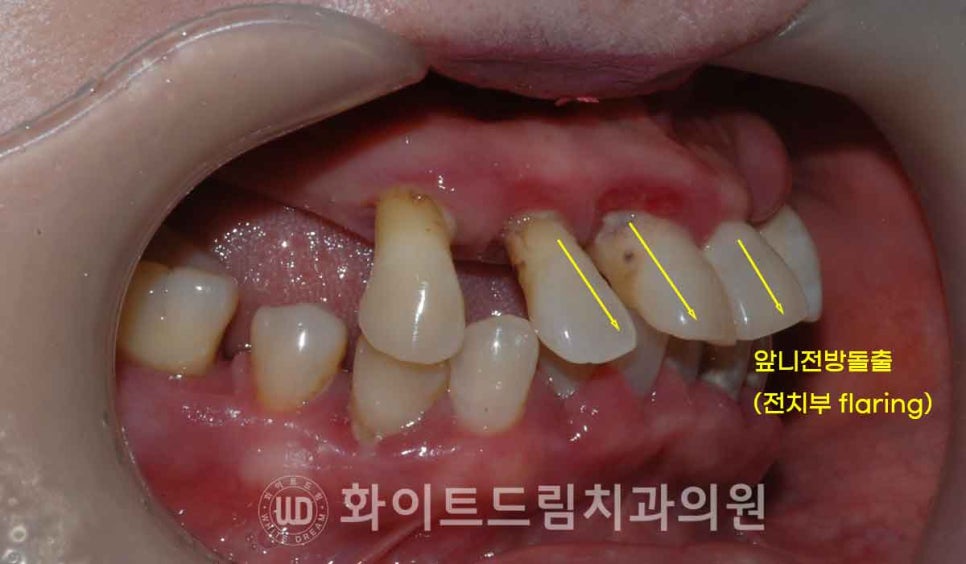 ▲ Front teeth protruding forward.
Because the gum bone had already dissolved due to periodontitis, the teeth were in a state where their support was already very weak,
so what happens when a strong force is applied to the front teeth?
In the end, the front teeth cannot withstand this force and lean, causing them to protrude forward.
This kind of symptom is treated through implant placement for the missing molars + periodontal treatment,
but in this patient, the front teeth had also reached the end of their lifespan, so extraction
was performed.
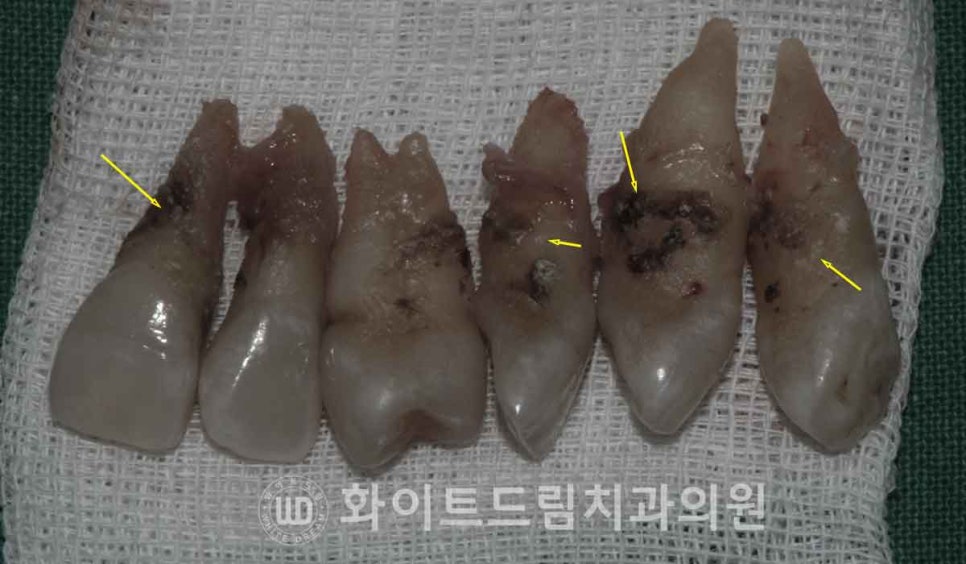 ▲ These are the extracted upper teeth. You can see that a large amount of calculus was attached all the way to the tooth root tips.
Because the patient came from far away and was not taking any medication at the time,
all of the upper teeth were extracted on the day of the visit,
and then implants were placed.
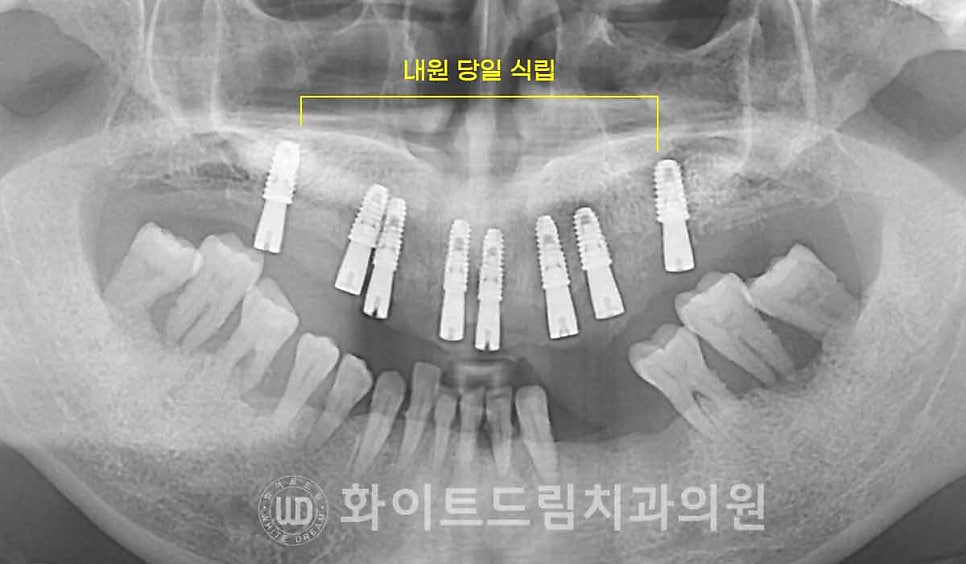 ▲ Upper implant surgery date: 24.02.17
One week after surgery, the patient visits once more
to check the condition and remove the stitches, and to have temporary teeth made for use until the final prosthesis is set.
Temporary teeth are made the same day at the in-house dental lab and then set in place. ^^
After that, one month later, surgery for the remaining lower jaw area was performed,
and as with the upper jaw, the patient visited again one week later for stitch removal, disinfection, and condition check.
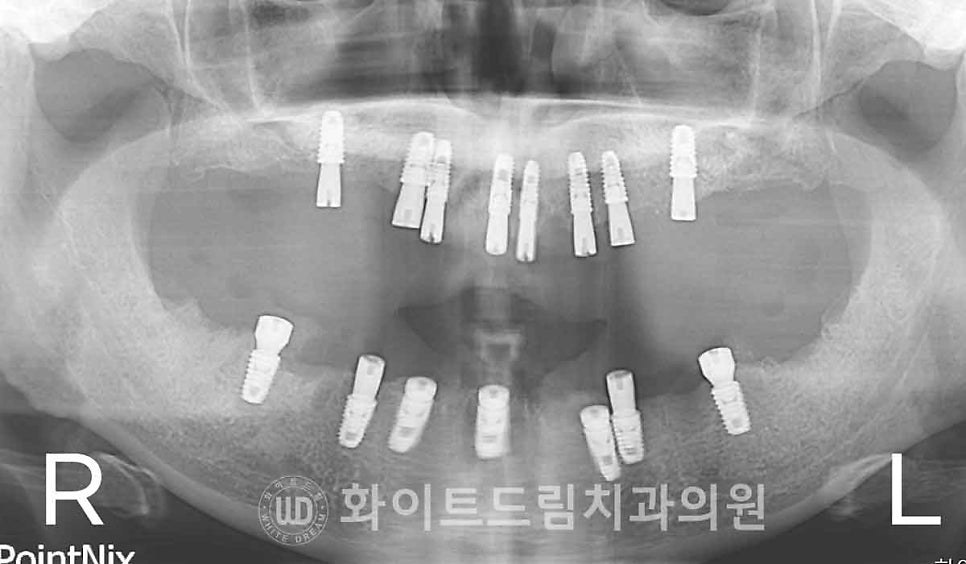 Lower jaw surgery date: 24.03.02
The jawbone density in the lower jaw is higher than in the upper jaw, so implant osseointegration progresses faster in the lower jaw than in the upper jaw.
Therefore, when performing Seoul full-mouth implant treatment, surgery is usually done first in the upper jaw and then continued in the lower jaw.
After a total of 4 visits like this,
after 4 months, when osseointegration has progressed, the patient visits once more for the implant impression-taking process.
This is the process of performing an oral scan for the fabrication of the final implant prosthesis,
and the Seoul full-mouth implant treatment is completed once the final prosthesis is set at the next visit.
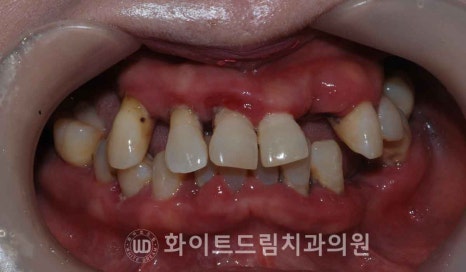
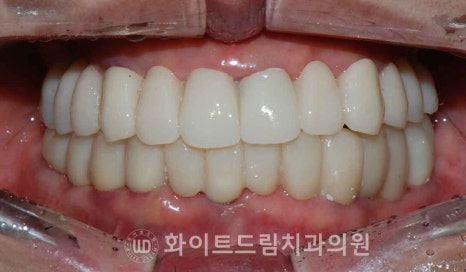
[Same person, photographed in the same environment / Total treatment period: Total treatment period: 24.02.17 - 24.08.08 (6 months)]
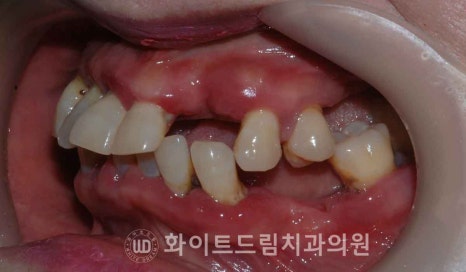
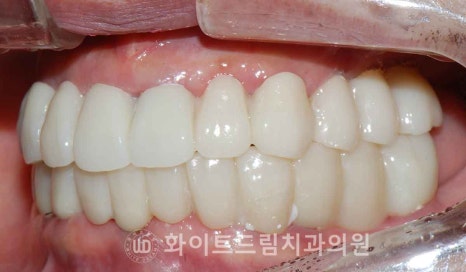
The full-mouth implant treatment was completed with a total of just 6 visits.
There are really many people who visit from the provinces to Seoul for implant treatment.
We prepared today’s post to be of some help to those people, and
was it helpful?
Because the treatment plan may differ slightly depending on the individual,
please remember that the exact number of visits is best discussed with a dental specialist who can establish the treatment plan,
and we hope you receive more appropriate dental care. ^^
Have a great day today as well~!
This was White Dream Dental Clinic Gangnam Branch.