Why It’s Important to Check OO Before Getting
Square Jaw Botox in Mokdong <Must Read>
Mokdong Square Jaw Botox

Hello.
I’m Kim Jin-hyeon, Chief Director of the Mokdong branch of You&I Clinic.
“ I think my jawline is too square. ”
“ When I’m in side-view photos or taking pictures,
a wide face really stresses me out. ”
One of the treatments people often look into in situations like this is “square jaw Botox.”
It is one way to inject botulinum toxin into the jaw muscles to reduce volume and help create a slimmer facial contour.
However, even after the treatment, some people say the change is not as noticeable as expected, or that their jaw somehow feels uncomfortable.
Today, I’ll explain directly why this happens.
I’ll clearly go over the parts you may be curious about regarding square jaw Botox, so please focus for just 3 minutes and read along with me.

Table of Contents
-
Is a square jaw due to muscle or bone?
-
Why doesn’t the change happen as much as expected?
-
My jaw feels uncomfortable—is it a side effect?
Mokdong Square Jaw Botox
Is a square jaw due to muscle or bone?
Before getting square jaw Botox, the most important thing to consider is what is causing the square jaw.
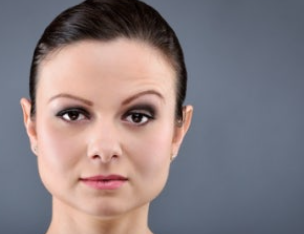
The causes of a square jaw can be broadly divided into two types.
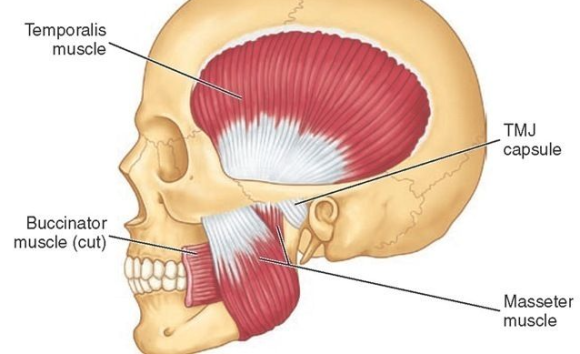
When the masseter muscles on both sides of the jaw are overly thick or strong, the chewing muscles can become bulky and make the lower part of the face look wider.
In cases of this muscle-type square jaw, injecting Botox into the masseter can temporarily reduce the muscle’s size and help refine the side profile.
However, some people naturally have a more angular lower jaw or thicker bone structure.
In cases of this skeletal-type square jaw, even if Botox is injected, the contour created by the bone remains, so the change may be limited.
What Botox can reduce is only muscle-related volume, so for people whose skeletal structure itself is prominent, surgery or other contouring procedures may need to be considered.
In short, Botox can be effective when the square jaw appears due to developed muscles, but when the problem is the bone structure, you may not see the expected results.
Checking this in advance helps you avoid unnecessary procedures and save time and money.
Mokdong Square Jaw Botox
Why doesn’t the change happen as much as expected?
Many people expect their jawline to become V-shaped after Botox treatment.
But when they look in the mirror after the procedure, they sometimes complain that it didn’t reduce as much as they thought.
This is because Botox has limitations when it comes to changing the jawline on its own.
In the case of a muscle-type square jaw, although individual differences exist, about 2 to 4 weeks after the procedure the masseter gradually atrophies and the jaw area becomes a little softer.
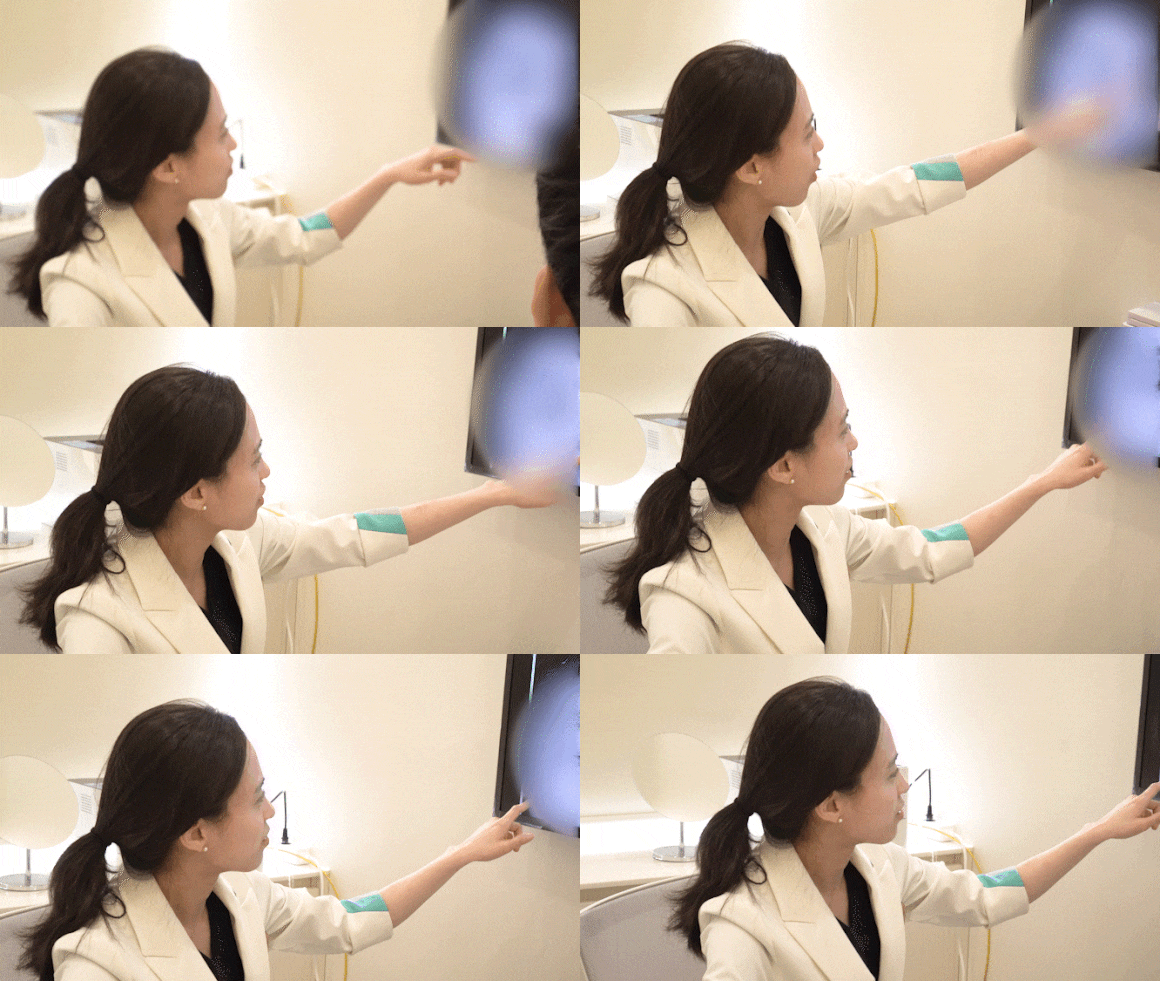
What you should keep in mind here is that a dramatic change, such as a “sudden hollowing,” is difficult.
Because the treatment does not completely destroy the muscle but instead reduces its movement, please keep in mind that the change appears gradually.
Also, if there is a lot of fat under the jaw, or if the skin has lost elasticity and is sagging, then even if Botox reduces the masseter, a double chin or cheek sagging may still remain visible, and the line may not look as clean as expected.
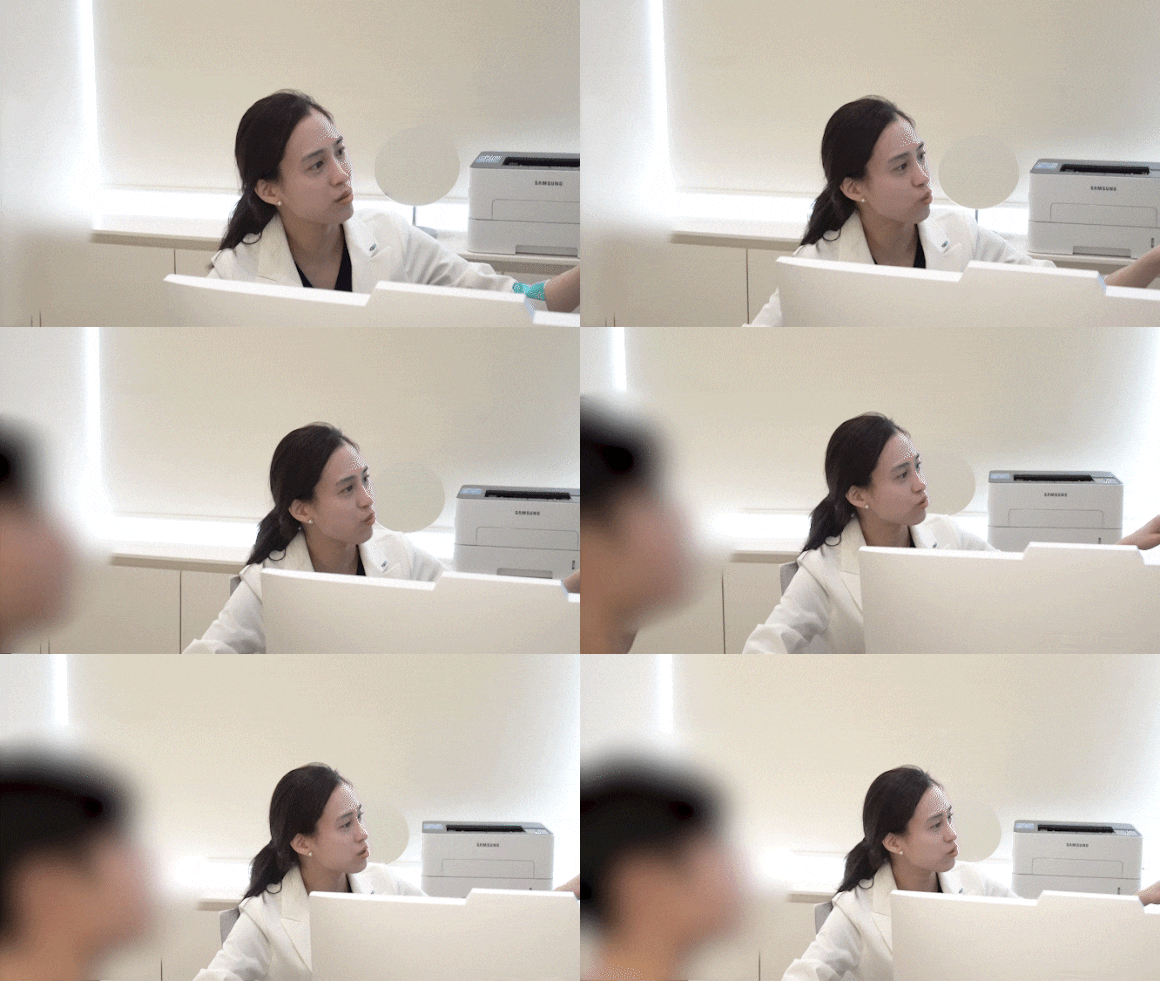
In cases like the above, combining treatments such as contour injections, thread lifting, or filler can also help bring about a bigger change.
In other words, what I want to say is that it is difficult for the face shape to change completely with masseter reduction alone.
That is why, before getting Botox, it is advisable to also examine the fat, elasticity, and bone structure together and find out in advance how much change can reasonably be expected.
Mokdong Square Jaw Botox
My jaw feels uncomfortable—is it a side effect?
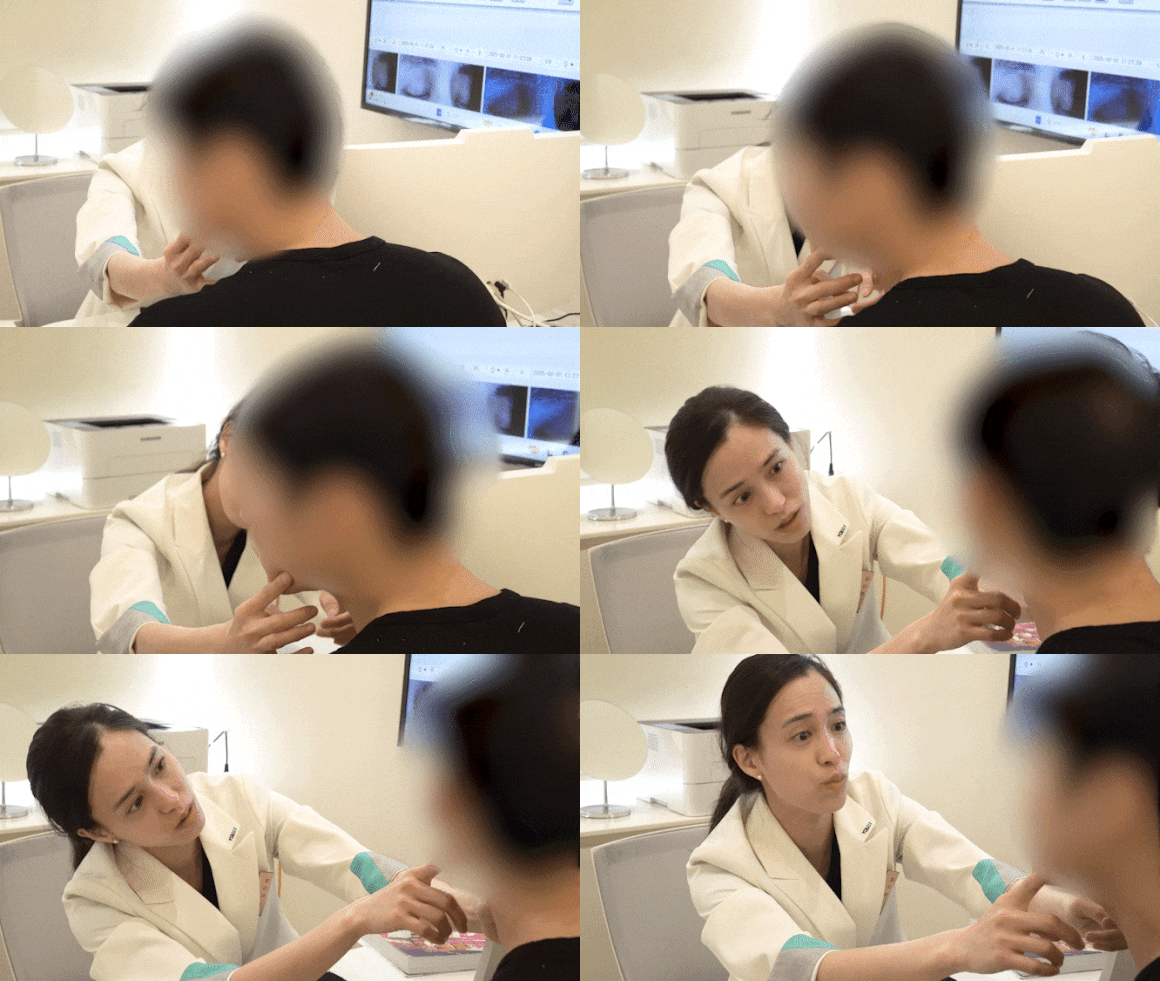
Some people also say that after the procedure their jaw feels strangely heavy or that their chewing strength seems weaker.
The masseter is the muscle mainly used when we chew food.
If Botox weakens this muscle, chewing force may temporarily decrease, and you may feel slightly more tired than usual when chewing hard foods.
However, this usually settles within 1 to 2 weeks, and since it generally does not significantly interfere with daily life, there is usually no need to worry too much.
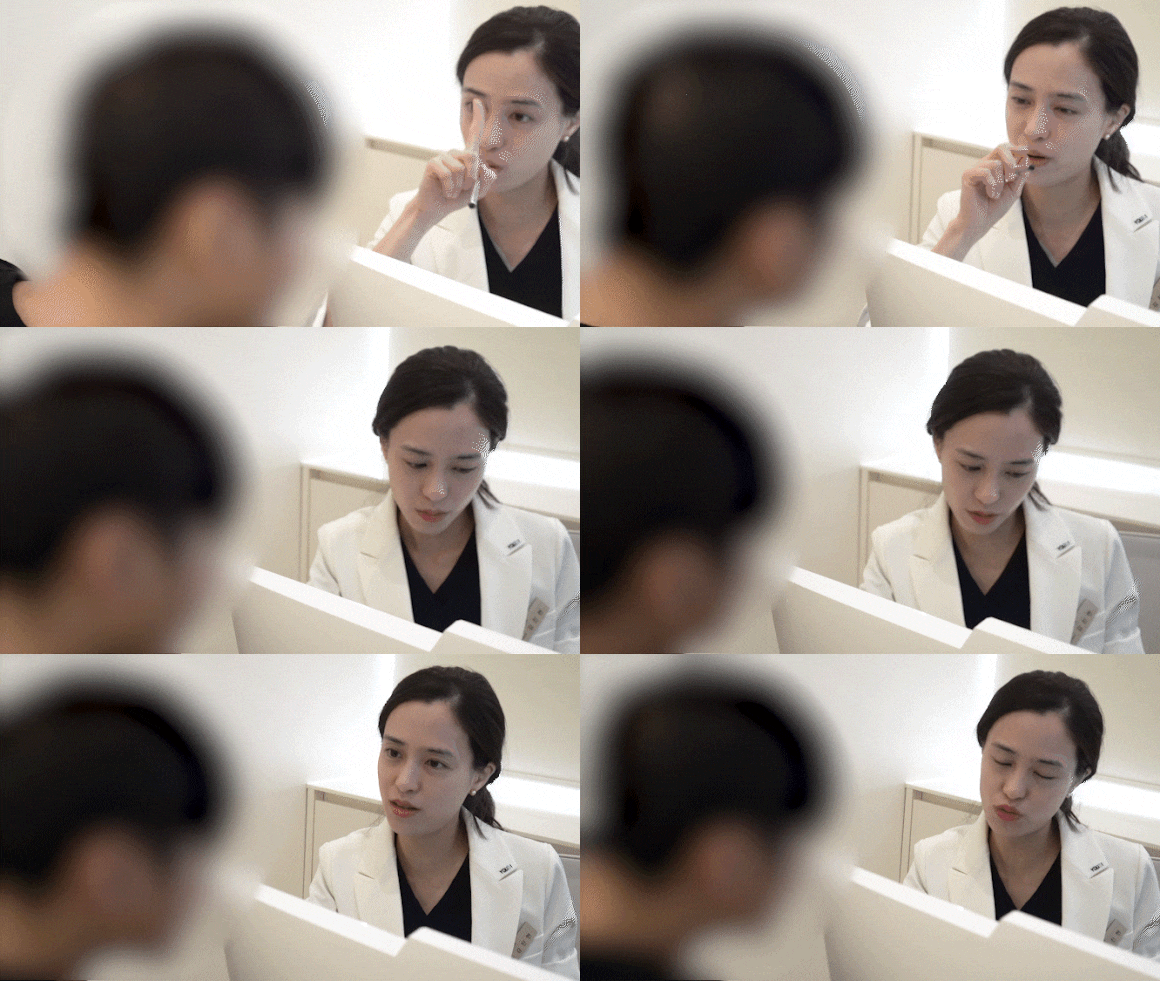
Also, as the masseter becomes smaller, you may unconsciously move your jaw back and forth or develop a compensatory habit of chewing with other muscles.
Because of this, in rare cases, strain can be placed on the temporomandibular joint, and the jawbone or surrounding tissues may feel awkward.
In most cases, people adapt over time, but if pain or severe discomfort continues, I recommend consulting the medical staff and taking prompt action.
If symptoms such as pain or fever appear, apart from simply feeling that the jaw is heavy and uncomfortable, the cause may not just be the muscle-paralyzing mechanism of Botox but could involve other issues such as inflammation, so an early consultation with the medical staff is necessary.
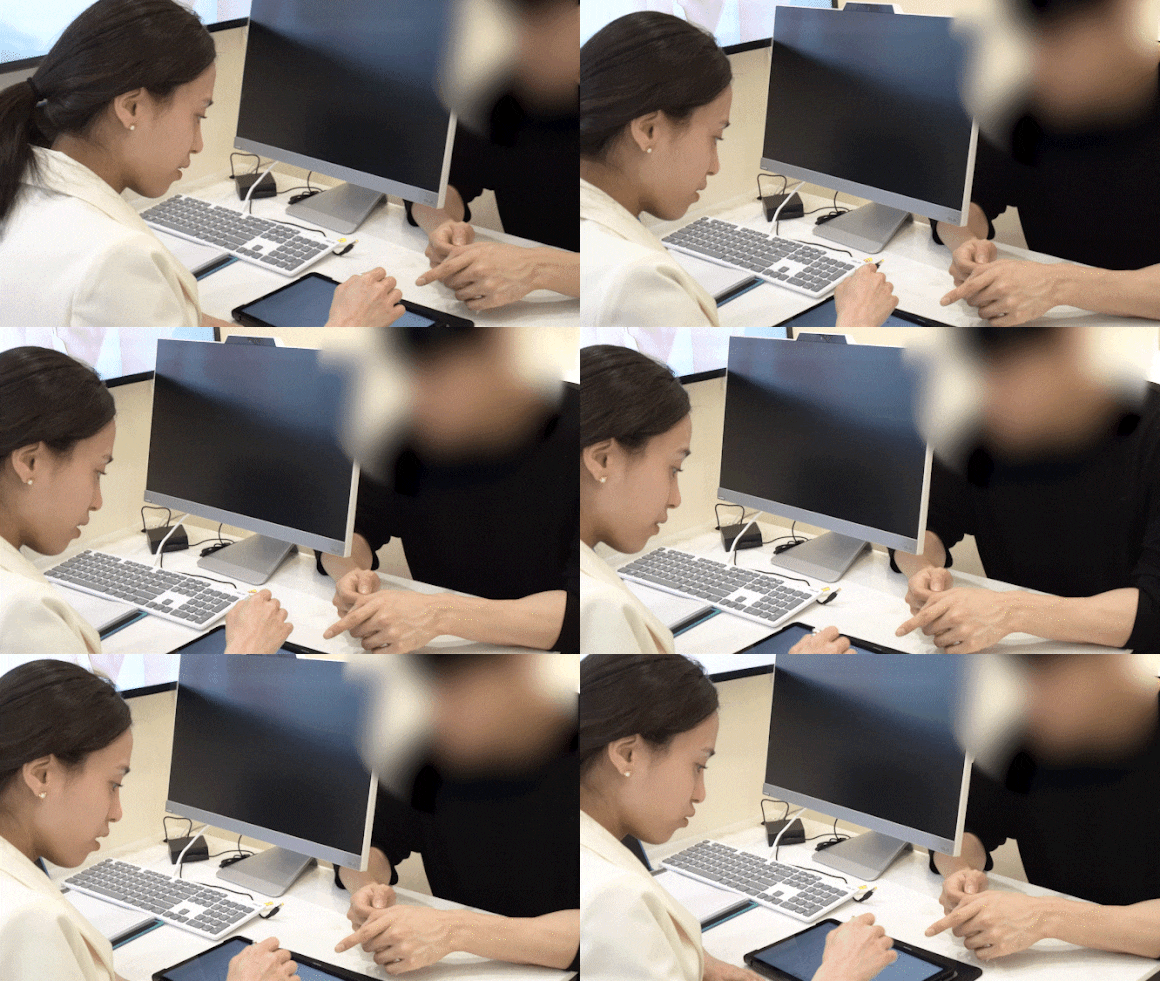
In conclusion, four things are essential to using Botox wisely.
-
Understanding the facial structure
-
Systematic consultation and treatment planning
-
Adjusting expectations
-
Direct treatment by the medical staff
In other words, square jaw Botox is a procedure that can increase satisfaction only when skilled medical technique, systematic diagnosis, and appropriate personal expectations come together.
Therefore, rather than blindly trying it after hearing other people’s reviews, I hope you will approach it carefully and decide on Botox treatment thoughtfully.^^
This has been Kim Jin-hyeon, Chief Director of the Mokdong branch of You&I Clinic.
Thank you.
< Related posts you may find helpful >
< Directions >