Yangcheon-gu dark spot removal
Can they be removed completely and cleanly?
Yangcheon-gu dark spot removal

Hello.
I’m Kim Jin-hyun, the chief director of Uni&I Clinic Mokdong Branch.
If a brown spot that suddenly appeared seems to be getting darker and larger, it may not be a simple blemish or freckle.
It could be a “dark spot.”
Many people usually mistake it for other pigment lesions such as melasma or freckles.
Dark spots have different causes and characteristics, so they must be approached differently even when removing them.
Today, for those considering dark spot removal, I will explain step by step why they appear, how they can be treated, and whether they can be removed completely.
Table of contents
Yangcheon-gu dark spot removal
What is a dark spot?
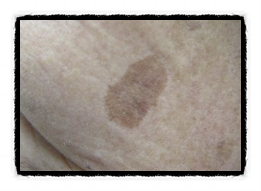
A dark spot refers to a brown to dark brown patch caused by excessive proliferation of melanocytes in the epidermal or basal layer of the skin, or by melanin pigmentation.
Because its appearance can overlap at first glance with melasma or other pigmented lesions, it is easy to confuse them, but it can be distinguished by the following characteristics and causes.
First, the color is often relatively dark, and the size varies quite widely, from a few millimeters to several centimeters in diameter.
It also tends to have clear borders, and another characteristic is that its shape is not limited to round or oval forms.

It commonly appears in areas frequently exposed to ultraviolet rays, and as people age, the number and size tend to increase.
So why do these dark spots appear?
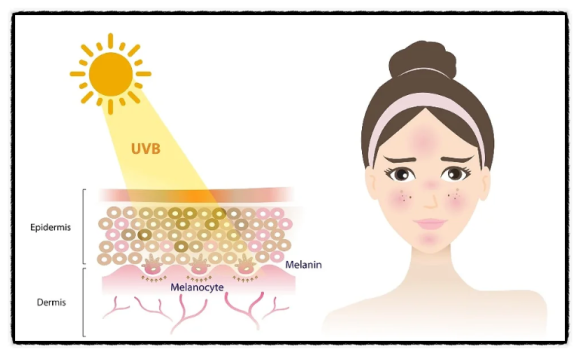
When the skin is repeatedly exposed to sunlight, melanocytes in the basal layer produce excess pigment as a defense mechanism.
As a result, a pigmented lesion called a dark spot may appear.
Dark spots can also develop or increase due to genetics or aging.
In some cases, they may also appear because of hormonal influences.
Pregnancy or taking oral contraceptives can cause hormonal changes that may worsen pigmentation.

But if it does not particularly bother you cosmetically, is it okay to just leave it alone?
Although it may become larger or darker and cause visual stress, if it is benign, there may be no need to remove it.
However, in rare cases it may be difficult to distinguish from other pigment disorders, and if the color or border changes suddenly and significantly, it may not be a benign dark spot but something malignant. So even if there is no cosmetic concern, it can be helpful to have it examined at least once.
Yangcheon-gu dark spot removal
Dark spot removal methods
Dark spots often have pigment concentrated in the epidermal layer or near the skin’s basement membrane.
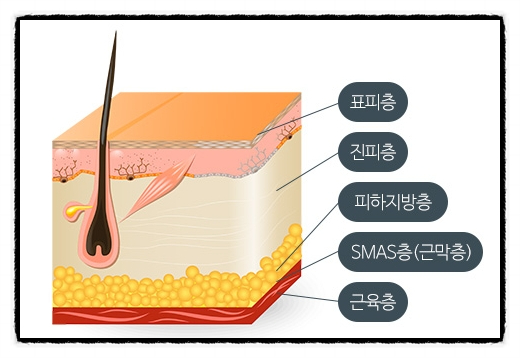
Various dermatological procedures can be used to remove them.
Among them, the most commonly used method is laser-based pigment destruction.
The melanin pigment inside the dark spot selectively absorbs laser light of a specific wavelength.
The energy then destroys the pigment particles through thermal shock.
Before the procedure, a numbing cream is applied and then the laser is used. The intensity and irradiation method should be adjusted according to the depth and size of the lesion as well as the individual’s skin type.
After the procedure, a scab forms and naturally falls off within 1 to 2 weeks, and the color gradually lightens.

Laser treatment is particularly effective for epidermal pigment and can minimize damage to the surrounding skin tissue as much as possible.
However, redness and swelling may occur immediately after the procedure, and until the scab forms and falls off, sun protection and regenerative care are very important.
Also, depending on the case, multiple repeated treatments may be necessary.
Using a strong output all at once because you want quick removal increases the risk of side effects, so a step-by-step approach is usually preferred.
Yangcheon-gu dark spot removal
Can dark spots be completely and cleanly removed?
“ How many laser treatments do I need
before the dark spot no longer shows up? ”
“ Can it disappear completely? ”
If you search online about dark spots, these are the most common questions.
In fact, since the course varies greatly depending on an individual’s skin type and the condition of the lesion, it is difficult to casually use the word “complete.”

The response to laser treatment differs depending on the location of the dark spot, that is, whether it is shallow in the epidermis or spread deep into the dermis, as well as the amount of pigment, size, and the individual’s skin type.
If the dark spot is shallow, it may disappear neatly after just 1 to 2 laser sessions, but if it is deep and wide, several treatments of 5 or more sessions may be needed, and there is also the possibility that residual pigment may remain.
Even if the existing pigmented lesion is removed by laser, new dark spots may develop or pigment may reappear around the existing area due to sun exposure, hormones, or genetic factors.
Therefore, rather than expecting that one treatment will make dark spots disappear completely for life, consistent treatment and post-procedure sun protection and lifestyle care are essential.

In conclusion, dark spot removal can be effectively performed through laser-based pigment destruction, but the expression “completely and cleanly” can be relative.
In some cases, it can be made much lighter so that it is not easily noticeable, and even one or two treatments can bring about a significant change,
but it is important to keep in mind that not every case guarantees the same result.
Therefore, for proper dark spot removal, an individual’s skin condition, post-treatment care, and a clear diagnosis and treatment plan from the medical staff are very important.
Rather than excessive expectations or absolute expressions, I hope you will remember that a step-by-step approach to reducing pigment is the path that can achieve both satisfying results and the prevention of side effects.^^
This has been Kim Jin-hyun, chief director of Uni&I Clinic Mokdong Branch.
Thank you.
< Recommended reading >
< Directions >